



Page 285
Page 285

Advanced Intelligent Computing Theories and Applications : With Aspects of Contemporary Intelligent Computing Techniques ; 3rd International Conference on Intelligent Computing, ICIC 2007 Qingdao, China, August 21-24, 2007 Proceedings
The International Conference on Intelligent Computing (ICIC) was formed to provide an annual forum dedicated to the emerging and challenging topics in artificial intelligence, machine learning, bioinformatics, and computational biology, etc. It aims to bring - gether researchers and practitioners from both academia and industry to share ideas, problems and solutions related to the multifaceted aspects of intelligent computing.This year, the conference concentrated mainly on the theories and methodologies as well as the emerging applications of intelligent computing. Its aim was to unify the picture of contemporary intelligent computing techniques as an integral concept that highlights the trends in advanced computational intelligence and bridges theoretical research with applications.
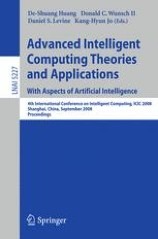
Advanced Intelligent Computing Theories and Applications : With Aspects of Artificial Intelligence ; 4th International Conference on Intelligent Computing, ICIC 2008 Shanghai, China, September 15-18, 2008 Proceeding
This book - in conjunction with the two volumes CCIS 0015 and LNCS 5226 - constitutes the refereed proceedings of the 4th International Conference on Intelligent Computing, ICIC 2008, held in Shanghai, China, in September 2008.

Advanced Intelligent Computing Theories and Applications : With Aspects of Artificial Intelligence ; 3rd International Conference on Intelligent Computing, ICIC 2007, Qingdao, China, August 21-24, 2007, Proceedings
The International Conference on Intelligent Computing (ICIC) was formed to provide an annual forum dedicated to the emerging and challenging topics in artificial intelligence, machine learning, bioinformatics, and computational biology, etc. It aims to bring gether researchers and practitioners from both academia and industry to share ideas, problems and solutions related to the multifaceted aspects of intelligent computing.This year, the conference concentrated mainly on the theories and methodologies as well as the emerging applications of intelligent computing. Its aim was to unify the picture of contemporary intelligent computing techniques as an integral concept that highlights the trends in advanced computational intelligence and bridges theoretical research with applications.

Advanced Imaging of the Abdomen
Bridges the clinician-radiologist interface on unusual clinical presentations and imaging findings. It explores imaging approaches to solve a particular problem.
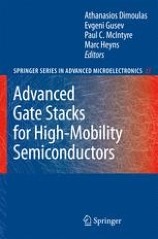
Advanced Gate Stacks for High-Mobility Semiconductors
Provides a comprehensive monograph on gate stacks in semiconductor technology. The reader will get a clear view of what has been done so far, what is the state-of-the-art and which are the main challenges ahead before we come any closer to a viable Ge and III-V MOS technology.
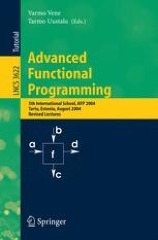
Advanced functional programming ; 5th International School, AFP 2004, Tartu, Estonia, August 14-21, 2004, Revised Lectures
Contains the revised lecture notes corresponding to nine of thelecture courses presented at the 5th International School on Advanced Functional Programming, AFP 2004, held in Tartu, Estonia, August 14–21, 2004. The goal of the AFP schools is to inform the wide international communitiesof computer science students and software production professionals about thenew and important developments in the area of functional programming. The schools put a special emphasis on practical applications of advanced techniques.
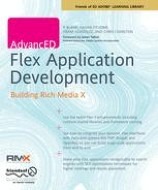
AdvancED Flex Application Development : Building Rich Media X
Many Flex books cover the basics—this book does something different, and goes far further. The authors, leading Flash platform developers at Almer/Blank, working with Adobe User Group communities, are the creators of the Rich Media Exchange (RMX), a social media network for Adobe developers. In covering just how the RMX was built, this book contains all the knowledge you need to build similar large-scale rich Internet applications with Adobe Flex. From the inception of the idea through to deployment, the authors show the techniques needed to plan and build advanced applications. You'll learn how to use forms, styles, validators, video, sound analysis, and framework caching, ensuring you make the most of the features introduced in Flex 3.
AdvancED Flex 3
Divided into three parts. The first part discusses the architectural and design aspects of Flex 3 application development. It explains the internals of a Flex 3 application and advocates a few best practices to fine-tune your application to ensure maximum performance. It includes tutorials on creating custom components, data binding, and creating AIR-powered desktop applications. The second part concentrates on effectively integrating Flex 3 with server- and client-side technologies. Techniques for integration with Java and PHP are covered in detail, and content covering interaction with client-side technologies is also included. After reading the chapter on JavaScript integration, you will be ready to create applications that can use Ajax and Flex 3 together. The third and final part of the book is a unique and eclectic mix of some advanced topics like mash-ups, collaborative applications, 3D rendering, highly interactive visualization, and audio and video streaming.
Advanced environments, tools, and applications for cluster computing ; NATO Advanced Research Workshop, IWCC 2001, Mangalia, Romania, September 1-6, 2001. Revised Papers
Started by small group of well known scientists with the aim of sharing knowledge, experiences, and results on all aspects of cluster computing, the initiative of a workshop on cluster computing received more attention after IFIP WG 10.3 and IEEE Romania Section accepted our request for sponsorship. Moreover, the application for a NATO ARW grant was successful, leading to a greater interest in the workshop. In this respect, we have to say that we chose Romania in order to attract scientists from Central and Eastern European countries and improve the cooperation in the region, in the field of cluster computing. We had an extremely short time to organize the event, but many people joined us and enthusiastically contributed to the process. The success of the workshop is wholly due to the hard work of the organizing committee, members of the program committee, key speakers, speakers from industry, and authors of accepted papers.

Advanced Environmental Monitoring
This book deals with recent developments and applications of environmental monitoring technologies, with emphasis on optical and biological methods that are rapidly progressing through the integration of emerging technologies from various disciplines.
Advanced engineering mathematics : A second course with MatLab
Presents a wide variety of topics needed by today's engineers. The fifth edition of that book, available now, has been broken into two parts: topics currently needed in mathematics courses and a new stand-alone volume presenting topics not often included in these courses and consequently unknown to engineering students and many professionals.
Advanced Earthquake Engineering Analysis
The purpose of the book is to review the fundamentals of displacement based methods, starting from engineering seismology, earthquake geotechnical engineering, to focus on design, analysis and testing of structures with emphasis on buildings and bridges.
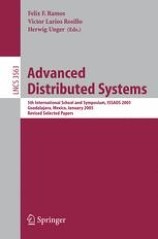
Advanced distributed systems ; 5th International School and Symposium, ISSADS 2005, Guadalajara, Mexico, January 24-28, 2005, Revised Selected Papers
Poses the papers accepted and presented at the 5th Int- national School and Symposium on Advanced Distributed Systems (ISSADS) in this LNCS volume. The papers presented in the sessions of the symposium cover the subjects of distributed systems from the system level and applications, but also contributions from the area of theory and artificial intelligence concepts.
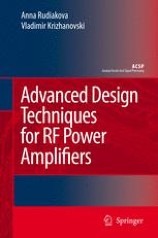
Advanced Design Techniques for RF Power Amplifiers
Main aim is to provide the reader with a deep analysis of theoretical aspects, modelling, and design strategies of RF high-efficiency power amplifiers. Advanced Design Techniques for RF Power Amplifiers begins with an analytical review of current state of the problem. Then it moves to the theoretical analysis of BJT class-F power amplifier near transition frequency and presents the necessary realization conditions. The next part concerns the practical verification and demonstration of the theoretical results. It is followed by the part devoted to the output networks of high-efficiency power ampifiers. The novel type of photonic band-gap structure providing improved characteristics both in the pass and stop bands is proposed. Finally, the fifth-harmonic peaking class F power amplifier design based on the above structure is presented.
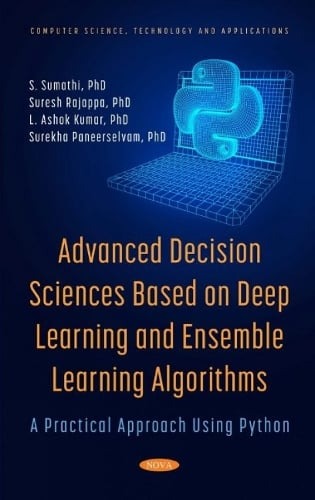
Advanced Decision Sciences Based on Deep Learning and Ensemble Learning Algorithms : A Practical Approach Using Python
Describes the deep learning models and ensemble approaches applied to decision-making problems. The authors have addressed the concepts of deep learning, convolutional neural networks, recurrent neural networks, and ensemble learning in a practical sense providing complete code and implementation for several real-world examples. The authors of this book teach the concepts of machine learning for undergraduate and graduate-level classes and have worked with Fortune 500 clients to formulate data analytics strategies and operationalise these strategies.
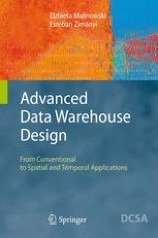
Advanced Data Warehouse Design : From Conventional to Spatial and Temporal Applications
This book serves as an introduction to the state of the art on data warehouse design, with many references to more detailed sources. Providing a clear and a concise presentation of the major concepts and results of data warehouse design, it can also be used as the basis of a graduate or advanced undergraduate course.
Advanced Data Mining Techniques
This book covers the fundamental concepts of data mining, to demonstrate the potential of gathering large sets of data, and analyzing these data sets to gain useful business understanding. The book is organized in three parts. Part I introduces concepts. Part II describes and demonstrates basic data mining algorithms. It also contains chapters on a number of different techniques often used in data mining. Part III focusses on business applications of data mining. Methods are presented with simple examples, applications are reviewed, and relativ advantages are evaluated.

Advanced Data Mining and Applications ; 4th International Conference, ADMA 2008, Chengdu, China, October 8-10, 2008. Proceedings
This book constitutes the refereed proceedings of the 4th International Conference on Advanced Data Mining and Applications, ADMA 2008, held in Chengdu, China, in October 2008.

Advanced Data Mining and Applications ; 3rd International Conference, ADMA 2007, Harbin, China, August 6-8, 2007 Proceedings
The Third International Conference on Advanced Data Mining and Applications (ADMA) organized in Harbin, China continued the tradition already established by the first two ADMA conferences in Wuhan in 2005 and Xi’an in 2006. One major goal of ADMA is to create a respectable identity in the data mining research com- nity. This feat has been partially achieved in a very short time despite the young age of the conference, thanks to the rigorous review process insisted upon, the outstanding list of internationally renowned keynote speakers and the excellent program each year. The impact of a conference is measured by the citations the conference papers receive. Some have used this measure to rank conferences.

Advanced concepts in fluorescence sensing ; Part A : Small molecule sensing
"This volume incorporates authoritative small molecule analytical fluorescence sensing reviews specialized enough to be attractive to professional researchers, yet also appealing to the wider audience of scientists in related disciplines of fluorescence. Advanced Concepts in Fluorescence Sensing Part A: Small Molecule Sensing is an essential reference for any lab working in the analytical fluorescence sensing field. All academics, bench scientists, and industry professionals wishing to take advantage of the latest and greatest in the continuously emerging field of fluorescence sensing will find it an invaluable resource. Advanced Concepts in Fluorescence Sensing Part A: Small Molecule Sensing topics include: Probes for Anion and Cation Sensing / Fluorescent Carbon Dioxide Indicators / Fluorescent Redox-Switchable Devices / PET based Fluorescence Sensors / Oxygen Sensing / Fluorescence Sensing using Charge Transfer Probes / Fluorescence-based Nitric Oxide Detection "
