



Page 28
Page 28
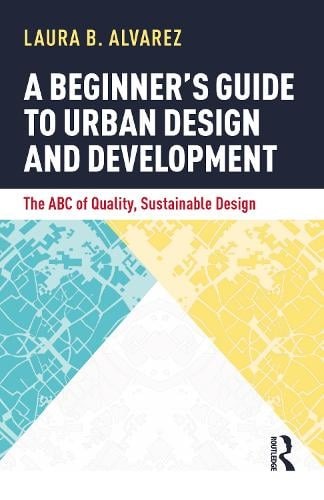
A beginner's guide to urban design and development : the ABC of quality, sustainable design
Provides invaluable guidance to all those with an interest in placemaking and the built environment, from those with no experience to those who have worked for many years in industry, illustrating key principles that will secure higher quality, more sustainable design in accessible, jargon-free language. Explains the design process in a straightforward way, exploring the different roles and highlighting the opportunities and limitations different agencies have to influence design over the various stages of the process. Examples from the UK and worldwide look at how the system operates and how best practice can make a real difference on the ground. Case studies examine situations where quality or sustainability fell short – and how this could have been avoided. This book also showcases a variety of evaluation tools, explaining how they operate, and giving guidance on how to create project-specific tools to drive schemes forward. With community empowerment at its core, the book explains technical language and shares bountiful knowledge to broaden place democracy and make influencing design accessible to many, not just a few.
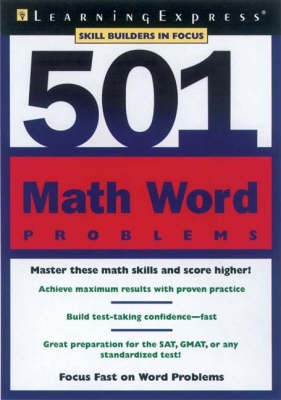
501 Math Word Problems
Contains only word problems - the kinds you encounter at school and on high stakes tests. Gaining familiarity with this specific question type is a proven technique for increasing test scores. The Skill Builder in Focus method provides the targeted practice on these questions necessary to attain higher scores. Questions are divided into six chapters: algebra, geometry, fractions, percents, decimals, and miscellaneous math. Within each chapter, questions move from easy to advanced, giving test-takers the opportunity to gain confidence in each math area. Each chapter contains questions, answers, and detailed explanations to reinforce learning and understanding. Diagrams and useful terminology help clarify math rules for effective studying and retention.
25 Years of Model Checking : History, Achievements, Perspectives
Model checking technology is among the foremost applications of logic to computer science and computer engineering. The model checking community has achieved many breakthroughs, bridging the gap between theoretical computer science and hardware and software engineering, and it is reaching out to new challenging areas such as system biology and hybrid systems. Model checking is extensively used in the hardware industry and has also been applied to the verification of many types of software. Model checking has been introduced into computer science and electrical engineering curricula at universities worldwide and has become a universal tool for the analysis of systems.

100 diagnostic dilemmas in clinical medicine
Presents 100 real-life scenarios seen in the hospital and community setting. A succinct summary of the patient's history, examination and any initial investigations is followed by a detailed consideration of the diagnosis and management of each case, in the short, medium and, where appropriate, long term.
10 Years Southeast European Cooperative Initiative : From Dayton to Brussels
The Southeast European Cooperative Initiative (SECI) was the first international instrument for "peace keeping and peace making". Conceived by the United States with full partnership and participation of the European Union, SECI was a response to the Dayton Agreement. SECI was convinced that sending troops and diplomats did not suffice. It called for a new strategy and approach that would promote economic and social development through regional cooperation. SECI understood that despite their differences, the countries of South East Europe shared many mutual concerns. For the international community, SECI was a prelude to a broader instrument - the Stability Pact for South Eastern Europe, launched in 1999. The approach was a success! This compendium of documents, agreements, analyses and essays gives a glimpse into decision-making processes and results achieved.

(R)Evolution : Organizations and the Dynamics of the Environment
Investigates the possible changes needed for industrial organizations to adapt to and remain competitive in their ever evolving environment. (R)Evolution’s main area of contribution to these very complex issues is embedded in the work’s ambitious attempt to borrow from evolutionary biology and genetics not only metaphors but also concepts and models to be adapted to the management of business organizations. The work provides us with a comprehensive vision of adaptation and variation in the business community, integrating various intellectual inputs which are based on an evolutionary vision of economic behavior. Using an extensive study of the literature in management science, and applying new models and methodologies in numerous case studies, Dekkers draws many insightful conclusions including the claim that companies often evolve slower than generally expected. Furthermore the research calls into question the effectiveness of the common practice of corporate reorganization. Embracing and merging most major contemporary developments in the theories of change into a comprehensive integrated approach, (R)Evolution is an invaluable resource for researchers specializing in the management of technological change.
