



Page 28
Page 28

Foundations of Hyperbolic Manifolds
The book is divided into three parts. The first part is concerned with hyperbolic geometry and discrete groups. The main results are the characterization of hyperbolic reflection groups and Euclidean crystallographic groups. The second part is devoted to the theory of hyperbolic manifolds. The main results are Mostow’s rigidity theorem and the determination of the global geometry of hyperbolic manifolds of finite volume. The third part integrates the first two parts in a development of the theory of hyperbolic orbifolds. The main result is Poincare«s fundamental polyhedron theorem.

Foundations of C++/CLI : The Visual C++ Language for .NET 3.5
Foundations of C++/CLI: The Visual C++ Language for .NET 3.5 introduces C++/CLI, Microsoft's extensions to the C++ syntax that allow you to target the common language runtime, the key to the heart of the .NET Framework 3.5. This book gives you a small, fast–paced primer that will kick–start your journey into the world of C++/CLI. In 13 no–fluff chapters, Microsoft insiders take readers into the core of the C++/CLI language and explain both how the language elements work and how Microsoft intends them to be used. This book is a beginner's guide, but it assumes a familiarity with programming basics. And it concentrates on explaining the aspects of C++/CLI that make it the most powerful and fun language of the .NET Framework. As such, this book is ideal if you're thinking of migrating to C++/CLI from another language.

Foundation Flash 8 Video
This book is the ultimate guide to Flash 8 video it offers practical advice, technical guidance, and a full series of creative projects ranging from the dead simple to the complex in a manner that talks to you as an equal and makes only one assumption: basic familiarity with the Flash interface. We start with the basicshow to edit video in some of the most popular packages available (such as iMovie and Movie Maker 2) and create a Flash video file and import it into Flash.
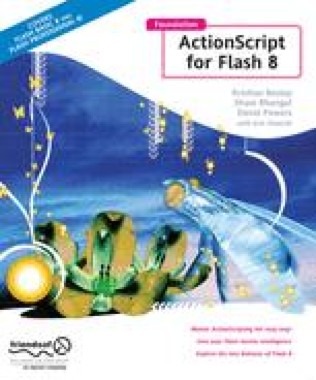
Foundation ActionScript for Flash 8
This book contains all you need to understand and make use of ActionScript, and to have some fun while learning. The Foundation series teaching style is ideal if you're a non-programmer who wants to learn Flash programming quickly and thoroughly. The authors teach the basics, and provide an all-around proficiency in ActionScript, as well as Flash components within Flash 8. You'll gain the practical skills to build ActionScript based Flash projects, including making initial design decisions, structuring code, and testing. An ongoing case study means that by the end of the book, you'll have constructed a cutting-edge Flash site to showcase your newly learned skills.

Fostering transformative change for sustainability in the context of socio-ecological production landscapes and seascapes (SEPLS)
This book is a compilation of case studies that provide useful knowledge and lessons that derive from on-the-ground activities and contribute to policy recommendations, focusing on the relevance of social-ecological production landscapes and seascapes (SEPLS) to “transformative change.” The concept of “transformative change” has been gaining more attention to deal with today’s environmental and development problems, whereas both policy and scientific communities have been increasingly calling for transformative change toward sustainable society. The Intergovernmental Science-Policy Platform on Biodiversity and Ecosystem Services (IPBES) has planned to start the so-called “assessment on transformative change” if approved by the IPBES plenary to be held in 2021
Formulas of Acoustics
This collection of formulas has been written by applied scientists and industrial engineers for design professionals and students who work in engineering acoustics. It is subdivided into the most important fields of applied acoustics, each dealing with a well-defined type of problem.

Formal techniques for computer systems and business processes ; European performance engineering workshop, EPEW 2005 and International workshop on web services and formal methods, WS-FM 2005, Versailles, France, September 1-3, 2005, Proceedings
This book constitutes the refereed proceedings of two colocated international workshops EPEW 2005 (European Performance Engineering Workshop) and WS-FM 2005 (Web Services and Formal Methods) held in Versailles, France in September 2005. The 20 revised full papers presented were carefully reviewed and selected from 59 submissions. For EPEW 2005 only 10 papers - of the 32 submitted - were accepted for presentation; they deal with queueing theory, bounding techniques, stochastic model checking, communication schemes analysis for high-speed LAN, QOS analysis in wireless ad-hoc networks and optical networks analysis. The main topics of the 10 papers accepted for WS-FM 2005 - from 27 submissions - include: protocols and standards for WS (SOAP, WSDL, UDDI, etc.); languages and description methodologies for Choreography/Orchestration/Workflow (BPML, XLANG and BizTalk, WSFL, WS-BPEL, etc.); coordination techniques for WS (transactions, agreement, coordination services, etc.); semantics-based dynamic WS discovery services (based on Semantic Web/Ontology Techniques or other semantic theories); security, performance evaluation and quality of service of WS; semi-structured data and XML related technologies; comparisons with different related technologies/approaches.
Formal Modeling and Analysis of Timed Systems ; 5th International Conference, FORMATS 2007, Salzburg, Austria, October 3-5, 2007, Proceedings
This volume consists of the proceedings of the Fifth International Conference on Formal Modelling and Analysis of Timed Systems (FORMATS 2007). The main goal of this series of conferences is to bring together diverse communities of researchers that deal with the timing aspects of computing systems.
Formal Methods for Open Object-Based Distributed Systems ; Vol. 3535 ; 7th IFIP WG 6.1 International Conference, FMOODS 2005, Athens, Greece, June 15-17, 2005, Proceedings
This volume contains the proceedings of FMOODS2005, the 7th IFIPWG6. 1 International Conference on Formal Methods for Open Object-Based Distributed Systems. The conference was held in Athens, Greece on June 15-17, 2005. The eventwasthe seventh meeting ofthis conference series, whichis held roughly every year and a half, with the earlier events held respectively in Paris, Canterbury, Florence, Stanford, Twente, and Paris. The goal of the FMOOD Sseries of conferences is to bring together researchers whose work encompasses three important and related fields: - formal methods; - distributed systems; - object-based technology. Sucha convergenceis representative of recent advances in the field of distributed systems, and provides links between several scientific and technological communities, as represented by the conferences FORTE, CONCUR, and ECOOP. The objective of FMOODS is to provide an integrated forum for the pres- tation of research in the above-mentioned fields, and the exchange of ideas and experiences in the topics concerned with the formal methods support for open object-based distributed systems.
Formal Methods for Components and Objects ; Vol. 4111 ; 4th International Symposium, FMCO 2005, Amsterdam, The Netherlands, November 1-4, 2005, Revised Lectures
This book presents 19 revised invited keynote lectures and revised tutorial lectures given by top-researchers at the 4th International Symposium on Formal Methods for Components and Objects, FMCO 2005, held in Amsterdam, Netherlands, in November 2005. The book provides a unique combination of ideas on software engineering and formal methods that reflect the current interest in the application or development of formal methods for large scale software systems such as component-based systems and object systems.

Formal Methods for Components and Objects ; Vol. 3657 ; 3rd International Symposium, FMCO 2004, Leiden, The Netherlands, November 2-5, 2004, Revised Lectures
This book presents revised tutorial lectures given by invited speakers at the Third International Symposium on Formal Methods for Components and Objects, FMCO 2004, held in Leiden, The Netherlands, in November 2004. The 14 revised lectures by leading researchers present a comprehensive account of the potential of formal methods applied to large and complex software systems such as component-based systems and object systems. The book provides an unique combination of ideas on software engineering and formal methods that reflect the expanding body of knowledge on modern software systems.

Formal Methods for Components and Objects ; 5th International Symposium, FMCO 2006, Amsterdam, Netherlands, November 7-10,2006, Revised Lectures
The book provides a unique combination of ideas on software engineering and formal methods that reflect the current interest in the application or development of formal methods for large scale software systems.

Form and structure in Interior Architecture : Basics interior architecture
This volume examines the basic ideas that underpin the design and remodelling of interior space, from the establishment of a relationship between the existing building and the new components that inhabit it, to the careful positioning and design of significant elements within the space

Forest Radioecology in Fukushima : Radiocesium Dynamics, Impact, and Future
This book provides holistic information on the radioactive contamination of forests. Topics are highly interdisciplinary, ranging from the dynamics of radioactive cesium in forest ecosystems to the radiation protection or the socio-economic aspects of radiation effects. It is designed to help people understand the radioactive contamination in forests and provide hints of how to cope with it and restore their livelihoods. The book is characterized by its well-balanced structure that allows the reader to understand the whole picture without going into too much scientific content. After explaining the basics of radioactive materials and radiation, the book illustrates the radioactive contamination of forests, it also describes the impacts on the forestry and life of local people and the measures taken by. Few books address the concerns about how to deal with radioactive contamination of forests and the future perspectives. In this book, people can learn all about the Fukushima nuclear accident of forests, forest products, and people with abundant reference materials.

Forest Inventory : Methodology and Applications
This book has been developed as a forest inventory textbook for students and can also serve as a handbook for practical foresters. The book is divided into four sections. The first section deals mostly with sampling issues. First, we present the basic sampling designs at a fairly non-technical mathematical level. In addition, we present some more advanced sampling issues often needed in forest inventory. Those include for instance problems with systematic sampling, and methods for sampling vegetation or rare populations. Forest inventory also includes issues that are unique to forestry, like problems in measuring sample plots in the field, or utilising sample tree measurements. These issues include highly sophisticated methodology, but we try to present these also such that forestry students can grasp the ideas behind them. Each method is presented with examples. For foresters who need more details, references are given to more advanced scientific papers and books in the fields of statistics and biometrics.

Forensic Psychiatry : Influences of Evil
In Forensic Psychiatry: Influences of Evil, Tom Mason brings together an international panel of experts from diverse specialties to examine the idea of "evil" in a medical context, specifically a mental health setting, to consider how the concept can be usefully interpreted, and to elucidate its relationship to forensic psychiatry. The authors challenge the belief that the concept of "evil" plays no role in "scientific" psychiatry and is not helpful to our understanding of aberrant human thinking and behavior.

Forensic Pathology Reviews ; Vol. 4
Building on the excellent foundation laid in earlier volumes of the series, leading forensic pathologists from the United States and around the world again provide in Forensic Pathology Reviews, Volume 4 evidence-based accounts of special topics of current interest from various fields of forensic pathology and death-scene investigation. The authors offer cutting-edge insights into death from environmental conditions (lightning and elder abuse), homicide by sharp force, death from natural causes (asthma, Marfan syndrome, and peliosis of the liver and spleen), and pathology of human endothelium in septic organ failure.

Forensic pathology reviews ; Vol. 3
Maintaining the high quality achieved in earlier volumes, leading national and international forensic pathologists provide in Forensic Pathology Reviews, Volume 3 evidence-based accounts of special topics of current interest from various fields of forensic pathology and death-scene investigation. The authors offer cutting-edge insights into the medicolegal investigation of bodies found in water, the forensic aspects of the human immunodeficiency virus (HIV)-1 infection of the central nervous system, deaths in a head-down position, and forensic bitemark analysis. Additional chapters address taphonomic changes in human bodies during the early postmortem interval, arrhythmogenic ventricular dysplasia that produces sudden death in young people, the postmortem diagnosis of death in anaphylaxis, and iatrogenic deaths. The forensic aspects of suicide, murder-suicide, and suicide trends in the United States are also discussed, along with the evaluation of fatal pulmonary thromboembolism and the use of radiology in medicolegal investigations. A comprehensive, up-to-date review of the international literature is given for each chapter. Evidence-based and state-of-the-art, Forensic Pathology Reviews, Volume 3 synthesizes the practical advances made in a variety of important subspecialties of forensic pathology, demonstrating how the latest medical and scientific advances are being applied to solve current problems of high interest to forensic pathologists today.

Forensic pathology of trauma
The practice of forensic pathology includes the collection and analysis of evidence in relation to a corpse in order to establish the cause of death. Knowledge of the cause of death contributes to the determination of the manner of death by medical examiners and coroners, who are occasionally assisted by law enforcement officers. In the process of establishing the cause and manner of death, representatives of various investigative bodies have several responsibilities, including explaining the death to family members, attempting to reduce the risk of similar deaths in the future, and, if applicable, apprehending the individuals who are responsible for the death. The most well-known and popular role of a forensic pathologist is in the inves- gation of cases of suspicious death; however, most medicolegal autopsies involve unexpected deaths that are above suspicion, many of which are caused by trauma (trauma being defined as any physical force or agent that causes bodily harm). The purpose of Forensic Pathology of Trauma: Common Problems for the Pathologist is to provide practical advice and information about the conduct of the forensic autopsy in cases of trauma, and to offer guidance about the analysis of the autopsy findings in these cases.

Forensic Anthropology and Medicine : Complementary Sciences From Recovery to Cause of Death
The aim of this book is to dissect forensic anthropology and forensic pathology in its various and valuable contributions to contemporary society. It gives answers and approaches key questions to this sciences' growing audience within different countries in the recent years. It aims to provide a practical approach to the investigation of bodies that are not fresh enough to be considered a normal forensic case.
