



Page 27
Page 27

Fadfada
Sharing personal problems and true feeling on social media has a lot of fears and is not likable nowadays, because of bullying, shaming, and making fun of the user by other users, Fadfada is a multi-platform social networking service, that aims to give the users the ability to share their problems or feeling via written newsfeed (posts) or videos (stories) that had an impact on their psychological health without revealing their true identity, by putting a mask on their faces and changing their voices after recording the story. In addition to extracting features from posts and stories to match users based on it.

Facilities Design
Describes tools commonly used for presenting layout designs Presents traditional models for facility layout including the popular systematic layout planning (SLP) model in detail Provides a layout project involving the SLP model Covers group technology and cellular manufacturing at the elementary level Includes a project and case study on machine grouping and layout Considers next-generation factory layouts Discusses analytical queuing and queuing network models, and more Explains the ins and outs of facility planning and design. A reference for both student and professional, the book addresses facilities design and layout problems in manufacturing systems and covers layout, logistics, supply chain, warehousing, and materials handling.

Fabbriche, sistemi, organizzazioni : Storia dell'ingegneria industriale = Factories, systems, organizations : A history of industrial engineering
This book examines the origin of the technological and organizational challenges of industry in Europe and the United States and the stages of its theoretical formulation; the creation of the figure of the industrial engineer between the nineteenth and twentieth centuries; and the elaboration of the technological disciplines and of the language and of the fundamental concepts (system, automation, control, optimization, network) of modern industrial engineering. Divided into three chronologically organized parts, each chapter is accompanied by readings, bibliographic information for in-depth study and illustrative sheets of historical, biographical aspects (relating to some great engineers, scientists and philosophers), terminological and mathematical-technical aspects.
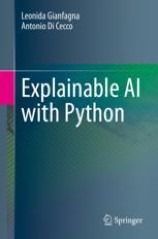
Explainable AI with Python
This book provides a full presentation of the current concepts and available techniques to make “machine learning” systems more explainable. The approaches presented can be applied to almost all the current “machine learning” models: linear and logistic regression, deep learning neural networks, natural language processing and image recognition, among the others.

Expert Network Time Protocol : An Experience in Time with NTP
Have you ever tried to figure out why your computer clock is off, or why your emails somehow have the wrong timestamp? Most likely, it's due to an incorrect network time synchronization, which can be reset using the Network Time Protocol. Until now, most network administrators have been too paranoid to work with this, afraid that they would make the problem even worse. However, Expert Network Time Protocol: An Experience in Time with NTP takes the mystery out of time, and shows the network administrator how to regain the upper hand. This book is a fascinating look into NTP, and the stories behind the science. Written by Peter Rybaczyk, one of the foremost experts on NTP, this book will show the network administrator how to become more comfortable working with time.

Expert Clouds and Applications ; Proceedings of ICOECA 2021
Features original papers from International Conference on Expert Clouds and Applications (ICOECA 2021), organized by GITAM School of Technology, Bangalore, India during February 18–19, 2021. It covers new research insights on artificial intelligence, big data, cloud computing, sustainability, and knowledge-based expert systems. The book discusses innovative research from all aspects including theoretical, practical, and experimental domains that pertain to the expert systems, sustainable clouds, and artificial intelligence technologies.

Experimental Algorithms ; 6th International Workshop, WEA 2007, Rome, Italy, June 6-8, 2007, Proceedings
Fostering and disseminating high quality research results focused on the experimental analysis of algorithms the papers are devoted to the design, analysis, implementation, experimental evaluation, and engineering of efficient algorithms. Among the application areas addressed are most fields applying advanced algorithmic techniques, such as combinatorial optimization, approximation, graph theory, discrete mathematics, data mining, simulation, cryptography and security, scheduling, searching, sorting, string matching, coding, networking, etc.

E-Voting and Identity ; 1st International Conference, VOTE-ID 2007, Bochum, Germany, October 4-5, 2007, Revised Selected Papers
Voting and identity have a very delicate relationship. Only a few processes - pendso much on an identity management respecting the fine line between reliable identification and reliable non-identifiability each at its part during the process. And only a few processes may change their outer appearance so much with the advent of new IT as voting and identity management do. So it was no surprise in FIDIS, the interdisciplinary Network of Excellence working on the Future of Identity in the Information Society

Evolving Connectionist Systems : The Knowledge Engineering Approach
Evolving Connectionist Systems is aimed at all those interested in developing and using intelligent computational models and systems to solve challenging real world problems in computer science, engineering, bioinformatics and neuroinformatics. The book challenges scientists and practitioners with open questions about future creation of new information models inspired by Nature. This edition includes new methods for adaptive, knowledge-based learning, such as online incremental feature selection, spiking neural networks, transductive neuro-fuzzy inference, adaptive data and model integration, cellular automata and artificial life systems, particle swarm optimisation, ensembles of evolving systems, and quantum inspired neural networks. New applications to gene and protein interaction modelling, brain data analysis and brain model creation, computational neuro-genetic modelling, adaptive speech, image and multimodal recognition, language modelling, adaptive robotics, modelling dynamic financial and socio-economic systems, and ecological modelling, are covered. An important new feature of the book is the attempt to connect different structural and functional levels of a complex, intelligent system, looking for inspiration from functional relationships in natural systems, such as the genetic and the brain activity.

Evolvable systems : From biology to hardware ; 8th International Conference, ICES 2008, Prague, Czech Republic, September 21-24, 2008. Proceedings
This book constitutes the refereed proceedings of the 8th International Conference on Evolvable Systems, ICES 2008, held in Prague, Czech Republic, in September 2008.The 28 revised full papers and 14 revised poster papers presented were carefully reviewed and selected from 52 submissions. The papers are organized in topical sections on evolution of analog circuits, evolution of digital circuits, hardware-software codesign and platforms for adaptive systems, evolutionary robotics, development, real-world applications, evolutionary networking, evolvable artificial neural networks, and transistor-level circuit evolution.

Evolutionary Multi-Criterion Optimization ; 4th International Conference, EMO 2007, Matsushima, Japan, March 5-8, 2007, Proceedings
Multicriterion optimization refers to problems with two or more objectives (normally in conflict with each other) which must be simultaneously satisfied. Evolutionary algorithms have been used for solving multicriterion optimization problems for over two decades, gaining an increasing attention from industry. This book included four keynote speakers: Hirotaka Nakayama on aspiration level methods, Kay Chen Tan on large and computationally intensive real-world MO optimization problems, Carlos Fonseca on decision making, and Gary B. Lamont on design of large-scale network centric systems.

Evolutionary Computer Music
The evolutionary computation approach to music is an exciting new development for composers and musicologists alike. For composers, it provides an innovative and natural means for generating musical ideas from a specifiable set of primitive components and processes. For musicologists, these techniques are used to model the cultural transmission and change of a population's body of musical ideas over time. In both cases, musical evolution can be guided by a variety of constraints and tendencies built into the system, such as realistic psychological factors that influence the way music is expressed, experienced, learned, stored, modified, and passed on among individuals. This book discusses not only the applications of evolutionary computation to music, but also the tools needed to create and study such systems. These tools are drawn in part from research into the origins and evolution of biological organisms, ecologies, and cultural systems on the one hand, and from computer simulation methodologies on the other. They can be combined to create surrogate artificial worlds populated by interacting simulated organisms in which complex musical experiments can be performed that would otherwise be impossible.

Evolutionary Computation in Dynamic and Uncertain Environments
This book provides a compilation on the state-of-the-art and recent advances of evolutionary algorithms in dynamic and uncertain environments within a unified framework. The motivation for this book arises from the fact that some degree of uncertainty in characterizing any realistic engineering systems is inevitable. Representative methods for addressing major sources of uncertainties in evolutionary computation, including handle of noisy fitness functions, use of approximate fitness functions, search for robust solutions, and tracking moving optimums, are presented. "Evolutionary Computation in Dynamic and Uncertain Environments" is a valuable reference for scientists, researchers, professionals and students in the field of engineering and science, particularly in the areas of computational intelligence, natural computing and evolutionary computation.

Evolutionary computation in combinatorial optimization ; 8th European Conference, EvoCOP 2008, Naples, Italy, March 26-28, 2008. Proceedings
Metaheuristics have been shown to be e?ective for di?cult combinatorial - timization problems appearing in various industrial, economical, and scientifc domains. Prominent examples of metaheuristics are evolutionary algorithms, tabu search, simulated annealing, scatter search, memetic algorithms, variable neighborhood search, iterated local search, greedy randomized adaptive search procedures, ant colony optimization and estimation of distribution algorithms. Problems solved successfully include scheduling, timetabling, network design, transportation and distribution, vehicle routing, the travelling salesman pr- lem, packing and cutting, satisfability and general mixed integer programming.

Evolution from Cellular to Social Scales
Evolution is a critical challenge for many areas of science, technology and development of society. The book reviews general evolutionary facts such as origin of life and evolution of the genome and clues to evolution through simple systems. Emerging areas of science such as "systems biology" and "bio-complexity" are founded on the idea that phenomena need to be understood in the context of highly interactive processes operating at different levels and on different scales. This is where physics meets complexity in nature, and where we must begin to learn about complexity if we are to understand it. Similarly, there is an increasingly urgent need to understand and predict the evolutionary behavior of highly interacting man-made systems, in areas such as communications and transport, which permeate the modern world. The same applies to the evolution of human networks such as social, political and financial systems, where technology has tended to vastly increase both the complexity and speed of interaction, which is sometimes effectively instantaneous.

Evidence and Expertise in Nordic Education Policy : A Comparative Network Analysis
This book explores how policy makers draw on national, regional and international expertise in issuing school reform within five Nordic countries. In an era of international comparison, policy makers are expected to review best practices, learn from experiences from elsewhere, and apply international standards propelled by international organizations. The chapters draw methodologically on bibliometric data, network analysis, document analysis and expert interviews.

Event-Triggered and Time-Triggered Control Paradigms
Event-Triggered and Time-Triggered Control Paradigms presents a valuable survey about existing architectures for safety-critical applications and discusses the issues that must be considered when moving from a federated to an integrated architecture. The book focuses on one key topic--the amalgamation of the event-triggered and the time-triggered control paradigm into a coherent integrated architecture. The architecture provides for the integration of independent distributed application subsystems by introducing multi-criticality nodes and virtual networks of known temporal properties.

Evaluation of Cooperative Planning in Supply Chains : An Empirical Approach of the European Automotive Industry
Modern literature has heralded the "Era of Network Competition" in which cooperating networks and not individual firms seek to attain competitive advantages. Supply chains in the automotive industry provide a good example of such cooperative environments which are characterized by a division of labor and where almost no final product is produced and sold by just one company alone.

European Robotics Symposium 2006
This unique reference represents a cross-section of forefront robotics research, ranging from robotics and systems to learning, autonomy and failure detection, from vision and navigation to localization and mapping, which are based on the papers presented at the 1st European Robotics Symposium (EUROS-06) held in Palermo, Italy from 16-18 March, 2006. The European Robotics Symposium (EUROS) is a brand-new International scientific event promoted by EURON, the European Robotics Network. Since its inception in 2000, EURON links most of the European robotics research teams and today (2006) involves more than 165 universities and companies across all of its member states. The EUROS meeting will be held in Europe every other year, but international participation at all levels is strongly encouraged making it a meeting place for high-quality presentation of interesting international research on robotics.

European Guide to Power System Testing : The ERIGrid Holistic Approach for Evaluating Complex Smart Grid Configurations
This book provides an overview of the ERIGrid validation methodology for validating CPES, a holistic power system testing method. It introduces readers to corresponding simulation and laboratory-based tools, including co-simulation, real-time simulation, and hardware-in-the-loop. Selected test cases and validation examples are provided, in order to support the theory discussed.
