



Page 27
Page 27

Micromechanical Photonics
The purpose of this book is to give the engineering student and the practical engineer a systematic introduction to optical MEMS (Micro electro mechanical systems) and micromechanical photonics through not only theoretical and experimental results, but also by describing various products and their fields of application. After an overview on optical MEMS and micromechanical photonics, the book describes extremely-short-external-cavity laser diodes tunable laser diodes, a resonant sensor and an integrated optical head. It then addresses optical tweezers, the new technology employed to manipulate various types of objects in a variety of research and industrial fields. Coverage progresses through topics on the design and fabrication of an optical rotor and evaluation of mixing performances of micro-liquids for future fluidic applications. In the final chapter, the fundamentals and applications of the near field are described for the future development of micromechanical photonics, as well as near-field features, theoretical analyses, experimental analyses and applications mainly related to optical recording.

Micromanufacturing and Nanotechnology
Micromanufacturing and Nanotechnology is an emerging technological infrastructure and process that involves manufacturing of products and systems at the micro and nano scale levels. Development of micro and nano scale products and systems are underway due to the reason that they are faster, accurate and less expensive. Moreover, the basic functional units of such systems possesses remarkable mechanical, electronic and chemical properties compared to the macro-scale counterparts. Since this infrastructure has already become the prefered choice for the design and development of next generation products and systems it is now necessary to disseminate the conceptual and practical phenomenological know-how in a broader context. This book incorporates a selection of research and development papers. Its scope is the history and background, underlynig design methodology, application domains and recent developments.

Micro-ISV : From Vision to Reality
Micro-ISV: From Vision to Reality explains what works and why in today's emerging micro-ISV sector. Currently, thousands of programmers build and deliver great solutions ISV-style, earning success and revenues much larger than you might guess. Written by and for micro-ISVs, with help from some of the leaders of the field, this book takes you beyond just daydreaming to running your own business. It thoroughly explores how it is indeed possible to launch and maintain a small and successful ISV business, and is an ideal read if you're interested in getting started.

Microformats : Empowering Your Markup for Web 2.0
This book is a comprehensive guide to microformats. It explores why—in Bill Gates' words—"We need microformats," how microformats work, and the kinds of problems microformats help solve. The book covers every current microformat, with complete details of the syntax, semantics, and uses of each, along with real-world examples and a comprehensive survey of the tools available for working with them. the book also features case studies detailing how major web content publishers such as yahoo put microformats to work in their web applications.
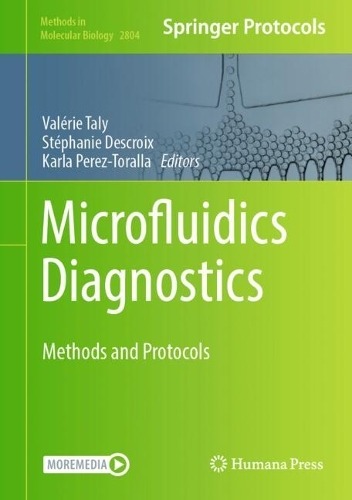
Microfluidics diagnostics : Methods and protocols
Explores a wide range of microfluidic-based approaches that exploit the unique features of microfluidic devices, which hold significant potential in the field of diagnosis. Beginning with a section on microchips for sample preparation, including cell-free DNA, exosomes, and cells, the book continues by covering protein marker analysis and detection, single-cell analysis, analysis of bacteria and viruses, as well as human cell-based culture and analysis. Written for the highly successful Methods in Molecular Biology series, chapters include introductions to their respective topics, lists of the necessary materials and reagents, step-by-step and readily reproducible laboratory protocols, and tips on troubleshooting and avoiding known pitfalls.

Microfluidic Technologies for Miniaturized Analysis Systems
Microfluidic Technologies for Miniaturized Analysis Systems provides a comprehensive overview of the fluidic aspects of Lab-on-a-Chip technology. This book describes the most important and state-of-the-art microfluidic technologies and the underlying principles utilized in the implementation of fluidic protocols of miniaturized analysis systems. This book discusses many of the effects, outcomes, and techniques which are unique to microfluidic systems. The specific components of this technology toolbox are elucidated through research and examples presented by some of the most renowned experts in the field.

Microflows and Nanoflows : Fundamentals and Simulation
This book provides a comprehensive summary of these changes describing fluid flow in micro and nano configurations. Where as in their previous book entitled Microflows: Fundamentals and Simulation. In this new book they discuss length scales from angstroms to microns (and beyond). While still maintaining the emphasis on fundamental concepts with a mix of semianalytical, experimental, and numerical results, this book outlines their relevance to modeling and analyzing functional devices.

Microfinance, EU structural funds and capacity building for managing authorities : A comparative analysis of European convergence regions
Presents a study of capacity building and structural funds in public managing authorities for the microcredit sector. It presents two surveys to highlight the strengths and weaknesses of the managing authorities' capacity building. The first survey investigates the authorities' need for and interests in capacity building activities, assessing the areas in which capacity building support is needed, and explores the different types of support offered. The second survey analyses the results of the microcredit and microfinance programming activity, investigating its target groups and other operational features. It examines the key monitoring and reporting issues involved in this activity, before analysing the regulatory framework of the microcredit and microfinance sector.

Microcontrollers in Practice
Stressing common characteristics and real applications of the most used microcontrollers, this practical guide provides readers with hands-on knowledge of how to implement three families of microcontrollers (HC11, AVR, and 8051). Unlike the rest of the ocean of literature on individual chips, Microcontrollers in Practice supplieS side-by-side comparisons and an overview that treats the systems as resources available for implementation. Packed with hundred of practical examples and exercises to foster mastery of concepts and details, the guide also includes several extended projects. By treating the less expensive 8-bit and RISC microcontrollers, this information-dense manual equips students and home-experimenters with the know-how to put these devices into operation.

Microbiologically Influenced Corrosion : An Engineering Insight
Microbiologically-influenced corrosion (MIC) is one of the greatest mysteries of corrosion science and engineering, due to the complexities resulting from the involvement of living things such as bacteria. Bacteria are not only able to affect our health, but are also capable of impacting upon everyday life through a wide range of industrial sectors and the economy. Microbiologically Influenced Corrosion: An Engineering Insight introduces a new approach to the basics of MIC and explains how to recognise, understand, mitigate and/or prevent this type of corrosion. Topics explored include stress corrosion cracking and microbial corrosion, the pros and cons of biocides, the involvement of magnetic bacteria in microbial corrosion, and a new interpretation of cathodic protection based on recent research in microbial environments.

Microbial Siderophores
"Microbial Siderophores" presents an up-to-date overview of the chemistry, biology and biotechnology of these iron chelators. Following an introduction to the structure, functions and regulation of fungal siderophores, several chapters focus on siderophores of pseudomonads. Here, the technique of siderotyping, which has proved to be a rapid, accurate and inexpensive tool for pseudomonad characterization and identification, is described.

Microbial bioprocessing of agri-food wastes : food ingredients
Food ingredients are important molecules of the most diverse chemical classes responsible for conferring nutrition, stability, color, flavor, rheological and sensorial characteristics, in addition to several other important uses in the food industry. In this way, the production routes of these ingredients have gained more and more attention from consumers and producing industries, who expect that, in addition to their technological properties, these ingredients are still obtained without synthetic means, with savings of natural resources and mainly with less environmental impact.

Microbial Activity in the Rhizosphere
The rhizosphere is a very complex environment in which the effects of the plant on soil microorganisms and the effects of the microorganisms on the plant are interacting and are interdependent. Plant root exudates and breakdown products attract microbes and feed them and, in turn, the plants often benefit from the microbes. Interactions among microorganisms and plant roots are essential for nutritional requirements of the plant. Plant growth, development and productivity are largely dependent on the soil environment in the root region rhizosphere. The new techniques of studying the rhizosphere enables us to get a much better understanding of the dynamics of the rhizosphere population, such rhizosphere studies being of interest to agriculturists, soilbiologists, chemists, microbiologists and molecular biologists. The rhizosphere microbes in?uence the root environment in several ways. They may change the oxidation-reduction potential, influence the availability of moisture and nutrients, produce growth inhibiting or growth promoting substances in the form of exudates, provide competition and possibly induce many other effects. My corrhizal associations are beneficial in mineral uptake and in increasing root surface area for effective ion absorption. Antagonism, ompetition and synergism in soil and the rhizoplane (rhizosphere) are the most important microbial interactions to consider in the study of rhizosphere biology. With the growing information on the production of growth regulators, competitiveness of the microbes in the rhizosphere, microsymbionts, and other factors, their effect upon plant growth will become more evident. Experiments on the introduction of microbes or their products in the rhizosphere will help to improve our understandingofthebiologyoftherhizosphere.

Microbes in agri-forestry biotechnology
Explores recent advances on the use of microbes for agri-forestry biotechnological applications. It provides technical concepts and discussions on the use of microorganisms for processes such as bioprocessing, bioremediation, soil enhancement, aquaponics advances, and plant-host symbiosis. The book provides an overview of the microbial approach to the tools and processes used in agriculture and forestry that make or modify products, improve plants for specific uses, and make use of livestock in agricultural systems. The authors discuss the main process conditions that enhance agri-forestry applications with the use of microbes and introduce the use of genetically modified (GM) microbes in agrobiotechnology. Finally, the authors explore the main technological advances in the production of secondary metabolites with potential applications in agri-forestry.

Microarrays in Inflammation
The book is of interest to academic and industrial researchers but also clinicians who are working on inflammation related topics and would like to extend their knowledge about microarrays and the application thereof. After reading the book a researcher or clinician should be in the position to plan, perform and analyse or to critically review microarray experiments related to inflammation research.

Microarray technology and cancer gene profiling
Cancer is a heterogeneous disease in most respects, including its cellularity, different genetic alterations and diverse clinical behaviors. In the present book, written by leading experts in each field, the technical features characterizing this powerful laboratory tool are discussed, and the applications so far described in the field of oncology are reviewed.

Microalgae Building Enclosures : Design and Engineering Principles
Aims to provide design, engineering, and biotechnical guidelines for microalgae building enclosures that need to be considered for symbiotic relations among the built environment, humans, and ecosystems. Introduces the theoretical background of microalgae as a bioremediator and future energy system and their potential roles toward sustainable and healthy built environments. Part II exemplifies interventions and multiple benefits of microalgae systems in product, architecture, urban, and infrastructure applications across the globe including Africa, Asia, Australia, Europe, South America, and North America. Part III explains the design and engineering criteria, biotechnical design requirements, and various performance metrics for microalgae architecture. Finally, Part IV investigates potential building applications in low-rise buildings, high-rise buildings, and energy-efficient retrofitting. The book also includes international case studies of microalgae building systems within various building types and climates.

Micro-, Meso- and Macro-Connectomics of the Brain
Highlights cutting-edge methods that can accelerate progress in elucidating static ‘hard-wired’ circuits of the brain as well as dynamic interactions that are vital for brain function. The power of connectomic approaches in characterizing abnormal circuits in the many brain disorders that afflict humankind is considered. Experts in computational neuroscience and network theory provide perspectives needed for synthesizing across different scales in space and time. Altogether, this book provides an integrated view of the challenges and opportunities in deciphering brain circuits in health and disease.

Micro- and Macro-Properties of Solids : Thermal, Mechanical and Dielectric Properties
Each of the eight chapters treats an important aspect of solid state physics, comprising a complete review of the particular field. Typically, a chapter starts with basic information about a property of a solid and the related experimental techniques. This is followed by a global overview which brings together all important contributions by different research workers in the field. This overview is comprehensive and covers essential literature over the past 60 years. Each chapter concludes with a detailed discussion of the contributions made by the chapter authors and their associates, in some cases spanning the last 45 years. In addition, Micro- and Macro-Properties of Solids provides data on new materials such as rare-earth metals, semiconductors, ferroelectrics, mixed-valence compounds, superionic conductors, optical and optoelectronic materials and biomaterials.

Michael Graves : Images of a grand tour
Michael Graves: Images of A Grand Tour collects for the first time the stunning artwork produced during this trip. Delicate pencil sketches, striking ink washes, and colorful photographs show the deep connection Graves had to the places he visited, from the Roman Forum to the Grecian Acropolis to Wiltshires Stonehenge. They also tell something of the education of an architect, bringing to light the classical buildings that caused Graves to reexamine his early devotion to modernism. A foreword by Graves reflects on these travels from the distance of forty years
