



Page 27
Page 27

Designing Ubiquitous Information Environments : Socio-Technical Issues and Challenges; IFIP TC8 WG 8.2 International Working Conference, August 1-3, 2005, Cleveland, Ohio, U.S.A.
The book brings in diverse perspectives on ubiquitous information environments, from computer-supported collaborative work, institutional perspective, diffusion of innovation, management, sociology, individual cognition, and software engineering. It also covers a variety of technologies that make up ubiquitous information environments including RFID, wireless grid, GPS, mobile phones, and wireless local area network. The papers cover many contexts of ubiquitous computing including personal use, library, automobile, healthcare, police, professional knowledge work, remote diagnostics of machines, and marketing, attesting to the wide range of potential of ubiquitous information environments.
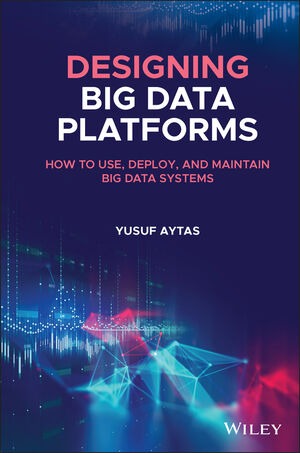
Designing big data platforms : How to use, deploy, and maintain big data systems
Provides expert guidance and valuable insights on getting the most out of Big Data systems. Helps readers understand how to process large amounts of data with well-known Linux tools and database solutions, use effective techniques to collect and manage data from multiple sources, transform data into meaningful business insights, and much more. Author Yusuf Aytas, a software engineer with a vast amount of big data experience, discusses the design of the ideal Big Data platform: one that meets the needs of data analysts, data engineers, data scientists, software engineers, and a spectrum of other stakeholders across an organization. Detailed yet accessible chapters cover key topics such as stream data processing, data analytics, data science, data discovery, and data security. This real-world manual for Big Data technologies: Provides up-to-date coverage of the tools currently used in Big Data processing and management / Offers step-by-step guidance on building a data pipeline, from basic scripting to distributed systems / Highlights and explains how data is processed at scale / Includes an introduction to the foundation of a modern data platform

Designing Accessible Technology
This book was stimulated by the third CWUAAT workshop, held in Cambridge, England in April 2006; the contributors representing leading researchers in the fields of Inclusive Design, Rehabilitation Robotics, Universal Access and Assistive Technology. Contributions focus on the following topics: design issues for a more inclusive world / enabling computer access and the development of new technologies / assistive technology and rehabilitation robotics and understanding users and involving them in design.

Design, user experience, and usability interaction design ; 9th International Conference, DUXU 2020, Held as Part of the 22nd HCI International Conference, HCII 2020, Copenhagen, Denmark, July 19–24, 2020, Proceedings, Part I
This book constitutes the refereed proceedings of the 9th International Conference on Design, User Experience, and Usability, DUXU 2020, held as part of the 22nd International Conference on Human-Computer Interaction, HCII 2020, in Copenhagen, Denmark, in July 2020. The conference was held virtually due to the COVID-19 pandemic. From a total of 6326 submissions, a total of 1439 papers and 238 posters has been accepted for publication in the HCII 2020 proceedings. The 40 papers included in this volume were organized in topical sections on UX design methods, tools and guidelines, interaction design and information visualization, and emotional design.
Design Patterns in Modern C++20 : Reusable Approaches for Object-Oriented Software Design
As well as covering traditional design patterns, this book fleshes out new design patterns and approaches that will be useful to modern C++ developers. Author Dmitri Nesteruk presents concepts as a fun investigation of how problems can be solved in different ways, along the way using varying degrees of technical sophistication and explaining different sorts of trade-offs. You will: Use creational patterns such as builder, factories, prototype and singleton / Implement structural patterns such as adapter, bridge, decorator, facade and more / Work with the behavioral patterns such as chain of responsibility, command, iterator, mediator and more / Apply functional design patterns such as the Maybe Monad

Design Patterns for eScience
There is much additional software including many versions of the case study as it gets built up and progressively refactored using design patterns. There will be a home web-site for this book which will contain up-to-date information about the software and other aspects of the case study.

Design of Systems on a Chip : Design and Test
Design of Systems on a Chip: Design&Test is the second of two volumes addressing the design challenges associated with new generations of the semiconductor technology. The various chapters are the compilations of tutorials presented at workshops in the recent years by prominent authors from all over the world. Technology, productivity and quality are the main aspects under consideration to establish the major requirements for the design and test of upcoming systems on a chip. In particular this second book include contributions on three different, but complementary axes: core design, computer-aided design tools and test methods. A collection of chapters deal with the heterogeneity aspect of core designs, showing the diversity of parts that may share the same substrate in a state-of-the-art system on a chip.

Design of industrial structures : Reinforced cement concrete and steel
Bridges the gap between academic and professional field pertaining to design of industrial reinforced cement concrete and steel structures. It covers pertinent topics on contracts, specifications, soil survey and design criteria to clarify objectives of the design work. Further, it gives out guiding procedures on how to proceed with the construction in phases at site, negotiating changes in equipment and design development. Safety, quality and economic requirements of design are explained with reference to global codes. Latest methods of analysis, design and use of advanced construction materials have been illustrated along with a brief on analysis software and drafting tool.

Design of adaptive finite Element software : The finite element toolbox ALBERTA
During the last years, scientific computing has become an important research branch located between applied mathematics and applied sciences and engineering. Highly efficient numerical methods are based on adaptive methods, higher order discretizations, fast linear and non-linear iterative solvers, multi-level algorithms, etc. Such methods are integrated in the adaptive finite element software ALBERTA. It is a toolbox for the fast and flexible implementation of efficient software for real life applications, based on modern algorithms. ALBERTA also serves as an environment for improving existent, or developing new numerical methods in an interplay with mathematical analysis and it allows the direct integration of such new or improved methods in existing simulation software.
Deployment and operation of complex software in heterogeneous execution environments : The SODALITE approach
This book provides an overview of the work developed within the SODALITE project, which aims at facilitating the deployment and operation of distributed software on top of heterogeneous infrastructures, including cloud, HPC and edge resources. The experts participating in the project describe how SODALITE works and how it can be exploited by end users. While multiple languages and tools are available in the literature to support DevOps teams in the automation of deployment and operation steps, still these activities require specific know-how and skills that cannot be found in average teams. The SODALITE framework tackles this problem by offering modelling and smart editing features to allow those we call Application Ops Experts to work without knowing low level details about the adopted, potentially heterogeneous, infrastructures. The framework offers also mechanisms to verify the quality of the defined models, generate the corresponding executable infrastructural code, automatically wrap application components within proper execution containers, orchestrate all activities concerned with deployment and operation of all system components, and support on-the-fly self-adaptation and refactoring.

Dependable Systems : Software, Computing, Networks : Research Results of the DICS Program
The present volume documents the results of a research program on Dependable Information and Communication Systems (DICS). The members of the project met in two workshops organized by the Hasler Foundation. This state-of-the-art survey contains 3 overview articles identifying major issues of dependability and presenting the latest solutions, as well as 10 carefully selected and revised papers depicting the research results originating from those workshops. The first workshop took place in Münchenwiler, Switzerland, in March 2004, and the second workshop, which marked the conclusion of the projects, in Löwenberg, Switzerland, in October 2005. The papers are organized in topical sections on surveys, dependable software, dependable computing, and dependable networks.
Dependable software engineering : Theories, tools, and applications ; 6th International Symposium, SETTA 2020, Guangzhou, China, November 24–27, 2020, Proceedings
This book constitutes the proceedings of the 6th International Symposium on Dependable Software Engineering, SETTA 2020, held in Guangzhou, China, in November 2020. The 10 full and 1 short paper included in this volume were carefully reviewed and selected from 20 submissions. They deal with latest research results and ideas on bridging the gap between formal methods and software engineering.

Dependable Embedded Systems
This book introduces readers to many new techniques for enhancing and optimizing reliability in embedded systems, which have emerged particularly within the last five years.
Dependable computing ; 3rd Latin-American Symposium, LADC 2007, Morelia, Mexico, September 26-28, 2007, Proceedings
This book presented fault-tolerant algorithms, software engineering of dependable systems, networking and mobile computing, experimental dependability evaluation, as well as intrusion tolerance and security.
Dependability Metrics : Advanced Lectures
This tutorial book gives an overview of the current state of the art in measuring the different aspects of dependability of systems: reliability, security and performance.

Demystifying Internet of Things Security : Successful IoT Device/Edge and Platform Security Deployment
The IoT presents unique challenges in implementing security and Intel has both CPU and Isolated Security Engine capabilities to simplify it. This book explores the challenges to secure these devices to make them immune to different threats originating from within and outside the network. The requirements and robustness rules to protect the assets vary greatly and there is no single blanket solution approach to implement security.

Deepfake
The technology used to create such digital content has quickly become accessible to the masses, such as “DEEPFAKE.” Deep fakes refer to manipulated videos, or other digital representations produced by sophisticated artificial intelligence, that yields to synthesize a sequence of face images and voices of characters corresponding to their identities, such as voice tone, facial expression, with a good lip synchronization. Therefore, this study is about developing real-time video generation software, which generates a target video from a single input image. Several methods and algorithms have been applied to detect, analyze personalize facial expression, voice and natural head poses to present a life-like image instead of a low quality one.

Deep Statistical Comparison for Meta-heuristic Stochastic Optimization Algorithms
Presents a comprehensive comparison of the performance of stochastic optimization algorithms / Includes an introduction to benchmarking and statistical analysis / Provides a web-based tool for making statistical comparisons of optimization algorithms / Overviews of the current approaches used to analyze algorithm performance in a range of common scenarios, while also addressing issues that are often overlooked. In turn, it shows how these issues can be easily avoided by applying the principles that have produced Deep Statistical Comparison and its variants. The focus is on statistical analyses performed using single-objective and multi-objective optimization data. At the end of the book, examples from a recently developed web-service-based e-learning tool (DSCTool) are presented. The tool provides users with all the functionalities needed to make robust statistical comparison analyses in various statistical scenarios. The book is intended for newcomers to the field and experienced researchers alike. For newcomers, it covers the basics of optimization and statistical analysis, familiarizing them with the subject matter before introducing the Deep Statistical Comparison approach. Experienced researchers can quickly move on to the content on new statistical approaches.

Deep Learning and its Applications
Presents an introduction to deep learning and various applications of deep learning such as recommendation systems, text recognition, diabetic retinopathy prediction of breast cancer, prediction of epilepsy, sentiment, fake news detection, software defect prediction and protein function prediction.

Deep fake detection
Deep learning has been successfully applied to solve various complex problems ranging from big data analytics to computer vision and human-level control. Deep learning advances however have also been employed to create software that can cause threats to privacy, democracy and national security. One of those deep learning-powered applications recently emerged is “deepfake”. Deepfake algorithms can create fake images and videos that humans cannot distinguish them from authentic ones. The proposal of technologies that can automatically detect and assess the integrity of digital visual media is therefore indispensable.
