



Page 25
Page 25

Évaluation des troubles neuropsychologiques en vie quotidienne = Assessment of neuropsychological disorders in daily life
Neurological diseases such as stroke, head trauma, Alzheimer's disease pose a public health problem. They affect all ages, from children to the elderly. They affect the possibilities of autonomy in daily life, the possibilities of social or professional integration. In these pathologies, neuropsychological disorders: disorders of language, memory, attention, etc., are the source of crucial difficulties. Cognitive tests performed by psychologists are essential for their diagnosis, but do not on their own make it possible to prejudge the difficulties encountered by people in their everyday life. This book presents an original approach to neuropsychological disorders, by describing specific assessments describing difficulties in daily life, in order to better understand them and to quantify their impact. The second part of the book develops the consequences in clinical practice in particular populations - children and the elderly - or the social objective of the evaluation, in particular school integration, professional integration and driving. Finally, the relevance of these assessments in the context of recent laws on disabled people as well as the development of compensation for bodily injury after an accident are also discussed.
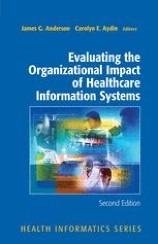
Evaluating the organizational impact of health care information systems
Evaluating the Organizational Impact of Health Care Information Systems, Second Edition, is heavily updated and revised from its First Edition, which is entitled Evaluating Health Care Information Systems: Methods and Applications. The much-needed Second Edition is a guide for evaluating the organizational impacts of computer systems in health care institutions. It provides a practical guide for determining the appropriate questions to ask based on underlying models of change and the most effective methods available. An introduction to various methods is provided, as well as appendices containing survey instruments usable in research and evaluation, computer programs for data analyses, and other evaluation resources. The book provides a critical overview of current research and evaluation to date with numerous bibliographic references from health care and other fields. The methods and instruments described are applicable to a wide variety of other organizations that utilize information technology and they emphasize the importance of clearly specifying the purpose of the evaluation, recognizing assumptions about organizational change and using a multi-method approach to system evaluation. The material presented is drawn from a variety of social and health science disciplines in order to integrate the study of information system with social science theory and methods. Chapter highlights include Cognitive Approaches to Evaluation, Computer Simulation as an Evaluation Tool, and Research and Evaluation: Future Directions.

Eutrophication of Shallow Lakes with Special Reference to Lake Taihu, China
Eutrophication and algal blooms are worldwide environmental issues in lakes. The eutrophication process and formation mechanisms of algal blooms are particularly complicated in shallow lakes due to the strong lake–land, air–water and water–sediment interactions. This volume features papers presented at the International Symposium on the Eutrophication Process and Control in Large Shallow Lakes – with Special Reference to Lake Taihu, a Shallow Subtropical Chinese Lake, held in Nanjing, China, 22–26 April, 2005. The topics include: physical processes and their effects on shallow lake ecosystems; biogeochemistry of sediments and nutrient cycling in shallow lakes; algal blooms and ecosystem response in shallow lakes; eutrophication control and restoration in shallow lakes; and resource exploitation, environmental protection and sustainable management in shallow lakes.

European water law and hydropolitics : An inquiry into the resilience of transboundary water governance in the European Union
provides the first comprehensive assessment of the various issues faced by countries in the European Union, where progressing climate change and urbanization pose significant cooperative challenges in a large number of river basins. Conducting a thorough analysis of the intricate web of EU water governance, it reveals that the hydropolitical stability of the European Union is already at risk. Further, given the structural nature of the shortcomings in EU water policy—e.g. the rigidity of the EU’s founding treaties or the institutional complacency of the European Commission— argues that these risks are likely to turn into sources of prolonged conflict, unless EU decision-making bodies take steps to address the new hydrological realities early on.

European Somalis' Post-Migration Movements : Mobility Capital and the Transnationalisation of Resources
Based on a qualitative study on migrants of Somali origin who have settled in Europe for at least a decade, this open access book offers a ground-breaking exploration of the idea of mobility, both empirically and theoretically. It draws a comprehensive typology of the varied “post-migration mobility practices” developed by these migrants from their country of residence after having settled there. It argues that cross-border mobility may, under certain conditions, become a form of capital that can be employed to pursue advantages in transnational social fields. The study sheds a different light on migrants who are often considered passive or problematic migrants/refugees in Europe, and demonstrates that mobility capital is not the prerogative of highly qualified elites: less privileged migrants also circulate in a globalised world, benefiting from being embedded in transnational social fields and from mobility practices over which they have gained some control.
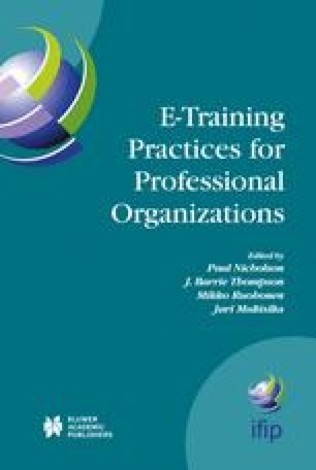
E-Training Practices for Professional Organizations
E-Training Practices for Professional Organizations is an essential reference for anyone interested in the integration of e-business, e-work and e-learning processes. The book collects, for the first time, the proceedings from the 2003 IFIP eTrain Conference held in Pori, Finland. The text serves as a multi-disciplinary resource for information on the research, development and applications of all topics related to e-Learning. The first half of the book discusses theories, paradigms and their applications in academia and industry. The last half of the book examines learning environments, design issues and collaboration among the corporate, governmental and academic sectors. With academic and professional contributors, E-Training Practices for Professional Organizations reflects the multi-faceted and exciting nature of e-training studies. This volume presents the balanced view of past developments and current research necessary to truly reach the potential of this burgeoning field.

Essentials of creatine in sports and health
This book unifies the sum of information on how creatine affects body composition, exercise performance, and health. Because the body of data on creatine is ample and constantly growing, a book such as this is a timely and important resource for the clinician, the coach, and the sports scientist.

Essentials of Chinese Materia medica and medical formulas : New century traditional Chinese medicine
Essentials of Chinese Materia Medica and Medical Formulas: New Century Traditional Chinese Medicine presents specific knowledge about the source, medicinal nature, action and application of more than 800 commonly-used Chinese materia medica, as well as the efficacy and application of more than 740 kinds of commonly-used Chinese medical formulas. Notably, all of the content is presented in table form, making the information easier to access, understand and apply. Each primary herbal medicine is introduced with color pictures, and each primary formula is presented with efficacy analysis pictures. The book provides readers with essential information on Chinese materia medica and formulas and how to use them accurately, including the most common Chinese materia medica used in clinics and in commonly used clinical formulas.

Essential Sports Medicine
Every medical student, resident, fellow and attending physician who deals with sports medicine injuries needs a high yield, comprehensive and practical resource to refer to time and time again. Comprehensive and accessible, Essential Sports Medicine provides an overview of the most salient and useful points in the field.

Essential Practice Guidelines in Primary Care
This book is an excellent summary of the most important evidence-based, nationally recognized, clinical guidelines, with aim to improve the quality of medical care. It represents understandable, useful, easy to implement, one source for questions arises that is best answered by an existing clinical guideline. Together with electronic (PDA) version, should facilitate the implementation of nationally recognized clinical guidelines by primary care physicians.

Essential pharmaceutics
Essential Pharmaceutics is suited to this modern teaching style, and is the first book of its kind to provide the resources and skills needed for successful implementation of an active learning pharmaceutics course.This text offers a format that is specifically suited for integration in an active learning, team-based classroom setting

Essential oils as antibacterial agents
An alarm increase in the rate of emerging of resistant bacteria have been causing a great public concern worldwide. This problem of increasing resistance has necessitated the search for safe and effective factors that may be used to treat persistent bacterial infections or modify the currently available antibiotics. An experimental approach, using agar diffusion method was used to estimate the antibacterial properties of 5 essential oils (cinnamon, clove, peppermint, rosemary and thyme) each one individually, in pure and commercial form, against 3 of the bacterial strains that cause common skin infections which are gram negative bacteria (Escherichia coli, Pseudomonas aeruginosa) and gram positive bacteria (Staphylococcus aureus), obtained from clinical sources. Only two of the commercial oils had an antibacterial effect on both gram negative bacteria (E. coli) and gram positive bacteria (S. aureus) and in lesser extent on gram negative bacteria (P. aeruginosa).synergy.

Essential oils : sources, production and applications
Essential oils are simply the volatile oils of plants. These are concentrated liquids contain many terpenes, alkaloids and alcohols etc. Various compounds of essential oils have bioactive properties such as antimicrobial, anti-cancer, anti-diabetic, anti-viral and anti-fungal etc. This book describes the sources of essential oils, extraction and production method, characterizing tools, bioactivity, and various applications in the field of industries, daily usage, agriculture, health, and food.

Essential Infectious Disease Topics for Primary Care
This book provides an easy-to-use, practical, yet comprehensive resource for family practitioners to use in the daily struggle against infectious diseases. It discusses vaccines and preventive measures as well as information on how to reduce the incidence of antimicrobial-resistant organisms by judiciously prescribing antibiotics and informing patients about the appropriate use of these agents.

Essential Fish Habitat Mapping in the Mediterranean
This book presents latest advances in EFH mapping and modelling and introduces the environmental approach to EFH identification through the combined use of latest technologies and advanced techniques, such as Remote Sensing, Geographic Information Systems and Spatial Statistics.The contents of this book include overviews and comparisons of different approaches on species habitat modelling, methods to identify teleconnection patterns between large-scale meteo-oceanic phenomena and local environmental variation, and EFH maps for cephalopod, shrimp, hake, anchovy, sardine, and swordfish resources in the Mediterranean.

Essays on Accounting Theory in Honour of Joel S. Demski
This rigorous scholarly work focuses on the analysis of corporate accounting reports as a source of information used in corporate decision-making and in pricing securities by the capital market.

Error-Correction Coding and Decoding : Bounds, Codes, Decoders, Analysis and Applications
This book discusses both the theory and practical applications of self-correcting data, commonly known as error-correcting codes. The applications included demonstrate the importance of these codes in a wide range of everyday technologies, from smartphones to secure communications and transactions. Written in a readily understandable style,This book is a valuable resource for anyone interested in error-correcting codes and their applications, ranging from non-experts to professionals at the forefront of research in their field.

ERP Systems and Organisational Change : A Socio-technical Insight
ERP (Enterprise Resource Planning) systems are now the backbone of the information systems in public and private sector organisations. This book provides a unique and comprehensive insight into ERP systems, from both a social and a technical viewpoint.

Equitable research partnerships : A global code of conduct to counter ethics dumping
This book offers insights into the development of the ground-breaking Global Code of Conduct for Research in Resource-Poor Settings (GCC) and the San Code of Research Ethics. Using a new, intuitive moral framework predicated on fairness, respect, care and honesty, both codes target ethics dumping – the export of unethical research practices from a high-income setting to a lower- or middle-income setting. The book is a rich resource of information and argument for any research stakeholder who opposes double standards in research. It will be indispensable for applicants to European Union framework programmes, as the GCC is now a mandatory reference document for EU funding.

Environmental Security in Harbors and Coastal Areas : Management Using Comparative Risk Assessment and Multi-Criteria Decision Analysis
This book explores the challenges facing coastal areas during the next few decades and the difficult decisions needed to prevent a repeat of the past. Establishing, maintaining or enhancing a sense of environmental security in different coastal regions and improving the management of critical infrastructure will require (i) matching human demands with available environmental resources; (ii) recognition of environmental security threats and infrastructure vulnerabilities; and, (iii) identification of the range of available options for preventing and/or minimizing natural disasters, technological failures, and/or terror actions. This book emphasizes beliefs that the convergence of seemingly disparate viewpoints and often uncertain and limited information is possible only by using one or more available risk assessment methodologies and decision-making tools such as multi-criteria decision analysis (MCDA).
