



Page 25
Page 25
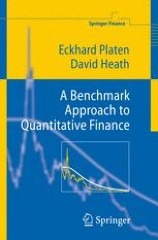
A Benchmark Approach to Quantitative Finance
The general framework is used to provide an understanding of the nature of stochastic volatility. The book is intended for a wide audience that includes quantitative analysts, postgraduate students and practitioners in finance, economics and insurance. It aims to be a self-contained, accessible but mathematically rigorous introduction to quantitative finance for readers that have a reasonable mathematical or quantitative background. Finally, the book should stimulate interest in the benchmark approach by describing some of its power and wide applicability.

250 Things a Landscape Architect Should Know
In this book 50 landscape architects from Europe, North and South America, Asia and Australia each give five responses. These include practitioners and teachers, young start-ups as well as internationally established firms. The publication illustrates the complex and dynamic nature of the discipline, and presents a diverse cross-section of the core expertise of this field. At the same time, it allows the reader to trace the individual attitudes into which geographical conditions, social contexts and political circumstances flow.
18 Unconventional Essays on the Nature of Mathematics
This essays edited by Reuben Hersh contains frank facts and opinions from leading mathematicians, philosophers, sociologists, cognitive scientists, and even an anthropologist. Each essay provides a challenging and thought-provoking look at recent advances in the philosophy of mathematics, demonstrating the possibilities of thinking fresh, sticking close to actual practice, and fearlessly letting go of standard shibboleths.
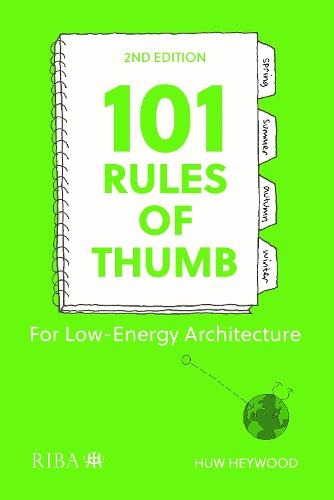
101 rules of thumb for low energy architecture
Sets out the essential elements of low-energy architecture in a fresh, intuitive way. Where ever-changing technology and complex legislation can cloud the designer’s thought-process, this book equips you with the fundamentals you need to minimise CO2 emissions, design for low-energy use and work with, not against, the forces of nature.
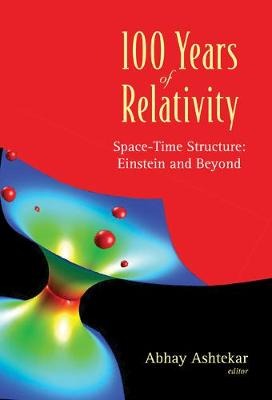
100 years of relativity : Space-time structure - Einstein and beyond
Contains contributions from leading researchers, worldwide, who have thought deeply about the nature and consequences of this interplay. The articles take a long-range view of the subject and distill the most important advances in broad terms, making them easily accessible to non-specialists. The first part is devoted to a summary of how relativity theories were born (J Stachel). The second part discusses the most dramatic ramifications of general relativity, such as black holes (P Chrusciel and R Price), space-time singularities (H Nicolai and A Rendall), gravitational waves (P Laguna and P Saulson), the large scale structure of the cosmos (T Padmanabhan); experimental status of this theory (C Will) as well as its practical application to the GPS system (N Ashby). The last part looks beyond Einstein and provides glimpses into what is in store for us in the 21st century.
