



Page 245
Page 245
Analog Circuit Design : High-Speed A-D Converters, Automotive Electronics and Ultra-Low Power Wireless
This book is number 15 in this successful series of Analog Circuit Design, providing valuable information and excellent overviews of analog circuit design and related CAD, mainly in the fields of basic analog modules, mixed-signal electronics, AD and DA converters, RF systems, and automotive electronics.
Analisi Matematica I : Teoria ed esercizi con complementi in rete
Il testo intende essere di supporto ad un primo insegnamento di Analisi Matematica secondo i principi dei nuovi Ordinamenti Didattici. È in particolare pensato per Ingegneria, Informatica, Fisica. Il testo presenta tre diversi livelli di lettura. Un livello essenziale permette allo studente di cogliere i concetti indispensabili della materia e di familiarizzarsi con le relative tecniche di calcolo. Un livello intermedio fornisce le giustificazioni dei principali risultati e arricchisce l'esposizione mediante utili osservazioni e complementi. Un terzo livello di lettura, basato su numerosi riferimenti ad un testo virtuale disponibile in rete, permette all'allievo più motivato ed interessato di approfondire la sua preparazione sulla materia. Completano il testo numerosi esempi ed esercizi con soluzioni. La grafica accattivante, a 2 colori, fa di questo testo un punto di riferimento fondamentale per lo studio della disciplina.

Anaesthesia, pain, intensive care and emergency medicine A.P.I.C.E. ; Proceedings of the 22nd Postgraduate Course in Critical Care Medicine Venice-Mestre, Italy — November 9–11, 2007
Improving standards of care is a real challenge in Intensive Care Medicine. Bettering clinical performance, patient safety, risk management and audit represents the cornerstone for raising the quality of care in ICU patients.

Anaesthesia, pain, intensive care and emergency medicine - A.P.I.C.E. ; Proceedings of the 20th Postgraduate Course in Critical Care Medicine, Trieste, Italy - November 18-21, 2005
The main objective of modern medicine has been the acquisition of increased skills and highly specialised knowledge in the various disciplines. At the same time, there has been a progressive multidisciplinary and multi-professional interest in acute disease conditions that place the patient in potential or real life-threatening situations. The state of the art of intensive medicine comprises a wide range of sophisticated interventions and collaboration between different medical disciplines, both of which give the patient access to the most advanced forms of treatment that are currently available.

Anaesthesia, pain, intensive care and emergency medicine - A.P.I.C.E. ; Proceedings of the 19 th Postgraduate Course in Critical Care Medicine. Trieste, Italy - November 12-15, 2004
APICE 2004 has been organised to provide precise answers to these issues. In particular, considerable emphasis has been given to the reviews regarding the most important aspects - or the most significant clinical developments - in the sectors involving variety of functions: neurological, respiratory and cardiovascular, gastrointestinal, metabolism and perfusion; trauma infections, sepsis and organ failure; perioperative medicine and life support techniques; information technology dedicated to clinical medicine, but also as a means of information and education.
An R and S-Plus® Companion to Multivariate Analysis
Most data sets collected by researchers are multivariate, and in the majority of cases the variables need to be examined simultaneously to get the most informative results. This requires the use of one or other of the many methods of multivariate analysis, and the use of a suitable software package such as S-PLUS or R. In this book the core multivariate methodology is covered along with some basic theory for each method described. The necessary R and S-PLUS code is given for each analysis in the book, with any differences between the two highlighted.

An Invitation to Quantum Cohomology : Kontsevich's Formula for Rational Plane Curves
This book is an elementary introduction to stable maps and quantum cohomology, starting with an introduction to stable pointed curves, and culminating with a proof of the associativity of the quantum product. The viewpoint is mostly that of enumerative geometry, and the red thread of the exposition is the problem of counting rational plane curves. Kontsevich's formula is initially established in the framework of classical enumerative geometry, then as a statement about reconstruction for Gromov–Witten invariants, and finally, using generating functions, as a special case of the associativity of the quantum product.

An Introduction to the Theory of Piezoelectricity
This volume is intended to provide researchers and graduate students with the basic aspects of the continuum modeling of electroelastic interactions in solids. A concise treatment of linear, nonlinear, static and dynamic theories and problems is presented. The emphasis on formulation and understanding of problems useful in device applications rather than solution techniques of mathematical problems. The mathematics used in this book is minimal.
An Introduction to the Heisenberg Group and the Sub-Riemannian Isoperimetric Problem
This book provides an introduction to the basics of sub-Riemannian differential geometry and geometric analysis in the Heisenberg group, focusing primarily on the current state of knowledge regarding Pierre Pansu's celebrated 1982 conjecture regarding the sub-Riemannian isoperimetric profile.
An Introduction to Structural Optimization
This textbook gives an introduction to all three classes of geometry optimization problems of mechanical structures: sizing, shape and topology optimization. The style is explicit and concrete, focusing on problem formulations and numerical solution methods. The treatment is detailed enough to enable readers to write their own implementations. On the book's homepage, programs may be downloaded that further facilitate the learning of the material covered.

An Introduction to Sobolev Spaces and Interpolation Spaces
After publishing an introduction to the Navier–Stokes equation and oceanography (Vol. 1 of this series), Luc Tartar follows with another set of lecture notes based on a graduate course in two parts, as indicated by the title. A draft has been available on the internet for a few years. The author has now revised and polished it into a text accessible to a larger audience.
An Introduction to Scientific Computing : Twelve Computational Projects Solved with MATLAB
This book provides twelve computational projects aimed at numerically solving problems from a broad range of applications including Fluid Mechanics, Chemistry, Elasticity, Thermal Science, Computer Aided Design, Signal and Image Processing. For each project the reader is guided through the typical steps of scientific computing from physical and mathematical description of the problem, to numerical formulation and programming and finally to critical discussion of numerical results. Considerable emphasis is placed on practical issues of computational methods. The last section of each project contains the solutions to all proposed exercises and guides the reader in using the MATLAB scripts.
An Introduction to Number Theory
An Introduction to Number Theory provides an introduction to the main streams of number theory. Starting with the unique factorization property of the integers, the theme of factorization is revisited several times throughout the book to illustrate how the ideas handed down from Euclid continue to reverberate through the subject. In particular, the book shows how the Fundamental Theorem of Arithmetic, handed down from antiquity, informs much of the teaching of modern number theory. The result is that number theory will be understood, not as a collection of tricks and isolated results, but as a coherent and interconnected theory. A number of different approaches to number theory are presented, and the different streams in the book are brought together in a chapter that describes the class number formula for quadratic fields and the famous conjectures of Birch and Swinnerton-Dyer. The final chapter introduces some of the main ideas behind modern computational number theory and its applications in cryptography.

An Introduction to Navier-Stokes Equation and Oceanography
The Introduction to Navier-Stokes Equation and Oceanography corresponds to a graduate course in mathematics, taught at Carnegie Mellon University in the spring of 1999. Comments were added to the lecture notes distributed to the students, as well as short biographical information for all scientists mentioned in the text, the purpose being to show that the creation of scientific knowledge is an international enterprise, and who contributed to it, from where, and when. The goal of the course is to teach a critical point of view concerning the partial differential equations of continuum mechanics, and to show the need for developing new adapted mathematical tools.
An Introduction to Meshfree Methods and Their Programming
This book aims to present meshfree methods in a friendly and straightforward manner, so that beginners can very easily understand, comprehend, program, implement, apply and extend these methods. It provides first the fundamentals of numerical analysis that are particularly important to meshfree methods. Typical meshfree methods, such as EFG, RPIM, MLPG, LRPIM, MWS and collocation methods are then introduced systematically detailing the formulation, numerical implementation and programming. Many well-tested computer source codes developed by the authors are attached with useful descriptions. The application of the codes can be readily performed using the examples with input and output files given in table form. These codes consist of most of the basic meshfree techniques, and can be easily extended to other variations of more complex procedures of meshfree methods. Readers can easily practice with the codes provided to effective learn and comprehend the basics of meshfree methods.
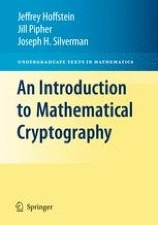
An Introduction to Mathematical Cryptography
This self-contained introduction to modern cryptography emphasizes the mathematics behind the theory of public key cryptosystems and digital signature schemes. The book focuses on these key topics while developing the mathematical tools needed for the construction and security analysis of diverse cryptosystems. Only basic linear algebra is required of the reader; techniques from algebra, number theory, and probability are introduced and developed as required.
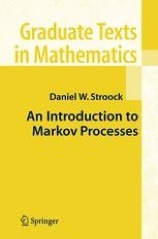
An Introduction to Markov Processes
Provides a more accessible introduction than other books on Markov processes by emphasizing the structure of the subject and avoiding sophisticated measure theoryLeads the reader to a rigorous understanding of basic theory
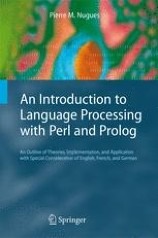
An Introduction to Language Processing with Perl and Prolog : An Outline of Theories, Implementation, and Application with Special Consideration of English, French, and German
This book teaches the principles of natural language processing, first covering linguistics issues such as encoding, entropy, and annotation schemes; defining words, tokens and parts of speech; and morphology. It then details the language-processing functions involved, including part-of-speech tagging using rules and stochastic techniques; using Prolog to write phase-structure grammars; parsing techniques and syntactic formalisms; semantics, predicate logic and lexical semantics; and analysis of discourse, and applications in dialog systems. The key feature of the book is the author's hands-on approach throughout, with extensive exercises, sample code in Prolog and Perl, and a detailed introduction to Prolog. The reader is supported with a companion website that contains teaching slides, programs, and additional material.

An Introduction to Kolmogorov Complexity and Its Applications
Written by two experts in the field, this book is ideal for advanced undergraduate students, graduate students, and researchers in all fields of science. It is self-contained: it contains the basic requirements from mathematics, probability theory, statistics, information theory, and computer science. Included are history, theory, new developments, a wide range of applications, numerous (new) problem sets, comments, source references, and hints to solutions of problems. This is the only comprehensive treatment of the central ideas of Kolmogorov complexity and their applications.
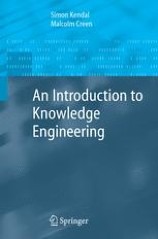
An Introduction to Knowledge Engineering
Knowledge Engineering refers to the development of systems that use knowledge, rather than data, to solve many novel computing problems. This is achieved by the application of computing techniques, closely associated with human cognitive processes, for transforming data into knowledge. An Introduction to Knowledge Engineering presents a simple but detailed exploration of current and established work in the field.
