



Page 239
Page 239
Applying fuzzy mathematics to formal models in comparative politics
This book explores the intersection of fuzzy mathematics and the spatial modeling of preferences in political science. This book develops single- and multidimensional models of fuzzy preference landscapes and characterizes the surprisingly high levels of stability that emerge from interactions between players operating.
Applied Stochastic Control of Jump Diffusions
The main purpose of the book is to give a rigorous, yet mostly nontechnical, introduction to the most important and useful solution methods of various types of stochastic control problems for jump diffusionsThe types of control problems covered include classical stochastic control, optimal stopping, impulse control and singular control. Both the dynamic programming method and the maximum principle method are discussed, as well as the relation between them. Corresponding verification theorems involving the Hamilton-Jacobi Bellman equation and/or (quasi-)variational inequalities are formulated. There are also chapters on the viscosity solution formulation and numerical methods.The text emphasises applications, mostly to finance. All the main results are illustrated by examples and exercises appear at the end of each chapter with complete solutions. This will help the reader understand the theory and see how to apply it.The book assumes some basic knowledge of stochastic analysis, measure theory and partial differential equations.
Applied Spatial Data Analysis with R
Applied Spatial Data Analysis with R is divided into two basic parts, the first presenting R packages, functions, classes and methods for handling spatial data, The second part showcases more specialised kinds of spatial data analysis, including spatial point pattern analysis, interpolation and geostatistics, areal data analysis and disease mapping.
Applied soft computing technologies : The challenge of complexity
This volume presents the proceedings of the 9th Online World Conference on Soft Computing in Industrial Applications (WSC9), September 20th - October 08th, 2004, held on the World Wide Web. It contains plenary lectures, original papers and tutorials presented during the conference. The book brings together outstanding research and developments in the field of soft computing (evolutionary computation, fuzzy logic, neural networks, and their fusion) and its applications in science and technology.
Applied Research in Environmental Economics
Sustainable development, climate policy, and biodiversity conservation are examples of issues on the current political agenda in many countries. These themes are also subject to economic research, and economic insights are increasingly finding their way into the design of environmental policy. Still, the reception of academic findings by policy makers as well as the timely identification of policy-relevant questions by economic researchers often seem to be problematic. This volume attempts to vitalise the exchange between policy makers and academics. It offers a snapshot of environmental economic research on a range of policy-relevant problems.
Applied Remote Sensing for Urban Planning, Governance and Sustainability
Despite the promising and exciting possibilities presented by new and fast-developing remote sensing technologies applied to urban areas, there is still a gap perceived between the generally academic and research-focused spectrum of results offered by the “urban remote sensing” community and the application of these data and products by the local governmental bodies of urban cities and regions. While there is no end of interesting science questions that we can ask about cities, sometimes these questions don't match well with what the operational problems and concerns of a given city are. The authors present data from six urban regions from all over the world. They explain what the important questions are, and how one can use data and scientific skills to help answer them.
Applied Reliability and Quality : Fundamentals, Methods and Procedures
"Reliability and quality professionals need to know about each other's work activities because this may help them - directly or indirectly - to perform their tasks more effectively. Applied Reliability and Quality: Fundamentals, Methods and Procedures meets the need for a single volume that considers applied areas of both reliability and quality. Before now, there has not been one book that covers both applied reliability and quality; so to gain knowledge of each other's specialties, these people had to study various books, articles, or reports on each area."
Applied Proof Theory : Proof Interpretations and Their Use in Mathematics
Ulrich Kohlenbach presents an applied form of proof theory that has led in recent years to new results in number theory, approximation theory, nonlinear analysis, geodesic geometry and ergodic theory (among others). This applied approach is based on logical transformations (so-called proof interpretations) and concerns the extraction of effective data (such as bounds) from prima facie ineffective proofs as well as new qualitative results such as independence of solutions from certain parameters, generalizations of proofs by elimination of premises. The book first develops the necessary logical machinery emphasizing novel forms of Gödel's famous functional ('Dialectica') interpretation. It then establishes general logical metatheorems that connect these techniques with concrete mathematics. Finally, two extended case studies (one in approximation theory and one in fixed point theory) show in detail how this machinery can be applied to concrete proofs in different areas of mathematics.
Applied Physics of Carbon Nanotubes : Fundamentals of Theory, Optics and Transport Devices
The book describes the state-of-the-art in fundamental, applied and device physics of nanotubes, including fabrication, manipulation and characterization for device applications; optics of nanotubes; transport and electromechanical devices and fundamentals of theory for applications. This information is critical to the field of nanoscience since nanotubes have the potential to become a very significant electronic material for decades to come. The book will benefit all all readers interested in the application of nanotubes, either in their theoretical foundations or in newly developed characterization tools that may enable practical device fabrication.

Applied Physics
Presents all the essential course information in an easy-to-follow, topic-by-topic format. You also get hundreds of examples, solved problems, and practice exercises to test your skills

Applied Parallel Computing ; State of the Art in Scientific Computing ; 8th International Workshop, PARA 2006, Umea, Sweden, June 18-21, 2006, Revised Selected Papers
It covers partial differential equations, parallel scientific computing algorithms, linear algebra, simulation environments, algorithms and applications for blue gene/L, scientific computing tools and applications, parallel search algorithms, peer-to-peer computing, mobility and security, algorithms for single-chip multiprocessors.
Applied Parallel Computing ; 6th International Conference, PARA 2002, Espoo, Finland, June 15-18, 2002. Proceeding
These proceedings contain the papers presented at PARA 2002, the Sixth In-ternational Conference on Applied Parallel Computing. PARA 2002 was held inEspoo, Finland, June 15–18, 2002, and hosted by CSC, the Finnish informationtechnology center for science. The general theme of the conference was advancedscientific computing.The conference demonstrated the ability of advanced scientific computing tosolve real-world problems, and highlighted methods, instruments, and trends infuture scientific computing. The conference began with a one-day tutorial sessionon Grid programming.The conference focused on an application-oriented, multi-disciplinary, andmulti-scale approach. A wide variety of scientific computing applications wereintroduced, from semiconductor processing and behavior of the human body tooceanic and atmospheric phenomena.
Applied Mathematics for Restructured Electric Power Systems : Optimization, Control, and Computational Intellige
Discusses the use of applied mathematics to solve challenging power system problems. This book covers such areas as: control, optimization, and computational intelligence. It follows a three-part format: a description of an important power system problem or problems; the practice and/or particular research approaches; and, research directions.
Applied mathematics and machine learning
The simultaneous availability of large datasets and high-performance computing capability in recent years has enabled the rapid development of powerful machine learning algorithms. On the one hand, state-of-the-art machine learning techniques have transformed many areas of science and engineering; on the other hand, theoretical discoveries in mathematical algorithms, differential equations, and statistical inferences, to name a few, have provided the foundation for the exploration of new multidisciplinary models for solving practical problems. This Special Issue endeavors to continue the journey that started in our previous Special Issue (Applied Mathematics and Computational Physics) by providing a platform for researchers from both academia and industry, as well as government, to present their new computational methods that have engineering and physics applications.
Applied Linguistics and Language Teacher Education
Applied Linguistics and Language Teacher Education is aimed at applied linguists who are interested in understanding more about the learning of novice teachers in their classes. The 21 studies in this volume provide information on the complexity of novice teachers’ learning and use of knowledge in a variety of applied linguistics classes such as SLA, Syntax, Pragmatics, Sociolinguistics, Phonetics and Phonology, L2 Reading and Writing, Testing, and Content Based Instruction. These studies were conducted in a variety of contexts, from North and South America to Europe, Asia and Australia, and look at the preparation of teachers of English, Spanish and Chinese.
Applied Informatics; Third International Conference, ICAI 2020, Ota, Nigeria, October 29–31, 2020, Proceedings
This book constitutes the thoroughly refereed papers of the Second International Conference on Applied Informatics, ICAI 2020, held in Ota, Nigeria, in October 2020. The 35 full papers were carefully reviewed and selected from 101 submissions. The papers are organized in topical sections on artificial intelligence; business process management; cloud computing; data analysis; decision systems; health care information systems; human-computer interaction; image processing; learning management systems; software design engineering.
Applied Hydrogeophysics
This book focuses on how hydrogeophysical methods can be applied to solve problems facing environmental engineers, geophysicists, agronomists, hydrologists, soil scientists and hydrogeologists. We present applications of hydrogeophysical methods to the understanding of hydrological processes and environmental problems dealing with the flow of water and the transport of solutes and contaminants. The majority of the book is organized as a series of process-driven chapters, each authored by leading experts. Areas covered include: infiltration and solute transport processes, biogeochemical functioning of soil-water systems, coastal groundwater interactions, cold region hydrology, engineered barriers and landfill processes. In addition, the book offers insight into the development of new data fusion methodologies, of value to many hydrogeophysical investigations, and provides an account how the rapidly developing self-potential technique can give valuable information about water fluxes and hydrochemical states within the subsurface.
Applied Geometry for Computer Graphics and CAD
Focusing on the manipulation and representation of geometrical objects, this book explores the application of geometry to computer graphics and computer-aided design (CAD). An introduction to transformations of the plane and three-dimensional space describes how objects can be constructed from geometric primitives and manipulated. This leads into a treatment of projections and the method of rendering objects on a computer screen by application of the complete viewing operation. Subsequently, the emphasis is on the two principal curve and surface representations, namely, Bézier and B-spline (including NURBS).
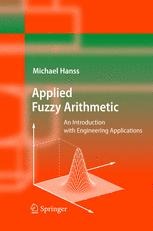
Applied Fuzzy Arithmetic : An Introduction with Engineering Applications
Applied Fuzzy Arithmetic provides a well-structured compendium that offers both a deeper knowledge about the theory of fuzzy arithmetic and an extensive view on its applications in the engineering sciences, making it a resource for students, researchers, and practical engineers. The first part of the book gives an introduction to the theory of fuzzy arithmetic, which aims to present the subject in a well-organized and comprehensible form. The derivation of fuzzy arithmetic from the original fuzzy set theory and its evolution towards a successful implementation is presented with existing formulations of fuzzy arithmetic included and integrated in the overall context. The second part of the book presents a diversified exposition of the application of fuzzy arithmetic, addressing different areas of the engineering sciences, such as mechanical, geotechnical, biomedical, and control engineering.
Applied Deep Learning with TensorFlow 2 : Learn to Implement Advanced Deep Learning Techniques with Python
Focuses on the fundamental concepts and at the same time on practical aspects of implementing neural networks and deep learning for your research projects. This book is designed so that you can focus on the parts you are interested in. You will explore topics as regularization, optimizers, optimization, metric analysis, and hyper-parameter tuning. In addition, you will learn the fundamentals ideas behind autoencoders and generative adversarial networks. All the code presented in the book will be available in the form of Jupyter notebooks which would allow you to try out all examples and extend them in interesting ways. A companion online book is available with the complete code for all examples discussed in the book and additional material more related to TensorFlow and Keras. All the code will be available in Jupyter notebook format and can be opened directly in Google Colab (no need to install anything locally) or downloaded on your own machine and tested locally. You will: Understand the fundamental concepts of how neural networks work / Learn the fundamental ideas behind autoencoders and generative adversarial networks / Be able to try all the examples with complete code examples that you can expand for your own projects / Have available a complete online companion book with examples and tutorials.
