



Page 23
Page 23
Logical Foundations for Rule-Based Systems
Presents logical foundations for rule-based systems, as seen by the Author. An attempt has been made to provide an in-depth discussion of logical and other aspects of such systems, including languages for knowledge representation, inference mechanisms, inference control, design and verification.

Logical approaches to computational barriers ; 2nd Conference on Computability in Europe, CiE 2006, Swansea, UK, June 30-July 5, 2006, Proceedings
The sources of new ideas and methods include practical developments in areas such as neural networks, quantum computation, natural computation, molecular computation, and computational learning. Applications are everywhere, especially, in algebra, analysis and geometry, or data types and programming. This volume, Logical Approaches to Computational Barriers, is the proce- ings of the second in a series of conferences of CiE that was held at the Depa- ment of Computer Science, Swansea University, 30 June - 5 July, 2006.

Logic, language, information and computation ; 15th International Workshop, WoLLIC 2008 Edinburgh, UK, July 1-4, 2008 Proceedings
The papers cover all pertinent subjects in computer science with particular interest in cross-disciplinary topics. Typical areas of interest are: foundations of computing and programming; novel computation models and paradigms; broad notions of proof and belief; formal methods in software and hardware development; logical approach to natural language and reasoning; logics of programs, actions and resources; foundational aspects of information organization, search, flow, sharing, and protection.

Logic, language, information and computation ; 14th International Workshop, WoLLIC 2007, Rio de Janeiro, Brazil, July 2-5, 2007, Proceedings
The Workshop on Logic, Language, Information and Computation (WoLLIC) is an annual international forum on inter-disciplinary research involving formal logic, computing and programming theory, and natural language and reasoning. The WoLLIC meetings alternate between Brazil (and Latin America) and other countries, with the aim of fostering interest in applied logic among Latin Am- ican scientists and students, and facilitating their interaction with the international - plied logic community.

Local Pattern Detection ; International Seminar Dagstuhl Castle, Germany, April 12-16, 2004, Revised Selected Papers
Introduction The dramatic increase in available computer storage capacity over the last 10 years has led to the creation of very large databases of scienti?c and commercial information. The need to analyze these masses of data has led to the evolution of the new field knowledge discovery in databases (KDD) at the intersection of machine learning, statistics and database technology. Being interdisciplinary by nature, the field offers the opportunity to combine the expertise of different fields into a common objective. Moreover, within each field diverse methods have been developed and justified with respect to different quality criteria. We have to investigate how these methods can contributet o solving the problem of KDD. Traditionally, KDD was seeking to end global models for the data that - plain most of the instances of the database and describe the general structure of the data. Examples are statistical time series models, cluster models, logic programs with high coverageor classi?cation models like decision trees or linear decision functions. In practice, though, the use of these models often is very l- ited, because global models tend to end only the obvious patterns in the data, 1 which domain experts already are aware of . What is really of interest to the users are the local patterns that deviate from the already-known background knowledge. David Hand, who organized a workshop in 2002, proposed the new field of local patterns.
Linkage in Evolutionary Computation
The whole volume consisting of 19 chapters is divided into 3 parts: Models and Theories; Operators and Frameworks; Applications. This edited volume will serve as a useful guide and reference for researchers who are currently working in the area of linkage. For postgraduate research students, this volume will serve as a good source of reference. It is also suitable as a text for a graduate level course focusing on linkage issues.
Linear Models and Generalizations : Least Squares and Alternatives
Gives an up-to-date account of the theory and applications of linear models. The book can be used as a text for courses in statistics at the graduate level and as an accompanying text for courses in other areas. Some of the highlights in this book are as follows. A relatively extensive chapter on matrix theory (Appendix A) provides the necessary tools for proving theorems discussed in the text and offers a selection of classical and modern algebraic results that are useful in research work in econometrics, engineering, and optimization theory. The matrix theory of the last ten years has produced a series of fundamental results aboutthe de?niteness ofmatrices,especially forthe di?erences ofmatrices, which enable superiority comparisons of two biased estimates to be made for the ?rst time. We have attempted to provide a uni?ed theory of inference from linear models with minimal assumptions
Linear Functional Analysis
This introduction to the ideas and methods of linear functional analysis shows how familiar and useful concepts from finite-dimensional linear algebra can be extended or generalized to infinite-dimensional spaces. Aimed at advanced undergraduates in mathematics and physics, the book assumes a standard background of linear algebra, real analysis (including the theory of metric spaces), and Lebesgue integration, although an introductory chapter summarizes the requisite material. The initial chapters develop the theory of infinite-dimensional normed spaces, in particular Hilbert spaces, after which the emphasis shifts to studying operators between such spaces. Functional analysis has applications to a vast range of areas of mathematics; the final chapters discuss the particularly important areas of integral and differential equations.
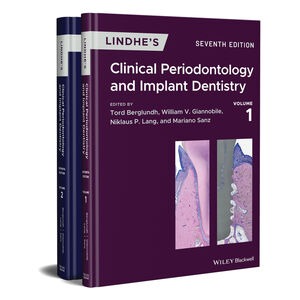
Lindhe's Clinical Periodontology and Implant Dentistry ; 2 Vol. Set ; 7th ed.
Provides an introduction to anatomy, including periodontal tissues, the edentulous ridge, the mucosa at teeth and implants, and osseointegration Discusses the epidemiology of periodontal and peri-implant diseases Explores the microbiology, including dental biofilms and calculus, periodontal infections, peri-implant infections, the pathogenesis of gingivitis and periodontitis, and the genetic susceptibility to periodontal disease Includes the latest perio- and peri-implant disease classifications Contains updated evidence-based preventive and treatment modalities for the treatment of periodontal and peri-implant diseases Features the latest evidence-based therapeutic alternatives on the use of dental implants to rehabilitate the lost dentition
Lie theory ; Vol.230 : Harmonic analysis on symmetric spaces, general Plancherel theorems
Van den Ban’s introductory chapter explains the basic setup of a reductive symmetric space along with a careful study of the structure theory, particularly for the ring of invariant differential operators for the relevant class of parabolic subgroups. Advanced topics for the formulation and understanding of the proof are covered, including Eisenstein integrals, regularity theorems, Maass–Selberg relations, and residue calculus for root systems. Schlichtkrull provides a cogent account of the basic ingredients in the harmonic analysis on a symmetric space through the explanation and definition of the Paley–Wiener theorem. Approaching the Plancherel theorem through an alternative viewpoint, the Schwartz space, Delorme bases his discussion and proof on asymptotic expansions of eigenfunctions and the theory of intertwining integrals.
Le raisonnement bayésien : Modélisation et inférence = Bayesian reasoning : Modeling and inference
Describes in detail the practice of the Bayesian statistical approach using many examples chosen for their educational interest. The first part gives the general principles of statistical modeling making it possible to supervise but also to come to the aid of the imagination of the apprentice modeler. By examining examples of increasing difficulty, the reader forges the keys to building their own model. The second part presents the most useful calculation algorithms for estimating the unknowns of the model. Each inference method is presented and illustrated by numerous application cases.
Le choix bayésien: Principes et pratique
Covers the so-called Bayesian approach to statistical inference and in particular its decision-making aspects. The bases of this axiomatics (choice of the a priori, optimal decisions, tests and regions of confidence) are discussed in detail, as well as more recent openings of Bayesian analysis such as the choice of models, the use of numerical methods. Stochastic approximation (MCMC), the theory of noninformative laws (Berger-Bernardo axioms) and the relation to the classical theory of admissibility. Each chapter is completed by an extensive series of exercises of increasing difficulty and by bibliographical notes on the themes addressed. This book can be used in a Master's program in Applied Mathematics, Biometrics, Econometrics or any other program that uses quantitative information processing techniques. It only requires a basic course in probability theory and mathematical statistics as a preliminary.
Lattice Hadron Physics
This series of lectures draws upon the developments made in recent years in implementing chirality on the lattice via the overlap formalism. These developments exploit chiral effective field theory in order to extrapolate lattice results to physical quark masses, new forms of improving operators to remove lattice artefacts, analytical studies of finite volume effects in hadronic observables, and state-of-the-art lattice calculations of excited resonances. This volume is designed to assist those outside the field who want quickly to becoming literate in these topics. So it is intended for graduate students and experienced researchers in other areas of hadronic physics to provide the background through which they can appreciate, if not become active in, contemporary lattice gauge theory and its applications to hadronic phenomena.
Laser Resonators and Beam Propagation : Fundamentals, Advanced Concepts, Applications
Optical Resonators provides a detailed discussion of the properties of optical resonators for lasers from basic theory to recent research. In addition to describing the fundamental theories of resonators such as geometrical optics, diffraction, and polarisation the characteristics of all important resonator schemes and their calculation are presented. Experimental examples, practical problems and a collection of measurement techniques support the comprehensive treatment of the subject. Optical Resonators is the only book currently available that provides a comprehensive overview of the the subject. Combined with the structure of the text and the autonomous nature of the chapters this work will be as suitable for those new to the field as it will be invaluable to specialists conducting research. This second edition has been enlarged by new sections on Q-switching and resonators with internal phase/amplitude control. In addition, the whole book has been brought up-to-date.
Large Eddy Simulation for Incompressible Flows : An Introduction
First concise textbook on Large-Eddy Simulation, a very important method in scientific computing and engineeringFrom the foreword to the third edition written by Charles Meneveau: ".

Language and Automata Theory and Applications ; 2nd International Conference, LATA 2008, Tarragona, Spain, March 13-19, 2008. Revised Papers
This book constitutes the refereed proceedings of the Second International Conference on Language and Automata Theory and Applications, LATA 2008, held in Tarragona, Spain, in March 2008.The 40 revised full papers presented were carefully reviewed and selected from 134 submissions. The papers deal with the various issues related to automata theory and formal languages
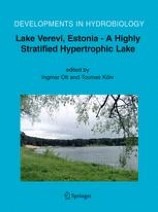
Lake Verevi, Estonia : A highly stratified hypertrophic lake
The present book summarises investigations on Lake Verevi (surface 12.6 ha, mean depth 3.6 m). The seventeen articles in this issue deal with a wide range of questions, starting with a holistic overview of the ecological status, over assessments of long-term changes in biotic and abiotic conditions and finishing with proposed restoration plans. Abiotic chapters provide calculations on water and mass balance, distribution and fractions of phosphorus in the sediment, optical properties and penetration of radiation in the water column, sedimentation rate during the formation of stratification, and nitrogen circulation characteristics.
Lacroix and the Calculus
Lacroix and the Calculus is the first major study of Lacroix’s large Traité. It uses the unique and massive bibliography given by Lacroix to explore late 18th-century calculus, and the way it is reflected in Lacroix’s account. Several particular aspects are addressed in detail, including: the foundations of differential calculus, analytic and differential geometry, conceptions of the integral, and types of solutions of differential equations (singular/complete/general integrals, geometrical interpretations, and generality of arbitrary functions).

Knowledge mining : Proceedings of the NEMIS 2004 final conference
The book presents results from the application of knowledge mining techniques in various sector of the academic and indystrial research. The results are increased scientific understanding along with improvements in research quality and value.
Kinetics of Catalytic Reactions--Solutions Manual
This textbook contains all the information needed for graduate students or industrial researchers to design kinetic experiments involving heterogeneous catalysts, to characterize these catalysts, to acquire valid rate data, to verify the absence of mass (and heat) transfer limitations, to propose reaction models, to derive rate expressions based on these models and, finally, to assess the consistency of these rate equations.The most recent technique to calculate heats of adsorption and activation barriers on metal surfaces, the BOC-MP approach, is discussed in detail. Methods to measure metal surface areas and crystallite sizes using x-ray diffraction, transmission electron microscopy and various chemisorption techniques are discussed. Different experimental techniques to determine the influence of mass transfer limitations, especially within the pores of a catalyst, are reviewed in detail, with a particular emphasis on liquid-phase reactions.
