



Page 22
Page 22

Metathesis Polymerization
Clearly illustrated and demonstrated by the entire series of Advances in Polymer Science., the area of polymer science is a rapidly developing and growing field, strongly influencing other areas of chemistry. Among other polymerization techniques, those based on metathesis polymerization have experienced significant progress. With a rapidly developing armory of initiators on hand, one is now capable of polymerizing various types of functional monomers by metathesis-based techniques.The latest developments in all these areas of metathesis-based polymerizations are summarized in this book. It is designed to attract equally students and advanced scientists working in the areas of polymer science, physical, and organometallic chemistry by providing both extensive background information and up-to-date interdisciplinary knowledge. Special consideration has been given to the literature sections in order to facilitate further reading.

Métastases vertébrales = Vertebral metastases
Updating the technical progress made by each of the players, both diagnostic and therapeutic, was necessary and confirms the quality of the result of a joint venture serving a patient in a particularly delicate situation. It is intended to be practical for each of the care providers and didactic for those who are less specialized in one or another area. This has led us to make choices, of course debatable, leading to explanations that are sometimes a little too "obvious" for connoisseurs, a little too technical for neophytes, repetitions for everyone to find in "their" chapter what makes it so. interested.

Metaphor and Analogy in Science Education
This book brings together powerful ideas and new developments from internationally recognised scholars and classroom practitioners to provide theoretical and practical knowledge to inform progress in science education. This is achieved through a series of related chapters reporting research on analogy and metaphor in science education. Throughout the book, contributors not only highlight successful applications of analogies and metaphors, but also foreshadow exciting developments for research and practice. Themes include metaphor and analogy: best practice, as reasoning; for learning; applications in teacher development; in science education research; philosophical and theoretical foundations. Accordingly, the book is likely to appeal to a wide audience of science educators –classroom practitioners, student teachers, teacher educators and researchers.
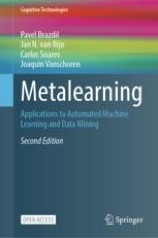
Metalearning : Applications to Automated Machine Learning and Data Mining
This book as one of the fastest-growing areas of research in machine learning, metalearning studies principled methods to obtain efficient models and solutions by adapting machine learning and data mining processes. This adaptation usually exploits information from past experience on other tasks and the adaptive processes can involve machine learning approaches. As a related area to metalearning and a hot topic currently, automated machine learning (AutoML) is concerned with automating the machine learning processes. Metalearning and AutoML can help AI learn to control the application of different learning methods and acquire new solutions faster without unnecessary interventions from the user.

Metaheuristics for Scheduling in Distributed Computing Environments
This volume presents meta-heuristics approaches for Grid scheduling problems. Due to the complex nature of the problem, meta-heuristics are primary techniques for the design and implementation of efficient Grid schedulers. The volume brings new ideas, analysis, implementations and evaluation of meta-heuristic techniques for Grid scheduling, which make this volume novel in several aspects. The 13 chapters of this volume have identified several important formulations of the problem, which we believe will serve as a reference for the researchers in the Grid computing community.

Metaheuristics : Progress in Complex Systems Optimization
The aim of METAHEURISTICS: Progress in Complex Systems Optimization is to provide several different kinds of information: a delineation of general metaheuristics methods, a number of state-of-the-art articles from a variety of well-known classical application areas as well as an outlook to modern computational methods in promising new areas. Therefore, this book may equally serve as a textbook in graduate courses for students, as a reference book for people interested in engineering or social sciences, and as a collection of new and promising avenues for researchers working in this field.

Metaheuristic Optimization via Memory and Evolution : Tabu Search and Scatter Search
Tabu Search (TS) and, more recently, Scatter Search (SS) have proved highly effective in solving a wide range of optimization problems, and have had a variety of applications in industry, science, and government. The goal of METAHEURISTIC OPTIMIZATION VIA MEMORY AND EVOLUTION: Tabu Search and Scatter Search is to report original research on algorithms and applications of tabu search, scatter search or both, as well as variations and extensions having "adaptive memory programming" as a primary focus. Individual chapters identify useful new implementations or new ways to integrate and apply the principles of TS and SS, or that prove new theoretical results, or describe the successful application of these methods to real world problems.The chapters of this book provide a series of landmarks along the way as we investigate and seek to better understand the elements of tabu search and scatter search that account for their successes in an astonishingly varied range of applications.

Metagraphs and Their Applications
The graph is a critical and useful concept in designing many information processing systems. Systems such as transaction processing systems, decision support systems, and workflow systems are all helped immensely by a graphical structure. Simple graphs and digraphs allow for the construction of a variety of system design tools that provide a convenient and appealing format for illustrating information infrastructures, while allowing any subsequent analyses to be performed by the user. However, the metagraph, a new graphical structure that is developed in this book, goes beyond the representational and provides Information Systems with a robust, analytical modeling graphic tool.

Messenger RNA therapeutics
Focuses on the fundamentals and applications of messenger RNA (mRNA)-based therapeutics and discusses the strengths and key challenges of this emerging class of drugs. In the past 30 years, extensive research and technological development in many areas have contributed to the emergence of in vitro transcribed mRNA as a therapeutic that has now reached clinical testing. Formulations that protect the mRNA from nucleases and accelerate its cellular uptake, combined with improvements to the mRNA molecules themselves, have been critical advancements for mRNAs to become viable therapeutics. Though once regarded as a serious impediment, the transient nature of mRNA technology is now considered a major advantage in making mRNA therapies safe and, ultimately, a potential game changer in the field of medicine. This new book in the RNA Technologies series provides a state-of-the-art overview on the emerging field of mRNA therapeutics covering essential strategies for formulation, delivery, and application. It also reviews the promising role in cancer immunotherapy, respiratory diseases, and chronic HBV infection and discusses RNA vaccines in light of the current COVID-19 pandemic. mRNA-based approaches have great potential to revolutionize molecular biology, cell biology, biomedical research, and medicine.

Mesoscale Analysis of Hydraulics
Presents a series of complicated hydraulic phenomena and related mechanism of high-speed flows in head-head dam. According to the basic hydraulic theory, detailed experiments and numerical simulations, microscopic scale analysis on cavitation bubbles, air bubbles, turbulent eddy vortices and sand grains are examined systemically. These investigations on microscopic fluid mechanics, including cavitation erosion, aeration protection, air–water flow, energy dissipation and river-bed scouring, allow a deep understanding of hydraulics in high-head dams. This book provides reference for designers and researchers in hydraulic engineering, environment engineering and fluid mechanics.

Meshfree Methods for Partial Differential Equations II
A Particle Strategy for Solving the Fokker-Planck Equation Modelling the Fiber Orientation Distribution in Steady Recirculating Flows Involving Short Fiber Suspensions.- Extended Meshfree Method for Elastic and Inelastic Media.- Meshfree Petrov-Galerkin Methods for the Incompressible Navier-Stokes Equations.- The ?-shape Based Natural Element Method in Solid and Fluid Mechanics.- A Particle-Partition of Unity Method Part VI: A p-robust Multilevel Solver.- Enriched Reproducing Kernel Approximation: Reproducing Functions with Discontinuous Derivatives.- Reproducing Kernel Element Interpolation: Globally Conforming I m/C n/P k Hierarchies.- Multi-scale Analysis Using Two Influence Radii in EFGM.- Solution of a Dynamic Main Crack Interaction with a System of Micro-Cracks by the Element Free Galerkin Method.- Finite Cover Method for Physically and Geometrically Nonlinear Problems.- A Numerical Scheme for Solving Incompressible and Low Mach Number Flows by the Finite Pointset Method.- SPH Renormalized Hybrid Methods for Conservation Laws: Applications to Free Surface Flows.- Discontinuous Radial Basis Function Approximations for Meshfree Methods.- Treating Moving Interfaces in Thermal Models with the C-NEM.- Bridging Scale Particle and Finite Element Methods.

Mercury
Mercury, the planet closest to the Sun, is different in several respects from the other three terrestrial planets. In appearance, it resembles the heavily cratered surface of the Moon, but its density is high, it has a magnetic field and magnetosphere, but no atmosphere or ionosphere. This book reviews the progress made in Mercury studies since the flybys by Mariner 10 in 1974-75, based on the continued research using the Mariner 10 archive, on observations from Earth, and on increasingly realistic models of its interior evolution.

Mental Health, Social Mirror
The essays in this volume reassert the centrality of research in mental health to sociology. First, they articulate the contributions that mental health research has made and can make to resolving key theoretical and empirical debates in important areas of sociological study. Second, they draw from mainstream theories and concepts to reconsider the potential of sociology to provide answers to critical questions regarding the social origins of and social responses to mental illness. As reflected in the title, the sociological study of mental health provides a reflection of the central processes that characterize our society.

Mental health disorders in pregnancy and the early postpartum
Mental health disorders are common in pregnancy and after childbirth with over 10% of women manifesting some form of mental illness during this time. Maternity services will encounter women with symptoms that vary in severity from mild self-limiting to potentially life-threatening. These conditions carry risks for both the woman and the fetus/newborn. Detecting women with, or at risk of, a serious mental health disorder and enabling them to access appropriate care in a timely fashion is a shared responsibility. However, given the frequency of contact they have with women through this period, maternity services have a pivotal role. From a mental health perspective, high-risk pregnancies are those primarily associated with serious mental illness (psychotic illnesses, bipolar disorder and severe depressive episodes). Healthcare professionals caring for pregnant women should have the appropriate skills to detect serious mental illness and identify women at risk and how to access specialist mental health care.

MEMS/NEMS : (1) Handbook Techniques and Applications Design Methods, (2) Fabrication Techniques, (3) Manufacturing Methods, (4) Sensors and Actuators, (5) Medical Applications and MOEMS
Micro-Electro Mechanical Systems (MEMS) is the integration of mechanical elements, sensors, actuators, and electronics on a common silicon substrate. While the electronics are fabricated using integrated circuit (IC) process sequences (e.g., CMOS, Bipolar, or BICMOS processes),the micromechanical components are fabricated using compatible micromachining processes that selectively etch away parts of the silicon wafer or add new structural layers to form the mechanical and electromechanical devices. MEMS promises to revolutionize nearly every product category by bringing together silicon-based microelectronics with micromachining technology, thereby, making possible the realization of complete systems-on-a-chip.

Memory B-cells : Methods and protocols
Details in methods to assess memory B cell formation and function in mice and humans. Chapters guide readers through tetramer-based methods to assess antigen-specific memory B cell dynamics in humans and mice in different vaccine, next-generation deep-sequencing, single-cell techniques to assess epigenomic, VDJ landscapes, lymph node aspirates from humans, advanced imaging, murine models to determine memory B cells formation, and bioinformatic techniques and in silico modelling of memory b cell formation. Written in the highly successful Methods in Molecular Biology series format, chapters include introductions to their respective topics, lists of the necessary materials and reagents, step-by-step, readily reproducible laboratory protocols, and key tips on troubleshooting and avoiding known pitfalls.

Mediterranean Land-surface Processes Assessed from Space
1. 1 Space View and Ground Observations 1 1. 2 Mediterranean Climatic Environment 2 1. 3 Processes at Surfaces 10 1. 3. 1 Deforestation and Land-use Changes 10 1. 3. 2 Water Related Problems 16 1. 3. 3 Fire, Grazing, and Land Degradation 19 1. 3. 4 Drought, Floods, Frost, and Desertification 21 1. 3. 5 Coupling Between Surface and Atmosphere: The Role of the Atmospheric Boundary Layer 25 1. 4 Role and Capabilities of Measurements Made From Space 30 1. 4. 1 Research Programmes 30 1. 4. 2 Expected Information 32 1. 4. 3 Research Strategy 33 1. 4. 4 Observation of Changes in Heterogeneous Landscapes: Spatial and Temporal Scales 35 1. 4. 5 Land-surface Change Indicators Observable from Space 36 Spectral Characteristics of Vegetation and Soils (36); Responses of Remote Sensing Signals to Changes of Land-surface Properties (40) 1. 5 About this Book 48 Chapter 2 Processing and Archiving of Satellite and Ancillary Data 51 2. 1 Introduction 51 2. 2 The Remote Sensing Data Base 55 2. 2. 1 Satellite Instruments 55 The NOAA Observing System (55); Meteosat (57); Nimbus-7 (59); Landsat (59); SPOT (61); DMSP (62); ERS-1 and ERS-2 (62); TRMM (63); Terra (64); Envisat (65); Aqua (66) 2. 2. 2 Aircraft Instruments 66 The Use of Aircraft for Land-surface Process Studies (66); AVIRIS (67); TMS (68); AIRSAR (68); DIAL (69) 2. 3 Reception, Acquisition and Availability of Satellite Data 70 2. 3.

Medicinal plants and antimicrobial therapies
Serves as an excellent comprehensive material covering the current understandings and updates on antimicrobial resistance (AMR) and the use of medicinal plant resources for tackling it. Chapters cover important aspects of AMR and strategies to address this threatening issue with medicinal plants and their resources. One health perspectives for addressing AMR have been presented for the readers. Antimicrobial medicinal plant therapeutic resources including crude extracts, active fractions, pure molecules and essential oils, besides using them as functionalizing agents for nano-antimicrobials have been covered. Further, plant endophytes as a source of antimicrobial compounds have been discussed. Chapters cover both the bactericidal as well as resistance-reversal (or potentiating/ combinatorial therapies) potencies of medicinal plant resources. The book also focuses on how medicinal plant resources effectively target major determinants of AMR.

Medicinal plants : From farm to pharmacy
Discuss current research on medicinal plants that connects traditionally accumulated botanical wisdom with current bioprospecting trends and (pre-clinical studies Provide an account of recent research activities on select medicinal plants from various phytogeographical regions all over the world Cater to the interest of a wide range of readers including lay enthusiasts, traditional practitioners as well as research and clinical professionals

Medicinal plants : Bioprospecting and pharmacognosy
Touches on a diverse selection of topics related to medicinal plants. Chapters look at the use of medicinal plants in healthcare and disease management, such as to treat inflammation, anti-hyperglycemia, and obesity and as immunity boosters. The authors also address the conservation, maintenance, and sustainable utilization of medicinal plants along with postharvest management issues. Topics include consumption, supply chain, marketing, trade, and future directions of research. Some specific plants discussed include fennel, basil, clove, ginger, lavender, turmeric, ginsing, and asparagus in connection with their various therapeutic properties, including anti-rheumatic, anti-asthmatic, anti-diabetic, carminative, diuretic, fever-reducing, and hypotensive. Medicinal Plants: Bioprospecting and Pharmacognosy will prove informative for scientists and researchers in medicinal plants as well as for faculty and students, pharmaceutical researchers, and others.
