



Page 22
Page 22
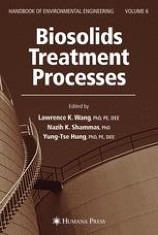
Biosolids treatment processes ; Vol.6
The past 30 years have seen the emergence of a growing desire worldwide to take positive actions to restore and protect the environment from the degrading effects of all forms of pollution: air, noise, solid waste, and water. The Handbook of Environmental Engineering series guides readers to answer the fundamental questions facing pollution in the modern era – How serious is pollution? Is the technology needed to abate it not only available, but feasible? Among the topics included in this, the sixth edition, are: biosolids, flotation thickening, anaerobic and aerobic digestion, pressurized ozonation, lime stabilization, elutriation and polymer conditioning, and animal waste treatment.
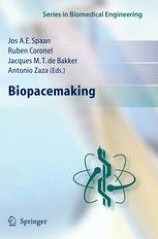
BioPaceMaking
The development of a bio-engineered pacemaker is of substantial clinical and also scientific interest because it promises to overcome several limitations of electronic pacemakers. Moreover it may answer the longstanding question of whether the complex structure of the sinus node is indeed a prerequisite for reliable pacemaking, or simpler structures might work as well. This book gives an overview of the current state-of-the-art of creating a bio-engineered pacemaker. It shows the approaches to develop of genetic and cell-based engineering methods suitable to implement them with safety and stability. It also illuminates the problems that need to be solved before bio-pacemaking can be considered for clinical use.
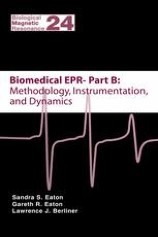
Biomedical EPR ; Part B : Methodology, Instrumentation, and Dynamics
Biomedical EPR – Part B focuses on applications of EPR techniques and instrumentation, with applications to dynamics. The book celebrates the 70th birthday of Prof. James S. Hyde, Medical College of Wisconsin, and his contributions to this field. Chapters are written to provide introductory material for new-comers to the field that lead into up-to-date reviews that provide perspective on the wide range of questions that can be addressed by EPR.
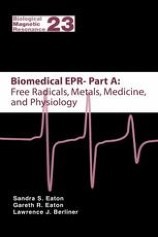
Biomedical EPR ; Part A : Free Radicals, Metals, Medicine and Physiology
Biomedical EPR – Part A focuses on applications of EPR spectroscopy in the areas of free radicals, metals, medicine, and physiology. The book celebrates the 70th birthday of Prof. James S. Hyde, Medical College of Wisconsin, and his contributions to this field. Chapters are written to provide introductory material for new-comers to the field which lead into up-to-date reviews that provide perspective on the wide range of questions that can be addressed by EPR.
Biological invaders in inland waters : Profiles, distribution, and threats
The book examines the identity, distribution, and impact of freshwater non-indigenous species and the dynamics of their invasion. Rather than providing a broad and comprehensive review of the issue, Biological invaders in inland waters focuses on old and new invaders and also raises questions and opens perspectives that provide a starting point for further research. The ultimate purpose of this book is to help define a more general framework for our knowledge of invasions in fresh waters. Such a framework will be indispensable to the planning of a science-based management program.
Biological Calcification : Normal and Pathological Processes in the Early Stages
This book follows a precursor volume devoted to biological calci?cation, - sued by the CRC Press, Boca Raton (Florida) in 1992. Several basic aspects of the calci?cation process were analyzed in it by outstanding authors who had unquestioned competence in their respective research areas. Its main aim was that of giving readers access to a series of papers which, even though they discussed divergent aspects of biological calci?cations drawn from the study of systems as different as vertebrate skeletons and mollusks, in vitro cultures and unicellular organisms, ectopic calci?cation and urinary stones, provided elements permitting a coherent approach to a comprehensive view of the calci?cation process in biological tissues.
Bio-informatique moléculaire : Une approche algorithmique = Molecular bioinformatics : An algorithmic approach
Deals with genetic maps, from the problem of sequence comparison and alignment, including DNA chips and genomic rearrangement. It thus covers a wide variety of topics relating to algorithmic and combinatorial processing of questions arising from molecular bioinformatics and biotechnology.
Bioethics and the Holocaust : A Comprehensive Study in How the Holocaust Continues to Shape the Ethics of Health, Medicine and Human Rights
This book offers a framework for understanding how the Holocaust has shaped and continues to shape medical ethics, health policy, and questions related to human rights around the world. The field of bioethics continues to face questions of social and medical controversy that have their roots in the lessons of the Holocaust, such as debates over beginning-of-life and medical genetics, end-of-life matters such as medical aid in dying, the development of ethical codes and regulations to guide human subject research, and human rights abuses in vulnerable populations. As the only example of medically sanctioned genocide in history, and one that used medicine and science to fundamentally undermine human dignity and the moral foundation of society, the Holocaust provides an invaluable framework for exploring current issues in bioethics and society today. This book, therefore, is of great value to all current and future ethicists, medical practitioners and policymakers – as well as laypeople.
Bioengineering in cell and tissue research
This book reviews the latest technological developments of bioengineering approaches in cell and tissue research. It is meant to have life and spirit, and to become a pioneer in technology and sciences, especially the life science. The chapters are written by excellent scientists on advanced, frontier technology and address scientific questions that need considerable thinking in terms of engineering.
Bioenergetics : Energy conservation and conversion
The present book addresses fundamental questions of biological energy transformation and conservation, with a focus on those processes which can now be understood on a structural basis.Current knowledge of selected examples of the biological energy conservation machinery such as cellular oxygen respiration, light-driven energy converters, and fermentation is reviewed. The machinery is highly variable, particularly that within microorganisms, but all of these devices universally rely on one unique underlying physico-chemical principle. The book is a rich source for specialists interested in recent developments in bioenergetics research and novices in the field alike.
Biodiversity Conservation and Phylogenetic Systematics : Preserving our evolutionary heritage in an extinction crisis
This book brings an updated state of the art of phylogenetic diversity in conservation biology. Nineteen chapters written by scientists from research institutions of fourteen countries demonstrate that approaches for preserving the evolutionary heritage are now very tuned into human impacts and sustainability issues. The questions, methods and applications around which it is organized show the importance of phylogenetic diversity in avoiding biodiversity losses in the present extinction crisis. They touch important points such as the way we value phylogenetic diversity, the importance of thinking at a much wider sample of the Tree of Life, the choice of adequate measures. In methods section, new solutions, such as dealing with abundances, sampling effort, or with information coming from conflicting phylogenetic trees are provided. Application section includes study cases of different groups of organi
Biochemistry and cell biology of ageing ; Part III : Biomedical science
Covering interesting and significant biomedical ageing topics not included in the earlier volumes. Comprehensive and cutting-edge, this book is a valuable resource for experienced researchers and early career scientist alike, who are interested in learning more about the fascinating and challenging question of why and how our cells age.
Big Data Science in Finance
Explains the mathematics, theory, and methods of Big Data as applied to finance and investing Examines the mathematics, theory, and practical use of the revolutionary techniques that are transforming the industry. Designed for mathematically-advanced students and discerning financial practitioners alike, this energizing book presents new, cutting-edge content based on world-class research taught in the leading Financial Mathematics and Engineering programs in the world. Marco Avellaneda, a leader in quantitative finance, and quantitative methodology author Irene Aldridge help readers harness the power of Big Data. Provides a complete account of Big Data that includes proofs, step-by-step applications, and code samples Explains the difference between Principal Component Analysis (PCA) and Singular Value Decomposition (SVD) Covers vital topics in the field in a clear, straightforward manner Compares, contrasts, and discusses Big Data and Small Data Includes Cornell University-tested educational materials such as lesson plans, end-of-chapter questions, and downloadable lecture slides
Beyond Cartesian Dualism : Encountering affect in the teaching and learning of science.
There is surprisingly little known about affect in science education. Despite periodic forays into monitoring students’ attitudes-toward-science, the effect of affect is too often overlooked. Beyond Cartesian Dualism gathers together contemporary theorizing in this axiomatic area. In fourteen chapters, senior scholars of international standing use their knowledge of the literature and empirical data to model the relationship between cognition and affect in science education. Their revealing discussions are grounded in a broad range of educational contexts including school classrooms, universities, science centres, travelling exhibits and refugee camps, and explore an array of far reaching questions. What is known about science teachers’ and students’ emotions? How do emotions mediate and moderate instruction? How might science education promote psychological
Best of five MCQs for the endocrinology and diabetes SCE
Including questions based on the latest National Institute for Health & Care Excellence (NICE), Joint British Diabetes Societies (JBDS) & Endocrine Society clinical practice guidelines. Includes 20 more questions on diabetes to reflect the increased weighing given to this subject in the SCE exam. New tables and algorithms have been added to provide specialty trainees useful information relevant to clinical practice
Benefits realisation : The change-driven approach to project success
In Benefits Realisation: The Change-Driven Approach to Project Success, renowned benefits realisation expert, speaker, and consultant Rasmus Rytter introduces a new approach to change projects where benefits realisation defines the design of the project and how it’s led. Once the project’s benefits have been defined, the key question for the project to answer is: ‘How might we help our colleagues change their behaviour? Thus, identifying behavioural change as the key driver of benefit realisation.

Beginning XSLT 2.0 : From novice to professional
This followup to Jeni Tennison's Beginning XSLT has been updated to accomodate the revised XSLT standard. Part one of this book introduces XML and XSLT at a comfortable pace, and gradually demonstrates techniques for generating HTML (plus other formats), from XML. In part two, Tennison applies theory to real-life XSLT capabilities—including generating graphics. Each chapter includes step-by-step examples (with code available online), plus review questions at the end, to help you grasp the discussed features. In fact, all of the examples and exercises revolve around an interesting common theme: making TV listings available online. This book lives up to its name, and will definitely take you from a novice to a professional, in no time!

Beginning Joomla! : From novice to professional
Beginning Joomla! answers many of the questions you're sure to have, guiding you through the process of creating your own design templates, adding and managing content, and adding popular community features such as article commenting, user profile management, and forums.

Beginning Database Design : From novice to professional
Beginning Database Design: From Novice to Professional provides short, easy-to-read explanations of how to get database design right the first time. Through the help of use cases and class diagrams modeled in the UML, youll learn how to discover and represent the details and scope of the problem in question.

Beginning CakePHP : From novice to professional
CakePHP is a leading PHP–based web app development framework. When asking a question on forums or chat rooms, many CakePHP beginners get little help from the experts. Simple questions can get a response like, “Well, just read the online manual and API.” Unfortunately, the online manual is depreciated, and who wants to absorb a programming language or framework from an API? Beginning CakePHP will do the following: Lead you from a basic setup of CakePHP to building a couple applications that will highlight CakePHP’s functionality and capabilities without delving too deeply into the PHP language, but rather what the CakePHP framework can offer the developer. Teach you to use CakePHP by incorporating advanced features into your web development projects.
