



Page 207
Page 207
Artificial Intelligence with Python
Introduces readers to various topics and examples of programming in Python, as well as key concepts in artificial intelligence. Python programming skills will be imparted as we go along. Concepts and code snippets will be covered in a step-by-step manner, to guide and instill confidence in beginners. Complex subjects in deep learning and machine learning will be broken down into easy-to-digest content and examples. Artificial intelligence implementations will also be shared, allowing beginners to generate their own artificial intelligence algorithms for reinforcement learning, style transfer, chatbots, speech, and natural language processing.

Artificial intelligence techniques in hydrology and water resources management
The sustainable management of water cycles is crucial in the context of climate change and global warming. It involves managing global, regional, and local water cycles, as well as urban, agricultural, and industrial water cycles, to conserve water resources and their relationships with energy, food, microclimates, biodiversity, ecosystem functioning, and anthropogenic activities. Hydrological modeling is indispensable for achieving this goal, as it is essential for water resources management and the mitigation of natural disasters. In recent decades, the application of artificial intelligence (AI) techniques in hydrology and water resources management has led to notable advances. In the face of hydro-geo-meteorological uncertainty, AI approaches have proven to be powerful tools for accurately modeling complex, nonlinear hydrological processes and effectively utilizing various digital and imaging data sources, such as ground gauges, remote sensing tools, and in situ Internet of Things (IoT) devices.
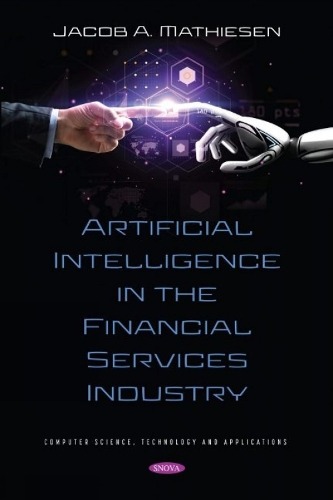
Artificial intelligence in the financial services industry
Today, the financial services sector is facing a period of rapid disruption and innovation, and artificial intelligence (AI) is at the heart of these changes. Artificial intelligence can be used to gather enormous amounts of data, detect abnormalities, and solve complex problems. Financial institutions are already experimenting extensively with AI strategies to enhance and streamline financial institutions, BSA and AML compliance, CRA requirements, fraud detection, and real estate valuations, all while reducing cost levels. This book looks at how artificial intelligence is affecting the financial services industry.
Artificial intelligence in the design process : The impact on creativity and team collaboration
Discusses how to include artificial intelligence (AI) systems in the early stages of the design process. Today designers need new tools capable of supporting them in dealing with the increasing project's complexity and empowering their performances and capabilities. AI systems appear to be powerful means to enhance designers' creativity. This assumption was tested in a workshop where sixteen participants collaborated with three AI systems throughout the creative phases of research, sketching, and color selection. Results show that designers can access a broader level of variance and inspiration while reducing the risk of fossilization by triggering lateral thinking through AI-generated data. Therefore, AI could significantly impact the creative phases of the design process if applied consciously. Being AI systems intelligent agents, the book treats the Human-AI collaboration as a collaboration between human agents, proposing a set of guidelines helpful to achieving an efficient partnership with the machine.

Artificial intelligence in medicine ; 10th conference on artificial intelligence in medicine, AIME 2005, Aberdeen, UK, July 23-27, 2005, Proceedings
This book constitutes the refereed proceedings of the 10th Conference on Artificial Intelligence in Medicine in Europe, AIME 2005, held in Aberdeen, UK in July 2005. The 35 revised full papers and 34 revised short papers presented together with 2 invited contributions were carefully reviewed and selected from 148 submissions. The papers are organized in topical sections on temporal representation and reasoning, decision support systems, clinical guidelines and protocols, ontology and terminology, case-based reasoning, signal interpretation, visual mining, computer vision and imaging, knowledge management, machine learning, knowledge discovery, and data mining.
Artificial intelligence in medicine
Provides a structured and analytical guide to the use of artificial intelligence in medicine. Covering all areas within medicine, the chapters give a systemic review of the history, scientific foundations, present advances, potential trends, and future challenges of artificial intelligence within a healthcare setting.
Artificial intelligence in higher education : A practical approach
Highlights the broad field of artificial intelligence applications in education, regarding any type of artificial intelligence that is correlated with education. It discusses learning methodologies, intelligent tutoring systems, intelligent student guidance and assessments, intelligent education chatbots, and artificial tutors and presents the practicality and applicability implications of AI in education. The book offers new and current research along with case studies showing the latest techniques and educational activities. Will find interest with academicians which includes teachers, students of various disciplines, higher education policymakers who believe in transforming the education industry, research scholars who are pursuing their Ph.D. or Post Doc. in the field of Education Technology, Education, and Learning, etc. and those working in the area of Education Technology and Artificial Intelligence such as industry professionals in education management and e-learning companies
Artificial intelligence in education ; 21st International conference, AIED 2020, Ifrane, Morocco, July 6–10, 2020, Proceedings, Part II
This two-volume set LNAI 12163 and 12164 constitutes the refereed proceedings of the 21th International Conference on Artificial Intelligence in Education, AIED 2020, held in Ifrane, Morocco, in July 2020.* The 49 full papers presented together with 66 short, 4 industry & innovation, 4 doctoral consortium, and 4 workshop papers were carefully reviewed and selected from 214 submissions. The conference provides opportunities for the cross-fertilization of approaches, techniques and ideas from the many fields that comprise AIED, including computer science, cognitive and learning sciences, education, game design, psychology, sociology, linguistics as well as many domain-specific areas.
Artificial intelligence in education ; 21st International conference, AIED 2020, Ifrane, Morocco, July 6–10, 2020, Proceedings, Part I
This two-volume set LNAI 12163 and 12164 constitutes the refereed proceedings of the 21th International Conference on Artificial Intelligence in Education, AIED 2020, held in Ifrane, Morocco, in July 2020.* The 49 full papers presented together with 66 short, 4 industry & innovation, 4 doctoral consortium, and 4 workshop papers were carefully reviewed and selected from 214 submissions. The conference provides opportunities for the cross-fertilization of approaches, techniques and ideas from the many fields that comprise AIED, including computer science, cognitive and learning sciences, education, game design, psychology, sociology, linguistics as well as many domain-specific areas.
Artificial intelligence in dentistry
Provides an introduction to next-generation applications and technologies for improving diagnostic accuracy and prediction of treatment outcomes in dentistry through the use of artificial intelligence (AI) and machine learning (ML). The authors attempt to bridge the gap between dental research and global health outcomes, as well as provide a comprehensive guide to general and clinical aspects of dental and oral health issues and the etiology, prevalence, assessment, and management of these conditions.

Artificial intelligence for customer relationship management : Solving customer problems
This book describes a number of applications of Artificial Intelligence in the field of Customer Relationship Management with the focus of solving customer problems. We design a system that tries to understand the customer complaint, his mood, and what can be done to resolve an issue with the product or service. To solve a customer problem efficiently, we maintain a dialogue with the customer so that the problem can be clarified and multiple ways to fix it can be sought. We introduce dialogue management based on discourse analysis: a systematic linguistic way to handle the thought process of the author of the content to be delivered. We analyze user sentiments and personal traits to tailor dialogue management to individual customers. We also design a number of dialogue scenarios for CRM with replies following certain patterns and propose virtual and social dialogues for various modalities of communication with a customer.
Artificial Intelligence for Cloud and Edge Computing
Discusses the future possibilities of AI with cloud computing and edge computing. Aims to conduct analyses, implementation and discussion of many tools (of artificial intelligence, machine learning and deep learning and cloud computing, fog computing, and edge computing including concepts of cyber security) for understanding integration of these technologies. Readers can quickly get an overview of these emerging topics and get many ideas of the future of AI with cloud, edge, and in many other areas. Topics include machine and deep learning techniques for Internet of Things based cloud systems; security, privacy and trust issues in AI based cloud and IoT based cloud systems; AI for smart data storage in cloud-based IoT; blockchain based solutions for AI based cloud and IoT based cloud systems.This book is relevent to researchers, academics, students, and professionals. Presents fusion of cloud computing services and AI technology for bringing a significant change in the technology industry; Includes self-assessment problems for increasing knowledge of real world problems, i.e., how AI and cloud/edge computing can change business for the better; Provides innovative results of integrations of AI in other applications such as healthcare, finance, manufacturing, transportation, agriculture, etc.
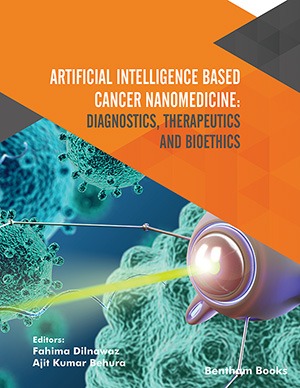
Artificial intelligence based cancer nanomedicine : Diagnostics, therapeutics and bioethics
Nanomedicine is evolving with novel drug formulations devised for multifunctional approaches towards diagnostics ad therapeutics. Nanomedicine-based drug therapy is normally explored at a fixed dose. The drug action is time-dependent, dose-dependent and patient-specific. To overcome challenges of nanomedicine testing, artificial intelligence (AI) serves as a helping tool for optimizing the drug and dose parameters. Real time conversions between these two features enables upgradation of patient data acquisition and improved design of nanomaterials. In this scenario, AI-based pattern analysis and algorithms models can greatly improve accuracy of diagnostics and therapeutics.

Artificial intelligence applications and innovations ; 16th IFIP WG 12.5 International Conference, AIAI 2020, Neos Marmaras, Greece, June 5–7, 2020, Proceedings, Part I
This 2 volume-set of IFIP AICT 583 and 584 constitutes the refereed proceedings of the 16th IFIP WG 12.5 International Conference on Artificial Intelligence Applications and Innovations, AIAI 2020, held in Neos Marmaras, Greece, in June 2020.* The 70 full papers and 5 short papers presented were carefully reviewed and selected from 149 submissions. They cover a broad range of topics related to technical, legal, and ethical aspects of artificial intelligence systems and their applications

Artificial intelligence and machine learning in health care and medical sciences : Best practices and pitfalls
Provides a detailed review of the latest methods and applications of artificial intelligence (AI) and machine learning (ML) in medicine. With chapters focusing on enabling the reader to develop a thorough understanding of the key concepts in these subject areas along with a range of methods and resulting models that can be utilized to solve healthcare problems, the use of causal and predictive models are comprehensively discussed. Care is taken to systematically describe the concepts to facilitate the reader in developing a thorough conceptual understanding of how different methods and resulting models function and how these relate to their applicability to various issues in health care and medical sciences. Guidance is also given on how to avoid pitfalls that can be encountered on a day-to-day basis and stratify potential clinical risks.

Artificial intelligence and knowledge engineering applications : A bioinspired approach ; 1st international work-Conference on the interplay between natural and artificial computation, IWINAC 2005, Las Palmas, Canary Islands, Spain, June 15-18, 2005, Proceedings, Part II
The computational paradigm considered here is a conceptual, theoretical andformal framework situated above machines and living creatures (two instantia-tions), sufficiently solid, and still non-exclusive, that allows us:1. to help neuroscientists to formulate intentions, questions, experiments, meth-ods and explanation mechanisms assuming that neural circuits are the psy-chological support of calculus;2. to help scientists and engineers from the fields of artificial intelligence (AI)and knowledge engineering (KE) to model, formalize and program the com-putable part of human knowledge;3. to establish an interaction framework between natural system computation(NSC) and artificial system computation (ASC) in both directions, fromASC to NSC (in computational neuroscience), and from NSC to ASC (inbioinspired computation).
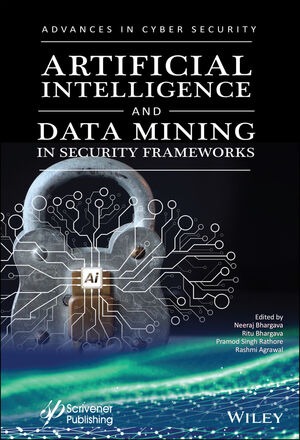
Artificial intelligence and data mining approaches in security frameworks
Offers solutions to the problems of security, outlining the concepts behind allowing computers to learn from experience and understand the world in terms of a hierarchy of concepts, with each concept defined through its relation to simpler concepts. provides state of the art approaches of artificial intelligence and data mining in these areas. It includes areas of detection, prediction, as well as future framework identification, development, building service systems and analytical aspects. In all these topics, applications of AI and data mining, such as artificial neural networks, fuzzy logic, genetic algorithm and hybrid mechanisms, are explained and explored. This book is aimed at the modeling and performance prediction of efficient security framework systems, bringing to light a new dimension in the theory and practice. This groundbreaking new volume presents these topics and trends, bridging the research gap on AI and data mining to enable wide-scale implementation. Whether for the veteran engineer or the student, this is a must-have for any library. This groundbreaking new volume: Clarifies the understanding of certain key mechanisms of technology helpful in the use of artificial intelligence and data mining in security frameworks ; Covers practical approaches to the problems engineers face in working in this field, focusing on the applications used every day ; Contains numerous examples, offering critical solutions to engineers and scientists ; Presents these new applications of AI and data mining that are of prime importance to human civilization as a whole

Artificial intelligence : The revolution of drug discovery
The successful application of AI is dependent on the availability of high-quality data, the addressing of ethical concerns, and the recognition of the limitations of AI-based approaches. Moreover artificial intelligence has been a game changer in the past decade. AI proved his worth by making the impossible possible in a short period of time. The health care industry has adopted artificial intelligence technology to deal with the ever-changing therapeutic and drug requirements of patients every day, as we encounter new viruses for which no antidote has been prepared, such as the Corona virus, diseases such as malaria, and the most important problem is the resistance to antibiotics by superbugs that are constantly developing new resistance mechanisms causing harm and confusion.

Artificial immune systems ; Vol. 4163 : 5th International conference, ICARIS 2006, Oeiras, Portugal, September 4-6, 2006, Proceedings
ICARIS 2006 is the ?fth instance of a series of conferences dedicated to the comprehension and the exploitation of immunological principles through their translation into computational terms.Their axis of research tries to stabilize an on-going identity somewhere in the crossroad of engineering (building useful artifacts), natural sciences (biologyor psychology— improving the comprehension and prediction of natural phenomena) and t- oretical computer sciences (developing and mastering the algorithmic world). Accordingly and depending on which of these perspectives receives more s- port, they attempt at attracting di?erent kinds of scientists and at stimul- ing di?erent kinds of scienti?c attitudes. For many years and in the previous ICARIS conferences, it was clearly the “engineering.

Artificial gravity
"This book reviews the principle and rationale for using artificial gravity during space missions, and describes the current options proposed, including a short-radius centrifuge contained within a spacecraft. In Artificial Gravity, experts provide recommendations on the research needed to assess whether or not short-radius centrifuge workouts can help limit deconditioning of physiological systems.""Aided by an exquisite group of experts, Gilles Clement and Angie Bukley have managed to put together THE new, comprehensive reference book on artificial gravity. This book will be an essential resource for students, scientists, and program planners alike."
