



Page 202
Page 202
An Introduction to Queueing Theory: and Matrix-Analytic Methods
The present textbook contains the recordsof a two–semester course on que- ing theory, including an introduction to matrix–analytic methods. This book provides a mathematical introduction to the theory of queuing theory and matrix-analytic methods … . The style of the text … is concise and rigorous. The proofs are presented for study. Each chapter concludes with a set of exercises inviting readers to prove supplementary results and review particular aspects of the theory. The book under review attempts to give an introduction to the theory of queues without losing contact with its applicability. … For instructors who prefer the topics covered, this book is a nice candidate as they do not need to choose the topics but only need to elaborate on them. Nevertheless, it would be a good reference book for an introductory course in queuing theory, stochastic modelling, or applied probability
An Introduction to Programming and Numerical Methods in MATLAB
The book covers numerical methods for solving a wide range of problems, from integration to the numerical solution of differential equations or the stimulation of random processes. Examples of programmes that solve problems directly, as well as those that use MATLAB’s high-level commands are given. Each chapter includes extensive examples and tasks, at varying levels of complexity. For practice, the early chapters include programmes that require debugging by the reader, while full solutions are given for all the tasks. The book also includes: A glossary of MATLAB commands / Aappendices of mathematical techniques used in numerical methods / Designed as a text for a first course in programming and algorithm design, as well as in numerical methods courses, the book will be of benefit to a wide range of students from mathematics and engineering, to commerce."
An introduction to ontology engineering
Provides the reader with a comprehensive introductory overview of ontology engineering. A secondary aim is to provide hands-on experience in ontology development that illustrate the theory. The book is divided into three blocks: Block I: logic foundations for ontologies both regarding the languages (mainly First Order predicate Logic, Description Logics, and OWL) and automated reasoning. Block II: developing good ontologies with methods and methodologies, the top-down approach with foundational ontologies, and the bottom-up approach to extract as much useful content as possible from legacy material. Block III: advanced topics with a selection of areas of specialisation, including Ontology-Based Data Access, the interaction between ontologies and natural languages (multilingual ontologies, controlled natural language), and advanced modelling with additional language features (fuzzy and temporal ontologies)
An Introduction to Number Theory
An Introduction to Number Theory provides an introduction to the main streams of number theory. Starting with the unique factorization property of the integers, the theme of factorization is revisited several times throughout the book to illustrate how the ideas handed down from Euclid continue to reverberate through the subject. In particular, the book shows how the Fundamental Theorem of Arithmetic, handed down from antiquity, informs much of the teaching of modern number theory. The result is that number theory will be understood, not as a collection of tricks and isolated results, but as a coherent and interconnected theory. A number of different approaches to number theory are presented, and the different streams in the book are brought together in a chapter that describes the class number formula for quadratic fields and the famous conjectures of Birch and Swinnerton-Dyer. The final chapter introduces some of the main ideas behind modern computational number theory and its applications in cryptography.
An Introduction to Network Programming with Java
This book provides an overview of Java … . Each chapter is supplemented with practical programming exercises.The combination of code templates with good supporting discussions allows a competent Java programmer to rapidly expand his or her skill base to include network programming.
An Introduction to Meshfree Methods and Their Programming
This book aims to present meshfree methods in a friendly and straightforward manner, so that beginners can very easily understand, comprehend, program, implement, apply and extend these methods. It provides first the fundamentals of numerical analysis that are particularly important to meshfree methods. Typical meshfree methods, such as EFG, RPIM, MLPG, LRPIM, MWS and collocation methods are then introduced systematically detailing the formulation, numerical implementation and programming. Many well-tested computer source codes developed by the authors are attached with useful descriptions. The application of the codes can be readily performed using the examples with input and output files given in table form. These codes consist of most of the basic meshfree techniques, and can be easily extended to other variations of more complex procedures of meshfree methods. Readers can easily practice with the codes provided to effective learn and comprehend the basics of meshfree methods.
An Introduction to Manifolds
Manifolds, the higher-dimensional analogs of smooth curves and surfaces, are fundamental objects in modern mathematics. Combining aspects of algebra, topology, and analysis, manifolds have also been applied to classical mechanics, general relativity, and quantum field theory. In this streamlined introduction to the subject, the theory of manifolds is presented with the aim of helping the reader achieve a rapid mastery of the essential topics. By the end of the book the reader should be able to compute, at least for simple spaces, one of the most basic topological invariants of a manifold, its de Rham cohomology. Along the way the reader acquires the knowledge and skills necessary for further study of geometry and topology.

An Introduction to Kolmogorov Complexity and Its Applications
Written by two experts in the field, this book is ideal for advanced undergraduate students, graduate students, and researchers in all fields of science. It is self-contained: it contains the basic requirements from mathematics, probability theory, statistics, information theory, and computer science. Included are history, theory, new developments, a wide range of applications, numerous (new) problem sets, comments, source references, and hints to solutions of problems. This is the only comprehensive treatment of the central ideas of Kolmogorov complexity and their applications.
An Introduction to Global Spectral Modeling
Numerical weather prediction is receiving increased attention as weather forecasters aim to improve the numerical models used to forecast the weather. This is a textbook on global spectral modeling, which is an important component for global weather forecasts at numerous operational centers. This book covers all areas of model development including numerical analysis, treatment of clouds, mountains, radiation, precipitation processes, and the surface layers over land and the ocean. The objectives of this book are to provide a systematic and sequential background for students, researchers, and operational weather forecasters in order to develop comprehensive weather forecast models. This is designed for a one semester introductory graduate level course on weather prediction methodologies. As a prerequisite it requires a basic background in meteorology, applied mathematics, and numerical analysis.
An introduction to generative drug discovery
Describes the state‑of‑the‑art methods and applications for de novo design of drug candidates using generative chemistry models as well as the ethical aspects of this technology. It will provide a foundation for those new to the field as well as those that may already have some experience of its utility. With contributions from scientists in both academia and industry ‘Introduction to Generative Drug Discovery’ may represent one of the earliest if not the first book to focus on this topic.
An Introduction to Ethics in Robotics and AI
This book provides an introduction into the ethics of robots and artificial intelligence. The book was written with university students, policy makers, and professionals in mind but should be accessible for most adults. The book is meant to provide balanced and, at times, conflicting viewpoints as to the benefits and deficits of AI through the lens of ethics. As discussed in the chapters that follow, ethical questions are often not cut and dry. Nations, communities, and individuals may have unique and important perspectives on these topics that should be heard and considered. While the voices that compose this book are our own, we have attempted to represent the views of the broader AI, robotics, and ethics communities.
An Introduction to Efficiency and Productivity Analysis
It is designed to be a "first port of call" for people wishing to study efficiency and productivity analysis. The book provides an accessible introduction to the four principal methods involved: econometric estimation of average response models; index numbers; data envelopment analysis (DEA); and stochastic firontier analysis (SFA). For each method, we provide a detailed introduction to the basic concepts, give some simple numerical examples, discuss some of the more important extensions to the basic methods, and provide references for further reading. In addition, we provide a number of detailed empirical applications using real-world data.
An introduction to differential geometry with applications to elasticity
Interestingly, notions that pertain to di?erential geometry per se,suchas covariant derivatives of tensor ?elds, are also introduced in Chapters 3 and 4, where they appear most naturally in the derivation of the basic boundary value problems of three-dimensional elasticity and shell theory.
An Introduction to Copulas
Copulas are functions that join multivariate distribution functions to their one-dimensional margins. The study of copulas and their role in statistics is a new but vigorously growing field. In this book the student or practitioner of statistics and probability will find discussions of the fundamental properties of copulas and some of their primary applications. The applications include the study of dependence and measures of association, and the construction of families of bivariate distributions.
An Introduction to continuous-time stochastic processes : Theory, models, and applications to finance, biology, and medicine
This book is introduction to the theory of continuous-time stochastic processes. A balance of theory and applications, the work features concrete examples of modeling real-world problems from biology, medicine, industrial applications, finance, and insurance using stochastic methods. No previous knowledge of stochastic processes is required. Key topics covered include: * Interacting particles and agent-based models: from polymers to ants * Population dynamics: from birth and death processes to epidemics * Financial market models: the non-arbitrage principle * Contingent claim valuation models: the risk-neutral valuation theory * Risk analysis in insurance
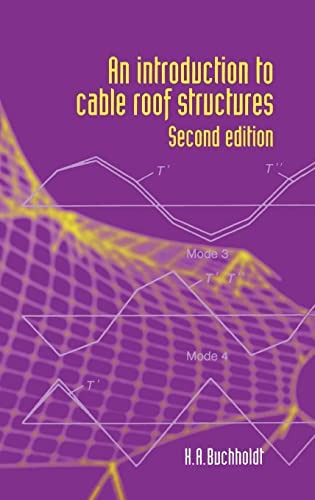
An introduction to cable roof structures ; 2nd ed.
Provides structural engineers with a concise introduction to the architectural, structural and technological aspects of cable roofs, and supplies sufficient information for engineers to carry out their own designs. The improved methods for generating wind and earthquake histories have been included as the trend in modern design codes seem increasingly to require that dynamic response of other forms of non-linear structures such as guyed masts is considered at the design stage.
An Introduction to Bayesian Analysis : Theory and Methods
This book is a contemporary introduction to theory, methods and computation in Bayesian Analysis. It focuses on topics that have stood the test of time and on emerging areas. No other such book is available in the market.
An Interactive Multimedia Introduction to Signal Processing
A didactic concept is undertaken for microelectronics, computer technology and communication engineering, which deals with the visualization of signals and processes in addition to graphical programming of signal processing systems. Through the utilization of a professional and globally supported software for metrology and control engineering, DasyLab, useful applications can be developed, modified and optimized. Computer supported processing of real signals is made possible over the sound card and the parallel port. Over two hundred pre-programmed signal engineering systems and design transparencies are provided. Pictures also play a dominant rule in this book: there are numerous introduction-videos, one for every chapter, more than 250 high-quality pictures and - most important – all the "living" experiments and their results are visualized. With this learning system, readers can now make use of "equipment" and software, which was practically unaffordable for individuals in the past. What's more, here is a very new concept for learning Signal Processing, not only from the physically-based scientific fundamentals, but also from the didactic perspective, based on modern results of brain research.
An Integrated Approach to Software Engineering
An Integrated Approach to Software Engineering introduces software engineering to advanced-level undergraduate and graduate students of computer science. It emphasizes a case-study approach whereby a project is developed through the course of the book, illustrating the different activities of software development. The sequence of chapters is essentially the same as the sequence of activities performed during a typical software project. All activities, including quality assurance and control activities, are described in each chapter as integral activities for that phase of development. Similarly, the author carefully introduces appropriate metrics for controlling and assessing the software process. Chapters in this revised edition, updated for today’s standards, include these new features: Software Process, Requirements Analysis and Specification, Software Architecture, Project Planning, Object Oriented Design, Coding,Testing,

An Illustrated Guide to Furniture History
Provides upper-level students and instructors with an alternative visual analytical approach to learning about furniture history from Antiquity to Postmodernism. Following an immersive teaching model, it presents a Nine-Step Methodology to help students strengthen their visual literacy and quickly acquire subject area knowledge. Moving chronologically through key periods in furniture history and interior design, such as the Renaissance, the Arts and Crafts Movement, and Modernism, it traverses Europe to America to present a comprehensive foundational guide to the history of furniture design.
