



Page 20
Page 20

Nanotechnology for Environmental Remediation
The newly discovered advanced oxidation technology using nanoscale zero-valent iron, which is reported in this book, could be widely used to treat pesticides, herbicides, and industrial chemicals as well as to purify contaminated water for domestic use. In addition, it can contribute to advancing science and technology and providing valuable information to all readers - researchers, scientists, engineers, and students - in this field for their further research and studies.
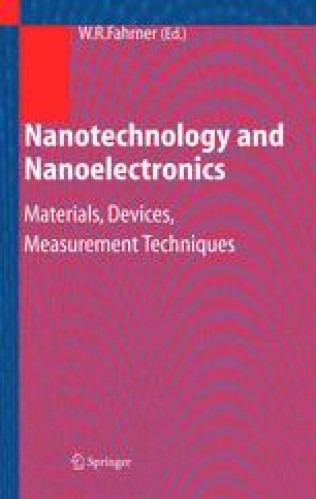
Nanotechnology and nanoelectronics : Materials, devices, measurement techniques
This book provides a concise and didactically structured presentation of nanotechnology as matters stand.nanotechnology. Based on known facts, an evaluation of nanotechnology, its further development, and its future prospects are attempted.

Nanotechnology ¿ Toxicological Issues and Environmental Safety and Environmental Safety
Nanotechnology is one of the fastest growing technological fields of the 21st century. Nanotechnologies will impact numerous industries, including daily consumer products, health care, energy, and transportation. However, the success of the emerging nanotechnology applications will depend on dynamic development of nanomaterial toxicology, risk and exposure assessment. Little is known about the potential adverse health and ecological effects of exposure to engineered nanomaterials, the main components of many nanotechnologies. Concerns are coming from the initial toxicological studies as well as the research and epidemiological reports on ultrafine particle toxicity. This book provides a summary of the state-of-art knowledge on nanomaterials and nanoparticles – toxicological issues; risk assessment and control measures.

Nanotechnology : Societal Implications ; I : Maximising Benefits for Humanity ; II : Individual Perspectives
This book includes a collection of essays by leading scientists, engineers, and social scientists reviewing the possible uses of these impending technical developments in various industrial, medical, and national security applications, and the corresponding ethical, legal, social, economic, and educational issues that they raise. The report outlines potential areas for research into societal implications of nanotechnology, as well as some preliminary suggestions for how potential positive impacts of nanotechnology can be maximized, while minimizing any possible negative impacts, real or imagined. This book also provides the beginning of a blueprint for how one should address second-order consequences of the new technology, either positive implications or potential risks.

Nanotechnology : Science and Computation
This book offers a unique and authoritative perspective on current research in nanoscale science, engineering and computing. Leading researchers cover the topics of DNA self-assembly in two-dimensional arrays and three-dimensional structures, molecular motors, DNA word design, molecular electronics, gene assembly, surface layer protein assembly, and membrane computing.

Nanotechnology : Assessment and Perspectives
A new definition of Nanotechnology by the authors is used as an anchor for the various sections of the book. This leads to an integrated text reflecting the multidimensional challenges occurring around Nanotechnology. The most important results of the study are transferred into acting recommendations concerning scientific progress, industrial relevance, economic potential, educational needs, potential adverse health effects and philosophical aspects of Nanotechnology.

Nanostructures : Fabrication and Analysis
The main theme of this book is the exploration the underlying physical laws that permit the fabrication of nanometer-scale structures. As researchers attempt to fabricate nanometer-scale structures which do not exist per se, they must still employ the natural laws to fabricate them through processes such as self-assembly. So it turns out that our techniques for fabrication of nanometer-scale structures are not artificial but actually rely on the natural laws. We even find that nanometer-scale structures, e.g. fullerenes, are fabricated in nature beneath the surface of the Earth. This fact may be called the ubiquity of the nanometer-scale structures. The topics presented in the book include: scanning probe-related and near-field techniques, nanolithography, self assembling and design of novel nanostructures, as well as new nanodevices and their application.

Nanostructured Soft Matter : Experiment, Theory, Simulation and Perspectives
This book provides an interdisciplinary overview of a new and broad class of materials under the unifying name Nanostructured Soft Matter. It covers materials ranging from short amphiphilic molecules to block copolymers, proteins, colloids and their composites, microemulsions and bio-inspired systems.

Nanoscale Transistors : Device Physics, Modeling and Simulation
The book is a useful reference for senior-level or graduate-level courses on nanoelectronics, modeling and simulation. Chapter 1 reviews some basic concepts, and Chapter 2 summarizes the essentials of traditional semiconductor devices, digital circuits, and systems. This material provides a baseline against which new devices can be assessed. Chapters 3 and 4 present a non-traditional view of the MOSFET using concepts that are valid at nanoscale. Chapter 5 applies the same concepts to nanotube FET as an example of how to extend the concepts to revolutionary nanotransistors. Chapter 6 explores the limits of devices by discussing conduction in single molecules.

Nanoscale Photonic Imaging
This book, edited and authored by a team of world-leading researchers, provides a broad overview of advanced photonic methods for nanoscale visualization, as well as describing a range of fascinating in-depth studies.

Nanoscale Devices - Fundamentals and Applications
This book contains a collection of papers giving insight into the fundamentals and applications of nanoscale devices. The main focus is on the synthesis and characterization of nanoscale magnetic materials, the fundamental physics and materials aspects of solid-state nanostructures, the development of novel device concepts and design principles for nanoscale devices, as well as on applications in electronics with special emphasis on defence against the threat of terrorism.

Nanoscale Assembly : Chemical Techniques
Recent advances have pushed the limits of lithography firmly into the sub-100 nm domain, with smallest feature sizes around 10 nm. However, compared to living organisms, devices fabricated using nanolithography are not nearly as complex, as they are essentially 2D and contain only a limited number of chemical elements. For centuries, Nature has been a major inspiration for science. First of all to learn how Life functions at cellular level, but increasingly, as a blueprint for designing non-natural devices where the building blocks and their assembly are inspired by biological examples. The key tool in translating these examples into the domain of engineering, has been self-assembly or self-organization. This book gathers a spectrum researchers who have not only furthered our knowledge of self-assembly using small molecules, polymers and colloidal particles as building blocks, but who have also shown it to be a practical tool in the assembly of an astonishing variety of devices, ranging from molecular electronics to biosensors.

Nanophytomedicine : An emerging platform for drug delivery
Covers recent advances in experimental and theoretical studies on various properties of nanoparticles derived from plant sources. This book assesses the recent advancements and applications of plant-based nanoparticles and also highlights emerging concepts of biomimetics. Contains 24 chapters encompassing various therapeutic applications of phytochemicals derived from plants, ferns, seaweeds, and so on, mediated through nanotechnology and its allied approaches. A fervent attempt has been made to compile every significant advancement in the field of phytonanomedicine so as to accelerate its momentum in the pharmaceutical sector.

Nanopharmaceuticals in regenerative medicine
A collective and comprehensive volume of the latest innovations in nanoscience technology for practical use in clinical, biomedicine and diagnostic arena. The term nanotechnology pops up in every segment of modern-day life. The primary aim of this book is to deliver the precise information to students, educators, technologists and researchers. A conglomerate of scientists from various research fields contributed to the chapters, giving detailed descriptions on the most recent developments of nanotechnology in the area of disease management. This book will also be useful for industrial research and development partners, start-up entrepreneurs, government policy makers and other professionals who are interested in nanomedicines.

Nanopharmaceuticals ; Vol.1 : Expectations and realities of multifunctional drug delivery systems
Reviews advances in the drug delivery field via nanovehicles or nanocarriers that offer benefits like targeted therapy and serves as a single dose magic bullet for multiple drug delivery with improved drug efficiency at a lower dose, transportation of the drug across physiological barriers as well as reduced drug-related toxicity. The chapters are written by a diverse group of international researchers from industry and academia. The series Expectations and Realities of Multifunctional Drug Delivery Systems examines the fabrication, optimization, biological aspects, regulatory and clinical success of wide range of drug delivery carriers. This series reviews multifunctionality and applications of drug delivery systems, industrial trends, regulatory challenges and in vivo success stories. Throughout the volumes discussions on diverse aspects of drug delivery carriers, such as clinical, engineering, and regulatory, facilitate insight sharing across expertise area and form a link for collaborations between industry-academic scientists and clinical researchers. Expectations and Realities of Multifunctional Drug Delivery Systems connects formulation scientists, regulatory experts, engineers, clinical experts and regulatory stake holders. The wide scope of the book ensures it as a valuable reference resource for researchers in both academia and the pharmaceutical industry who want to learn more about drug delivery systems.

Nanopharmaceuticals : Vol.3 : Principles and applications
Focuses on the recent advances of nanopharmaceuticals in cancer, dental, dermal and drug delivery applications and presents their safety, toxicity and therapeutic efficacy. The book also includes the transport phenomenon of nanomaterials and important pathways for drug delivery applications. It goes on to explain the toxicity of nanoparticles to different physiological systems and methods used to assess this for different organ systems using examples of in vivo systems.

Nanoparticle-Based Drug Delivery in Cancer Treatment
Discusses nanotechnological developments of interfering RNA-based nanoparticles, delivery vehicles, and validated therapeutic RNAi–molecular target interactions and explains the results of clinical and preclinical trials. The book also gives strategies for universal methods of constructing hybrid organic–inorganic nanomaterials that can be widely applied in the biomedical field. Focuses on : Recent advances of nanoparticle-mediated siRNA delivery systems and their application in clinical trials for cancer therapy Material platforms that establish NPs and both localized and controlled gene silencing The most promising systems for clinical application Surveys progress in nanoparticle-based nanomedicine in cancer treatment The most advanced of the nonviral nanocarriers for delivery of oligonucleotides to malignant blood cancer cells

Nanomedicine : Innovations, applications, and breakthroughs in the quest for health and medicine's future
Revolutionizing healthcare, by providing innovative solutions to some of the most challenging issues in medicine. This book provides an in-depth overview of nanoscale materials and devices that are advancing diagnostics, therapeutics, and personalized care in medical field. It focuses on nanomedicine’s impact on vaccine efficacy as well as innovative diagnosis and therapy for various type of cancer while addressing concerns about safety and toxicity. It examines how nanotechnology is enhancing drug delivery by precisely targeting medicines to specific cells or tissues, thereby increasing treatment efficacy with reduced side effects. Explores how nanoparticles are advancing medical imaging for earlier and more accurate disease detection, and how nanosensors allow real-time biomarker monitoring for faster and more reliable diagnoses. Additionally, it explores nanomedicine's role in managing cardiovascular diseases, improving bone health through nano-extracellular vesicles, and regenerative medicine, including ongoing clinical trials and ethical considerations.
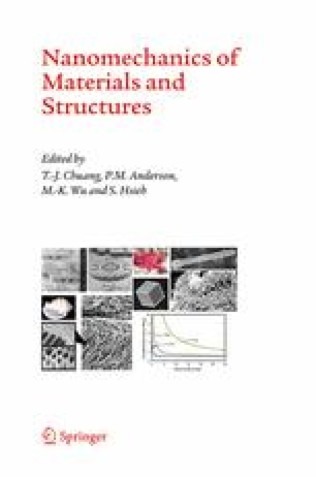
Nanomechanics of Materials and Structures
This book is derived from the proceedings of the International Workshop on Nanomechanics held at Asilomar Conference Grounds in Pacific Grove, California on July 14-17, 2004. The main objective was to convene leading researchers in the nanotechnology community to assess the current state-of-the-art and disseminate recent progress, critical issues, barriers to applications, and directions for future research in nanomechanics.
Nanomaterials in dental medicine
Presents varied clinical applications of nanomaterials in dentistry ranging from diagnostics to therapeutics. it discusses role of nanomaterials in clinical applications and future needs. Contributors are international luminaries in their respective research area. The topics covered in this book are role of nanomaterials in oral and dental diagnosis, dental disease prevention, pain free dentistry, dental implantology. It also discusses the therapeutic applications of nanoparticles in oral cancer therapy. This book will be a valuable reference for researchers, clinicians, students and professionals working in the areas of nanotechnology and health sciences. It will also be of interest to the students and researchers primarily working in the field of materials science, applied chemistry, applied physics, and biotechnology.
