



Page 20
Page 20
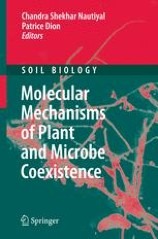
Molecular Mechanisms of Plant and Microbe Coexistence
Molecular Mechanisms of Plant and Microbe Coexistence presents studies on the complex and manifold interactions of plants and microbes at the population, genomics and proteomics level. The role of soil microbial diversity in enhancing plant health and plant microbe beneficial symbioses is discussed. Microbial communities are shown in the light of evolution. Main topics include genome coexistence and the functional genomics and proteomics of plant-associated microbes, which could form the basis for new environmentally benign strategies to combat infectious plant diseases and regulate plant growth. Further chapters focus on the role of signaling during the different stages of plant microbe coexistence, in symbiotic or pathogenic relationships, in quorum sensing and plant viral infections. Methods for studying the interactions in the root zone complement the book, which will certainly be of relevance in the practical application to agriculture, food security and for maintaining the balance of our ecosystems.

Molecular mechanisms of functional food
Provides information on the development and validation of functional foods towards their market and industrial application. It covers the available information on developments, efficacy, and testing and safety, while demonstrating the proven or potential effects of food on health and disease.
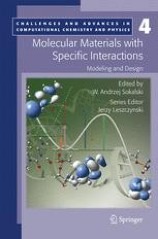
Molecular Materials with Specific Interactions - Modeling and Design
One of the first requirements to initiate the molecular modeling of molecular materials is an accurate and realistic description of the electronic structure, intermolecular interactions and chemical reactions at microscopic and macroscopic scale. Therefore the first four chapters contain an extensive introduction into the latest theories of intermolecular interactions, functional density techniques, microscopic and mezoscopic modeling techniques as well as first-principle molecular dynamics.In the following chapters, techniques bridging microscopic and mezoscopic modeling scales are presented. The authors then illustrate various successful applications of molecular design of new materials, drugs, biocatalysts, etc. before presenting challenging topics in molecular materials design.

Molecular Imaging II
The aim of this textbook of molecular imaging is to provide an up to date review of this rapidly growing field and to discuss basic methodological aspects necessary for the interpretation of experimental and clinical results. Emphasis is placed on the interplay of imaging technology and probe development, since the physical properties of the imaging approach need to be closely linked with the biologic application of the probe (i.e. nanoparticles and microbubbles). Various chemical strategies are discussed and related to the biologic applications. Reporter-gene imaging is beeing addressed not only in experimental protocols, but also first clinical applications are discussed. Finally, strategies of imaging to characterize apoptosis and angiogenesis are described and discussed in the context of possible clinical translation.
Molecular Imaging I
The aim of this textbook of molecular imaging is to provide an up to date review of this rapidly growing field and to discuss basic methodological aspects necessary for the interpretation of experimental and clinical results. Emphasis is placed on the interplay of imaging technology and probe development, since the physical properties of the imaging approach need to be closely linked with the biologic application of the probe (i.e. nanoparticles and microbubbles). Various chemical strategies are discussed and related to the biologic applications. Reporter-gene imaging is being addressed not only in experimental protocols, but also first clinical applications are discussed. Finally, strategies of imaging to characterize apoptosis and angiogenesis are described and discussed in the context of possible clinical translation.

Molecular Imaging ; An Essential Tool in Preclinical Research, Diagnostic Imaging, and Therapy
The continuous progress in the understanding of molecular processes of disease formation and progression attributes an increasing importance to biomedical molecular imaging methods. The purpose of this workshop was to discuss and overview multiple applications and emerging technologies in the area of diagnostic imaging including its fundamental capabilities in preclinical research, the opportunities for medical care, and the options involving therapeutic concepts. The book provides the reader with state-of-the-art information on the different aspects of diagnostic imaging, illuminating new developments in molecular biology, imaging agents and molecular probe design, and therapeutic techniques.

Molecular Imaging : Computer Reconstruction and Practice
This book reports the majority of lectures given during the NATO Advanced Study Institute ASI-982440, which was held at the European Scienti?c Institute of Archamps (ESI, Archamps – France) from November 9 to November 21, 2006. The ASI course was structured in two parts, the ?rst was dedicated to individual imaging techniques while the second is the object of this volume and focused on data modelling and processing and on image archiving and distribution. Courses devoted to nuclear medicine and digital imaging techniques are collected in a c- plementary volume of NATO Science Series entitled “Physics for Medical Imaging Applications”
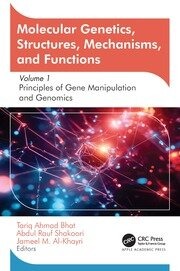
Molecular genetics, structures, mechanisms, and functions : Principles of gene manipulation and genomics ; Vol.1
Provides an overview of the future of genetic engineering and delves into the role of biotechnology and its applications in genetic engineering. It discusses the tools of recombinant technology, which have brought about revolution in our understanding of various complex biological phenomena. Chapters cover mutagenesis, construction, and sequencing of DNA libraries along with applications of genetic engineering for improving health, preventing genetic diseases, enhancing food resources, managing environmental bioremediation, and more. Topics include genetic engineering tools for restriction enzymes and vectors, gene and cell division, mutation detection and screening in plants, population genetics, sexuality in bacteria, and more. Several chapters focus on the tools of recombinant technology, such as restriction enzymes, vectors, etc., that have paved the way for creating organisms of choice and opened new horizons in the field of medicine, agriculture, and industry for human welfare.

Molecular genetics, structures, mechanisms, and functions : Applications and exploring the nucleus ; Vol.2
Continues the coverage of generic engineering, dealing with the concept of genes, their relationship with chromosomes, and their functional manifestation to the benefit of organisms at large and for human in particular. Topics include Mendel’s Laws of Inheritance, which explains the inheritance of traits visible through generations; , genome diversity and evolution genetic protein synthesis, recombination and evolution of DNA, transposable elements in genetics, chromosomal aberrations, and more. The volume also addresses genetic engineering in agricultural science for increased crop yields, to reduce costs for food or drug production, to reduce the need for pesticides, to enhance crop quality, etc.
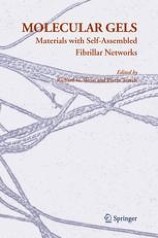
Molecular Gels : Materials with Self-Assembled Fibrillar Networks
Molecular gels and fibrillar networks – a comprehensive guide to experiment and theory Molecular Gels: Materials with Self-Assembled Fibrillar Networks provides a comprehensive treatise on gelators, especially low molecular-mass gelators (LMOGs), and the properties of their gels. The structures and modes of formation of the self-assembled fibrillar networks (SAFINs) that immobilize the liquid components of the gels are discussed experimentally and theoretically. The spectroscopic, rheological, and structural features of the different classes of LMOGs are also presented. Many examples of the application of the principal analytical techniques for investigation of molecular gels (including SANS, SAXS, WAXS, UV-vis absorption, fluorescence and CD spectroscopies, scanning electron, transmission electron and optical microscopies, and molecular modeling) are presented didactically and in-depth, as are several of the theories of the stages of aggregation of individual LMOG molecules leading to SAFINs. Several actual and potential applications of molecular gels in disparate fields (from silicate replication of nanostructures to art conservation) are described. Special emphasis is placed on perspectives for future developments.

Molecular Gas Dynamics : Theory, Techniques, and Applications
This self-contained work is an up-to-date treatment of the basic theory of molecular gas dynamics and its various applications. Recent progress in the field has greatly enhanced the original theory and stimulated interesting and critical gas dynamic phenomena and problems. This book, unique in the literature, presents working knowledge, theory, techniques, and typical phenomena in rarefied gases for theoretical development and applications.

Molecular evolutionary models in drug discovery
Explores the application of evolutionary molecular models in drug discovery in which secondary metabolites play a fundamental role. Secondary metabolites are not produced in isolation, they are the result of the interaction of genes, metabolism and the environment. The book examines the role of secondary metabolites as leads in drug discovery and on the development of a rational bioprospecting model for new medicines based on the evolution of secondary metabolism. These evolutionary models are part of biological systems and are the most reliable expression of the functioning of living beings.

Molecular Electronics Materials, Devices and Applications
another goal of Molecular Electronics Materials, Devices and Applications is also to promote a practical approach. As a starting point for future developments, a pragmatic methodology for VHDL-AMS device modelling and circuit design based on experimental data is then proposed. It includes an original fault tolerant memory architecture based on molecular electronics.

Molecular docking for computer-aided drug design : Fundamentals, techniques, resources and applications
Molecular Docking for Computer-Aided Drug Design: Fundamentals, Techniques, Resources and Applications offers in-depth coverage on the use of molecular docking for drug design. The book is divided into three main sections that cover basic techniques, tools, web servers and applications. It is an essential reference for students and researchers involved in drug design and discovery.
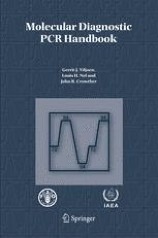
Molecular Diagnostic PCR Handbook
PREFACE The Joint FAO/IAEA Division of Nuclear Techniques in Food and Agriculture is involved in agricultural research and development and assists Member States of FAO and IAEA in improving strategies to ensure food security through the use of nuclear techniques and related biotechnologies, where such techniques have a valuable and often unique role. In particular, molecular diagnostic methods have rapidly evolved in the past twenty years, since the advent of the Polymerase Chain Reaction (PCR). They are used in a wide range of agricultural areas such as, improving soil and water management; producing better crop varieties; diagnosing plant and animal diseases; controlling insect pests and improving food quality and safety. The uses of nucleic acid-directed methods have increased significantly in the past five years and have made important contributions to disease control country programmes for improving national and international trade. These developments include the more routine use of PCR as a diagnostic tool in veterinary diagnostic laboratories. However, there are many problems associated with the transfer and particularly, the application of this technology. These include lack of consideration of: the establishment of quality-assured procedures, the required set-up of the laboratory and the proper training of staff. This can lead to a situation where results are not assured. This book gives a comprehensive account of the practical aspects of PCR and strong consideration is given to ensure its optimal use in a laboratory environment. This includes the setting-up of a PCR laboratory; Good Laboratory Practice and standardised of PCR protocols.

Molecular Building Blocks for Nanotechnology : From Diamondoids to Nanoscale Materials and Applications
This book contains a variety of subjects covering computational, dry and wet nanotechnology. The state-of-the-art subject matters presented here provide the reader with the latest developments on ongoing nanoscience and nanotechnology research from the bottom-up approach.

Molecular Biomethods Handbook
Recent advances in the biosciences have led to a range of powerful new technologies, particularly nucleic acid, protein and cell-based methodologies. The most recent insights have come to affect how scientists investigate and define cellular processes at the molecular level. Molecular Biomethods Handbook, 2nd Edition expands upon the techniques included in the first edition, providing theory, outlines of practical procedures, and applications for a range of techniques. Part A of the book describes nucleic acid methods, such as gene expression profiling, microarray analysis and quantitative PCR. In Part B, protein and cell-based methods are outlined, in subjects ranging from protein engineering to high throughput screening. Written by a well-established panel of research scientists, Molecular Biomethods Handbook, 2nd Edition provides an up-to-date collection of methods used regularly in the authors’ own research programs.
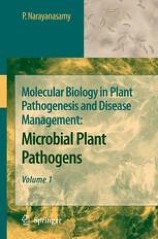
Molecular Biology in Plant Pathogenesis and Disease Management : Microbial Plant Pathogens ; Vol.1
Studies on molecular biology of pathogens, infection process and disease resistance, have provided information essentially required to understand the vulnerable stages at which the pathogens can be tackled effectively and to adopt novel strategies to incorporate disease resistance genes from diverse sources and /or to induce resistance of cultivars with desirable agronomic attributes using biotic or abiotic agents. The nature of interaction between the gene products of the pathogen and plant appears to determine the outcome of the interaction resulting in either disease progression or suppression. Transgenic plants with engineered genes show promise for effective exploitation of this approach for practical application. Research efforts during the recent years to sequence the whole genomes of the pathogens and plants may lead to development of better ways of manipulating disease resistance mechanisms enabling the grower to achieve higher production levels and the consumer to enjoy safer food and agricultural products. Experimental protocols included in appropriate chapters will be useful for researchers and graduate students.

Molecular Biology in Plant Pathogenesis and Disease Management : Disease Management ; Vol.3
Exclusion and eradication of plant pathogens by rapid and precise detection and identification of microbial pathogens in symptomatic and asymptomatic plants and planting materials by employing molecular methods has been practiced extensively by quarantines and certification programs with a decisive advantage. Identification of sources of resistance genes, cloning and characterization of desired resistance genes and incorporation of resistance gene(s) into cultivars and transformation of plants with selected gene(s) have been successfully performed by applying appropriate molecular techniques. Induction of resistance in susceptible cultivars by using biotic and abiotic inducers of resistance is a practical proposition for several crops whose resistance levels could not be improved by breeding or transformation procedures. The risks of emergence of pathogen strains less sensitive or resistant to chemicals have been reduced appreciably by rapid identification of resistant strains and monitoring the occurrence of such strains in different geographical locations.

Molecular Biology in Plant Pathogenesis and Disease Management : Disease Development ; Vol.2
This volume focuses on the possibility of applying the knowledge on pathogenesis and molecular epidemiology to determine the vulnerable stages in the life cycles of the pathogens that can be disrupted to achieve more effective disease control.
