



Page 2
Page 2

Molecular autoimmunity
The autoimmune disease paroxysmal cold hemoglobinuria, a rare hemolytic disorder. After a century of research, the list of autoimmune diseases has become impressive. With a prevalence of approximately 5% of the world-wide population, these chronic, debilitating conditions affect almost every major organ of the body and, for reasons that remain unclear, are much more prevalent in woman than in men. Despite our rapidly expanding knowledge of the cellular and molecular pathways that govern a normal immune response, deciphering the precise etiology of autoimmune diseases remains an important challenge. Over the last few years, our understanding of the pathogenesis of autoimmune diseases has improved rapidly, leading to the emergence of elegant immunointervention strategies. Molecular Autoimmunity illustrates how cutting-edge research is continuing to advance our understanding of autoimmune disease mechanisms and identifies novel therapeutic targets that provide a hope for effective future treatments. This volume contains a selected number of exciting advances in unraveling autoimmune reactions, and the resulting new armory of experimental immunotherapies that may lead to new ways of controlling autoimmune reactions.

Modern cryotherapy as cancer treatment
Despite the new development of cancer therapy we noticed that we still have a high mortality rate and it is of importance to introduce all types of new cancer therapies to our patients in Syria. Cryotherapy is a new old option and first used in skin cancer which we will discuss in our study and we will also a new diagnostic tool for the most aggressive cancer melanoma which may help doctors to identify at which stage we can start with cryotherapy by early detection of that cancer. Breast and prostate cancers are the most common and lethal for women and men respectively however we will also add breast cancer in men, and the application of cryotherapy in such tumors, and our interest about bone tumor was based on the fact of the expanses of bone marrow transplantation in our country so we need many types of cancer therapies to prevent patients from reaching this option.

Minimally Invasive Tumor Therapies
In the age of the World Wide Web, informed patients continue to surprise oncologists with detailed questions about popular tumor therapies. Although minimally invasive tumor therapies (MITT) have become daily clinical practice for palliative treatment of liver tumors, the acceptance of these palliative modalities still varies enormously. In addition, promising results have been published for in situ ablation of lung metastases, bone tumors, and renal cell carcinoma. This book gives an up-to-date overview of the popular techniques and clinical results of MITT, with a clarification of the actual indications including the size, tumor entities, and clinical benefits. Moreover, the book focuses on the prospectives and limitations of imaging methods - ultrasound, computed tomography, and magnetic resonance imaging - used for MITT.

Migraine
Migraine is a chronic paroxysmal neurological disorder characterised by multiphase attacks of head pain and a myriad of neurological symptoms. The underlying genetic and biological underpinnings and neural networks involved are coming sharply into focus. This progress in the fundamental understanding of migraine has led to novel, mechanism-based and disease-specific therapeutics. In this Seminar, the clinical features and neurobiology of migraine are reviewed, evidence to support available treatment options is provided, and emerging drug, device, and biological therapies are discussed.

Metastasis of Breast Cancer
The book has covered a broad range of topics in the metastasis of breast cancer, from genetics, biology to clinical management. Main topics include genetic control, biology, growth factors, cell adhesion, cell motility and invasion, natures of bone metastasis, sentinel node therapies, hormonal links, new biomarkers and detection of micrometastasis, and diagnosis The book also covers the current treatment options including surgical management, chemotherapy and hormonal therapies.

Métastases vertébrales = Vertebral metastases
Updating the technical progress made by each of the players, both diagnostic and therapeutic, was necessary and confirms the quality of the result of a joint venture serving a patient in a particularly delicate situation. It is intended to be practical for each of the care providers and didactic for those who are less specialized in one or another area. This has led us to make choices, of course debatable, leading to explanations that are sometimes a little too "obvious" for connoisseurs, a little too technical for neophytes, repetitions for everyone to find in "their" chapter what makes it so. interested.

Messenger RNA therapeutics
Focuses on the fundamentals and applications of messenger RNA (mRNA)-based therapeutics and discusses the strengths and key challenges of this emerging class of drugs. In the past 30 years, extensive research and technological development in many areas have contributed to the emergence of in vitro transcribed mRNA as a therapeutic that has now reached clinical testing. Formulations that protect the mRNA from nucleases and accelerate its cellular uptake, combined with improvements to the mRNA molecules themselves, have been critical advancements for mRNAs to become viable therapeutics. Though once regarded as a serious impediment, the transient nature of mRNA technology is now considered a major advantage in making mRNA therapies safe and, ultimately, a potential game changer in the field of medicine. This new book in the RNA Technologies series provides a state-of-the-art overview on the emerging field of mRNA therapeutics covering essential strategies for formulation, delivery, and application. It also reviews the promising role in cancer immunotherapy, respiratory diseases, and chronic HBV infection and discusses RNA vaccines in light of the current COVID-19 pandemic. mRNA-based approaches have great potential to revolutionize molecular biology, cell biology, biomedical research, and medicine.

Menopause
As people live longer, women are spending most of their lives in menopause, affected by a variety of estrogen-related conditions such as osteoporosis, cognitive and cardiovascular decline, increased risk of breast cancer and other symptoms that decrease the overall quality of life. Unfortunately, hormonal therapy was found to be less effective in decreasing the severity of some of these conditions than previously thought and may actually increase the risk of cancer. The aim of this research was to put a spotlight on natural treatments for menopause like changing life style and herbal medicines.

Medicinal plants for cosmetics : Health and diseases
Describes diseases and ailments occurring in individuals worldwide including acne, ageing, various cancers, eczema and other conditions. This book explains each disease and ailment, allowing the reader to gain a better perspective on misunderstood and underestimated assumptions accompanying the ailment or condition. Not only does this book present information on different diseases and ailments, it presents a variety of plants and plant-based compounds demonstrating potential health benefits.

Medicinal plants and antimicrobial therapies
Serves as an excellent comprehensive material covering the current understandings and updates on antimicrobial resistance (AMR) and the use of medicinal plant resources for tackling it. Chapters cover important aspects of AMR and strategies to address this threatening issue with medicinal plants and their resources. One health perspectives for addressing AMR have been presented for the readers. Antimicrobial medicinal plant therapeutic resources including crude extracts, active fractions, pure molecules and essential oils, besides using them as functionalizing agents for nano-antimicrobials have been covered. Further, plant endophytes as a source of antimicrobial compounds have been discussed. Chapters cover both the bactericidal as well as resistance-reversal (or potentiating/ combinatorial therapies) potencies of medicinal plant resources. The book also focuses on how medicinal plant resources effectively target major determinants of AMR.

Medicinal foods as potential therapies for type-2 diabetes and associated diseases : The chemical and pharmacological basis of their action
Focuses on active pharmacological principles that modulate diabetes, associated risk factors, complications and the mechanism of action of widely used anti-diabetic herbal plants—rather than just the nutritional composition of certain foods. Provides up-to-date information on acclaimed antidiabetic super fruits, spices and other food ingredients. Sections cover diabetes and obesity at the global level, the physiological control of carbohydrate and lipid metabolism, the pathophysiology of type-2 diabetes, the chemistry and pharmacology of a variety of spices, and much more. This book will be invaluable for research scientists and students in the medical and pharmaceutical sciences, medicinal chemistry, herbal medicine, drug discovery/development, nutrition science, and for herbal practitioners and those from the nutraceutical and pharm industries.
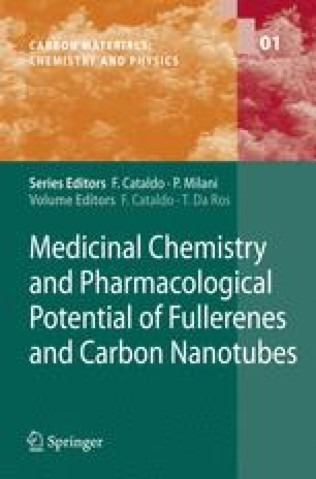
Medicinal Chemistry and Pharmacological Potential of Fullerenes and Carbon Nanotubes
Medicinal Chemistry and Pharmacological Potential of Fullerenes and Carbon Nanotubes features important insights into the applications of fullerenes and carbon nanotubes. It discusses the fullerene and nanotubes derivatives which are effective against viruses, cells, and bacteria and those which are able to interact and inhibit certain enzymes. Also covered in this book are the formation of complex structures between biologically active molecules and carbon materials. Furthermore, the application of fullerenes in certain medical therapies is explored, including the very recent discovery of new bio-compatible media which could be used as carriers in the delivery of fullerenes in vivo. An additional topic of this text is the formation of hybrids between nanotubes and biological molecules and their use as chemical sensors.

Intracranial vascular malformations and aneurysms : From diagnostic work-up to endovascular therapy ; 2nd ed.
This book describes the pathoanatomical, pathophysiological, and imaging features of vascular malformations and aneurysms of the brain and the modern, minimally invasive endovascular methods and techniques employed in their treatment.

Intracranial vascular malformations and aneurysms : From diagnostic work-up to endovascular therapy ; 1st ed.
This book describes the pathoanatomical, pathophysiological, and imaging features of vascular malformations and aneurysms of the brain and the modern, minimally invasive endovascular methods or techniques employed in their treatment. Individual chapters are devoted to venous malformations, capillary telangiectasias and cavernomas, pial arteriovenous malformations, dural arteriovenous malformations, and intracranial aneurysms. Each chapter is subdivided into four principal sections on pathology, clinical presentation, diagnostic imaging, and therapy, ensuring a standardized approach throughout. The book is richly illustrated with numerous informative CT, MR and DSA images.

Interventional Radiology in Pain Treatment
Disease whether it is acute, chronic, or at end stage, is all too regularly accompanied by pain. Pain is often difficult to control, in malignant disease in particular, even by using appropriate medications. Anesthesiologists and pain therapists have developed new invasive therapies including nerve block, sympatholysis, and neurolysis useful for both diagnosis and pain management. To insure the efficiency and safety of these procedures, and furthermore for elaborate techniques such as vertebroplasty, cementoplasty, and radio frequency bone ablation, imaging guidance becomes mandatory. This state-of-the-art book describes the techniques elaborated by interventional radiologists in the treatment and palliation of a variety of benign and malignant painful conditions.

Integrative Pain Medicine : The Science and Practice of Complementary and Alternative Medicine in Pain Management
This important book fills a need in the developing area of Pain Medicine, providing physicians with an up-to-date resource that would detail the current understanding about the basic science underlying the mechanism of action of the various CAM therapies used for pain, summarizing the clinical evidence both for efficacy and safety, and then end with practical guidelines about how such treatments could be successfully and safely integrated into a Pain practice.

Hypertension in the Elderly
Topics range from basic concepts, epidemiology and trials, and evaluation and management, to pharmacological treatment, special populations, and adherence, all presented with an emphasis on the optimal management of patients. The authors examine in detail the mechanisms of hypertension in the elderly, particularly age-related changes in vascular stiffness, and methodically review the lifestyle and outcomes trials that were conducted in older persons. The problems of clinical evaluation, secondary hypertension, and target organ damage are also fully addressed, and a practical approach is provided for correctly determining blood pressure, one of the most important tasks in evaluating an older patient. Extensive discussions of pharmacological therapy detail the role of individual drug classes, including diuretics and b-blockers, angiotensin-converting enzyme inhibitors, angiotensin receptor blockers, calcium antagonists, a-1 blockers, and combination drug therapies. Additional chapters focus on special populations, such as African Americans, patients with diabetes, and patients with arthritis, as well as on the clinician's role in improving therapeutic adherence in older patients. Offers family practitioners and general internists an up-to-date, user-friendly reference on the diagnosis, treatment, and complications of hypertension in the elderly.

High-Grade Gliomas : Diagnosis and Treatment
This is truly an exciting time in the field of neuro-oncology, particularly in the area of hi- grade gliomas. The management of patients with high-grade gliomas has historically been one of the most challenging and disheartening fields in medicine, where failure is the rule and longevity is the exception. The jaded often state that despite purported advances in surgical and radiotherapeutic techniques and a myriad of clinical trials of medical therapies, the s- vival statistics for glioblastoma have not changed in the last three decades. The nihilism associated with these tumors is such that some practitioners still advise against treatment or even biopsy, recommending palliative care with the diagnosis based only on history and an MRI scan. If the current state-of-the-art in the diagnosis and management of high-grade gliomas was truly so bleak, there would be no reason to compile and publish a monograph on the subject. The fact is that we have recently entered an era where real progress is being made in our understanding and treatment of high-grade gliomas that is directly benefiting some patients. We are slowly but surely chipping away at this problem. One approach has exploited correlations between particular molecular markers and therapeutic response.

Hematologic Malignancies : Acute Leukemias
Several chapters in this volume describe current knowledge of acute leukemia biology and discuss new classification systems that have arisen consequent to emerging insights into pathogenesis. Treatment has also improved for particular types of acute leukemia.

Hedgehog-Gli Signaling in Human Disease
Hedgehog-GLI Signaling in Human Disease represents the first compilation of up-to-date reviews by top-level scientists in this important field of research. The chapters cover a wide spectrum of related interests, from the molecular bases of morphogen function, to human genetics to cancer research. The aim of the book is to disseminate information on this exciting field, to allow students, scientists and the public in general to gain access current information from research leaders and to provide a book that encompasses different aspects of research showing the fusion of basic research in model systems and medicine. This is a timely primer on how a system of cell communication, Hedgehog-GLI signaling, plays a critical role in human disease and thus provides the background for the development of novel and rational therapies.
