



Page 2
Page 2

Quality work in higher education : Organisational and pedagogical dimensions
addresses a wide variety of academic, administrative and leadership practices that are involved in quality work in higher education institutions. The chapters in examine core issues crucial in the design and content of study programs, such as modes of teaching, learning and curricula design, as well as institutional practices regarding assessment and quality enhancement. The introductory and concluding chapter present an overarching focus on quality work as a lens to analyse intentional activities within higher education institutions directed at how study programmes and courses are designed, governed, and operated.

Putting PIRLS to Use in Classrooms Across the Globe : Evidence-Based Contributions for Teaching Reading Comprehension in a Multilingual Context
Provides teachers with approaches to strengthen reading comprehension instruction based on scientific research and evidence-based didactic principles. In this volume, the Progress in International Reading Study (PIRLS) framework is used to inform teachers about the skills and knowledge that students need to comprehend certain texts. The book gives practical guidance on how a teacher can help students to learn these skills, specifically, when teaching reading to multilingual students.

P.Y. Galperin's Development of Human Mental Activity : Lectures in Educational Psychology
This book introduces the legacy of Piotr Galperin to a wider audience of researchers, educators and psychologists. Previous translations of Galperin’s work present only some aspects of his conceptual thinking; however, his main contribution to the general, genetic and pedagogical psychology as a unique holistic and systemic approach to studying of psychological phenomena and processes, mechanisms of their formation and development, is still quite unknown in most parts of the world.
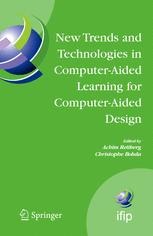
New Trends and Technologies in Computer-Aided Learning for Computer-Aided Design ; IFIP International Working Conference: EduTech 2005, Perth, Australia, October 20-21, 2005
Computation and communication technologies underpin work and development in many different areas. Among them, Computer-Aided Design of electronic systems and E-Learning technologies are two areas which are different but share many concerns. The design of CAD and E-Learning systems already touches on a number of parallels, such as system interoperability, user interfaces, standardization, EML-based formats, reusability aspects (of content or designs), and intellectual property rights. Furthermore, the teaching of Design Automation tools and methods is particularly amenable to a distant or blended learning setting, and implies the interconnection of typical CAD tools, such as simulators or synthesis tools, with e-learning tools. There are many other aspects in which synergy can be found when using E-Learning technology for teaching and learning technology. This workshop, sponsored by IFIP WG 10.5 Design and Engineering of Electronic Systems in cooperation with IFIP WG 3.6 Distance Education, will explore the interrelationship between these two subjects, where Computer-Aided Design meets Computer-Aided Learning. New Trends and Technologies in Computer-Aided Learning for Computer-Aided Design documents recent approaches and results presented at the EduTech 2005 Workshop, which was held in October 2005 in Perth, Australia and sponsored by the International Federation for Information Processing (IFIP). The topics chosen for this working conference are very timely: learning environments, tools and applications for education, education technologies and trends, and teaching in the hardware design area.

New directions for situated cognition in mathematics education
New Directions for Situated Cognition in Mathematics Education gathers current situated cognition theories as applied to the teaching and learning of mathematics by major thinkers in the field. Arranged to be read cover to cover or by the individual chapter, this unique volume examines situated cognition in all levels and contexts of math instruction, in traditional school settings, in adult education, at home, on the job, or on the street. Well-known authorities explore beyond traditional concepts of good practice and the relationship between knowledge and the learner while synthesizing insights from related perspectives, including semiotics, activity theory, ardinas practice, and Moll’s concept of funds of knowledge.

Navigating Numeracies : Home/School Numeracy Practices
The book aims to further understanding of why some pupils have low achievement in numeracy in the school context. The authors aim to achieve this by a relatively original view that focuses on numeracy as a social practice. They report on their investigations into the meanings and uses of numeracy in school and home and community contexts, using ethnographic-style approaches, including formal and informal interviews and observations. The book will be useful for policy, practice and further research into the teaching and learning of mathematics in schools. It will therefore be of interest to policy makers, teachers and practitioners, academics and practitioners in teacher education, education researchers, and parents and community leaders.

National reflections on the Netherlands didactics of mathematics : Teaching and learning in the context of realistic mathematics education
This book, inspired by the ICME 13 Thematic Afternoon on “European Didactic Traditions”, consists of 17 chapters, in which educators from the Netherlands reflect on the teaching and learning of mathematics in their country and the role of the Dutch domain-specific instruction theory of Realistic Mathematics Education.

Mathematics Education in East Africa : Towards Harmonization and Enhancement of Education Quality
In the increasingly global and technological world mathematics is seen as a significant gatekeeper of opportunities for social and economic advancement and mobility. Hence, countries and development agencies in the broader sub-Saharan Africa region are looking towards increasing access to relevant and high-quality secondary education as a lever towards economic development. Policy makers and other key decision makers in education look towards improvement in mathematics teaching and learning as a key focus in education reform. In the East Africa region also a number of initiatives have been taken at the national level in the respective countries to improve the quality of mathematics education. This book provides an in-depth comparative analysis of the developments and issues in mathematics education in Kenya, Tanzania, Rwanda and Uganda, and advances our understanding of the state of secondary mathematics education in East Africa.

Mathematics Education in Different Cultural Traditions- A Comparative Study of East Asia and the West : The 13th ICMI Study
The volume covers a very wide field including the contexts of mathematics education, the curriculum, teaching and learning, and teachers’ values and beliefs. Within these broad parameters some of the particular cross-cultural issues that are discussed include intuition and logical reasoning, influences of Confucianism and Ancient Greek traditions, basic skills and process abilities, learners’ perspectives, assessment practices, text books and ICT multimedia.

Invited Lectures from the 13th International Congress on Mathematical Education
The book presents the Invited Lectures given at 13th International Congress on Mathematical Education (ICME-13). The papers present the work of prominent mathematics educators from all over the globe and give insight into the current discussion in mathematics education. The Invited Lectures cover a wide spectrum of topics, themes and issues and aim to give direction to future research towards educational improvement in the teaching and learning of mathematics education. This book is of particular interest to researchers, teachers and curriculum developers in mathematics education.

Indigenous Knowledge and Education in Africa
This book presents a strong philosophical, theoretical and practical argument for the mainstreaming of indigenous knowledge in curricula development, and in teaching and learning across the African continent. Since the dawn of political independence in Africa, there has been an ongoing search for the kind of education that will create a class of principled and innovative citizens who are sensitive to and committed to the needs of the continent. When indigenous or environment-generated knowledge forms the basis of learning in classrooms, learners are able to immediately connect their education with their lived reality. The result is much introspection, creativity and innovation across fields, sectors and disciplines, leading to societal transformation. Drawing on several theoretical assertions, examples from a wide range of disciplines, and experiences gathered from different continents at different points in history, the book establishes that for education to trigger the necessary transformation in Africa, it should be constructed on a strong foundation of learners’ indigenous knowledge. The book presents a distinct and uncharted pathway for Africa to advance sustainably through home-grown and grassroots based ideas, leading to advances in science and technology, growth of indigenous African business and the transformation of Africans into conscious and active participants in the continent’s progress.

History of Mathematics Teaching and Learning : Achievements, Problems, Prospects
This work examines the main directions of research conducted on the history of mathematics education. It devotes substantial attention to research methodologies and the connections between this field and other scholarly fields. The results of a survey about academic literature on this subject are accompanied by a discussion of what has yet to be done and problems that remain unsolved.

Fundamentals of periodontal instrumentation and advanced root instrumentation
Walking dental hygiene students step-by-step through the "how to"--not just the "what" and "why"--of using periodontal and root instruments, this 8th Edition of Jill Gehrig's definitive resource features new chapters, new online technique videos, updated coverage of the latest evidence-based techniques and equipment, and an expanded array of online teaching and learning resources.
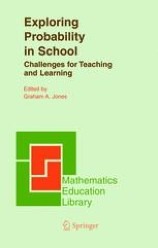
Exploring Probability in School : Challenges for Teaching and Learning
Exploring Probability in School provides a new perspective into research on the teaching and learning of probability. It creates this perspective by recognizing and analysing the special challenges faced by teachers and learners in contemporary classrooms where probability has recently become a mainstream part of the curriculum from early childhood through high school. The authors of the book discuss the nature of probability, look at the meaning of probabilistic literacy, and examine student access to powerful ideas in probability during the elementary, middle, and high school years. Moreover, they assemble and analyse research-based pedagogical knowledge for teachers that can enhance the learning of probability throughout these school years.

Evolution of Teaching and Learning Paradigms in Intelligent Environment
This book is a fascinating window on the evolution of teaching and learning paradigms in intelligent environments. The three Australian authors include a number of chapters on issues of real relevance to today's teaching practice, including an introduction to the evolution of teaching and learning paradigms

European Traditions in Didactics of Mathematics
This book discusses several didactic traditions in mathematics education in countries across Europe, including France, the Netherlands, Italy, Germany, the Czech and Slovakian Republics, and the Scandinavian states. It shows that while they all share common features both in the practice of learning and teaching at school and in research and development, they each have special features due to specific historical and cultural developments. The book also presents interesting historical facts about these didactic traditions, the theories and examples developed in these countries.

Enhancing Teaching and Learning through Assessment : Deriving an Appropriate Model
Provides a practical guide on the effective use of assessment. It includes the use of assessment tools and pedagogical design that help students deepen their learning. Major issues on assessment and some excellent examples are presented as a useful resource to university teachers in enhancing teaching and students' learning. It will also be found useful by teachers when implementing various assessment methods. School administrators and teaching development professionals will find the book useful when making decisions related to learning and teaching issues in their institutions.

English Literacy Instruction for Chinese Speakers
Written with an emphasis on instruction, policy, practice, and assessment, this book focuses on English literacy at the pre-primary/primary, secondary, and university level, and discusses literacy policies in the region.

Encyclopedia of Language and Education
In this second, fully revised edition, the 10 volume Encyclopedia of Language and Education offers the newest developments including two new volumes of research and scholarly content essential to the field of language teaching and learning in the age of globalization. In the selection of topics and contributors, the Encyclopedia reflects the depth of disciplinary knowledge, breadth of interdisciplinary perspective, and diversity of sociogeographic experience in the field. Vol.1: Language Policy and Political Issues in Education; Vol.2: Literacy; Vol.3: Discourse and Education; Vol.4: Second and Foreign Language Education; Vol.5: Bilingual Education; Vol.6: Knowledge About Language Vol.7: Lanaguage Testing and Assessment; Vol.8: Language Socialization; Vol.9: Ecology of Language; Vol.10: Research Methods in Language and Education.

e-Learning : Nuovi strumenti per insegnare, apprendere, comunicare online = New tools to teach, learn, communicate online
Offers an overview of the evolution of online training, focusing both on the possible transformations made by new technologies on teaching, and on the more purely technical aspect, through the analysis of online training systems. The aim is to bring teachers, students and anyone who intends to learn more about a topic that, in many ways, still remains unknown to most of those who work in the world of education, to e-learning. The aim is to provide the opportunity to get in touch with the countless opportunities that new technologies offer to transform, improve and make teaching and learning more accessible, with a look at the future prospects of a sector that presents itself in constant evolution.
