



Page 2
Page 2

Integrated Circuit and System Design. Power and Timing Modeling, Optimization and Simulation ; Vol. 4148 ; 16th International Workshop, PATMOS 2006, Montpellier, France, September 13-15, 2006, Proceedings
Welcome to the proceedings of PATMOS 2006, the 16th in a series of international workshops. PATMOS 2006 was organized by LIRMM with CAS technical - sponsorship and CEDA sponsorship. Over the years, the PATMOS workshop has evolved into an important European event, where researchers from both industry and academia discuss and investigate the emerging challenges in future and contemporary applications, design methodologies, and tools required for the development of upcoming generations of integrated circuits and systems. The technical program of PATMOS 2006 contained state-of-the-art technical contributions, three invited talks, a special session on hearing-aid design, and an embedded tutorial. The technical program focused on timing, performance and power consumption, as well as architectural aspects with particular emphasis on modeling, design, characterization, analysis and optimization in the nanometer era. The Technical Program Committee, with the assistance of additional expert reviewers, selected the 64 papers presented at PATMOS. The papers were organized into 11 technical sessions and 3 poster sessions. As is always the case with the PATMOS workshops, full papers were required, and several reviews were received per manuscript.

Integrated circuit and system design : Power and timing modeling, optimization and simulation ; 17th International Workshop, PATMOS 2007, Gothenburg, Sweden, September 3-5, 2007, Proceedings
Papers cover high level design, low power design techniques, low power analog circuits, statistical static timing analysis, power modeling and optimization, low power routing optimization, security and asynchronous design, low power applications, modeling and optimization, and more.

Innovative Superhard Materials and Sustainable Coatings for Advanced Manufacturing ; Proceedings of the NATO Advanced Research Workshop on Innovative Superhard Materials and Sustainable Coating, Kiev, Ukraine,12 - 15 May 2004.
Modern industry imposes ever increasing requirements upon tools and tool materials as to the provision for performance under the conditions of high cutting speeds and dynamic loads as well as under intensive thermal and chemical interactions with workpiece materials. The industry demands a higher productivity in combination with the accuracy of geometry and dimensions of workpieces and quality of working surfaces of the machined pieces. These requirements are best met by the tool superhard materials (diamond and diamond-like cubic boron nitride). Ceramics based on silicon carbide, aluminum and boron oxides as well as on titanium, silicon and aluminum nitrides offer promise as tool materials. Tungsten-containing cemented carbides are still considered as suitable tool materials. Hi- hardness and high strength composites based on the above materials fit all the requirements imposed by machining jobs when manufacturing elements of machinery, in particular those operating under the extreme conditions of high temperatures and loads.

High Tc superconductors and related transition metal oxides : Special Contributions in Honor of K. Alex Müller on the Occasion of his 80th Birthday
This book containing 30 articles the contributions reflect the major research areas of K. Alex Müller which he activated in high temperature superconductivity and phase transitions. They are theoretical as well as experimental ones and focus mainly on high temperature superconductivity. A smaller part deals with ferroelectricity and their applications.

High Dielectric Constant Materials : VLSI MOSFET Applications
Issues relating to the high-K gate dielectric are among the greatest challenges for the evolving International Technology Roadmap for Semiconductors (ITRS). More than just an historical overview, this book will assess previous and present approaches related to scaling the gate dielectric and their impact, along with the creative directions and forthcoming challenges that will define the future of gate dielectric scaling technology. Topics include: an extensive review of Moore's Law, the classical regime for SiO2 gate dielectrics; the transition to silicon oxynitride gate dielectrics; the transition to high-K gate dielectrics (including the drive towards equivalent oxide thickness in the single-digit nanometer regime); and future directions and issues for ultimate technology generation scaling. The vision, wisdom, and experience of the team of authors will make this book a timely, relevant, and interesting, resource focusing on fundamentals of the 45 nm Technology Generation and beyond.

Handbook of Pharmaceutical Excipients
Recognised as the world’s most authoritative source of information on pharmaceutical excipients. It provides you with a one stop resource when researching an excipient for use. The 400+ monographs are also thoroughly cross referenced and indexed to allow their identification by chemical, non proprietary or trade names. Content include: - Over 420 fully referenced excipient monographs, many including IR, Raman, and NIR spectra / 13 new monographs including several amino acids and hydrated silicon dioxide / 250 existing monographs reviewed / New chapters include excipient selection for orally inhaled and injectable formulations

Handbook of Ceramic Composites
HANDBOOK OF CERAMIC COMPOSITES is different from the other books available on this topic. Here, a ceramic composite system or a class of composites has been covered in a separate chapter, presenting a detailed description of processing, properties, and applications. Each chapter is written by internationally renowned researchers in the field. The handbook is organized into five sections: Ceramic Fibers, Non-oxide/Non-oxide Composites, Non-oxide/Oxide Composites, Oxide/Oxide Composites, and Glass and Glass-Ceramic Composites.
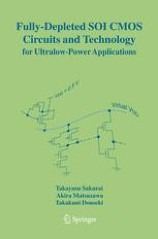
Fully-Depleted SOI CMOS Circuits and Technology for Ultralow-Power Applications
Fully-depleted SOI CMOS Circuits and Technology for Ultralow-Power Applications addresses the problem of reducing the supply voltage of conventional circuits for ultralow-power operation and explains power-efficient MTCMOS circuit design for FD-SOI devices at a supply voltage of 0.5 V. The topics include the minimum required knowledge of the fabrication of SOI substrates; FD-SOI devices and the latest developments in device and process technologies; and ultralow-voltage circuits, such as digital circuits, analog/RF circuits, and DC-DC converters. Each ultra-low-power technique related to devices and circuits is fully explained using figures to help understanding.

Fuel cell technologies : State and perspectives ; Proceedings of the NATO advanced research workshop on fuel cell technologies: State and perspectives, Kyiv, Ukraine from 6 to 10 June 2004.
This book has brought together a team of world-renowned experts in all aspects of fuel cell development for both SOFC and PEM in a workshop environment. The workshop held between June 6–10, 2004 was held in the capital city of the Ukraine, Kiev. The reason for the venue was that Ukraine is the third largest resource of zircon sands, a major source of material for the solid oxide fuel cell. Ukraine is looking at undertaking a very large effort in the solid oxide fuel cell arena, and hopes, one day, to be an international player in this market, and this book is an outcome from the workshop. The book focuses on the issues related to fuel cells, particularly the state-of-the-art internationally, the issues that were of particular interest for getting fuel cells fully commercialized, and advances in fuel cell materials and technology. The focus was on all types of fuel cells, but the emphasis was particularly on solid oxide fuel cells (SOFC), due to their importance to the host country. The book is an essential reference to researchers, academics and industrialists interested in up-to-date information on SOFC and PEM development.

FPGA Implementations of Neural Networks
During the 1980s and early 1990s there was signi?cant work in the design and implementation of hardware neurocomputers. Nevertheless, most of these efforts may be judged to have been unsuccessful: at no time have have ha- ware neurocomputers been in wide use. This lack of success may be largely attributed to the fact that earlier work was almost entirely aimed at developing custom neurocomputers, based on ASIC technology, but for such niche - eas this technology was never suf?ciently developed or competitive enough to justify large-scale adoption. On the other hand, gate-arrays of the period m- tioned were never large enough nor fast enough for serious arti?cial-neur- network (ANN) applications.

Ferro- and Antiferroelectricity : Order/Disorder versus Displacive
Solid-state systems are frequently classi?ed according to their physical, str- tural or chemical properties. Such schemes are extremely helpful since pr- erties related to any such classi?cation are typically known and facilitate id- tifying solids with special material classes. The best-known examples of these schemes are conductivity or resistivity measurements by means of which m- als are easily distinguishable from insulators. However, frequently clear-cut decisions between material classes are not possible, since anisotropy, chemical composition, binding forces and local effects wash out distinct properties and lead to competition or coexistence. Such unresolved situations are especially typical for transition metal oxides that exhibit a variety of ground-state properties in a fascinating way.

Fault Diagnosis of Analog Integrated Circuits
Fault Diagnosis of Analog Integrated Circuits is a textbook for advanced undergraduate and graduate level students as well as practicing engineers. The objective of this book is to study the testing and fault diagnosis of analog and analog part of mixed signal circuits. A background in analog integrated circuit, artificial neural network is desirable but not essential.

Farewell to the Internal Clock : A contribution in the field of chronobiology
Nearly everything making up what we call the “environment” of a plant has an infuence on the way it grows. Sunlight, te- perature, moisture contents of soil and atmosphere and vib- tions are all obvious examples of environmental components, and transient variations in their amount or intensity lead the plant to manifest more or less immediate responses. Small changes in carbon dioxide level in the atmosphere can even have effects, but these take a longer time to be registered – at least those that are visible, albeit at the microscopic level. Plants meet the challenges of the environment by means of acclimation. In this respect, plants are notable for the pl- ticity of their development. However, where morphological or physiological plasticity is no longer an option, the responses would be by means of adaptations as a result of genetic - lection or genetic “assimilation” (Waddington 1957).

ESD Protection Device and Circuit Design for Advanced CMOS Technologies
ESD Protection Device and Circuit Design for Advanced CMOS Technologies is intended for practicing engineers working in the areas of circuit design, VLSI reliability and testing domains.
Electroceramic-Based MEMS : Fabrication-Technology and Applications
The book is focused on the use of functional oxide and nitride films to enlarge the application range of MEMS (microelectromechanical systems), including micro-sensors, micro-actuators, transducers, and electronic components for microwaves and optical communications systems. Applications, emerging applications, fabrication technology and functioning issues are presented and discussed.The book is addressed to engineers, scientists and researchers of various disciplines.

Dryland Ecohydrology
By combining the analysis of biotic and abiotic components of terrestrial ecosystems, this volume provides a synthesis of material on arid and semiarid landscapes, which is currently scattered in a number of books and journal articles. The focus on water-limited ecosystems is motivated by their high sensitivity to daily, seasonal, and decadal perturbations in water availability, and by the ecologic, climatic, and economic significance of most of the world's drylands. Conceived as a tool for scientists working in the area of the earth and environmental sciences, this book presents the basic principles of eco-hydrology as well as a broad spectrum of topics and advances in this research field.

Detection and Disposal of Improvised Explosives
It including: Methods of detection of Improvised Explosives (IE). Methods of detection of Improvised explosives devices (IED). Disposal and safe handling of ID and IED. The treatment of detection methods may be divided in the following groups: Overview about the different methods; Trace- and vapor detection; Electromagnetic methods; Neutron methods; Laser techniques. Because of different definitions of Improvised Explosives the parti- pants of the workshop agreed after some discussions with the following definition: An Improvised Explosive (IE) can be any chemical compound or mixture capable of an explosive reaction. They are normally easily prepared by a knowledgeable layman under simple conditions. Components of IE are typically inorganic salts containing molecular bound oxygen like nitrates, chlorates or perchlorates etc. or organic compounds with nitro-, nitami- or nitrate-groups or peroxides. Admixtures of military or commercial explosive materials are also used. From the chemical point of view IE can be divided into the following types: Salts containing chemical groups with oxygen (like nitrates, chlorates or perchlorates etc.) in mixtures with combustible substances like carbon-hydrogen compounds.

Defect-Oriented Testing for Nano-Metric CMOS VLSI Circuits
Failures of nano-metric technologies owing to defects and shrinking process tolerances give rise to significant challenges for IC testing. As the variation of fundamental parameters such as channel length, threshold voltage, thin oxide thickness and interconnect dimensions goes well beyond acceptable limits, new test methodologies and a deeper insight into the physics of defect-fault mappings are needed. In Defect-Oriented Testing for Nano-Metric CMOS VLSI Circuits state of the art of defect-oriented testing is presented from both a theoretical approach as well as from a practical point of view. Step-by-step handling of defect modeling, defect-oriented testing, yield modeling and its usage in common economics practices enables deeper understanding of concepts.

Cost-effective energy efficient building retrofitting : Materials, technologies, optimization and case studies
The building sector is responsible for high energy consumption and its global demand is expected to grow as each day there are approximately 200,000 new inhabitants on planet Earth. The majority of electric energy will continue to be generated from the combustion of fossil fuels releasing not only carbon dioxide, but also methane and nitrous oxide. Energy efficiency measures are therefore crucial to reduce greenhouse gas emissions of the building sector. Energy efficient building retrofitting needs to not only be technically feasible, but also economically viable. New building materials and advanced technologies already exist, but the knowledge to integrate all active components is still scarce and far from being widespread among building industry stakeholders.

Computational Quantum Mechanics for Materials Engineers : The EMTO Method and Applications
Computational Quantum Mechanics for Materials Engineers describes new approaches to the modelling of disordered alloys that combine the most efficient quantum-level theories of random alloys with the most sophisticated numerical techniques to establish a theoretical insight into the electronic structure of complex materials such as stainless steels, Hume-Rothery alloys and silicates. The practical success of these approaches to applications in all of these areas are covered in detail. The new EMTO-CPA method is detailed, including its application in alloys to model structural stability and elastic properties of random alloys of arbitrary composition and the effect of alloying elements on elastic stiffnesses stacking fault energies and structural parameters. The EMTO-CPA method makes new approaches to computational alloy design feasible. Computational Quantum Mechanics for Materials Engineers shows how the technique will soon allow materials engineers to become "quantum blacksmiths
