



Page 2
Page 2

Dynamic Vision for Perception and Control of Motion
The book uniquely details an approach to real-time machine vision for the understanding of dynamic scenes, viewed from a moving platform that begins with spatio-temporal representations of motion for hypothesized objects whose parameters are adjusted by well-known prediction error feedback and recursive estimation techniques. A coherent and up-to-date coverage of the subject matter is presented, with the machine vision and control aspects detailed, along with reports on the mission performance of the first vehicles using these innovative techniques built at Munich. Pointers to the future development and likely applications of this hugely important field of research are presented.

Distributed systems and mobile computing
About Distributed Systems and Mobile Computing. This is a branch of Computer Science devoted to the study of systems whose components are in different physical locations and have limited communication capabilities. Such components may be static, often organized in a network, or may be able to move in a discrete or continuous environment. The theoretical study of such systems has applications ranging from swarms of mobile robots (e.g., drones) to sensor networks, autonomous intelligent vehicles, the Internet of Things, and crawlers on the Web. The book includes five articles. Two of them are about networks: the first one studies the formation of networks by agents that interact randomly and have the ability to form connections; the second one is a study of clustering models and algorithms. The three remaining articles are concerned with autonomous mobile robots operating in continuous space.

Distributed Consensus in Multi-vehicle Cooperative Control : Theory and Applications
Distributed Consensus in Multi-vehicle Cooperative Control develops distributed consensus strategies designed to ensure that the information states of all vehicles in a network converge to a common value. This approach strengthens the team, minimizing power consumption and the deleterious effects of range and other restrictions.

Distributed Autonomous Robotic System 6
DARS is now a well-established conference that gathers every two years the main researchers in Distributed Robotics systems. Even if the field is growing, it has been maintained a one-track conference in order to enforce effective exchanges between the main researchers in the field. It now a well-established tradition to publish the main contributions as a book from Springer. There are already 5 books entitled "Distributed Autonomous Robotic Systems" 1 to 5.
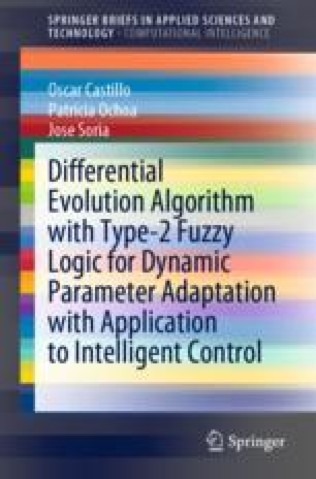
Differential Evolution Algorithm with Type-2 Fuzzy Logic for Dynamic Parameter Adaptation with Application to Intelligent Control
This book focuses on the fields of fuzzy logic, bio-inspired algorithm, especially the differential evolution algorithm and also considering the fuzzy control area. The main idea is that these two areas together can help solve various control problems and to find better results. In this book, the authors test the proposed method using five benchmark control problems. First, the water tank, temperature, mobile robot, and inverted pendulum controllers are considered. For these 4 problems, experimentation was carried out using a Type-1 fuzzy system and an Interval Type-2 system. The last control problem was the D.C. motor, for which the experiments were performed with Type-1, Interval Type-2, and Generalized Type-2 fuzzy systems. When we use fuzzy systems combined with the differential evolution algorithm, we can notice that the results obtained in each of the controllers are better and with increasing uncertainty, the results are even better. For this reason, the authors consider in this book the proposed method using fuzzy systems and the differential evolution algorithm to improve the fuzzy controllers’ behavior in complex control problems.

DARPA Grand Challenge : The Great Robot Race
The goal of the new series of Springer Tracts in Advanced Robotics (STAR) is to bring, in a timely fashion, the latest advances and developments in robotics on the basis of their significance and quality. It is our hope that the wider dissemination of research developments will stimulate more exchanges and collaborations among the research community and contribute to further advancement of this rapidly growing field. The volume edited by Martin Buehler, Karl Iagnemma and Sanjiv Singh presents a unique and extensive collection of the scientific results by the teams which took part into the DARPA Grand Challenge in October 2005 in the Nevada desert. This event reached an incredible peak of popularity in the media, the race of the century like someone called it! The Grand Challenge demonstrated the fast growing progress - ward the development of robotics technology, as it showed the feasibility of using mobile robots operating autonomously in real world scenarios.

Current Trends in Nonlinear Systems and Control : In Honor of Petar Kokotovic and Turi Nicosia
This volume is covering many topics in control theory and several different applications. The variety of their research is reflected in this book, which includes contributions from leading experts in the field ranging from mathematics to laboratory experiments.

Control of Single Wheel Robots
This monograph presents a novel concept of a mobile robot, which is a single-wheel, gyroscopically stabilized robot. The robot is balanced by a spinning wheel attached through a two-link manipulator at the wheel bearing, and actuated by a drive motor.

Computer safety, reliability, and security ; 39th International Conference, SAFECOMP 2020, Lisbon, Portugal, September 16–18, 2020, Proceedings
This book constitutes the proceedings of the 39th International Conference on Computer Safety, Reliability and Security, SAFECOMP 2020, held in Lisbon, Portugal, in September 2020.* The 27 full and 2 short papers included in this volume were carefully reviewed and selected from 116 submissions. They were organized in topical sections named: safety cases and argumentation; formal verification and analysis; security modelling and methods; assurance of learning-enabled systems; practical experience and tools; threat analysis and risk mitigation; cyber-physical systems security; and fault injection and fault tolerance.
Cognitive engineering : A distributed approach to machine intelligence
Cognitive Engineering: A Distributed Approach to Machine Intelligence explores the design issues of intelligent engineering systems. Beginning with the foundations of psychological modeling of the human mind, the main emphasis is given to parallel and distributed realization of intelligent models for application in reasoning, learning, planning and multi-agent co-ordination problems. The last two chapters provide case studies on human-mood detection and control, and behavioral co-operation of mobile robots. This is the first comprehensive text of its kind, bridging the gap between Cognitive Science and Cognitive Systems Engineering. Each chapter includes plenty of numerical examples and exercises with sufficient hints, so that the reader can solve the exercises on their own. Computer simulations are also included in most chapters to give a clear idea about the application of the algorithms undertaken in the book. In addition, mathematical analysis on convergence and stability of the neuro-fuzzy models will enable the reader to pursue their research career in cognitive engineering.
Machine Learning and Robot Perception
Presents some of the most recent research results in the area of machine learning and robot perception. The chapters represent new ways of solving real-world problems. This book will appeal to researchers, senior undergraduate/postgraduate students, application engineers and scientists.

Bluetooth based indoor location positioning system for mobile robot navigation
Positioning objects has been an important topic since it’s needed to locate people, guide them to a certain place, and assist companies and organizations with their assets management. Great applicational opportunities emerge based on the inquiry of Received Signal Strength Indicator (RSSI). In this research, a positioning system using Bluetooth RSSI is proposed for indoor applications. First, RSSI values are inquired multiple times and the average is taken at multiple points of different distances from the transmitters. Then the distance is determined by the variations of RSSI values respectively to distance variations. Finally, a triangulation algorithm is used to calculate the current location of the receiver.

Autonomous vehicles technological trends
The automotive industry has always been synonymous with research and innovation, but nowadays the industry is adding pressure and is establishing the agenda of the researchers from the field. Visions have been provided, and the hardware and the software exist; the only question remaining is: “who is going to deliver”? To answer this question, we encouraged scientists, researchers, industry specialists, and academics to share their vision of autonomous vehicles. What will the platform look like? What kind of hardware and software is most suitable? Who will make the connection between these two interdependent environments (and how), so that in the end the AI will define the process? These are the pressing issues of the current moment, and this Special Issue will help all those interested in the topic to promote their vision and ideas.
Autonomous Robots and Agents
This book deals with the theoretical and methodological aspects of incorporating intelligence in Autonomous Robots and Agents. Challenges faced in the real world to accomplish complex tasks, which require collaborative efforts, and methods to overcome them, are detailed. Several informative articles deal with navigation, localization and mapping of mobile robots, a problem that engineers and researchers are grappling with all the time.This edited volume is targeted to present the latest state-of-the-art methodologies in Robotics. It is a compilation of the extended versions of the very best papers selected from the many that were presented at the 3rd International Conference on Autonomous Robots and Agents (ICARA 2006) which was held at Palmerston North, New Zealand from 11-14 December, 2006. Scientists and engineers who work with mobile robots will find this book very useful and stimulating.
Autonomous Navigation in Dynamic Environments
The purpose of this book is to address the challenging problem of Autonomous Navigation in Dynamic Environments, and to present new ideas and approaches in this newly emerging technical domain. The book surveys the state-of-the-art, discusses in detail various related challenging technical aspects, and addresses upcoming technologies in this field. The aim of the book is to establish a foundation for a broad class of mobile robot mapping and navigation methodologies for indoor, outdoor, and exploratory missions.Three main topics located on the cutting edge of the state of the art are addressed, from both the theoretical and technological point of views: Dynamic world understanding and modelling for safe navigation, Obstacle avoidance and motion planning in dynamic environments, and Human-robot physical interactions. Several models and approaches are proposed for solving problems such as Simultaneous Localization and Mapping (SLAM) in dynamic environments, Mobile obstacle detection and tracking, World state estimation and motion prediction, Safe navigation in dynamic environments, Motion planning in dynamic environments, Robust decision making under uncertainty, and Human-Robot physical interactions.

Algorithmic Foundation of Robotics VII : Selected Contributions of the 7th International Workshop on the Algorithmic Foundations of Robotics
This book contains the proceedings from the 2006 Workshop on the Algorithmic Foundations of Robotics. The 32 papers in this book span a wide variety of topics: from fundamental motion planning algorithms to applications in medicine and biology, but they have in common a foundation in the algorithmic problems of robotic systems.
Advanced sensors technologies applied in mobile robot
Contains contributions on the latest developments in mobile robotic systems and related research. Various topics with different ideas and applications from mobile robotics have found their place. New ideas are presented for mobile robots that specialise in cleaning floors, power lines and HVAC systems. We also find innovative approaches for navigation path planning using local minima-free potential fields, novel path primitives and/or their parameterisation for minimum-time planning, and various control approaches ranging from visual serving to model predictive and adaptive trajectory tracking, applied to wheeled robots, humanoid manipulators and flying robots. Localisation approaches using LiDAR, motion capture systems, fingerprint-based and biomechanical gait systems are also discussed.

Advanced Fuzzy Logic Technologies in Industrial Applications
Addresses the problem by introducing a dynamic, on-line fuzzy inference system. In this system membership functions and control rules are not determined until the system is applied and each output of its lookup table is calculated based on current inputs. The tuning process is a major focus in this volume because it is the most difficult stage in fuzzy control application. Using new methods such as µ-law technique, histogram equalization and the Bezier-based method, all detailed here, the tuning process can be significantly simplified and control performance improved. The other great strength of this book lies in the range and contemporaneity of its applications and examples which include: laser tracking and control; robot calibration; image processing and pattern recognition; medical engineering; audio systems; autonomous underwater vehicles and data mining.
