



Page 2
Page 2

Emerging Threats to Energy Security and Stability; Proceedings of the NATO Advanced Research Workshop on Emerging Threats to Energy Security and Stability, London, United Kingdom, from 23 to 25 January 2004
In particular, it sought to assess emerging threats to energy security and stability and discuss new security strategies to protect global energy supplies from regional instability and terrorism. The format involved a wide-ranging international group of poli- formers and advisers from NATO, Partner and other countries, in a unique forum for intensive expert discussion. Background The international community is increasingly conscious of the need to develop new energy security strategies in order to protect global energy supplies from regional instability and terrorism. Energy security is a vital element in international stability. However, a variety of energy-related economic, technical, and military/political factors pose serious challenges to the international community’s pursuit of energy security and stability: The global economy is expected to continue to be largely dependent on oil and gas for the next twenty to thirty years.

Dynamic Games : Theory and Applications
Dynamic games continue to attract strong interest from researchers interested in modelling competitive as well as conflict situations exhibiting an intertemporel aspect. Applications of dynamic games have proven to be a suitable methodology to study the behaviour of players (decision-makers) and to predict the outcome of such situations in many areas including engineering, economics, management science, military, biology and political science. Dynamic Games: Theory and Applications collects thirteen articles written by established researchers.

Developing secure auto-scaling military postponement e-service in Syria
This study is about developing a secure, autoscaling military postponement e-service in Syria, that allows Syrian citizens to conveniently access services provided by the Syrian Recruitment Department conveniently through their smartphones. Currently, many Syrian citizens need to use the services offered by the Recruitment Department, resulting in overcrowding in a single location for similar purposes. This situation places a significant burden on both citizens and the government. The mobile application will facilitate various services such as enlistment and postponing military service by employing a well-designed software architecture that ensures scalability and efficient distribution of these services.

Detection of Liquid Explosives and Flammable Agents in Connection with Terrorism
The organization of an Advanced Research Workshop with the title “Detection and Disposal of Liquid Explosives and Flammable Agents in Connection with Terrorism” was motivated by international findings about activities in this field of application. This ARW followed a meeting about the “Detection of Disposal Improvised Explosives” (St. Petersburg, 2005). Both items show the logistic problems as one of the lessons, terrorists have to overcome. These problems are connected with the illegal supply and transport of explosives and fuels and as counter-measure the detection of these materials. The invention of liquid explosives goes back to the middle of the 19th century and was used for special purposes in the commercial field of application. Because of the high sensitivity of liquid explosives against mechanical shock, caused by adiabatic compression of air-bobbles producing “hot spots” as origin of initiation the commercial application was not very successful. Because of this high risk, liquid explosives are not used in military or commercial application with some exceptions. In the commercial field explosives as slurries or emulsions consisting of suitable salts (Ammoniumnitrate etc.) and water are used to a large extend because of their high insensitivity. In many cases these slurries or emulsions were unfit for terrorist actions, because of their low sensitivity, large critical diameter and using in confinement. In the military field liquid explosives are used in World War I and II as bomb-fillings.

Detection and Disposal of Improvised Explosives
It including: Methods of detection of Improvised Explosives (IE). Methods of detection of Improvised explosives devices (IED). Disposal and safe handling of ID and IED. The treatment of detection methods may be divided in the following groups: Overview about the different methods; Trace- and vapor detection; Electromagnetic methods; Neutron methods; Laser techniques. Because of different definitions of Improvised Explosives the parti- pants of the workshop agreed after some discussions with the following definition: An Improvised Explosive (IE) can be any chemical compound or mixture capable of an explosive reaction. They are normally easily prepared by a knowledgeable layman under simple conditions. Components of IE are typically inorganic salts containing molecular bound oxygen like nitrates, chlorates or perchlorates etc. or organic compounds with nitro-, nitami- or nitrate-groups or peroxides. Admixtures of military or commercial explosive materials are also used. From the chemical point of view IE can be divided into the following types: Salts containing chemical groups with oxygen (like nitrates, chlorates or perchlorates etc.) in mixtures with combustible substances like carbon-hydrogen compounds.

Cyber-physical systems of systems : Foundations : A conceptual model and some derivations : The AMADEOS legacy
Technical Systems-of-Systems (SoS) – in the form of networked, independent constituent computing systems temporarily collaborating to achieve a well-defined objective – form the backbone of most of today’s infrastructure. The energy grid, most transportation systems, the global banking industry, the water-supply system, the military equipment, many embedded systems, and a great number more, strongly depend on systems-of-systems. The correct operation and continuous availability of these underlying systems-of-systems are fundamental for the functioning of our modern society.

Coordination of Large-Scale Multiagent Systems
Challenges arise when the size of a group of cooperating agents is scaled to hundreds or thousands of members. In domains such as space exploration, military and disaster response, groups of this size (or larger) are required to achieve extremely complex, distributed goals. To effectively and efficiently achieve their goals, members of a group need to cohesively follow a joint course of action while remaining flexible to unforeseen developments in the environment. Coordination of Large-Scale Multiagent Systems provides extensive coverage of the latest research and novel solutions being developed in the field.

Content based image retrieval systems
With an advent of technology, huge collection of digital images is formed as repositories on crime prevention, medical diagnosis, military, face finding, satellites and remote sensing. The task of searching for similar images in the repository is difficult. The data is growing enormously which makes it difficult to store and manage. The traditional image retrieval technique is inefficient in retrieving these images. Content-based image retrieval is an approach from data mining community, which provides the solution of managing this huge quantity of data. In this research, a Content-Based Image Retrieval (CBIR) system has been developed using color and texture as retrieval features from the image repository. The system allows the user to search for an image based on any of the two features alone or in combination by assigning weights to the features. The histogram and color moments approach is used to extract the color feature, texture feature is extracted using statistical moments and co-occurrence matrix method and the shape feature is extracted using the morphological operations. The images and the extracted feature vectors are stored in the Pickle file. The system is robust as it provides search based on the multiple features. The performance of the system was evaluated by analyzing the retrieval results using precision and recall.

Computer Vision Beyond the Visible Spectrum
Recently, there has been a dramatic increase in the use of sensors in the non-visible bands. As a result, there is a need for existing computer vision methods and algorithms to be adapted for use with non-visible sensors, or for the development of completely new methods and systems. Computer Vision Beyond the Visible Spectrum is the first book to bring together state-of-the-art work in this area. It presents new & pioneering research across the electromagnetic spectrum in the military, commercial, and medical domains. By providing a detailed examination of each of these areas, it focuses on the development of state-of-the-art algorithms and looks at how they can be used to solve existing & new challenges within computer vision. Essential reading for academics & industrial researchers working in the area of computer vision, image processing, and medical imaging, it will also be useful background reading for advanced undergraduate & postgraduate students.

Computational intelligence in information assurance and security
The global economic infrastructure is becoming increasingly dependent upon information technology, with computer and communication technology being essential and vital components of Government facilities, power plant systems, medical infrastructures, financial centers and military installations to name a few. Finding effective ways to protect information systems, networks and sensitive data within the critical information infrastructure is challenging even with the most advanced technology and trained professionals. This volume provides the academic and industrial community with a medium for presenting original research and applications related to information assurance and security using computational intelligence techniques. The included chapters communicate current research on information assurance and security regarding both the theoretical and methodological aspects, as well as various applications in solving real world information security problems using computational intelligence.

Cold War Civil Defence in Western Europe : Sociotechnical Imaginaries of Survival and Preparedness
This edited collection brings together established and new perspectives on Cold War civil defence in Western Europe within a common analytical framework that also facilitates comparative and transnational dimensions. The current interest in creating disaster-resilient societies demands new histories of civil defence. Historical contextualization is essential in order to understand what is at stake in preparing, devising, and implementing forms of preparedness, protection, and security that are specifically targeted at societies and citizens. Applying the concept of sociotechnical imaginaries to civil defence history, the chapters of this volume cover a range of new themes, from technology and materiality to media, memory, and everyday experience.

Mass Vaccination : Global Aspects - Progress and Obstacles
Mass immunization is the blitzkrieg of vaccination practice. It serves to rapidly protect populations, both because of the high coverage achieved and because of the herd immunity thereby induced. However, as in war, mass immunization campaigns must be conducted intelligently, with careful strategy and strong attention to logistics of supply and deployment. If conducted badly, mass immunization may fail or even be counter-productive. In this volume, some of the most successful practitioners of mass im- nization tell us about its art and science. David Heymann and Bruce Aylward of WHO begin the book with a theoretical and practical overview of mass immunization. Michael Lane, who participated in the successful effort to eradicate smallpox relates how this was done using mass vaccination and other strategies. Application of mass immunization by the US military is c- ered by John Grabenstein and Remington Nevin, who have a large experience in these matters. Karen Noakes and David Salisbury recount the striking s- cesses of mass immunization in the United Kingdom. The global control of the clostridia that produce diphtheria toxin is described by Charles Vitek. Hepa- tis A is decreasing dramatically under the impact of large-scale vaccination, as Francis André illustrates. The French experience with Hepatitis B vac- nation has been mixed, and François Denis and Daniel Levy-Bruhl explain the circumstances. In?uenza vaccination is an annual example of large-scale campaigns, the complexity of which is recounted by Benjamin Schwartz and Pascale Wortley.

Kristian Birkeland : The First Space Scientist
PREFACEThisscientific biography of Kristian Birkeland (1867–1917) was written to bring the story ofa Norwegian national hero to the attention ofthe English-speaking world. Birkeland’sheroic stature was established not on a field of military battle,but in the bitter cold of the Artic wilderness ashe sought to answer basic questions abouthow the Sun controlled northern lights andmag-netic storms. He was also afather of Norsk Hydro one ofNorway’s largest industries. Birkel and died before reaching the age of 50.Because Birkel and never kept adiary, documented information about his family and private life is sparse. Before he died, Olaf Devik, the last of Birke-ffland’s close friends, gave along interview and graciously transferred his personal archive to A.E. Birkeland’s 82 scientific papers and three book-length publications map the progress of his investigations. addressed this book questions that had vexed European scientists for centuries. Why do the northern lights appear overhead when the Earth’s magnetic field is disturbed? How are magnetic storms connected to disturbances on the Sun? To answer these questions Birkeland interpreted his advance laboratory simulations and daring campaigns in the Arctic wilderness in the light of Maxwell’s newly discovered laws of electricity and magnetism. Birkeland’s ideas were dismissed for decades, only to be vindicated when satellites could fly above the Earth’s atmosphere.

Comparative and international criminal justice systems : policing, judiciary, and corrections
The Nature of Comparative and International Criminal JusticeThe Purpose of Comparative and International Criminal Justice Systems; Crime and Criminal Law: Global PerspectiveCrime: International and Comparative;Overview of Model Criminal Justice Systems

Challenging American Leadership : Impact of National Quality on Risk of Losing Leadership
After leading the world during most of the 20th century in economic, political, technological, military, and even social terms, America’s role is now being challenged. Its values questioned, and its methods often disparaged, America had become the clear example to be followed or even copied, yet its more recent strategic and political decisions gained little international support and a lot of outright opposition. The quality of its national planning and decision making has been severely compromised, and risk management appears to be largely absent. India and China are now emerging as new economic powers, with advancing technological prowess. Their focus is on socioeconomic development, but their capabilities and potentials are much broader and may challenge America's leadership before long, unless it recognizes the changing demands of the new wide open globalized world.
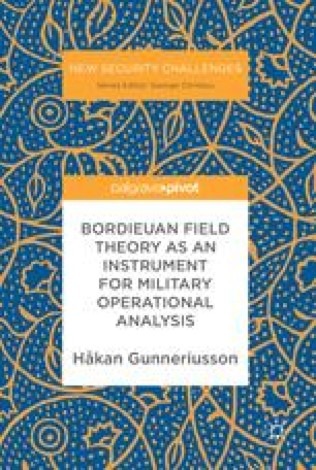
Bordieuan Field Theory as an Instrument for Military Operational Analysis
This book uses Pierre Bourdieu’s field theory as a lens through which to examine military operations. Novel in its approach, this innovative text provides a better, more nuanced understanding of the modern ‘battlespace’, particularly in instances of prolonged low-intensity conflict. Formed in two parts, this book primarily explores the scope of Bourdien theory before secondly providing a detailed case study of the Yugoslavian succession war of 1990-1992. Gunneriusson suggests that although theories do not necessarily provide answers, they do help us ask better questions. This volume suggests news lines of interdisciplinary investigation that will be of interest to members of armed forces, practitioners from NGOs, and policymakers.

Ballistic Trauma : A Practical Guide
Ballistic Trauma: A Practical Guide provides a concise guide to the clinical and operational issues surrounding the management of the ballistic casualty. The book crystallizes the knowledge and experience accrued by those dealing with ballistic trauma on a regular basis and extends this to those who have to manage these patients on an occasional basis only.
AsiaSim 2007 ; Asia Simulation Conference 2007, Seoul, Korea, October 10-12, 2007, Proceedings
This book contains modeling, simulation, and their applications.It also contains e-business, supply chain management, general and engineering applications, manufacturing, medical, military,networks, transportation, traffic and virtual reality.

Applied High-Speed Plate Penetration Dynamics
High-speed impact dynamics is of interest in the fundamental sciences, e.g., astrophysics and space sciences, and has a number of important applications in military technologies, homeland security and engineering.

Advances in Unmanned Aerial Vehicles : State of the Art and the Road to Autonomy
There has been tremendous emphasis in unmanned aerial vehicles, both of fixed (airplanes) and rotary wing (vertical take off and landing, helicopters) types over the past ten years. Applications span both civilian and military domains, the latter being the most important at this stage. This edited book provides a solid and diversified reference source related to basic, applied research and development on small and miniature unmanned aerial vehicles, both fixed and rotary wing. As such, the book offers background information on the evolution of such vehicles over the years, followed by modeling and control fundamentals that are of paramount importance due to unmanned aerial vehicle model complexity, nonlinearity, coupling, inhirent instability and parameter values uncertainty. Aspects of navigation, including visual-based navigation and target tracking are discussed, followed by applications to attitude estimation on micro unmanned aerial vehicles, autonomous solar unmanned aerial vehicle, biomimetic sensing for autonomous flights in near-earth environments, localization of air-ground wireless sensor networks, decentralized formation tracking, design of an unmanned aerial vehicle for volcanic gas sampling and design of an on-board processing controller for miniature helicopters.
