



Page 2
Page 2
Microscopy Techniques
Light Microscopy has returned to fashion through the synergy of green fluorescent protein and a clutch of techniques involving some permutation of lasers, mathematics and acronyms, which offer the prospect of watching biological molecules at work inside living cells. This volume provides an introduction to these techniques … . this volume will be a longer-term reference for anyone who wants to understand how these methods actually work. In this respect it is excellent.

Microlithography/Molecular Imprinting
The series presents critical reviews of the present and future trends in polymer and biopolymer science including chemistry, physical chemistry, physics and material science. It is addressed to all scientists at universities and in industry who wish to keep abreast of advances in the topics covered.Molecular recognition is central to how biological systems work. The molecular imprinting technique is a valuable polymerisation method for preparing synthetic materials able to mimic the molecular recognition phenomena present in living systems. A molecule that acts as a template is associated with functional monomers to form a complex by means of covalent linkages or noncovalent interactions. A polymerisation-crosslinking reaction is then performed around this complex. Upon removal of the template species, functionalised cavities, that have memorized the special features and bonding preferences of the template, are left inside the polymer network.

Microbiologically Influenced Corrosion : An Engineering Insight
Microbiologically-influenced corrosion (MIC) is one of the greatest mysteries of corrosion science and engineering, due to the complexities resulting from the involvement of living things such as bacteria. Bacteria are not only able to affect our health, but are also capable of impacting upon everyday life through a wide range of industrial sectors and the economy. Microbiologically Influenced Corrosion: An Engineering Insight introduces a new approach to the basics of MIC and explains how to recognise, understand, mitigate and/or prevent this type of corrosion. Topics explored include stress corrosion cracking and microbial corrosion, the pros and cons of biocides, the involvement of magnetic bacteria in microbial corrosion, and a new interpretation of cathodic protection based on recent research in microbial environments.

Meeting Basic Learning Needs in the Informal Sector : Integrating Education and Training for Decent Work, Empowerment and Citizenship
This anthology brings together basic facts and features about basic learning needs and skills of people working and living in the informal economy and presents case studies from different countries examining educational and training strategies for meeting these learning needs. It portrays the grave problems facing educational and training systems vis-á-vis informal sector workers, even as they look at holistic solutions that take into account principles of lifelong learning and innovations in informal, non-formal and formal adult learning, and show a growing awareness that education is a human right of fundamental significance to promoting decent work and humane living conditions.

Meaning-Making for Living : The Emergence of the Presentational Self in Children’s Everyday Dialogues
This Brief analyzes the dynamics in which children’s selves emerge through their everyday activities of meaning construction, both in their relationships with family and within school education. It begins with a discussion of new psychological inquiries into children's selves and builds upon the innovative theoretical notion of the Presentational Self, developed by the author over the last decade. The book illustrates how the observation of children’s meaning construction in their everyday lives becomes a starting point for theoretical and empirical inquiries into child development and gives a framework that promotes new inquiries in this area. The book describes the Presentational Self Theory as a sense of how the notion of the Self is being worked upon in everyday life encounters. Chapters feature in-depth analyses of exchanges between adults and children in the Japanese cultural context.

Mathematical Survey Lectures 1943-2004
This collection traces the career of Beno Eckmann, whose work ranges across a broad spectrum of mathematical concepts from topology and differential geometry through homological algebra to group theory. One of our most influential living mathematicians, Eckmann has been associated for nearly his entire professional life with the Swiss Federal Institute of Technology Zurich (ETH), as student, lecturer, professor, and professor emeritus.

Iron Nutrition in Plants and Rhizospheric Microorganisms
This book uses an interdisciplinary approach to provide a comprehensive review on the status of iron nutrition in plants. International scientists discuss research on acquisition of iron by strategy I and strategy II plants. These reviews summarize a variety of plant species and include both laboratory and field observations. Topics covered in this book include: plants as a source of iron for animals and humans, iron translocation in the plants, iron-stimulated activities that influence crop yield and fruit tree productivity, iron uptake by plants as influenced by microorganisms (i.e. free living soil microorganisms, symbiotic nitrogen-fixing and pathogenic bacteria), the role of plant hormones in iron transport, iron-metal competition in phytoremediation, root zone activities involving interactions between minerals and organic matter, the role of microbial siderophores in rhizospheric iron cycling, iron storage as phytoferritin, proteomic and metabolic studies associated with iron stress response, methods for studying iron metabolism including stable isotopes, and the correction of iron deficiency through the use of synthetic or natural chelates.

IoT and AI Technologies for Sustainable Living : A Practical Handbook
Brings together all the latest methodologies, tools and techniques related to the Internet of Things and Artificial Intelligence in a single volume to build insight into their use in sustainable living. The areas of application include agriculture, smart farming, healthcare, bioinformatics, self-diagnosis systems, body sensor networks, multimedia mining, and multimedia in forensics and security. Provides a comprehensive discussion of modeling and implementation in water resource optimization, recognizing pest patterns, traffic scheduling, web mining, cyber security and cyber forensics. It will help develop an understanding of the need for AI and IoT to have a sustainable era of human living. The tools covered include genetic algorithms, cloud computing, water resource management, web mining, machine learning, block chaining, learning algorithms, sentimental analysis and Natural Language Processing (NLP).

Introduction to Ion Beam Biotechnology
It presents treatment of modern ion beam biotechnology and with respect to applications of ion beam bombardment of living cellular material in the hybrid field of ion beam physics and biology.Key Topics include: – Ion beam formation – Ion implantation fundamentals – Interaction between energetic ions and biological organisms – Reaction processes of ion implanted biological small molecules – Damage and repair of ion-bombarded DNA – Cell damage due to ion bombardment – Biological effects of ion implantation – Fundamentals of ion-bombardment-induced genetic variation – Ion beam mutation breeding of crops – Ion beam mutation breeding of microbes – Ion beam induced gene transfer – Ion beam induced synthesis of organic molecules – Single-ion bombardment mutation of cells

Intestinal Microorganisms of Termites and Other Invertebrates
Soil microorganisms play a major role in the degradation and recycling of organic material. Microbes are involved in the food web and strongly contribute to soil fertility. In the past, attention was mainly directed towards free-living or particle-bound microorganisms, while the role of intestinal microbes of soil animals has been neglected. For the first time, "Intestinal Microorganisms of Termites and Other Invertebrates" focuses on the microbes in gut systems of soil animals. It starts with a profound overview of the biology of soil invertebrates. A major part deals with the gut microbiota of termites, the best investigated gut system of invertebrates. Termites are important soil processors in tropical and subtropical regions. Insight is given into the intestinal microbiota of further relevant primary litter decomposers, such as earthworms, springtails, millipeds, and woodlice. Novel techniques for studying intestinal microbes complete the volume.

Intersubjective Temporality : It's About Time
This book addresses the above problematic at several levels: First, it is a careful analysis of Husserl's understanding of inner time-consciousness. I take up each aspect of temporalizing consciousness ,explaining it in light of Husserl's phenomenology and showing how it functions in the whole of the "living present,” i. e. , our active, constituting consciousness. These sections of the book are helpful both to the uninitiated student trying to enter the world of Husserl's "inner ti- consciousness" and to the experienced Husserl scholar who desires a closer look at Husserl's theory of temporalizing consciousness. Second, as my analyses take us to Husserl's recently published manuscripts, I provide an explanation of Husserl's later considerations of temporalizing consciousness, showing how he developed his earliest conceptions.
Integrated Urban Water Resources Management
Growing populations and rising standards of living exert stress on water supply and the quality of drinking water. In wastewater management, new challenges are caused by new chemicals of concern, including endocrine disrupters, pharmaceuticals, hormones, and personal care products, which often pass through wastewater treatment plants unabated, but may cause serious impacts on receiving aquatic ecosystems. Advanced wastewater treatment leads to production of biosolids, which are processed in various ways, including on-land applications in agriculture. Municipal effluents, combined with increasing withdrawals of water, lead to the worsening of receiving water quality. Expert opinions indicate that the only way to deal with the current urban water management dilemmas is by integrated management and innovative delivery of water services. This book presents important aspects of Challenges in Management of Urban Water Resources, Challenges in Urban Water Supply, Urban Drainage and Water Bodies, Wastewater Treatment and Security, and Wastewater Treatment and Reuse.

Injecting Salmonella Bacteria in to the Tumor Cures Cancer
The human body is inhabited by millions of tiny living organisms like good bacteria. We acquire these bacteria during birth and the first years of life, and they live with us throughout our lives. The human microbiomes are involved in healthy growth, in protecting the body from invaders, in helping digestion, and in regulating moods, but sometimes these bacteria can also be harmful. We need to take good care of our health to avoid the development of some diseases, like salmonella for example. Salmonella infections in humans can range from self-limiting gastroenteritis typically associated with non-typhoidal Salmonella (NTS) to typhoidal fever, which can be life-threatening. Salmonellosis causes considerable morbidity and mortality in both humans and animals, and has a significant socioeconomic impact worldwide.

Information and its role in nature
Infromation and Its Role in Nature presents an in-depth interdisciplinary discussion of the concept of information and its role in the control of natural processes. After a brief review of classical and quantum information theory, the author addresses numerous central questions, including: Is information reducible to the laws of physics and chemistry? Does the Universe, in its evolution, constantly generate new information? Or are information and information-processing exclusive attributes of living systems, related to the very definition of life? If so, what is the role of information in classical and quantum physics? In what ways does information-processing in the human brain bring about self-consciousness? Accessible to graduate students and professionals from all scientific disciplines, this stimulating book will help to shed light on many controversial issues at the heart of modern science.

Increasing climate variability and change : Reducing the vulnerability of agriculture and forestry
One of the major challenges facing humankind is to provide an equitable standard of living for this and future generations: adequate food, water and energy, safe shelter and a healthy environment. Human-induced climate change, and increasing climate variability, as well as other global environmental issues such as land degradation and loss of biological diversity, threaten our ability to meet these basic human needs. It is undisputed that the last two decades have been the warmest this century, and likely to be the warmest for the last 1000 years, sea level is rising, rain and snowfall patterns are changing.

Hypomelanosis Vitiligo & Albinism
• In General, understanding the disease is the best way to reach a perfect treatment. • This study aims to discuss the Hypomelanosis: • Vitiligo and Albinism and understanding the pathophysiology and present a types, symptoms and diagnosis of it. • Treatment ways and it's development, Nano-Drug and role of PRP in the treatments also had been presented. • The effect of Vitiligo on family members and living with it also had been discussed. • Finally, we have searched in managements and recommendations of Vitiligo patients during COVID-19 pandemic.

Humanized mice
The term humanized mouse in this text refers to a mouse in which human tissues and cells have been transplanted and show the same biological function as they do in the human body. That is, the physiological properties and functions of tra- planted human tissues and cells can be analyzed in the mouse instead of using a living human body. It should therefore be possible to study the pathophysiology and treatment of human diseases in mice with good reproducibility.

How AI Impacts Urban Living and Public Health ; 17th International Conference, ICOST 2019, New York City, NY, USA, October 14-16, 2019, Proceedings
This book cover topics such as: e-health technology design; well-being technology; biomedical and health informatics; and smart environment technology.
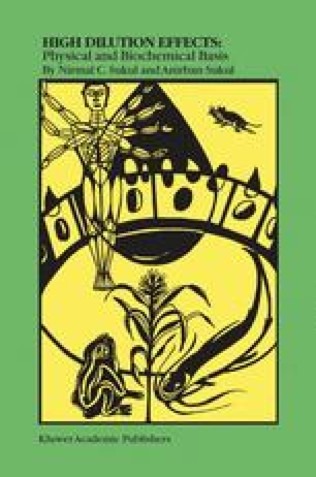
High dilution effects : Physical and biochemical basis
this volume provides evidence in support of effects from control clinical studies, and in vitro tests without any organisms (Chapter II). An overview of the methods for preparing drugs at ultra high dilution is also provided as well as the basic principles of homeopathy, (Chapter I). Chapter III provides physical basis of high dilutions as evidence from the NMR, IR, UV and fluorescence spectra of those drugs.Chapter IV focuses on the mechanism of action of potentized drugs in the living system, discussing the structure of the cell, the plasma membrane, the integral proteins on the membrane, the interaction between these proteins and high dilutions and the manifestations of the therapeutic effects of high dilutions.

Hierarchy in Natural and Social Sciences
This book reviews ancient and modern representations and explanations of hierarchies, and compares their relevance in a variety of fields, such as language, societies, cities, and living species. It throws light on concepts and models such as scaling laws, fractals and self-organisation that are fundamental in the dynamics and morphology of complex systems.This book addresses a wide audience of biologists and social scientists, as well as managers and executives in a variety of institutions.
