



Page 2
Page 2

Discoveries in Photosynthesis
Conceived of as a way of summarizing the history of research advances in photosynthesis as of millennium 2000, the book evolved into a majestic and encyclopedic saga involving all of the basic sciences. This book is meant not only for the researchers and graduate students, but also for advanced undergraduates in Plant Biology, Microbiology, Cell Biology, Biochemistry, Biophysics and History of Science.

De sphaera of Johannes de Sacrobosco in the Early Modern Period : The Authors of the Commentaries
Explores commentaries on an influential text of pre-Copernican astronomy in Europe. It features essays that take a close look at key intellectuals and how they engaged with the main ideas of this qualitative introduction to geocentric cosmology.

Data Journeys in the Sciences
This groundbreaking, book analyses and compares data practices across several fields through the analysis of specific cases of data journeys. It brings together leading scholars in the philosophy, history and social studies of science to achieve two goals: tracking the travel of data across different spaces, times and domains of research practice; and documenting how such journeys affect the use of data as evidence and the knowledge being produced.

Creativity, Psychology and the History of Science
The present book includes papers from a wide range of topics. In the contributions to creativity research, Gruber proposes his key ideas for studying creative work. Gruber focuses on how the thinking, motivation and affect of extraordinarily creative individuals evolve and how they interact over long periods of time. Gruber’s approach bridges many disciplines and subdisciplines in psychology and beyond, several of which are represented in the present volume: cognitive psychology, developmental psychology, history of science, aesthetics, and politics. The volume thus presents a unique and comprehensive contribution to our understanding of the creative process. Many of Gruber's papers have not previously been easily accessible; they are presented here in thoroughly revised form. The book is for psychologists, historians and philosophers of science interested in the intersection of psychology and the history of science.

Constructions of cancer in early Modern England : Ravenous natures
Cancer is perhaps the modern world's most feared disease. Yet, we know relatively little about this malady's history before the nineteenth century. This book provides the first in-depth examination of perceptions of cancerous disease in early modern England. Looking to drama, poetry and polemic as well as medical texts and personal accounts, it contends that early modern people possessed an understanding of cancer which remains recognizable to us today. Many of the ways in which medical practitioners and lay people imagined cancer – as a 'woman's disease' or a 'beast' inside the body – remain strikingly familiar, and they helped to make this disease a byword for treachery and cruelty in discussions of religion, culture and politics. Equally, cancer treatments were among the era's most radical medical and surgical procedures. From buttered frog ointments to agonizing and dangerous surgeries, they raised abiding questions about the nature of disease and the proper role of the medical practitioner.
Making Ammonia : Fritz Haber, Walther Nernst, and the Nature of Scientific Discovery
This book discusses the progress of science and the transfer of scientific knowledge to technological application. It also identifies the factors necessary to achieve this progress. Based on a case study of the physical chemist Fritz Haber's discovery of ammonia synthesis between 1903 and 1909, the book places Haber's work in historical and scientific (physicochemical) context. The scientific developments of the preceding century are framed in a way that emphasizes the confluence of knowledge needed for Haber's success. Against this background, Haber's work is presented in detail along with the indispensable contributions of his colleague, the physical chemist, Walter Nernst, and their assistants. The detailed accounts of scientific advancement remind us of the physical basis on which our scientific theories and ideas are built. Without this reminder we often forget how complex, and how beautiful achievements in science can be.
Lewis Fry Richardson : His Intellectual Legacy and Influence in the Social Sciences
A pioneer in meteorology and peace research and remains a towering presence in both fields. This edited volume reviews his work and assesses its influence in the social sciences, notably his work on arms races and their consequences, mathematical models, the size distribution of wars, and geographical features of conflict

Leibniz : What Kind of Rationalist?
The chapters of the book are the result of intense discussion in the course of an international conference focused on the title question of this book, and were selected in view of their contribution to this topic. They are clustered in thematically organized parts. No effort has been made to hide the controversies underlying the different interpretations of Leibniz’s “rationalism” – in each particular domain and as a whole. On the contrary, the editor firmly believes that only through a variety of conflicting interpretive perspectives can the multi-faceted nature of an oeuvre of such a magnitude and variety as Leibniz’s be brought to light and understood as it deserves.
La correspondance entre Henri Poincaré et les physiciens, chimistes et ingénieurs = The correspondence between Henri Poincaré and physicists, chemists and engineers
Cosmic microwave background radiation is the residue of the great heat following the Big Bang. A tenuous sign, over 13 billion years old, in which the answers to many of the questions about the nature of our Universe are hidden. Discovered by chance in 1964, in the last forty years this fossil trace of the origins of the Cosmos has been explored with every available means. Two Nobel Prizes in physics have already been awarded for research involving it, the last in 2006 for the results of the COBE satellite. Much of the information encoded in the cosmic background radiation was impressed by the superimposition of acoustic waves present in the early Universe: a "music" of the Big Bang, which cosmologists have tried for years to reconstruct, using techniques similar to those that allow to distinguish the sound of different musical instruments. Only recently have the first notes of this extraordinary cosmic symphony finally been revealed, but the investigation is not over yet. This book illustrates, with a language suitable even for non-specialists, the theories, observations and discoveries that have brought cosmology into a new era.
John Dee : Interdisciplinary Studies in English Renaissance Thought
This volume records the diversity of scholarly approaches to John Dee which have emerged since the synthetic accounts of I. R. F. Calder, Frances Yates and Peter French. If these approaches have not succeeded in resolving the problematic multiplicity of Dee’s activities, they will at least deepen our understanding of specific and local areas of his intellectual life, and render them more historiographically legible.

Clashes of Knowledge : Orthodoxies and Heterodoxies in Science and Religion
"Clashes of Knowledge" is the first volume of a series called "Knowledge and Space" dealing with spatial disparities of knowledge and the impact of the spatial context on the production and application of knowledge. The contributions in this book explore the conflicts between various types of knowledge, especially between orthodox and heterodox knowledge systems, which range from religious fundamentalism to heresies within the scientific community itself.

Buchi neri nel mio bagno di schiuma : L’enigma di Einstein = Black holes in my bubble bath : Einstein's riddle
Einstein's Enigma, or black holes in my foam bath, tells the story of the theory of gravitation, from its beginnings to the latest developments in astrophysics, focusing on Albert Einstein's theory of general relativity and the physics of black holes. Through engaging conversations and diagrams scribbled on paper napkins, the rudiments of relativity, space-time and many aspects of modern physics follow one another. In skits narrated with pedagogical skill and remarkable literary talent, the reader will come across the informal lessons that a cosmopolitan astrophysicist gives to his friend Alfie, a free lance organizer of research projects. Join in the intellectual fun and get excited with sparkling ideas, while with your imagination you enjoy a relaxing soak in this magical tub!

Bearing Witness : Ruth Harrison and British Farm Animal Welfare (1920–2000)
This book is the biography of one of Britain’s foremost animal welfare campaigners and of the world of activism, science, and politics she inhabited. In 1964, Ruth Harrison’s bestseller Animal Machines triggered a gear change in modern animal protection by popularising the term ‘factory farming’ alongside a new way of thinking about animal welfare.
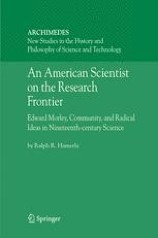
An American scientist on the research frontier : Edward Morley, community, and radical ideas in nineteenth-century science
This important examination of Morley’s struggle for personal and professional legitimacy extends and transforms our understanding of science during a foundational period, and leads to a number of unique conclusions that are vital to the literature and historiography of science.

Alzheimer : 100 Years and Beyond
Few medical or scientific addresses have so unmistakeably made history as the presentation delivered by Alois Alzheimer on November 4th, 1906 in Tübingen. The celebratory event, "Alzheimer 100 Years and Beyond" organized on the initiative of the Alzheimer community in Germany and worldwide, in collaboration with the Fondation Ipsen, at the very site of the original lecture, namely the Institute of Psychiatry at the University of Tübingen in Germany from November 2nd to 5th, 2006, was the highlight of the Alzheimer Year. Over the last century of Alzheimer research (1906-2006), remarkable progress has been achieved. Most of the authors of the major discoveries and the people involved in research in this field will present, during the meeting and in this volume, the pioneering research explaining the conditions under which they were conducted. The goal of this book is to honor the work accomplished, to summarize the most important knowledge and to provide material for the history of science.
A Prodigy of Universal Genius : Robert Leslie Ellis, 1817-1859
Written by a diverse team of experts, the chapters in the book’s first part contain in-depth examinations of, among other things, Ellis’s family, education, Bacon scholarship and mathematical contributions. The second part consists of annotated transcriptions of a selection of Ellis’s diaries and correspondence. Taken together, A Prodigy of Universal Genius: Robert Leslie Ellis, 1817–1859 is a rich resource for historians of science, historians of mathematics and Victorian scholars alike.

A History of Physical Theories of Comets, From Aristotle to Whipple
The book describes the major physical theories of comets in the past two millennia. It demonstrates the evolution of ideas about the nature, position, motion and physical constitution of comets from Aristotle to Whipple. Unlike the available works on the history of comets, which either illustrate relatively short periods in the history of physical cometology or portray a landscape view without adequate details, the present study focuses on details of each theory. It also investigates the interaction between observational and mathematical astronomy, and the physical sciences in defining the properties of comets.

A History of Male Psychological Disorders in Britain, 1945–1980
Explores the under-researched history of male mental illness from the mid-twentieth century. It argues that statistics suggesting women have been more vulnerable to depression and anxiety are misleading since they underplay a host of alternative presentations of 'distress' more common in men.
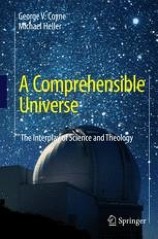
A Comprehensible Universe : The Interplay of Science and Theology
Why is our world comprehensible? This question seems so trivial that few people have dared to ask it. In this book we explore the deep roots of the mystery of rationality. The inquiry into the rationality of the world began over two-and-a-half-thousand years ago, when a few courageous people tried to understand the world with the help of reason alone, rejecting the comforting fabric of myth and legend.
