



Page 2
Page 2

Environments for Multi-Agent Systems ; 1st International Workshop, E4MAS, 2004, New York, NY, July 19, 2004, Revised Selected Papers
The modern ?eld of multiagent systems has developed from two main lines of earlier research. Its practitioners generally regard it as a form of arti?cial intelligence (AI). Some of its earliest work was reported in a series of workshops in the US dating from1980,revealinglyentitled,“DistributedArti?cialIntelligence,”andpioneers often quoted a statement attributed to Nils Nilsson that “all AI is distributed. ” The locus of classical AI was what happens in the head of a single agent, and much MAS research re?ects this heritage with its emphasis on detailed modeling of the mental state and processes of individual agents. From this perspective, intelligenceisultimatelythepurviewofasinglemind,thoughitcanbeampli?ed by appropriate interactions with other minds. These interactions are typically mediated by structured protocols of various sorts, modeled on human conver- tional behavior. But the modern ?eld of MAS was not born of a single parent. A few - searchershavepersistentlyadvocatedideasfromthe?eldofarti?ciallife(ALife). These scientists were impressed by the complex adaptive behaviors of commu- ties of animals (often extremely simple animals, such as insects or even micro- ganisms). The computational models on which they drew were often created by biologists who used them not to solve practical engineering problems but to test their hypotheses about the mechanisms used by natural systems. In the ar- ?cial life model, intelligence need not reside in a single agent, but emerges at the level of the community from the nonlinear interactions among agents. - cause the individual agents are often subcognitive, their interactions cannot be modeled by protocols that presume linguistic competence.

Energy Resources in East Africa: Opportunities and Challenges
East African states have historically shared several resources including energy and common heritage of its people. This book provides information on available sources of energy in the region and how the energy suppliers can exploit them in an integrated form to produce the right blend of energy for various applications e.g., industrial, domestic and recreational uses. We provide an in-depth analysis of the advantages and disadvantages of different energy sources in-terms of environmental, industrialization, distribution costs and impacts. We hope that the book will contribute towards a sustainable exploitation of energy resources for the improvement of the people’s quality of life.

Enabling the City : Interdisciplinary and Transdisciplinary Encounters in Research and Practice
Focuses on how interdisciplinary and transdisciplinary processes of knowledge production may contribute to urban transformation at a local level in the 21st century, striking a balance between enthusiastic support for such transformational potential and a cautious note regarding the persistent challenges to the ethos as well as the practice of inter and transdisciplinarity. The rich stories reflect different research and local practice cultures, exploring issues such as ageing, community, health and dementia, public space, energy, mobility cultures, heritage, housing, re-use, and renewal, as well as more universal questions about urban sustainability and climate change, and perhaps most importantly, education.

Emerging Technologies and Information Systems for the Knowledge Society ; 1st World Summit on the Knowledge Society, WSKS 2008, Athens, Greece, September 24-26, 2008. Proceedings
This book, in conjunction with the volume CCIS 19, constitutes the refereed proceedings of theFirst World Summit, WSKS 2008, held in Athens, Greece, in September 2008.

Educating in the Arts : The Asian Experience: Twenty-Four Essays
Written by leaders in a wide range of creative fields and from all corners of the Asian region, this collection of essays presents arts and education programs which reflect traditional and contemporary practices. The volume brings together researchers, practitioners, educators, children and young people with shared interests in the arts and activities that cross disciplinary divisions and aims to encourage the use of the arts in developing international understanding, celebrating cultural diversity, building cultural bridges and creating cross-cultural dialogue throughout the Asian region.

Doors : History, repair and conservation
Guides you through the function, history, development, care, repair and conservation of doors by chapter authors who are experts in their field. This book offers depth and range of detail from dating and archaeology right through to the surveying, recording, engineering and curation of the door, its furniture and the part of the building into which it is set.

Dissonant Heritages and Memories in Contemporary Europe
This book discusses political, economic, social, and humanitarian challenges that influence both how people deal with their past and how they build their identities in contemporary Europe. Ongoing debates on migration, on local, national, inter- and transnational levels, prove that it is a divisive issue with regards to understanding European integration and identity. At the same time, the European Union increasingly invests in projects related to European heritage, museums, and cultural memory networks, while having to take dissonant heritages into account. These processes in their combination offer an interesting dynamic and form the complex puzzle that poses challenging questions for anyone involved in academic research, heritage practices, and policy debates. With this puzzle at its core, this book explicitly focuses on slippery and transforming notions of Europe and critically discusses ongoing and transforming power structures of heritage and memory in today’s Europe.
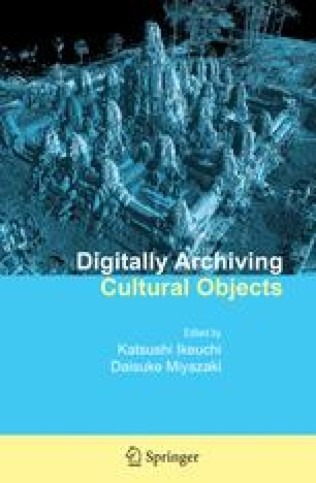
Digitally Archiving Cultural Objects
Digitally Archiving Cultural Objects describes thorough research and methods for preserving cultural heritage objects through the use of 3D digital data. These methods were developed through using computer vision and computer graphics technologies.

Digital Technologies in Construction Engineering : Selected Papers
Includes the latest advances, innovations, and applications in the field of construction engineering, as presented by researchers and engineers at the Digital Technologies in Construction Engineering conference, held in Belgorod, Russia, on June 8-9, 2021. It covers highly diverse topics, including industrial and civil construction, building materials; environmental engineering and protection; sustainability; structure safety and special construction structures. The contributions, which were selected by means of a rigorous international peer-review process, highlight numerous exciting ideas that will spur novel research directions and foster multidisciplinary collaborations.

Digging it up down under : A practical guide to doing archaeology in Australia
This book contains the answers to these questions, and more. Whether you are a graduate student seeking to gain overseas experience, a volunteer wanting to learn more about archaeology by working on a real site, or a professional archaeologist interested in gaining employment, this volume provides a unique introduction to undertaking archaeology in an Australian setting. Grounded in the social, political and ethical issues that inform Australian archaeology today, Digging it up Down Under includes advice on the local legislative situation, relevant codes of ethics, definitions of artifacts and sites, and the history and characteristic features of the occupation of the continent by both Aboriginal and European people.

Cultural heritage in a changing world
The central purpose of this collection of essays is to make a creative addition to the debates surrounding the cultural heritage domain. In the 21st century the world faces epochal changes which affect every part of society, including the arenas in which cultural heritage is made, held, collected, curated, exhibited, or simply exists. The book is about these changes; about the decentring of culture and cultural heritage away from institutional structures towards the individual; about the questions which the advent of digital technologies is demanding that we ask and answer in relation to how we understand, collect and make available Europe’s cultural heritage.

Cultural heritage and human rights
The volume addresses a deeply political aspect of heritage preservation and management as it relates to human rights. Social and community advocates assert that heritage is necessary for the articulation and preservation of cultural identity. The display of heritage monuments and performance can be a strategy for asserting minority identity in the face of majority pressure – as well as a tool for resistance and the expression of difference.

Contemporary Issues in Luxury Brand Management
Provides a comprehensive overview of the key themes surrounding luxury brand management and the core issues faced by luxury firms today. The luxury industry has undergone a series of dynamic changes in the past twenty years. Economic trends, digital transformation, and changing consumer habits are creating a new competitive landscape where traditional strategies will not necessarily provide continued growth and profitability. Approaching luxury from a realistic brand management perspective, this book works step-by-step through a typical luxury course structure, covering sustainability, heritage, emerging brands, digital marketing and analytics, curation, intellectual property, and start-ups.
Material Agency : Towards a Non-Anthropocentric Approach
This book is a groundbreaking attempt to address questions of non-human and material agency from a wide range of perspectives and disciplines: archaeology, anthropology, sociology, cognitive science, philosophy, and economics. The editors and authors demostrate that a distributed, relational approach to agency, incorporating both humans and artifacts, has important ramifications for how we understand material culture.
Martin Waldseemüller’s 'Carta marina' of 1516 : Study and transcription of the long legends
This book presents the first detailed study of one of the most important masterpieces of Renaissance cartography, Martin Waldseemüller’s Carta marina of 1516. By transcribing, translating into English, and detailing the sources of all of the descriptive texts on the map, as well as the sources of many of the images, the book makes the map available to scholars in a wholly unprecedented way.
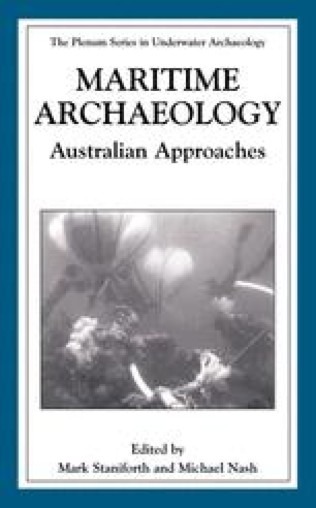
Maritime Archaeology : Australian Approaches
Subject areas discussed in this book include shipwrecks and abandoned vessels, The application of National and State legislation and management regimes to these underwater cultural heritage sites is also highlighted, together with the important role of avocational divers and training programs in raising the profile of underwater and maritime heritage sites.The book includes a comprehensive bibliography of work conducted both in Australia and by Australian maritime archaeologists in the Asia-Pacific region. This book will be of interest to students and practitioners of maritime and historical archaeology and cultural heritage managers throughout the world .
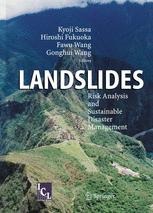
Landslides : Risk Analysis and Sustainable Disaster Management
Based on contributions to the first General Assembly of the International Consortium on Landslides, this reference and status report emphasizes the mechanisms of different types of landslides, landslide risk analysis, and sustainable disaster management. It comprises the achievements of the ICL over the past three years, since the Kyoto assembly. It consists of three parts: research results of the International Programme on Landslides (IPL); contributions on landslide risk analysis; and articles on sustainable disaster management. The contributions reflect a wide range of topics and concerns, randing from field studies, identification of objects of cultural heritage at landslide risk, as well as landslide countermeasures.
Landscapes Under Pressure : Theory and Practice of Cultural Heritage Research and Preservation
This book investigates the newly emerging scope of interests and project agendas to investigate and preserve cultural landscapes. It presents the historic, archaeological, ethnographic, and environmental traditions of cultural landscape study and the attempts to reconstruct and analyze the complex processes of cultural changes through prehistoric and historic times.The "guiding light" of the book is that the fullest understanding of a cultural landscape will materialize through interdisciplinary cooperation, which should involve an ecological approach with historical ecology as the guiding tool, applied archaeology, and environmental planning.
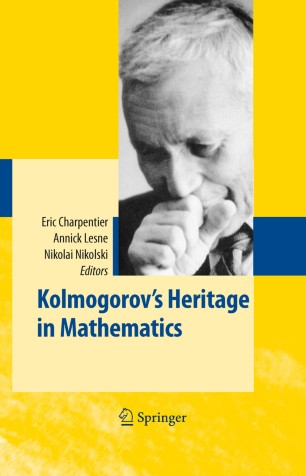
Kolmogorovs Heritage in Mathematics
A.N. Kolmogorov (b. Tambov 1903, d. Moscow 1987) was one of the most brilliant mathematicians that the world has ever known. Incredibly deep and creative, he was able to approach each subject with a completely new point of view: in a few magnificent pages, which are models of shrewdness and imagination, and which astounded his contemporaries, he changed drastically the landscape of the subject.Most mathematicians prove what they can, Kolmogorov was of those who prove what they want. For this book several world experts were asked to present one part of the mathematical heritage left to us by Kolmogorov.
Knowledge and Institutions
Bridges the disciplinary boundaries within the social sciences to explore the role of social institutions in shaping geographical contexts, and in creating new knowledge. It includes theorizations as well as original empirical case studies on the emergence, maintenance and change of institutions as well as on their constraining and enabling effects on innovation, entrepreneurship, art and cultural heritage, often at regional scales across Europe and North America. Rooted in the disciplines of management and organization studies, sociology, geography, political science, and economics the contributors all take comprehensive approaches to carve out the specific contextuality of institutions as well as their impact on societal outcomes. Not only does this book offer detailed insights into current debates in institutional theory, it also provides background for scholars, students, and professionals at the intersection between regional development, policy-making, and regulation.
