



Page 2
Page 2
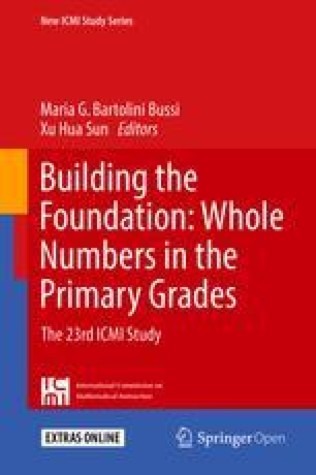
Building the Foundation : Whole Numbers in the Primary Grades : The 23rd ICMI Study
This twenty-third ICMI Study addresses for the first time mathematics teaching and learning in the primary school (and pre-school) setting, while also taking international perspectives, socio-cultural diversity and institutional constraints into account. One of the main challenges of designing the first ICMI primary school study of this kind is the complex nature of mathematics at the early level. Accordingly, a focus area that is central to the discussion was chosen, together with a number of related questions. The broad area of Whole Number Arithmetic (WNA), including operations and relations and arithmetic word problems, forms the core content of all primary mathematics curricula. this study presents a meta-level analysis and synthesis of what is currently known about WNA, providing a useful base from which to gauge gaps and shortcomings, as well as an opportunity to learn from the practices of different countries and contexts.
Beyond the apparent Banality of the mathematics classroom
New research in mathematics education deals with the complexity of the mathematics’ classroom. The classroom teaching situation constitutes a pertinent unit of analysis for research into the ternary didactic relationship which binds teachers, students and mathematical knowledge. The classroom is considered as a complex didactic system, which offers the researcher an opportunity to gauge the boundaries of the freedom that is left with regard to choices about the knowledge to be taught and the ways of organizing the students’ learning, while giveing rise to the study of interrelations between three main elements of the teaching process the: mathematical content to be taught and learned, management of the various time dimensions, and activity of the teacher who prepares and manages the class, to the benefit of the students' knowledge and the teachers' own experience.
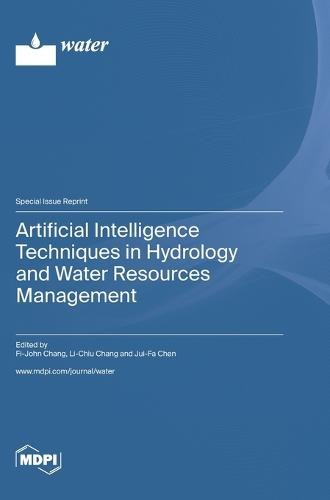
Artificial intelligence techniques in hydrology and water resources management
The sustainable management of water cycles is crucial in the context of climate change and global warming. It involves managing global, regional, and local water cycles, as well as urban, agricultural, and industrial water cycles, to conserve water resources and their relationships with energy, food, microclimates, biodiversity, ecosystem functioning, and anthropogenic activities. Hydrological modeling is indispensable for achieving this goal, as it is essential for water resources management and the mitigation of natural disasters. In recent decades, the application of artificial intelligence (AI) techniques in hydrology and water resources management has led to notable advances. In the face of hydro-geo-meteorological uncertainty, AI approaches have proven to be powerful tools for accurately modeling complex, nonlinear hydrological processes and effectively utilizing various digital and imaging data sources, such as ground gauges, remote sensing tools, and in situ Internet of Things (IoT) devices.
Applications of random matrices in physics
Random matrices are widely and successfully used in physics for almost 60-70 years, beginning with the works of Dyson and Wigner. Although it is an old subject, it is constantly developing into new areas of physics and mathematics. It constitutes now a part of the general culture of a theoretical physicist. Mathematical methods inspired by random matrix theory become more powerful, sophisticated and enjoy rapidly growing applications in physics. Recent examples include the calculation of universal correlations in the mesoscopic system, new applications in disordered and quantum chaotic systems, in combinatorial and growth models, as well as the recent breakthrough, due to the matrix models, in two dimensional gravity and string theory and the non-abelian gauge theories. The book consists of the lectures of the leading specialists and covers rather systematically many of these topics.
An introduction to relativistic processes and the standard model of electroweak interactions
The first part of the volume is devoted to the description of scattering processes in the context of relativistic quantum field theory. The use of the semi-classical approximation allows us to illustrate the relevant computation techniques in a reasonably small amount of space. Our approach to relativistic processes is original in many respects. The second part contains a detailed description of the construction of the standard model of electroweak interactions, with special attention to the mechanism of particle mass generation. The extension of the standard model to include neutrino masses is also described. We have included a number of detailed computations of cross sections and decay rates of pedagogical and phenomenological relevance.
