



Page 2
Page 2

Digital Signal Processing with Field Programmable Gate Arrays
Field-Programmable Gate Arrays (FPGAs) are revolutionizing digital signal processing as novel FPGA families are replacing ASICs and PDSPs for front-end digital signal processing algorithms. So the efficient implementation of these algorithms is critical and is the main goal of this book. It starts with an overview of today's FPGA technology, devices, and tools for designing state-of-the-art DSP systems. A case study in the first chapter is the basis for more than 40 design examples throughout. The following chapters deal with computer arithmetic concepts, theory and the implementation of FIR and IIR filters, multirate digital signal processing systems, DFT and FFT algorithms, advanced algorithms with high future potential, and adaptive filters. Each chapter contains exercises. The VERILOG source code and a glossary are given in the appendices. This edition has a new chapter on microprocessors, new sections on special functions using MAC calls, intellectual property core design and arbitrary sampling rate converters, and over 100 new exercises.

Digital Signal Processing : An Experimental Approach
Digital Signal Processing is a mathematically rigorous but accessible treatment of digital signal processing that intertwines basic theoretical techniques with hands-on laboratory instruction. Divided into three parts, the book covers various aspects of the digital signal processing (DSP) "problem".

Digital Image Processing : An Algorithmic Introduction using Java
This modern, self-contained, textbook explains the fundamental algorithms of digital image processing through practical examples and complete Java implementations.

Difference Equations : From Rabbits to Chaos
Difference equations are models of the world around us. From clocks to computers to chromosomes, processing discrete objects in discrete steps is a common theme. Difference equations arise naturally from such discrete descriptions and allow us to pose and answer such questions as: How much? How many? How long? Difference equations are a necessary part of the mathematical repertoire of all modern scientists and engineers.The book cover the basics of difference equations and some of their applications in computing and in population biology. Each chapter leads to techniques that can be applied by hand to small examples or programmed for larger problems. Along the way, the reader will use linear algebra and graph theory, develop formal power series, solve combinatorial problems, visit Perron—Frobenius theory, discuss pseudorandom number generation and integer factorization, and apply the Fast Fourier Transform to multiply polynomials quickly.

Cours doptique : Simulations et exercices résolus avec Maple, Matlab, Mathematica, Mathcad = Optics course: Simulations and exercises solved with Maple, Matlab, Mathematica, Mathcad
Intended for students at the L and M levels of the university as well as for engineers wishing to study certain subjects in greater depth. It covers all the themes of a traditional optics course, from geometric optics to holography, interference, diffraction, coherence and the use of the Fourier transform for spectroscopy. The presentation is developed from mathematical models deriving from typical situations and fundamental examples which are presented in the form of computer programs ready to be implemented. These programs are also available on the CD accompanying the book, for each of the following scientific programming environments: Matlab, Maple, Mathematica and Mathcad. Thus, the reader will be able to modify the parameters of the examples proposed to adapt them to new situations.

Continuous-Time Signals
The book systematically covers major principle foundations of the signals theory. The representation of signals in the frequency domain (by Fourier transform) is considered with strong emphasis on how the spectral density of a single waveform becomes that of its burst and then the spectrum of its train. Different kinds of amplitude and angular modulations are analyzed noticing a consistency between the spectra of modulating and modulated signals. The energy and power presentation of signals is given along with their correlation properties. Finally, presenting the bandlimited and analytic signals, the book elucidates the methods of their description, transformation (by Hilbert transform), and sampling.

Concise Guide to Quantum Computing : Algorithms, Exercises, and Implementations
This textbook is intended for practical, laboratory sessions associated with the course of quantum computing and quantum algorithms, as well as for self-study. It contains basic theoretical concepts and methods for solving basic types of problems and gives an overview of basic qubit operations, entangled states, quantum circuits, implementing functions, quantum Fourier transform, phase estimation, etc. The book serves as a basis for the application of new information technologies in education and corporate technical training: theoretical material and examples of practical problems, as well as exercises with, in most cases, detailed solutions, have relation to information technologies. A large number of detailed examples serve to better develop professional competencies in computer science.

Mathematical methods for engineers and scientists 3 : Fourier analysis, partial differential equations and variational methods
Pedagogical insights gained through 30 years of teaching applied mathematics led the author to write this set of student oriented books. Topics such as complex analysis, matrix theory, vector and tensor analysis, Fourier analysis, integral transforms, ordinary and partial differential equations are presented in a discursive style that is readable and easy to follow.
Communication system design using DSP algorithms : with laboratory experiments for the TMS320C6713 DSK
Designed for senior electrical engineering students, this textbook explores the theoretical concepts of digital signal processing and communication systems, using practical laboratory experiments with real-time DSP hardware.
Basic Real Analysis
Basic Real Analysis and Advanced Real Analysis (available separately or together as a Set) systematically develop those concepts and tools in real analysis that are vital to every mathematician, whether pure or applied, aspiring or established. These works present a comprehensive treatment with a global view of the subject, emphasizing the connections between real analysis and other branches of mathematics.
Astronomical image and data analysis
With information and scale as central themes, this comprehensive survey explains how to handle real problems in astronomical data analysis using a modern arsenal of powerful techniques. It treats those innovative methods of image, signal, and data processing that are proving to be both effective and widely relevant. The coverage includes chapters or appendices on: detection and filtering; image compression; multichannel, multiscale, and catalog data analytical methods; wavelets transforms, Picard iteration, and software tools. This second edition of Starck and Murtagh's highly appreciated reference again deals with topics that are at or beyond the state of the art. It presents material which is more algorithmically oriented than most alternatives and broaches new areas like ridgelet and curvelet transforms. Throughout the book various additions and updates have been made.
Arithmetical investigations : Representation theory, orthogonal polynomials, and quantum interpolations
In this volume the author further develops his philosophy of quantum interpolation between the real numbers and the p-adic numbers. The p-adic numbers contain the p-adic integers Zp which are the inverse limit of the finite rings Z/pn. This gives rise to a tree, and probability measures w on Zp correspond to Markov chains on this tree. From the tree structure one obtains special basis for the Hilbert space L2(Zp,w). The real analogue of the p-adic integers is the interval [-1,1], and a probability measure w on it gives rise to a special basis for L2([-1,1],w) - the orthogonal polynomials, and to a Markov chain on "finite approximations" of [-1,1]. For special (gamma and beta) measures there is a "quantum" or "q-analogue" Markov chain, and a special basis, that within certain limits yield the real and the p-adic theories. This idea can be generalized variously. In representation theory, it is the quantum general linear group GLn(q)that interpolates between the p-adic group GLn(Zp), and between its real (and complex) analogue -the orthogonal On (and unitary Un )groups. There is a similar quantum interpolation between the real and p-adic Fourier transform and between the real and p-adic (local unramified part of) Tate thesis, and Weil explicit sums.

An Introduction to Sobolev Spaces and Interpolation Spaces
After publishing an introduction to the Navier–Stokes equation and oceanography (Vol. 1 of this series), Luc Tartar follows with another set of lecture notes based on a graduate course in two parts, as indicated by the title. A draft has been available on the internet for a few years. The author has now revised and polished it into a text accessible to a larger audience.

Algorithmic number theory ; 8th International Symposium, ANTS-VIII Banff, Canada, May 17-22, 2008 Proceedings
This book constitutes the refereed proceedings of the 8th International Algorithmic Number Theory Symposium, ANTS 2008, held in Banff, Canada, in May 2008.
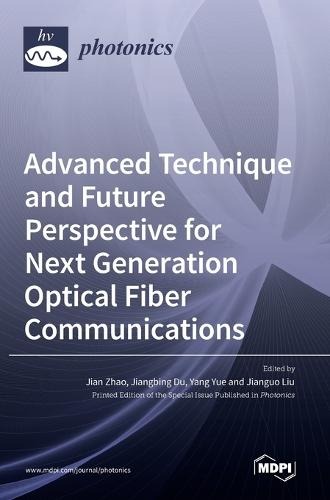
Advanced technique and future perspective for next generation optical fiber communications
Optical fiber communication industry has gained unprecedented opportunities and achieved rapid progress in recent years. However, with the increase of data transmission volume and the enhancement of transmission demand, the optical communication field still needs to be upgraded to better meet the challenges in the future development. Artificial intelligence technology in optical communication and optical network is still in its infancy, but the existing achievements show great application potential. In the future, with the further development of artificial intelligence technology, AI algorithms combining channel characteristics and physical properties will shine in optical communication. This reprint introduces some recent advances in optical fiber communication and optical network, and provides alternative directions for the development of the next generation optical fiber communication technology.

Advanced Real Analysis
Basic Real Analysis and Advanced Real Analysis (available separately or together as a Set) systematically develop those concepts and tools in real analysis that are vital to every mathematician, whether pure or applied, aspiring or established. These works present a comprehensive treatment with a global view of the subject, emphasizing the connections between real analysis and other branches of mathematics.

A First Course in Harmonic Analysis
This book is a primer in harmonic analysis using an elementary approach. Its first aim is to provide an introduction to Fourier analysis, leading up to the Poisson Summation Formula. Secondly, it makes the reader aware of the fact that both, the Fourier series and the Fourier transform, are special cases of a more general theory arising in the context of locally compact abelian groups. The third goal of this book is to introduce the reader to the techniques used in harmonic analysis of noncommutative groups. There are two new chapters in this new edition. One on distributions will complete the set of real variable methods introduced in the first part. The other on the Heisenberg Group provides an example of a group that is neither compact nor abelian, yet is simple enough to easily deduce the Plancherel Theorem.
