



Page 2
Page 2

Cosmeceuticals
Stay on top of more than "just the basics" concerning cosmetics and skin care and deliver the state-of-the-art expertise your patients are looking for. Procedures in Cosmetic Dermatology: Cosmeceuticals, 4th Edition, improves your knowledge and expertise with the cutting-edge cosmeceuticals that produce the superior results your patients expect. Dr. Zoe Diana Draelos, along with hand-selected experts in each individual area, provides expert guidance on all of today’s principal cosmeceuticals, including how to evaluate their efficacy and how to advise patients on their use. A substantial, all-new video library from Dr. Draelos answers frequently asked questions and dispels commonly held myths.

Contact Dermatitis
Covers various aspects of the modern-day management of contact dermatitis. This title also covers irritant and allergic contact dermatitis with an emphasis being given to immunological mechanisms, molecular aspects of sensitizers, atypical clinical forms, reactions to medicaments, and occupational and environmental aspects.

Coloring the Cosmetic World : Using Pigments in Decorative Cosmetic Formulations
A comprehensive resource on the regulations, applications, properties and processing of pigments used in color cosmetics. It is a highly practical guide to colorant selection for product formulations in the modern cosmetics and toiletries industry. Providing the essential knowledge required to successfully incorporate pigments into cosmetic formulations, this unique resource covers all essential aspects of color selection—including regulations, economics, color esthetics, and stability—as well as processing, color measurement, pigment testing, natural colorants, and more. This new edition contains carefully revised content and includes updated coverage of economic and regulatory criteria.

Liposomes as Drug Carriers
Patients have recently suffered from the side effects of a large number of drugs and from the weak pharmacological effect, due to the biokinetics and the difficulty of delivering the drug to the targeted cells, which negatively affected the therapeutic efficacy, creating an opportunity to discover nanometric carriers to load the active drug substances, so we covered in this research the most famous and widely used nanocarriers which are liposomes. We touched in some detail its composition, types, the relationship of structure to influence, methods of preparation, its delivery mechanism for the drug, and at the end of the research, we attached various applications in the field of therapeutic diagnostics and its role in cosmetics, cancers and many other fields.
Life in Extreme Environments
Investigating life processes under extreme conditions can also bring clues for understanding and predicting ecosystems' responses to global changes. Furthermore, this area of research has a wide application potential in the fields of (bio)technoloty, chemical industry, pharmaceutics, biomedicine or cosmetics.
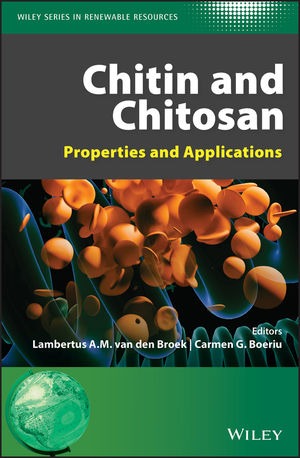
Chitin and Chitosan : Properties and Applications
Chitin and Chitosan: Properties and Applications presents a comprehensive review of the isolation, properties and applications of chitin and chitosan. These promising biomaterials have the potential to be broadly applied and there is a growing market for these biopolymers in areas such as medical and pharmaceutical, packaging, agricultural, textile, cosmetics, nanoparticles and more.
Chemometrics and Cheminformatics in Aquatic Toxicology
Chemometrics and Cheminformatics in Aquatic Toxicology delivers an exploration of the existing and emerging problems of contamination of the aquatic environment through various metal and organic pollutants, including industrial chemicals, pharmaceuticals, cosmetics, biocides, nanomaterials, pesticides, surfactants, dyes, and more. The book discusses different chemometric and cheminformatic tools for non-experts and their application to the analysis and modeling of toxicity data of chemicals to various aquatic organisms.
Botulinum toxin
Offering a step-by-step, practical approach to this commonly performed cosmetic procedure, Procedures in Cosmetic Dermatology: Botulinum Toxin, 5th Edition, enables you to master the up-to-date cosmetic techniques that produce the superior results your patients expect. It covers the science behind these neuromodulators and their usage areas in cosmetic dermatology, as well as the latest treatment options—all abundantly illustrated and evidence based. A substantial video library demonstrating injection techniques helps you successfully incorporate the latest procedures into your practice.

Botox side effect and natural alternatives
Botox is a drug made from a toxin produced by the bacterium Clostridium botulinum. It's the same toxin that causes a life-threatening type of food poisoning called botulism. Doctors use it in small doses to treat health problems. Botox injections work by weakening or paralyzing certain muscles or by blocking certain nerves. The effects last about three to twelve months, depending on what you are treating...
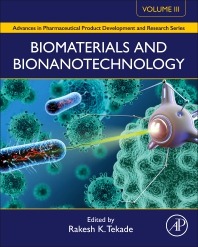
Biomaterials and bionanotechnology ; 1st ed.
Examines the current state of the field within pharmaceutical sciences and concisely explains the history of biomaterials including key developments. Written by experts in the field, this volume within the Advances in Pharmaceutical Product Development and Research series deepens understanding of biomaterials and bionanotechnology within drug discovery and drug development. Each chapter delves into a particular aspect of this fast-moving field to cover the fundamental principles, advanced methodologies and technologies employed by pharmaceutical scientists, researchers and pharmaceutical industries to transform a drug candidate or new chemical entity into a final administrable dosage form, with particular focus on biomaterials and bionanomaterials. This book provides a comprehensive examination suitable for researchers working in the pharmaceutical, cosmetics, biotechnology, food and related industries as well as advanced students in these fields.
Bioactive egg compounds
Hen eggs have exceptional potential as an inexhaustible source for a variety of products with unique properties. These products are valuable to human health and nutrition and can be used as raw materials for diverse purposes in the cosmetics and pharmaceutical industries. Bioactive Egg Compounds presents the latest results and concepts in the biotechnological use of egg compounds. Following an introduction to the different compounds of egg white, yolk and shell, the nutritive value of egg compounds is discussed. Procedures for processing egg compounds to improve their nutritive value are described, including the concept of so-called enriched eggs. Also described is the isolation and application of egg compounds with special properties, such as antibiotic action.
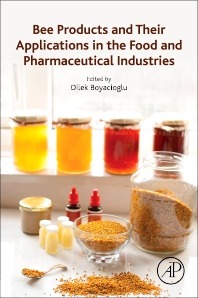
Bee products and their applications in the food and pharmaceutical industries ; 1st ed.
Focuses on the health benefits of selected bee products by looking more closely at their pharmacological potentials and therapeutic applications in coping with various diseases. The book explores some of these products, such as royal jelly, propolis and bee venom, which is highly attractive to the food supplement sector due to the biological actions that are proved by scientific studies. Bee products also attract the cosmetics industry by utilizing those products in various applications such as hair products, toothpaste, sunscreen creams, lip balsams, or facial moisturizing creams. Each chapter focuses on a particular health benefit, providing more compact and detailed information about each activity for a specific interest. The mainframe of the book is based on the medicinal and pharmacological functions of bee products, with the therapeutic applications for each bee product supporting the mechanism of action of their biological functions.

Alternatives to Animal Testing : Proceedings of Asian Congress 2016
This book presents recent advances in the pure sciences that are of significance in the quest for alternatives to the use of animals in research and describes a variety of practical applications of the three key guiding principles for the more ethical use of animals in experiments – replacement, reduction, and refinement, collectively known as the 3Rs. Important examples from across the world of implementation of the 3Rs in the testing of cosmetics, chemicals, pesticides, and biologics, including vaccines, are described, with additional information on relevant regulations. The coverage also encompasses emerging approaches to alternative tests and the 3Rs.
