



Page 2
Page 2

In vivo Models of HIV Disease and Control
An AIDS vaccine is still elusive and HIV treatment continues to develop multidrug resistance at alarming rates. Because of the similarities between HIV and immune deficiency infections in a variety of animals, it is only natural that scientists use these animals as models to study pathogenesis, treatment, vaccine development and many other aspects of HIV. Part of the series Infectious Agents and Pathogenesis, this volume reviews the immune deficiency virus in a variety of hosts. Pathogenesis, vaccine and drug development, epidemiology, and the natural history of the monkey, mouse, cat, cow, horse, and other animal viruses are detailed and compared to HIV. Also included are chapters on the history and future of animal models, as well as a chapter on ethical and safety considerations in using animal models for AIDS studies.

How the immune system recognizes self and nonself : Immunoreceptors and their signaling
This brain function must have been particularly important for most animals to protect their lives from enemies and for species to survive through evolution. Similarly, higher organisms have also acquired their immune system through evolution that discriminates nonself pathogens and self-body to protect their lives from pathogens such as bacteria or viruses. The brain system may distinguish integrated images of self and nonself created from many inputs, such as vision, sound, smell, and others. The immune system recognizes and distinguishes a variety of structural features of self and nonself components. The latter actually include almost everything but self.

Handbook of plant and animal toxins in food : Occurrence, toxicity, and prevention
Focuses on various selected toxins in foods derived from plants as well as animals. The prominent plant toxins include solanine and chaconine, mushroom toxins, phytates, tannins, oxalates, goitrogens, gossypol, phytohemagglutinins, erucic acid, saponins, cyanogenic glycosides, enzyme inhibitors, BOAA (lathyrogens), toxic amino acids and toxic fatty acids. The prominent animal toxins covered in the book include various seafood toxins, shellfish toxins and biogenic amines. Presents complete information about a plethora of toxins Provides quick and easy access to data on major plant and animal toxins Covers distribution of toxins in the plant and animal kingdom Provides comprehensive information on chemistry, safety and precautions of each toxin

Handbook of In Vivo Chemistry in Mice : From Lab to Living System
The Handbook of In Vivo Chemistry in Mice: From Lab to Living System introduces readers to general information about live animal experiments and detection methods commonly used for these animal models. It focuses on chemistry-based techniques to develop selective in vivo targeting methodologies, as well as strategies for in vivo chemistry and drug release.

Genome Mapping and Genomics in Fishes and Aquatic Animals
The series Genome Mapping and Genomics in Animals provides comprehensive and up-to-date reviews on genomic research on a large variety of selected animal systems, contributed by leading scientists from around the world.This volume summarizes the first era of genomic studies of aquaculture species, in which the tools and resources necessary to support whole-genome sequencing were developed. These tools will enhance efforts toward selective breeding of aquaculture species. Included in this volume are summaries of work on salmonids, cyprinids, catfish, tilapias, European sea bass, Japanese flounder, shrimps and oysters.

Genome Mapping and Genomics in Arthropods
Mapping of animal genomes has generated huge databases and several new concepts and strategies, which are useful to elucidate origin, evolution and phylogeny. Genetic and physical maps of genomes further provide precise details on chromosomal location, function, expression and regulation of academically and economically important genes. The series "Genome Mapping and Genomics in Animals" provides comprehensive and up-to-date reviews on genomic research on a large variety of selected animal systems, contributed by leading scientists from around the world.Insects and other arthropods, the largest group of animals in number of species, have global impact on agriculture, industry, human health and environment. They are of particular economic importance for food production as pollinators, for natural products like silk and also as pests and parasites. Arthropods covered in this volume include honeybee, bumblebee, the parasitic Jewel Wasp, silkworm, pea aphid, mosquito, Hessian fly and tick.

Gene drives at tipping points : Precautionary technology assessment and governance of new approaches to genetically modify animal and plant populations
This book reports on a pilot project aiming at collecting information on the socio-ecological risks that could arise in the event of an uncontrolled spread of genetically engineered organisms into the environment. The researchers will, for instance, be taking a closer look at genetically engineered oilseed rape, genetically engineered olive flies as well as plants and animals with so-called gene drives. The book mainly adresses researchers.

Fundamentals of Space Biology : Research on Cells, Animals, and Plants in Space
This book is intended as an overview at the undergraduate or early university level and describes the effects of spaceflight at cellular and organism levels. Past, current, and future research on the effects of gravity--or its absence--and ionizing radiation on the evolution, development, and function of living organisms is presented in layman's terms by researchers who have been active in this field. The purpose is to enlighten science and non-science readers to the benefits of space biology research for conducting basic and applied research to support human exploration of space. Also covered are the advantages of approaching the space environment as a laboratory for scientific, technological, and commercial research.
From Animals to Animats 9 ; 9th International Conference on Simulation of Adaptive Behavior, SAB 2006, Rome, Italy, September 25-29, 2006, Proceedings
This book constitutes the refereed proceedings of the 9th International Conference on Simulation of Adaptive Behavior, SAB 2006. The 35 revised full papers and 35 revised poster papers presented are organized in topical sections on the animat approach to adaptive behaviour, perception and motor control, action selection and behavioral sequences, navigation and internal world models, learning and adaptation, evolution, collective and social behaviours, applied adaptive behavior and more.
From Animals to Animats 10 ; 10th International Conference on Simulation of Adaptive Behavior, SAB 2008, Osaka, Japan, July 7-12, 2008. Proceedings
This book constitutes the refereed proceedings of the 10th International Conference on Simulation of Adaptive Behavior, SAB 2008, held in Osaka, Japan in July 2008.The 30 revised full papers and 21 revised poster papers presented were carefully reviewed and selected from 110 submissions. The papers are organized in topical sections on the animat approach to adaptive behaviour, evolution, navigation and internal world models, perception and control, learning and adaptation, cognition, emotion and behaviour, collective and social behaviours, adaptive behaviour in language and communication, and applied adaptive behaviour.

Freshwater Animal Diversity Assessment
The Freshwater Animal Diversity Assessment gives a state of the art assessment of the diversity and distribution of Metazoa in the continental waters of the world. The project deals with all major animal groups plus the macrophytes, and encompasses the complete array of terrestrial aquatic ecosystems. It is the most comprehensive study of species- and genus-level diversity and chorology of the global freshwater fauna to date, and is the first to present comparable data on the different faunal groups concerned. The project draws from the collected expertise of numerous world-renowned taxonomic experts that have bundled efforts to produce this outstanding volume. The result is invaluable to all scientists, managers and conservationists interested in non-marine aquatic animals.
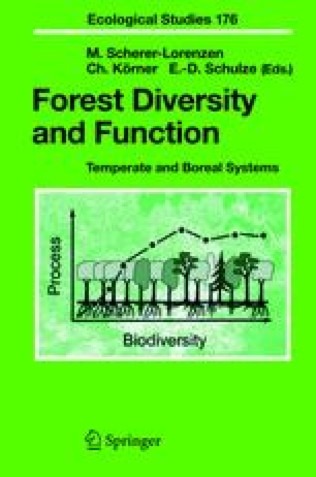
Forest Diversity and Function : Temperate and Boreal Systems
One of the central research themes in ecology is evaluating the extent to which biological richness is necessary to sustain the Earth's system and the functioning of individual ecosystems. In this volume, for the first time, the relationship between biodiversity and ecosystem processes in forests is thoroughly explored. The text examines the multiple effects of tree diversity on productivity and growth, biogeochemical cycles, animals, pests, and disturbances.

Food Biotechnology in Ethical Perspective
Agrifood biotechnology—the genetic transformation of plants and animals through recombinant means—has created controversy in the food system for more than twenty years. The new edition reflects lessons from the hotly contested debates over those issues in the intervening decade, and includes wholly new discussions on ethical issues associated with livestock cloning, the Precautionary Principle, and the transatlantic debate between United States and European perspectives on biotechnology.
First floridians and last mastodons : The Page-Ladson Site in the Aucilla River
Over the last 20 years the Aucilla River Prehistory Project has been one of the most f- cinating stories unfolding in Florida. This project, uncovering the remains of plants and animals from the end of the last Ice Age and the beginning of Florida’s human oc- pation, is answering questions important to the entire western hemisphere. Questions such as when did people first arrive in the Americas? Were these newcomer scavengers or skillful hunters? Could they have contributed to the extinction of the great Ice Age beasts – animals such as elephants – that were creatures native to Florida for the pre- ous million or so years? And how did these first Florida people survive 12,000 years ago at a time when sea level was so low that this peninsula was double its present size, sprawling hugely into the warm waters of the Caribbean? Much of Florida at that time was almost desert.

Farming for Health : Green-Care Farming Across Europe and the United States of America
Farming for Health describes the utilization of agricultural farms, farm animals, plants and landscapes as a base for promoting human mental and physical health and social well-being. This book gives an overview of the development of ‘Farming for Health’ initiatives across Europe. This development is a logical result of the changing paradigms in the health-care sector and the demand for new social and financial impulses in agriculture and rural areas.

Essential Fish Habitat Mapping in the Mediterranean
This book presents latest advances in EFH mapping and modelling and introduces the environmental approach to EFH identification through the combined use of latest technologies and advanced techniques, such as Remote Sensing, Geographic Information Systems and Spatial Statistics.The contents of this book include overviews and comparisons of different approaches on species habitat modelling, methods to identify teleconnection patterns between large-scale meteo-oceanic phenomena and local environmental variation, and EFH maps for cephalopod, shrimp, hake, anchovy, sardine, and swordfish resources in the Mediterranean.

Environments for Multi-Agent Systems ; 1st International Workshop, E4MAS, 2004, New York, NY, July 19, 2004, Revised Selected Papers
The modern ?eld of multiagent systems has developed from two main lines of earlier research. Its practitioners generally regard it as a form of arti?cial intelligence (AI). Some of its earliest work was reported in a series of workshops in the US dating from1980,revealinglyentitled,“DistributedArti?cialIntelligence,”andpioneers often quoted a statement attributed to Nils Nilsson that “all AI is distributed. ” The locus of classical AI was what happens in the head of a single agent, and much MAS research re?ects this heritage with its emphasis on detailed modeling of the mental state and processes of individual agents. From this perspective, intelligenceisultimatelythepurviewofasinglemind,thoughitcanbeampli?ed by appropriate interactions with other minds. These interactions are typically mediated by structured protocols of various sorts, modeled on human conver- tional behavior. But the modern ?eld of MAS was not born of a single parent. A few - searchershavepersistentlyadvocatedideasfromthe?eldofarti?ciallife(ALife). These scientists were impressed by the complex adaptive behaviors of commu- ties of animals (often extremely simple animals, such as insects or even micro- ganisms). The computational models on which they drew were often created by biologists who used them not to solve practical engineering problems but to test their hypotheses about the mechanisms used by natural systems. In the ar- ?cial life model, intelligence need not reside in a single agent, but emerges at the level of the community from the nonlinear interactions among agents. - cause the individual agents are often subcognitive, their interactions cannot be modeled by protocols that presume linguistic competence.

Encyclopedia of Parasitology
Knowledge in the field of parasitology must be kept at a high level and up to date in order to fight a parasitosis as quickly and effectively as possible.The third edition of the “Encyclopedia of Parasitology” contributes to these goals in several ways: the number of entries has been increased by about 30%, the content has been even more improved by adding more tables and figures. The extensive linking between definitions and essays facilitates information within a minimum of time.More than 40 international contributors, who are well known specialists in their fields, give a comprehensive review of all parasites and therapeutic strategies in veterinarian and human parasitology.The third edition is now presented as two volumes in A-Z format and additionally in an electronic online version.

Encyclopedia of Genetics, Genomics, Proteomics and Informatics
It includes about 56% more words than the 1,392-page 2nd edition of 2003. The number of illustrations increased to almost 2,000 and their quality has improved by design and four colors. Cross-references among entries are expanded. The statements are supported by references; more than 14,000 journal papers and more than 3,000 books are listed. The book includes ~1,800 current databases and web servers. Retractions and corrigenda are pointed out.It covers the basics and the latest in genomics, proteomics, genetic engineering, small RNAs, transcription factories, chromosome territories, stem cells, genetic networks, epigenetics, prions, hereditary diseases, patents, etc. Similar integrated information is not available in textbooks or on the Internet. The journal reviews called it the best, high-quality resource for researchers, instructors and students of basic and applied biology, as well as for physicians and lawyers or even for interested laymen because of the clarity of presentation.

Electromagnetics in Biology
In this book, the authors intended to focus their effort on describing (1) biological responses of human and animals, both in vivo and in vitro methodologies, to magnetic and/or electromagnetic field exposure, (2) characteristics of effective fields, (3) hypotheses to explain possible mechanisms of interaction between the fields and cells, and (4) induced current in ELF and induced heat in RF fields as key interaction mechanisms. The readers can have the present-day comprehensive knowledge about biological responses to electromagnetic field exposure.
