



Page 2
Page 2

Inherited inborn errors in amino acids metabolism
Proteins are the most abundant organic molecules in animals, playing important roles in all aspects of cell structure and function. Proteins are biopolymers of acids, so named because the amino group is bonded to the carbon atom, next to the carbonyl group.

Inflammation and natural products ; 1st ed.
Brings together research in the area of the natural products and their anti-inflammatory action in medical, nutraceutical and food products, addressing specific chronic inflammatory diseases like cancer and the mechanistic aspects of the mode of action of some key natural products. Inflammation is a complicated process, driven by infection or injury or genetic changes, which results in triggering signalling cascades, activation of transcription factors, gene expression, increased levels of inflammatory enzymes, and release of various oxidants and pro-inflammatory molecules in inflammatory cells. Excessive oxidants and inflammatory mediators have a harmful effect on normal tissue, including toxicity, loss of barrier function, abnormal cell proliferation, inhibiting normal function of tissues and organs and finally leading to systemic disorders. The emerging development of natural product formulations utilizing the unique anti-inflammatory compounds such as polyphenols, polysaccharides, terpenes, fatty acids, proteins and several other bioactive components has shown notable successes.

Immobilisation of DNA on Chips II
DNA chips are gaining increasing importance in different fields ranging from medicine to analytical chemistry with applications in the latter in food safety and food quality issues as well as in environmental protection. In the medical field, DNA chips are frequently used in arrays for gene expression studies to identify diseased cells due to over- or under-expression of certain genes, to follow the response of drug treatments, or to grade cancers), for genotyping of individuals, for the detection of single nucleotide polymorphisms, point mutations, and short tandem reports, or moreover for genome and transcriptome analyses in the quasi post-genomic sequencing era. Furthermore, due to some unique properties of DNA molecules, self-assembled layers of DNA are promising candidates in the field of molecular electronics.the main focus of these two volumes is on the immobilization chemistry, considering the various aspects of the immobilization process itself, since different types of nucleic acids, support materials, surface activation chemistries and patterning tools are of key concern.

Immobilisation of DNA on Chips I
the main focus of these two volumes is on the immobilization chemistry, considering the various aspects of the immobilization process itself, since different types of nucleic acids, support materials, surface activation chemistries and patterning tools are of key concern.the focus of the major part of the chapters lies on the coupling chemistry used for DNA immobilization. Successful immobilization techniques for DNA appear to either involve a multi-site attachment of DNA (preferentially by electrochemical and/or physical adsorption) or a single-point attachment of DNA (mainly by surface activation and covalent immobilization or (strept)avidin-biotin linkage).

Homocysteine
Homocysteine is a non-proteinogenic α-amino acid. It is a homologue of the amino acid cysteine, differing by an additional methylene bridge (-CH2-). It is biosynthesized from methionine by the removal of its terminal methyl group. In the body, Homocysteine (HCY) can be recycled into methionine or converted into cysteine with the aid of certain B-vitamins. A high level of Homocysteine in the blood (hyperhomocysteinemia) makes a person more prone to endothelial cell injury, which leads to inflammation in the blood vessels, which in turn may lead to atherogenesis, which can result in ischemic injury. Therefore, hyperhomocysteinemia is a possible risk factor for coronary artery disease (CAD). Coronary artery disease occurs when an atherosclerotic plaque blocks blood flow to the coronary arteries, which supply the heart with oxygenated blood.

High value fermentation products ; Vol.1 : Human health
This book describes relevant aspects of industrial-scale fermentation, an expanding area of activity, which already generates commercial values of over one third of a trillion US dollars annually, and which will most likely radically change the way we produce chemicals in the long-term future. From biofuels and bulk amino acids to monoclonal antibodies and stem cells, they all rely on mass suspension cultivation of cells in stirred bioreactors, which is the most widely used and versatile way to produce.

Handbook of plant and animal toxins in food : Occurrence, toxicity, and prevention
Focuses on various selected toxins in foods derived from plants as well as animals. The prominent plant toxins include solanine and chaconine, mushroom toxins, phytates, tannins, oxalates, goitrogens, gossypol, phytohemagglutinins, erucic acid, saponins, cyanogenic glycosides, enzyme inhibitors, BOAA (lathyrogens), toxic amino acids and toxic fatty acids. The prominent animal toxins covered in the book include various seafood toxins, shellfish toxins and biogenic amines. Presents complete information about a plethora of toxins Provides quick and easy access to data on major plant and animal toxins Covers distribution of toxins in the plant and animal kingdom Provides comprehensive information on chemistry, safety and precautions of each toxin

Handbook of Pharmaceutical Excipients
Recognised as the world’s most authoritative source of information on pharmaceutical excipients. It provides you with a one stop resource when researching an excipient for use. The 400+ monographs are also thoroughly cross referenced and indexed to allow their identification by chemical, non proprietary or trade names. Content include: - Over 420 fully referenced excipient monographs, many including IR, Raman, and NIR spectra / 13 new monographs including several amino acids and hydrated silicon dioxide / 250 existing monographs reviewed / New chapters include excipient selection for orally inhaled and injectable formulations

Handbook of neurochemistry and molecular neurobiology : Amino acids and peptides in the nervous system
It is our belief that this volume of the Handbook of Neurochemistry and Molecular Neurobiology provides an excellent review of the tremendous advances of the past decades in the neurochemical and molecular biological aspects of cerebral ischemia. It is hoped that these advances will provide an impetus for basic scientists and clinicians to further their translational research and to promote the insights for development of therapeutic interventions for stroke.

Fundamentals of Protein Structure and Function
This book serves as an introduction to the fundamentals of protein structure and function. Starting with their make up from simple building blocks called amino acids, the 3-dimensional structure of proteins is explained. This is followed by an introduction into enzymology and modern concepts of enzyme kinetics, taking into account the physiological and medical significance of this often neglected topic.
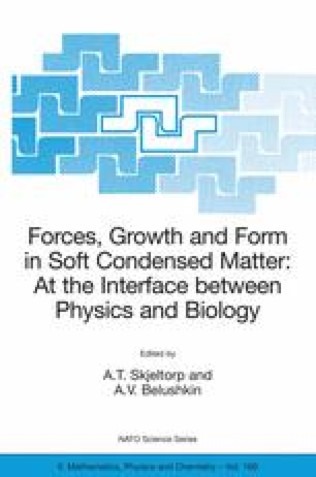
Forces, Growth and Form in Soft Condensed Matter : At the Interface between Physics and Biology
This volume comprises the proceedings of a NATO Advanced Study Institute held at Geilo, Norway, 24 March - 3 April 2003, the seventeenth ASI in a series held every two years since 1971. The objective of this ASI was to identify and discuss areas where synergism between modern physics, soft condensed matter and biology might be most fruitful. The main pedagogical approach was to have lecturers focussing on basic understanding of important aspects of the relative role of the various interaction- electrostatic, hydrophobic, steric, conformational, van der Waals etc. Soft condensed matter and the connection between physics and biology have been the themes of several earlier Geilo Schools. A return to these subjects thus allowed a fresh look and a possibility for defining new directions for research. Examples of soft materials, which were discussed at this ASI, included colloidal dispersions, gels, biopolymers and charged polymer solutions, polyelectrolytes, protein/membrane complexes, nucleic acids and their complexes. Indeed, most forms of condensed matter are soft and these substances are composed of aggregates and macromolecules, with interactions that are too weak and complex to form crystals spontaneously. A characteristic feature is that small external forces, slight perturbations in temperature, pressure or concentration, can all be enough to induce significant structural changes. Thermal fluctuations are almost by definition strong in soft materials and entropy is a predominant determinant of structure, so that disorder, slow dynamics and plastic deformation are the rule. Hence the phrase ‘soft condensed matter’ has been coined.

Fatty acids
Fatty acid metabolism, including the de novo synthesis, uptake, oxidation, and derivation of fatty acids, plays several important roles at cellular and organ levels. Recent studies have identified characteristic changes in fatty acid metabolism in idiopathic pulmonary fibrosis (IPF) lungs, which implicates its dysregulation in the pathogenesis of this disorder. Here, we review the evidence for how fatty acid metabolism contributes to the development of pulmonary fibrosis, focusing on the profibrotic processes associated with specific types of lung cells, including epithelial cells, macrophages, and fibroblasts. We also summarize the potential therapeutics that target this metabolic pathway in treating IPF.

Esterification of Polysaccharides
Polysaccharide esters (cellulose and starch) are among the first polymeric materials applied commercially. The way of producing these technically relevant derivatives, mainly the carboxylic acid esters of C2 to C4 acids, have not been changed significantly during their history of manufacture. The investigation of new acylation methods and strategies of analysis was revived during the last decade by the search for tailored, biocompatible, material for specific fields of application, e.g., biotechnology, sensor technique and medicine. Unconventional solvents were developed for completely homo-geneous acylation reaction applying state of the art techniques of modern organic chemistry for polysaccharide modification. This book will provide a first comprehensive summary of acylation methods in a very practical manner. Detailed structure analysis is indispensable for the evaluation of structure-property-relationships. Spectroscopic methods in particular FTIR- and NMR spectroscopy including two dimensional methods are of increasing importance.

Enzymatic and Chemical Synthesis of Nucleic Acid Derivatives
The book covers enzymatic (including chemo-enzymatic) methods, with a focus on the synthesis and incorporation of modified nucleosides. The authors also offer a review of innovative approaches for the non-enzymatic chemical synthesis of nucleic acids and their analogs and derivatives, highlighting especially challenging species. The book offers a concise review of the methods that prepare novel and heavily modified polynucleotides in sufficient amount and purity for most clinical and research applications.

Emergent Computation : Emphasizing Bioinformatics
Emergent Computation is concerned with recent applications of Mathematical Linguistics or Automata Theory. This subject has a primary focus upon ""Bioinformatics"" (the Genome and arising interest in the Proteome), but the closing chapter also examines applications in Biology, Medicine, Anthropology, etc. The book is composed of an organized examination of DNA, RNA, and the assembly of amino acids into proteins. Rather than examine these areas from a purely mathematical viewpoint (that excludes much of the biochemical reality), the author uses scientific papers written mostly by biochemists based upon their laboratory observations. Thus while DNA may exist in its double stranded form, triple stranded forms are not excluded. Similarly, while bases exist in Watson-Crick complements, mismatched bases and abasic pairs are not excluded, nor are Hoogsteen bonds. Just as there are four bases naturally found in DNA, the existence of additional bases is not ignored, nor amino acids in addition to the usual complement of 20. Can there be more than ""64"" possible codons? RNA is examined from the point of view of Nussinov plots.

Early Life Origins of Health and Disease
Early Life Origins of Health and Disease is a new book which presents and discusses the many factors that may have impact on normal development. In a concise and readable manner, the authors consider both the proven and suggestive evidence that the high prevalence of hypertension, diabetes, obesity and, in some populations, kidney disease, may not be all due to genetics or adult environment alone. There is good evidence that stress and more subtle dietary deficiencies, as well as placental malfunction, may increase the risk that the offspring will develop these problems in later life. Finally, new and emerging evidence for other areas of human health and disease such a motor control and mental health is critically reviewed for the first time. The book is a ‘must’ for all scientists interested in researching these areas, as there is a critical evaluation of the methodology used and suggestions for the ‘optimal’ way in which to investigate these phenomena.

Dissecting the Molecular Anatomy of Tissue
The book provides an updated overview of molecular analysis of human tissues, and the impact this analysis has on diagnosis and prognosis of human diseases. Special emphasis is placed on human cancer and the future directions of the field. Methods of handling clinical tissue samples, including the impact of handling on subsequent molecular analysis, are also discussed. In addition, detailed protocols for molecular analysis of DNA, RNA and protein, with special emphasis on molecular analysis of highly complex human tissue samples containing mixtures of cell populations, are provided.

Directory of microbicides for the protection of materials : A handbook
This edition is divided into two parts. In Part One 23 contributions of worldwide selected experts present extensively diversified information about: -Microbicides with regard to the relationship between chemical structure and mode of action and activity, -Research and development in consideration of registration procedures,Legislative aspects,The use of microbicides in the major application areas (18) which are described in detail.The Microbicide Data is organized into 21 substance classes (e.g. alcohols, aldehydes, acids, amides, etc.) and collected in Part Two.

Development of trans-free lipid systems and their use in food products
Encompasses the work of leading researchers discussing, from a scientific and technological perspective, the latest and most innovative approaches to structure edible oils without the use of trans fats. Additionally, the authors discuss practical uses and technical limitations associated with the use of "structured edible oils" in different food systems. Appealing to researchers and professionals working in lipid science, food chemistry and fat metabolism, it fills the gap in the literature for a book in this fast-changing field.

Current Developments in Solid-state Fermentation
Over the period of last two decades, there has been significant resurgence in solid-state fermentation due to the numerous benefits it offers, especially in the engineering and environmental aspects. SSF has shown much promise in the development of several bioprocesses and products. This resurgence gained further momentum during the last 5-6 years with the developments in fundamental and applied aspects. A good deal of information has been generated in published literature and patented information. Several commercial ventures have come up based on SSF in different parts of the world. The contents are organized into four parts: Part 1 deals with the General and Fundamentals aspects of SSF; Part 2 deals with the production of bulk chemicals and products such as enzymes, organic acids, spores and mushrooms in SSF; Part 3 is on the use of SSF for specialty chemicals such as gibberellic acid, antibiotics and other pharmaceutically valuable secondary metabolites, pigments, and aroma compounds; Part 4 deals with the use of SSF miscellaneous application such as SSF for food and feed applications, agro-industrial residues as substrates in SSF and the production of silage and vermicompost.
