



Page 2
Page 2

High Performance Tensegrity-Inspired Metamaterials and Structures
New metamaterials, smart materials and structures, and adaptive systems with adjustable behaviour or which use high performance or 'extremal' materials can be applied to bigger structural systems, such as cellular tensegrity lattices with extremal mechanical properties. Numerical analyses justify tensegrities and discrete and continuum models offer two main approaches to the analysis of tensegrity-based mechanical metamaterials and lattices. Two examples of 2D and 3D tensegrity modules and lattices, and potential applications in civil engineering are presented.

Hearing faces
Our project aims to aid deaf-mute people by tracking hand movements of the deaf-mute person for word level American Sign Language using WLASL model that include 2D CNN -3D CNN and RNN networks training on WLASL large video dataset, then generating the corresponding text and analyzing the person's facial gestures to generate information related to the tone of voice that is most appropriate to the person's age, gender, and race through MTCNN network algorithm that training on generated dataset by us depending on blending VOXCELEB dataset and VGGFACE dataset .

Galaxy Formation
This second edition of Galaxy Formation is an up-to-date text on astrophysical cosmology, expounding the structure of the classical cosmological models from a contemporary viewpoint. This forms the background to a detailed study of the origin of structure and galaxies in the Universe. The derivations of many of the most important results are derived by simple physical arguments which illuminate the results of more advanced treatments. A very wide range of observational data is brought to bear upon these problems, including the most recent results from WMAP, the Hubble Space Telescope, galaxy surveys like the Sloan Digital Sky Survey and the 2dF Galaxy Redshift Survey, studies of Type 1a supernovae, and many other observations.

From Cells to Proteins : Imaging Nature across Dimensions ; Proceedings of the NATO Advanced Study Institute, held in Pisa, Italy, 12-23 September 2004
This book offers updated information on how much information we are able to obtain in the exploration of the inner details of biological specimens in their native structure and composition. And deals with the implementation of laser beam and stage scanning systems incorporating confocal optics or multiphoton microscopy; the advent of new electro-optical detectors with great sensitivity, linearity, and dynamic range; the possibility of 2D fast image enhancement, reconstruction, restoration, analysis and 3D display, and the application of luminescence techniques.

Essential NMR : For Scientists and Engineers
ESSENTIAL NMR is a set of lecture notes for scientists and engineers who want to brush up on their knowledge of NMR. This book is also a compendium for graduate and postgraduate students of physics and chemistry as well as for their teachers, covering all fields of NMR, i.e. NMR methodology and hardware, chemical analysis, 2D-spectroscopy, NMR imaging, flow NMR, and quality control NMR. The material, selected and organized for a one-semester course, is presented with pairs of pages addressing particular topics. One page of each pair provides a text containing the key information, the other page shows a color illustration. This is the most comprehensive textbook on NMR to date.

DNA and RNA origami : methods and protocols
Detials diverse methodological approaches on the assembly and applications of DNA origami assemblies. Chapters guide readers through different synthetic and computational methods, isolation and structural characterization of 2D and 3D DNA origami nanoarchitectures, nanophotonics, drug delivery, biophysics, and synthetic biology.Written in the successful Methods in Molecular Biology series format, chapters include introductions to their respective topics, lists of the necessary materials and reagents, step-by-step, readily reproducible protocols, and notes on troubleshooting and avoiding known pitfalls.

Digital Sketching : Computer-Aided Conceptual Design
Delivers a comprehensive and insightful examination of how architects and other design professionals can best use digital design technology to become better designers. Celebrated professional, professor, and author John Bacus provides readers with practical and timely information on emerging digital design technologies and their effect on professional practice.

Diabetes Mellitus & Recent developments
Diabetes mellitus is a group of metabolic disease characterized by hyperglycemia resulting from defect in insulin secretion, insulin action, or both. Symptoms of marked hyperglycemia include polyuria, polydipsia, weight loss, sometimes with polyphagia, and blurred vision. Frequency of diabetic in the world About 1 in 11 adults worldwide now have diabetes mellitus, 90% of whom have type 2 diabetes mellitus (T2DM). Asia is a major area of the rapidly emerging T2DM global epidemic Classification Of Diabetic Mellitus. 1-Type 1 diabetes: which accounts for only5–10% of those with diabetes, results from a cellular-mediated autoimmune destruction of the cells of the pancreas. 2-Type 2 diabetes: which accounts for90 –95% of those with diabetes, result from insulin resistance. The chronic complications of diabetes mellitus affect many organ systems and are responsible for the majority of morbidity and mortality. Such as, retinopathy, diabetic foot, neuropathy, and nephropathy, sexual dysfunction, and skin changes.

Control Systems Theory and Applications for Linear Repetitive Processes
After motivating examples, this monograph gives substantial new results on the analysis and control of linear repetitive processes. These include further applications of the abstract model based stability theory which, in particular, shows the critical importance to the dynamics developed of the structure of the initial conditions at the start of each new pass, the development of stability tests and performance bounds in terms of so-called 1D and 2D Lyapunov equations. It presents the development of a major bank of results on the structure and design of control laws, including the case when there is uncertainty in the process model description, together with numerically reliable computational algorithms. Finally, the application of some of these results in the area of iterative learning control is treated --- including experimental results from a chain conveyor system and a gantry robot system.
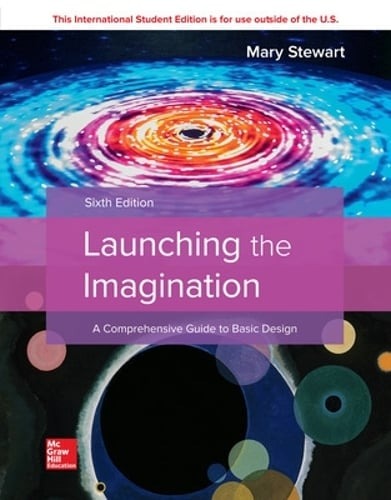
Launching the imagination : A comprehensive guide to two-dimensional design
Launching the Imagination treats design as both a verb and a noun—as both a process and a product. Through an immersion in 2D, 3D, and 4D concepts and possibilities, students develop visual thinking strategies that will serve them throughout their studies and their careers. They discover that design is deliberate—a process of exploring a wide range of solutions and choosing the most promising option for development. They are encouraged to analyze each resulting solution thoughtfully in order to produce the clearest and most inventive solution to each assignment.
IUTAM symposium on relations of shell plate beam and 3D models ; Proceedings of the IUTAM Symposium on the relations of shell, plate, beam, and 3D models, Dedicated to the Centenary of Ilia Vekua’s Birth, held in Tbilisi, Georgia, April 23-27, 2007
Contains papers on the main topics reflecting the scientific programme of the symposium: hierarchical, refined mathematical and technical models of shells, plates, and beams; relation of 2D and 1D models to 3D linear, non-linear and physical models; junction problems. In particular, peculiarities of cusped shells, plates, and beams are emphasized and special attention is paid to junction, multibody and fluid-elastic shell (plate, beam) interaction problems and their applications.

Beginning jOOQ : Learn to Write Efficient and Effective Java-Based SQL Database Operations
Learn to use the jOOQ library to manage SQL database operations in Java and JVM applications. This book walks you through what JOOQ is, how to install and get started with it, and then gets you working with it. You will: Comparing equivalent features between Hibernate, JPA and jOOQ. Unlock the power of your SQL database with high performing, flexible and typesafe SQL queries. Seamlessly work with many different SQL database vendors without changing your code. Effortlessly generate Java code based on the content of your database. Write reactive SQL database access code with R2DBC. Integrating jOOQ into popular frameworks and platforms like Hibernate, Spring boot and Quarkus tools like IDEs. Testing jOOQ-based code with modern integration testing frameworks like TestContainers and Docker. Learn how to safely handle data access code within frameworks like the Java Persistence API (JPA)

Beginning game development with Godot : Learn to create and publish your first 2D platform game
Learn the fundamentals of Godot by diving headfirst into creating a 2D platformer from scratch. This book is a hands-on, practical guide to developing 2D games using the Godot Engine 3.2.3/3.3, with the help of GDScript. You will: Understand the Godot engine and the benefits of using it for game development Master the fundamentals of programming in GDScript Use the Godot graphical interface to design and animate players, the game world, menus, and various games scenes Create your first 2D game in Godot and publish it to various platforms

Basic methods for the biochemical lab
Covers : quantitative methods (proteins, nucleic acids, phospholipids and carbohydrates), electrophoresis (several polyacrylamide and agarose systems, 2D-PAGE, detection methods and affinity electrophoresis), chromatographic protocols (thin-layer chromatography, GPC, IEC, affinity chromatography, HPLC), immunochemical protocols (hapten-carrier and enzyme conjugation, immunization and antibody purification, immune affinity chromatography, ELISA), centrifugation (differential and density gradient centrifugation for cells and cellular fractions), radioactivity (labeling and counting), buffers (buffer properties and compositions).

Atlas of oral and maxillofacial radiology
Presents an extensive case collection of both common and less common conditions of the jaws and teeth. Focusing on the essentials of radiologic interpretation, this is a go-to companion for clinicians in everyday practice who have radiologically identified a potential abnormality, as well as a comprehensive study guide for students at all levels of dentistry, surgery and radiology. Unique lesion-based problem solving chapter makes this an easy-to-use reference in a clinical settingIncludes 2D intraoral radiography, the panoramic radiograph, cone beam CT, multidetector CT and MRIMultiple cases are presented in order to demonstrate the variation in the radiological appearances of conditions affecting the jaws and teethSpecial focus on conditions where diagnostic imaging may substantially contribute to diagnosisFeatures a useful chapter covering the temporomandibular joint

Architectural Drafting for Interior Design
Incorporates material and examples that are meaningful to today's interior designers. Beginning interior designers will learn how to communicate their ideas graphically with a resource that is designed specifically for them. This book addresses their needs by focusing on topics independent of CAD, such as how to draw a floor plan, how to use it to create an interior elevation, and how to understand the relationship between 2D and 3D drawings. Written with NCIDQ, CIDA and NKBA requirements in mind, this book will provide readers with a strong, standards-based foundation in interior design.
An Introduction To Chemoinformatics
This, the first text written specifically for this field, aims to provide an introduction to the major techniques of chemoinformatics. The first part of the book deals with the representation of 2D and 3D molecular structures, the calculation of molecular descriptors and the construction of mathematical models. The second part describes other important topics including molecular similarity and diversity, the analysis of large data sets, virtual screening, and library design. Simple illustrative examples are used throughout to illustrate key concepts, supplemented with case studies from the literature.
Advances in Visual Information Systems ; 9th International Conference, VISUAL 2007 Shanghai, China, June 28-29, 2007 Revised Selected Papers
The visual information systems paradigm continues to evolve, and the unrelenting exponential growth in the amount of digital visual data underlines the escalating importance of how such data are effectively managed and deployed.It covered image and video retrieval, visual biometrics, intelligent visual information processing, visual data mining, ubiquitous and mobile visual information systems, visual semantics, 2D/3D graphical visual data retrieval and applications of visual information systems.

Advances in Mass Data Analysis of Signals and Images in Medicine, Biotechnology and Chemistry ; International Conference, MDA 2006/2007, Leipzig, Germany, July 18, 2007, Selected Papers
The automatic analysis of images and signals in medicine, biotechnology, and chemistry is a challenging and demanding field. Signal-producing procedures by microscopes, spectrometers, and other sensors have found their way into wide fields of medicine, biotechnology, economy, and environmental analysis. With this arises the problem of the automatic mass analysis of signal information. Signal-interpreting systems which generate automatically the desired target statements from the signals are therefore of compelling necessity. The continuation of mass analyses on the basis of classical procedures leads to investments of proportions that are not feasible. New procedures and system architectures are therefore required. The goals of this: Provide a forum for identifying important contributions and opportunities for research on mass data analysis on microscopic images Promote the systematic study of how to apply automatic image analysis and interpretation procedures to that field Show case applications of mass data analysis in biology, medicine, and chemistry Topics of interest include (but are not limited to): Techniques and developments of signal and image producing procedures Object matching and object tracking in microscopic and video microscopic images 1D, 2D, and 3D shape analysis and description

3D Segmentation for medical images (OsteoVision) = التقطيع ثلاثي الأبعاد للصور الطبية
With the increasing integration of AI across various sectors, artificial intelligence (AI) is already playing a significant role in the healthcare industry, and its use is expected to grow further. AI systems used in image processing and computer vision algorithms have shown a significant ability to perform many operations such as segmentation, classification, and detection. This project presents the application of computer vision algorithms in the field of medical imaging for diagnostic, therapeutic, and interventional purposes. This thesis explores the use of several computer vision algorithms to address different pathologies, specifically brain tumors (glioma) (see Appendix A) and knee osteoarthritis (OA), as well as tracking the progression of knee osteoarthritis using the Kellgren and Lawrence (KL) grading system, a common method for classifying the severity of OA into five grades. To achieve the desired impact, the project employs various techniques, including 3D segmentation for brain tumors, 2D segmentation for knee joints, and multinomial classification for determining the severity of knee OA injuries. The primary aims of the project are to enhance diagnostic accuracy, assist in creating treatment plans, provide an assistive tool for healthcare providers to make more informed decisions, leverage AI's capabilities to detect abnormalities that might escape the human eye, and streamline workflow. To facilitate these goals, the project incorporates a user-friendly UI, a website, and a Flutter-based mobile application, enabling healthcare providers to efficiently integrate these tools into their practice and improve patient care.
