



Page 192
Page 192
Computer Aided Verification ; 33rd International Conference, CAV 2021, Virtual Event, July 20–23, 2021, Proceedings, Part II
This two-volume set LNCS 12759 and 12760 constitutes the refereed proceedings of the 33rd International Conference on Computer Aided Verification, CAV 2021, held virtually in July 2021. The 63 full papers presented together with 16 tool papers and 5 invited papers were carefully reviewed and selected from 290 submissions. The papers were organized in the following topical sections: Part I: invited papers; AI verification; concurrency and blockchain; hybrid and cyber-physical systems; security; and synthesis. Part II: complexity and termination; decision procedures and solvers; hardware and model checking; logical foundations; and software verification.

Computer Aided Verification ; 33rd International Conference, CAV 2021, Virtual Event, July 20–23, 2021, Proceedings, Part I
This two-volume set LNCS 12759 and 12760 constitutes the refereed proceedings of the 33rd International Conference on Computer Aided Verification, CAV 2021, held virtually in July 2021. The 63 full papers presented together with 16 tool papers and 5 invited papers were carefully reviewed and selected from 290 submissions. The papers were organized in the following topical sections: Part I: invited papers; AI verification; concurrency and blockchain; hybrid and cyber-physical systems; security; and synthesis. Part II: complexity and termination; decision procedures and solvers; hardware and model checking; logical foundations; and software verification.

Computer Aided Verification ; 32nd International Conference, CAV 2020, Los Angeles, CA, USA, July 21–24, 2020, Proceedings, Part II
The two-volume set LNCS 12224 and 12225 constitutes the refereed proceedings of the 32st International Conference on Computer Aided Verification, CAV 2020, held in Los Angeles, CA, USA, in July 2020.*
Computer Aided Verification ; 32nd International Conference, CAV 2020, Los Angeles, CA, USA, July 21–24, 2020, Proceedings, Part I
The two-volume set LNCS 12224 and 12225 constitutes the refereed proceedings of the 32st International Conference on Computer Aided Verification, CAV 2020, held in Los Angeles, CA, USA, in July 2020.*

Computer Aided Verification ; 31st International Conference, CAV 2019, New York City, NY, USA, July 15-18, 2019, Proceedings, Part I
This volume presented automata and timed systems; security and hyperproperties; synthesis; model checking; cyber-physical systems and machine learning; probabilistic systems, runtime techniques; dynamical, hybrid, and reactive systems.

Computer Aided Verification ; 20th International Conference, CAV 2008 Princeton, NJ, USA, July 7-14, 2008 Proceedings
This book constitutes the refereed proceedings of the 20th International Conference on Computer Aided Verification, CAV 2008, held in Princeton, NJ, USA, in July 2008.

Computer Aided Verification ; 19th International Conference, CAV 2007, Berlin, Germany, July 3-7, 2007, Proceedings
This volume contains advancement of the theory and practice of computer-assisted formal analysis methods for software and hardware systems. covers the spectrum from theoretical - sults to concrete applications, with an emphasis on practical verification tools and the algorithms and techniques that are needed for their implementation.

Computer Aided Systems Theory – EUROCAST 2007 ; 11th International Conference on Computer Aided Systems Theory, Las Palmas de Gran Canaria, Spain, February 12-16, 2007, Revised Selected Papers
This book presented formal approaches, Computation and Simulation in Modelling Biological Systems, Intelligent Information Processing, Computers in Education, Grid Computing, Applied Formal Verification, Cellular Automata, Computer Vision, Heuristic Problem So.

Computer Aided Systems Theory – EUROCAST 2005 ; 10th International Conference on Computer Aided Systems Theory, Las Palmas de Gran Canaria, Spain, February 7-11, 2005, Revised Selected Papers
The concept of CAST, computer aided systems Theory, was introduced by F. Pichler of Linz in the late 1980s to include those computer theoretical and practical developments used as tools to solve problems in system science. It was considered as the third component (the other two being CAD and CAM) that would provide for a complete picture of the path from computer and systems sciences to practical developments in science and engineering. Selected papers were published as Springer Lecture Notes in Computer Science vols. 410, 585, 763, 1030, 1333, 1728, 2178 and 2809 and in several special issues of Cybernetics and Systems: an lnternational

Computer Aided Pharmaceutics and Drug Delivery : An Application Guide for Students and Researchers of Pharmaceutical Sciences
Examines the role of computer-assisted techniques for discovering, designing, optimizing and manufacturing new, effective, and safe pharmaceutical formulations and drug delivery systems. The book discusses computational approaches, statistical modeling and molecular modeling for the development and safe delivery of drugs in humans. The application of concepts of QbD (Quality by Design), DoE (Design of Experiments), artificial intelligence and in silico pharmacokinetic assessment/simulation have been made a lot easier with the help of commercial software and expert systems. This title provides in-depth knowledge of such useful software with illustrations from the latest researches. The book also fills in the gap between pharmaceutics and molecular modeling at micro, meso and maro scale by covering topics such as advancements in computer-aided Drug Design (CADD), drug-polymer interactions in drug delivery systems, molecular modeling of nanoparticles and pharmaceutics/bioinformatics.

Computer Aided Bridge Engineering : Detail Design of Pre-Stressed Concrete I-Girder / Box-Girder Bridges
Real project design calculations for a deck-girder superstructure are presented along with the design of an abutment and pier with pile foundation as the bridge substructure. The book is proposed to be read in association with processing the design work by using the computer software ASTRA Pro as referred to in the book. The book describes two essential facets of the work, which are 'Analysis of the Grillage Model of the Deck-Girder Superstructure' and the subsequent 'Design of Deck Slab and PSC I-Girder'. The software provides three facets of the work: first is the 'Analysis of the Grillage Model of the Deck-Girder Superstructure', second is the 'Design of Deck Slab and PSC I-Girder, Abutment, Piers along with Pile Foundation', and the third is a 'Set of Sample Editable CAD Drawings for the work'. The drawings may be modified as per the design work and be submitted as required for the construction. The drawings contain information on dimensions, structural detailing, bar-bending schedules, pre-stressing details and construction guides.

Computer aided architectural design futures 2005 ; Proceedings of the 11th International CAAD futures Conference held at the Vienna University of Technology, Vienna, Austria, on June 20-22, 2005
MARTENS Bob and BROWN Andre Co-conference Chairs, CAAD Futures 2005 Computer Aided Architectural Design is a particularly dynamic field that is developing through the actions of architects, software developers, researchers, technologists, users, and society alike. CAAD tools in the architectural office are no longer prominent outsiders, but have become ubiquitous tools for all professionals in the design disciplines. At the same time, techniques and tools from other fields and uses, are entering the field of architectural design. This is exemplified by the tendency to speak of Information and Communication Technology as a field in which CAAD is embedded. Exciting new combinations are possible for those, who are firmly grounded in an understanding of architectural design and who have a clear vision of the potential use of ICT. CAAD Futures 2005 called for innovative and original papers in the field of Computer Aided Architectural Design, that present rigorous, high-quality research and development work. Papers should point towards the future, but be based on a thorough understanding of the past and present.
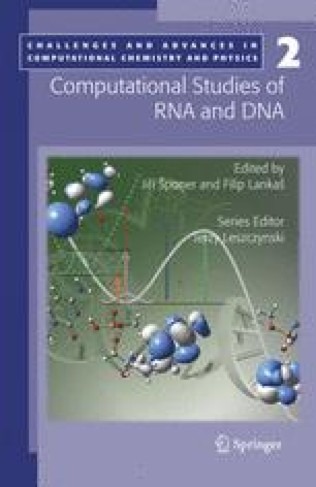
Computational studies of RNA and DNA
Computational Studies of RNA and DNA includes, in an integrated way, modern computational studies of nucleic acids, ranging from advanced electronic structure quantum chemical calculations through explicit solvent molecular dynamics (MD) simulations up to mesoscopic modelling, with the main focus given to the MD field. It gives an equal emphasis to the leading methods and applications while successes as well as pitfalls of the computational techniques are discussed.The systems and problems studied include: Accurate calculations of base pairing energies / Electronic properties of nucleic acids and electron transfer, through various types of nucleic acid / Calculating DNA elasticity

Computational science and its applications– ICCSA 2007 ; International Conference, Kuala Lumpur, Malaysia, August 26-29, 2007. Proceedings, Part II
This volume feature outstanding papers that present a wealth of original research results in the field of computational science, from foundational issues in computer science and mathematics to advanced applications in almost all sciences that use computational techniques.

Computational Science and Its Applications - ICCSA 2008 ; International Conference, Perugia, Italy, June 30– July 3, 2008, Proceedings, Part II
The two-volume set LNCS 5072 and 5073 constitutes the refereed proceedings of the International Conference on Computational Science and Its Applications, ICCSA 2008, held in Perugia, Italy in June/July 2008.

Computational science and its applications - ICCSA 2008 ; International Conference, Perugia, Italy, June 30 – July 3, 2008, Proceedings, Part I
The two-volume set LNCS 5072 and 5073 constitutes the refereed proceedings of the International Conference on Computational Science and Its Applications, ICCSA 2008, held in Perugia, Italy, in June/July, 2008.

Computational science and its applications – ICCSA 2007 ; International Conference, Kuala Lumpur, Malaysia, August 26-29, 2007. Proceedings, Part III
This volume feature outstanding papers that present a wealth of original research results in the field of computational science, from foundational issues in computer science and mathematics to advanced applications in almost all sciences that use computational techniques.

Computational science and its applications – ICCSA 2007 ; International Conference, Kuala Lumpur, Malaysia, August 26-29, 2007. Proceedings, Part I
This volume feature outstanding papers that present a wealth of original research results in the field of computational science, from foundational issues in computer science and mathematics to advanced applications in almost all sciences that use computational techniques.

Computational science and its applications - ICCSA 2006 ; Vol. 3983 ; International Conference, Glasgow, UK, May 8-11, 2006, Proceedings, Part IV
This ?ve-volume set was compiled following the 2006 International Conference on Computational Science and its Applications, ICCSA 2006. It represents the outstanding collection of almost 664 refereed papers selected from over 2,450 submissions to ICCSA 2006. Computational science has ?rmly established itself as a vital part of many scienti?c investigations, a?ecting researchers and practitioners in areas ranging from applications such as aerospace and automotive, to emerging technologies such as bioinformatics and nanotechnologies, to core disciplines such as ma- ematics, physics, and chemistry.

Computational science and its applications - ICCSA 2006 ; Vol. 3982 ; International Conference, Glasgow, UK, May 8-11, 2006, Proceedings, Part III
This ?ve-volume set was compiled following the 2006 International Conference on Computational Science and its Applications, ICCSA 2006. It represents the outstanding collection of almost 664 refereed papers selected from over 2,450 submissions to ICCSA 2006. Computational science has ?rmly established itself as a vital part of many scienti?c investigations, a?ecting researchers and practitioners in areas ranging from applications such as aerospace and automotive, to emerging technologies such as bioinformatics and nanotechnologies, to core disciplines such as ma- ematics, physics, and chemistry.
