



Page 19
Page 19

Nanoscale Photonic Imaging
This book, edited and authored by a team of world-leading researchers, provides a broad overview of advanced photonic methods for nanoscale visualization, as well as describing a range of fascinating in-depth studies.

Nanoscale Phenomena : Basic Science to Device Applications
Nanotechnology is the result of the continuing technological trend toward device miniaturization and the characterization, manipulation, and fine control of structure and function at diminishing length scales. A large class of nanoscale materials can be stable even though they are far from the lowest-energy thermodynamic state, and many possess novel properties unattainable in bulk. These trends are supported by the increasing sophistication of characterization and fabrication tools such as the scanning tunneling microscope and the transmission electron microscope, which allow the resolution and manipulation of single atoms and molecules.

Nanoscale Devices - Fundamentals and Applications
This book contains a collection of papers giving insight into the fundamentals and applications of nanoscale devices. The main focus is on the synthesis and characterization of nanoscale magnetic materials, the fundamental physics and materials aspects of solid-state nanostructures, the development of novel device concepts and design principles for nanoscale devices, as well as on applications in electronics with special emphasis on defence against the threat of terrorism.

Nanoscale Assembly : Chemical Techniques
Recent advances have pushed the limits of lithography firmly into the sub-100 nm domain, with smallest feature sizes around 10 nm. However, compared to living organisms, devices fabricated using nanolithography are not nearly as complex, as they are essentially 2D and contain only a limited number of chemical elements. For centuries, Nature has been a major inspiration for science. First of all to learn how Life functions at cellular level, but increasingly, as a blueprint for designing non-natural devices where the building blocks and their assembly are inspired by biological examples. The key tool in translating these examples into the domain of engineering, has been self-assembly or self-organization. This book gathers a spectrum researchers who have not only furthered our knowledge of self-assembly using small molecules, polymers and colloidal particles as building blocks, but who have also shown it to be a practical tool in the assembly of an astonishing variety of devices, ranging from molecular electronics to biosensors.

Nanophytomedicine : An emerging platform for drug delivery
Covers recent advances in experimental and theoretical studies on various properties of nanoparticles derived from plant sources. This book assesses the recent advancements and applications of plant-based nanoparticles and also highlights emerging concepts of biomimetics. Contains 24 chapters encompassing various therapeutic applications of phytochemicals derived from plants, ferns, seaweeds, and so on, mediated through nanotechnology and its allied approaches. A fervent attempt has been made to compile every significant advancement in the field of phytonanomedicine so as to accelerate its momentum in the pharmaceutical sector.

Nanopharmaceuticals in regenerative medicine
A collective and comprehensive volume of the latest innovations in nanoscience technology for practical use in clinical, biomedicine and diagnostic arena. The term nanotechnology pops up in every segment of modern-day life. The primary aim of this book is to deliver the precise information to students, educators, technologists and researchers. A conglomerate of scientists from various research fields contributed to the chapters, giving detailed descriptions on the most recent developments of nanotechnology in the area of disease management. This book will also be useful for industrial research and development partners, start-up entrepreneurs, government policy makers and other professionals who are interested in nanomedicines.

Nanoparticles in Biomedical Imaging : Emerging Technologies and Applications
Fundamental Biomedical Technologies features titles in multidisciplinary, technology-driven areas, providing the foundations for breakthrough advances in medicine and biology. The term technology refers, in a vigorously unrestrictive sense, to a broad array of engineering disciplines, the sciences of computation and informatics, mathematical models exploiting and advancing methods of mathematical physics, and the development of novel, experimental discovery devices. Titles in this series are designed and selected to provide high-level visionary input for specialists, while presenting overviews of emerging fields for those in related areas. Volumes in this series aim to provide technologists with the material to gain competent entry into biomedical research and biomedical researchers to understand and embrace novel technological foundations and tools.

Nanoparticle-Based Drug Delivery in Cancer Treatment
Discusses nanotechnological developments of interfering RNA-based nanoparticles, delivery vehicles, and validated therapeutic RNAi–molecular target interactions and explains the results of clinical and preclinical trials. The book also gives strategies for universal methods of constructing hybrid organic–inorganic nanomaterials that can be widely applied in the biomedical field. Focuses on : Recent advances of nanoparticle-mediated siRNA delivery systems and their application in clinical trials for cancer therapy Material platforms that establish NPs and both localized and controlled gene silencing The most promising systems for clinical application Surveys progress in nanoparticle-based nanomedicine in cancer treatment The most advanced of the nonviral nanocarriers for delivery of oligonucleotides to malignant blood cancer cells
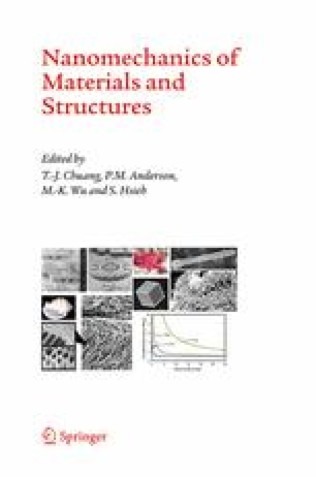
Nanomechanics of Materials and Structures
This book is derived from the proceedings of the International Workshop on Nanomechanics held at Asilomar Conference Grounds in Pacific Grove, California on July 14-17, 2004. The main objective was to convene leading researchers in the nanotechnology community to assess the current state-of-the-art and disseminate recent progress, critical issues, barriers to applications, and directions for future research in nanomechanics.
Nanomaterials in dental medicine
Presents varied clinical applications of nanomaterials in dentistry ranging from diagnostics to therapeutics. it discusses role of nanomaterials in clinical applications and future needs. Contributors are international luminaries in their respective research area. The topics covered in this book are role of nanomaterials in oral and dental diagnosis, dental disease prevention, pain free dentistry, dental implantology. It also discusses the therapeutic applications of nanoparticles in oral cancer therapy. This book will be a valuable reference for researchers, clinicians, students and professionals working in the areas of nanotechnology and health sciences. It will also be of interest to the students and researchers primarily working in the field of materials science, applied chemistry, applied physics, and biotechnology.

Nanomaterials for Application in Medicine and Biology
This volume contains research reports presented during the NATO Advanced Research Workshop (ARW) “Materials for Application in Medicine and Biology” held in Bonn, Germany, from October 4 to 6, 2006 at the center of advanced european studies and research (caesar). The application of nanomaterials in medicine and biology can be understood as the gathering and use of our current knowledge on nanoscale features of b- logical systems in order to learn how to design nanodevices for biomedical uses.

Nanomaterials and nanotechnology in medicine
The use of nanotechnology and nanomaterials more generally is an emerging field that has generated a lot of interest in the last few years. To this point, there have been few books that deal with the recent advances in nanomaterials or nanocomposites in the medical discipline. Intended as a one-stop reference, Nanomaterials and Nanotechnology in Medicine provides the reader with the most-up-to-date and comprehensive exploration of the field of nanomedicine. The scope of the topic is huge, with nano applications in every medical specialization—from diagnostics to pharmaceuticals, from biological therapies to surgical devices, and from regenerative therapies to gene therapy. As such, this volume provides the most comprehensive coverage of this intriguing field of study.
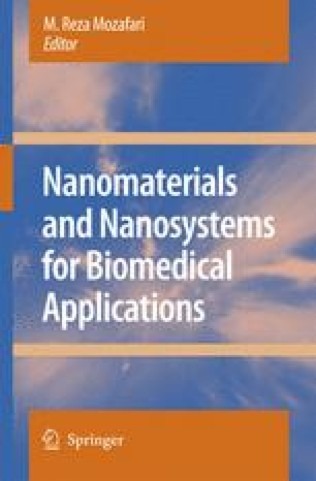
Nanomaterials and Nanosystems for Biomedical Applications
The book includes expert reviews on the advances and current problems associated with the implants and nanodevices along with their applications in medicine, pharmaceutics, cancer therapy, gene transfer and drug delivery. The editor, M. R. Mozafari (PhD), has been working in the field of nanobiotechnology for the past 14 years and has produced more than 60 publications.

Nanoinformatics
Brings out the state of the art on how informatics-based tools are used and expected to be used in nanomaterials research. There has been great progress in the area in which “big-data” generated by experiments or computations are fully utilized to accelerate discovery of new materials, key factors, and design rules. Data-intensive approaches play indispensable roles in advanced materials characterization. "Materials informatics" is the central paradigm in the new trend. "Nanoinformatics" is its essential subset, which focuses on nanostructures of materials such as surfaces, interfaces, dopants, and point defects, playing a critical role in determining materials properties. There have been significant advances in experimental and computational techniques to characterize individual atoms in nanostructures and to gain quantitative information. The collaboration of researchers in materials science and information science is growing actively and is creating a new trend in materials science and engineering.

Nanoformulations in Human Health: Challenges and Approaches
This book is an amalgamation of knowledge, experience, and expertise in various aspects of nanotechnology, by experts who are proficient in designing novel nanoformulations that are used in the treatment of various challenging and prevalent diseases. It is an exhaustive compilation of the multi-faceted arena of nanoformulations and the healthcare system that caters to the needs of academicians, scholars, researchers, etc. The most important aspect of the book covers various types of nanoformulations and their applications in the treatment of communicable and non-communicable diseases. Each chapter focuses on a particular nanoformulation as well as a disease including the pathophysiology of the disease, the current treatment modalities of diseases, the role of nanoformulation in treatment and other future aspects and directions for further work. Coverage includes neuropathic pain, colon targeting, nose-to-brain drug delivery, cancer, arthritis and tuberculosis.

Nanoelectronics and Photonics : From Atoms to Materials, Devices, and Architectures
Nanoelectronics and Photonics: From Atoms to Materials, Devices, and Architectures provides a description of the core elements and challenges of advanced and future information technology. By linking the materials physics and chemistry at the atomic scale with device and circuit design and performance requirements, tutorial chapters from leaders in the field present a coherent picture of theoretical and experimental research efforts and technology development in this highly interdisciplinary area.

Nanocrystals : Synthesis, Properties and Applications
Nanocrystals and Their Mesoscopic Organization is an up-to-date monograph on an important aspect of nanoscience and technology. It opens with an elegant introduction including a brief historical account. Emphasis is then given to diverse synthetic methods, both chemical and physical, in addition to modern hybrid methods. The orientation shifts gradually to properties of nanocrystals that evolve with size; detailed discussions are to be found on mesoscalar assemblies in different dimensions, special cases of core-shell and magic nuclearity nanocrystals. The authors also address applications of nanocrystals, carefully separating out potential applications and those that have already emerged, and cite around 900 references from the literature, most from the last decade. Tables providing information at a glance and schematic diagrams at relevant places, make the monograph appealing to read.

Nanocomposites : Ionic Conducting Materials and Structural Spectroscopies
Nanocomposites have been receiving more and more attention given the improvement of synthesis techniques and the availability of powerful characterization techniques. The aim of the book is to introduce nanocomposite materials using a broad range of inorganic and organic solids. Furthermore, it is intended to present recent and not very common developments in especially spectroscopic characterization techniques, including Mössbauer, EXAFS, NMR. This should make the book attractive for a broad range of readers, including chemists and physicists.

Nanocatalysis
Nanocatalysis is one of the most exciting subfields to have emerged from nanoscience. Its central aim is the control of chemical reactions by changing the size, dimensionality, chemical composition and morphology of the reaction center and by changing the kinetics using nanopatterning of the reaction centers. This approach opens up new avenues for atom-by-atom design of nanocatalysts with distinct and tunable chemical activity, specificity, and selectivity. This book is intended to give a pedagogical and methodological overview of this exciting and growing field and to highlight specific examples of current research. In this way, it serves both as an instructive introduction for graduate students who plan to enter the field and as a reference work for scientists already active in this and related areas.
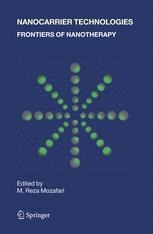
Nanocarrier Technologies : Frontiers of Nanotherapy
Nanobiotechnology is one of the key technologies of the 21st century. It is a combination of nanoscience and biotechnology and covers areas ranging from gene transfer and nanoencapsulation to food technology. Nanocarriers are a leading nanobiotechnology tool with the ability to provide protection, site-specific delivery, enhanced bioavailability and controlled release of pharmaceuticals, genetic material, imaging agents, nutraceuticals and cosmetics to name a few. For this reason, the study of nanocarriers, their properties and applications has attracted a great deal of interest over recent years. Designed as an advanced survey of the field, this book describes the key research parameters of nanocarrier technologies including their preparation methods, evaluation of their safety and efficiency, their interaction with biologicals and their application in biotechnology, drug delivery, gene therapy and food technology areas.
