



Page 19
Page 19

Molecular mechanisms in nutritional epigenetics
The field of nutritional epigenetics/nutri-epigenetics has expanded significantly, shedding light on how environmentally-driven epigenetic pathways can be modulated through nutrition and eating habits. The book provides a comprehensive introduction to the various epigenetic mechanisms affected by dietary compounds and focuses on specific topics such as the relationship between diet and the gut microbiome, the impact of diet on cardiovascular disease and psychopathology and the role of diet in pregnancy.

Molecular Machines
The chapters in this volume describe bottom-up strategies and chronicle cutting-edge advances from several of the world’s leading laboratories engaged in the development of molecular machines.The Nobel Prize in Chemistry 2016 was awarded jointly to Jean-Pierre Sauvage, Sir J. Fraser Stoddart and Bernard L. Feringa "for the design and synthesis of molecular machines". Both Jean-Pierre Sauvage and Sir J. Fraser Stoddart have also contributed to this book.

Molecular interactions : Concepts and methods
A modern, comprehensive text and reference describing intermolecular forces, this book begins with coverage of the concepts and methods for simpler systems, then moves on to more advanced subjects for complex systems – emphasizing concepts and methods used in calculations with realistic models and compared with empirical data.

Molecular Imaging II
The aim of this textbook of molecular imaging is to provide an up to date review of this rapidly growing field and to discuss basic methodological aspects necessary for the interpretation of experimental and clinical results. Emphasis is placed on the interplay of imaging technology and probe development, since the physical properties of the imaging approach need to be closely linked with the biologic application of the probe (i.e. nanoparticles and microbubbles). Various chemical strategies are discussed and related to the biologic applications. Reporter-gene imaging is beeing addressed not only in experimental protocols, but also first clinical applications are discussed. Finally, strategies of imaging to characterize apoptosis and angiogenesis are described and discussed in the context of possible clinical translation.
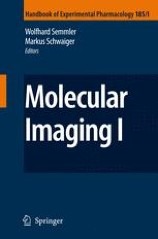
Molecular Imaging I
The aim of this textbook of molecular imaging is to provide an up to date review of this rapidly growing field and to discuss basic methodological aspects necessary for the interpretation of experimental and clinical results. Emphasis is placed on the interplay of imaging technology and probe development, since the physical properties of the imaging approach need to be closely linked with the biologic application of the probe (i.e. nanoparticles and microbubbles). Various chemical strategies are discussed and related to the biologic applications. Reporter-gene imaging is being addressed not only in experimental protocols, but also first clinical applications are discussed. Finally, strategies of imaging to characterize apoptosis and angiogenesis are described and discussed in the context of possible clinical translation.

Molecular Imaging ; An Essential Tool in Preclinical Research, Diagnostic Imaging, and Therapy
The continuous progress in the understanding of molecular processes of disease formation and progression attributes an increasing importance to biomedical molecular imaging methods. The purpose of this workshop was to discuss and overview multiple applications and emerging technologies in the area of diagnostic imaging including its fundamental capabilities in preclinical research, the opportunities for medical care, and the options involving therapeutic concepts. The book provides the reader with state-of-the-art information on the different aspects of diagnostic imaging, illuminating new developments in molecular biology, imaging agents and molecular probe design, and therapeutic techniques.

Molecular Genetics of Recombination
Genetic recombination is an important process involved in shaping the genetic make up of progeny. Increasingly, it has become evident that recombination is a DNA repair pathway crucial during DNA replication in vegetatively growing cells.

Molecular evolutionary models in drug discovery
Explores the application of evolutionary molecular models in drug discovery in which secondary metabolites play a fundamental role. Secondary metabolites are not produced in isolation, they are the result of the interaction of genes, metabolism and the environment. The book examines the role of secondary metabolites as leads in drug discovery and on the development of a rational bioprospecting model for new medicines based on the evolution of secondary metabolism. These evolutionary models are part of biological systems and are the most reliable expression of the functioning of living beings.

Molecular Electronics Materials, Devices and Applications
another goal of Molecular Electronics Materials, Devices and Applications is also to promote a practical approach. As a starting point for future developments, a pragmatic methodology for VHDL-AMS device modelling and circuit design based on experimental data is then proposed. It includes an original fault tolerant memory architecture based on molecular electronics.
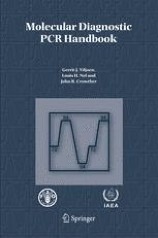
Molecular Diagnostic PCR Handbook
PREFACE The Joint FAO/IAEA Division of Nuclear Techniques in Food and Agriculture is involved in agricultural research and development and assists Member States of FAO and IAEA in improving strategies to ensure food security through the use of nuclear techniques and related biotechnologies, where such techniques have a valuable and often unique role. In particular, molecular diagnostic methods have rapidly evolved in the past twenty years, since the advent of the Polymerase Chain Reaction (PCR). They are used in a wide range of agricultural areas such as, improving soil and water management; producing better crop varieties; diagnosing plant and animal diseases; controlling insect pests and improving food quality and safety. The uses of nucleic acid-directed methods have increased significantly in the past five years and have made important contributions to disease control country programmes for improving national and international trade. These developments include the more routine use of PCR as a diagnostic tool in veterinary diagnostic laboratories. However, there are many problems associated with the transfer and particularly, the application of this technology. These include lack of consideration of: the establishment of quality-assured procedures, the required set-up of the laboratory and the proper training of staff. This can lead to a situation where results are not assured. This book gives a comprehensive account of the practical aspects of PCR and strong consideration is given to ensure its optimal use in a laboratory environment. This includes the setting-up of a PCR laboratory; Good Laboratory Practice and standardised of PCR protocols.

Molecular bio-sensors and the role of metal ions
Represents a milestone of contemporary progress and understanding of molecular bio-sensors for metal ions. It is bringing together the latest research in academia and industry, and it also emphasizes the spectrum of evolving regulations from regulatory bodies. This vibrant research area is covered by 31 internationally recognized experts. The impact of MILS-23 is manifested by more than 1300 references and close to 200 figures, more than 100 of them in color; further information is summarized in several tables. In conclusion, Volume 23 significantly advances our understanding of Molecular Bio-Sensors, it is therefore an essential resource for scientists working in the wide range from earth sciences, material sciences, physics, pharmacology, enzymology, analytical, organic, and inorganic biochemistry all the way through to medicine including the clinic.

Molecular Biomethods Handbook
Recent advances in the biosciences have led to a range of powerful new technologies, particularly nucleic acid, protein and cell-based methodologies. The most recent insights have come to affect how scientists investigate and define cellular processes at the molecular level. Molecular Biomethods Handbook, 2nd Edition expands upon the techniques included in the first edition, providing theory, outlines of practical procedures, and applications for a range of techniques. Part A of the book describes nucleic acid methods, such as gene expression profiling, microarray analysis and quantitative PCR. In Part B, protein and cell-based methods are outlined, in subjects ranging from protein engineering to high throughput screening. Written by a well-established panel of research scientists, Molecular Biomethods Handbook, 2nd Edition provides an up-to-date collection of methods used regularly in the authors’ own research programs.

Molecular Biology of Metal Homeostasis and Detoxification : From Microbes to Man
One of the challenges faced by every cell as well as by whole organisms is to maintain appropriate concentrations of essential nutrient metals while excluding nonessential toxic metals. Toward that end, all organisms have developed mechanisms for metal homeostasis and detoxification to maintain metal levels within physiological limits. This book brings together current knowledge of the molecular basis of metal homeostasis and detoxification in various eukaryotic model systems, including yeasts, plants, and mammals. It focuses on the cellular systems controlling metal transport, intracellular distribution, and immobilization as well as on systems regulating metal-dependent transcription. In addition to environmental aspects (including phytoremediation), the book treats the pathophysiology of metal deficiency and overload in relation to disease.

Molecular Biology of Human Cancers: An Advanced Student's Textbook
Presents many of the molecules and mechanisms generally important in human cancers. Following an overview on the cancer problem, individual chapters deal with cancer genetics and epigenetics, DNA damage and repair, oncogenes, tumor suppressors, regulatory pathways in cancer, apoptosis, cellular senescence, tumor invasion, and metastasis. A consensus is emerging that while these common mechanisms and molecules are all relevant to human cancers, in each cancer type (or even subtype) a selection of them are extremely important. For selected cancers, the route from genetic and epigenetic changes to their biological and clinical behavior can already be traced. Part II of the book presents a broad, but exemplary selection of cancers that serve as paradigms to illustrate this point. In fact, cancer research has now reached a critical stage, in which the accumulated knowledge on molecular mechanisms is gradually translated into improved prevention, diagnosis, and treatment. The state, pitfalls, and potential of these efforts are summarized in Part III. More than ever, cancer research is now an interdisciplinary effort which requires a basic knowledge of commonly used terms, facts, issues, and concepts. The aim of this book is to provide advanced students and practitioners of different disciplines with this basis, bridging the gap between standard textbooks of molecular biology, pathology, and oncology on the one hand and the specialized cancer literature on the other.

Molecular Biology in Plant Pathogenesis and Disease Management : Disease Management ; Vol.3
Exclusion and eradication of plant pathogens by rapid and precise detection and identification of microbial pathogens in symptomatic and asymptomatic plants and planting materials by employing molecular methods has been practiced extensively by quarantines and certification programs with a decisive advantage. Identification of sources of resistance genes, cloning and characterization of desired resistance genes and incorporation of resistance gene(s) into cultivars and transformation of plants with selected gene(s) have been successfully performed by applying appropriate molecular techniques. Induction of resistance in susceptible cultivars by using biotic and abiotic inducers of resistance is a practical proposition for several crops whose resistance levels could not be improved by breeding or transformation procedures. The risks of emergence of pathogen strains less sensitive or resistant to chemicals have been reduced appreciably by rapid identification of resistant strains and monitoring the occurrence of such strains in different geographical locations.

Molecular Beams in Physics and Chemistry : From Otto Stern's Pioneering Exploits to Present-Day Feats
This book gives a comprehensive account of both the history and current achievements of molecular beam research. In 1919, Otto Stern launched the revolutionary molecular beam technique. This technique made it possible to send atoms and molecules with well-defined momentum through vacuum and to measure with high accuracy the deflections they underwent when acted upon by transversal forces. These measurements revealed unforeseen quantum properties of nuclei, atoms, and molecules that became the basis for our current understanding of quantum matter. This volume shows that many key areas of modern physics and chemistry owe their beginnings to the seminal molecular beam work of Otto Stern and his school. Written by internationally recognized experts, the contributions in this volume will help experienced researchers and incoming graduate students alike to keep abreast of current developments in molecular beam research as well as to appreciate the history and evolution of this powerful method and the knowledge it reveals.
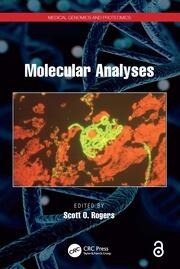
Molecular analyses : Medical genomics and proteomics
Methods for extraction, manipulation, and characterization of nucleic acids, peptides, and proteins have been rapidly developed. Extraction from a variety of tissues and samples have become routine and automated. Next generation sequencing (NGS) methods have been developed. This book focuses on medically-focused methods
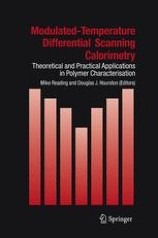
Modulated Temperature Differential Scanning Calorimetry : Theoretical and Practical Applications in Polymer Characterisation
This book provides both a basic and advanced treatment of the theory of the technique followed by a detailed exposition of its application to reacting systems, blends and semicrystalline polymers by the leaders in all of these fields. It is an essential text for anybody interested in calorimetry or polymer characterization, especially if they have found that conventional DSC cannot help them with their problems.

Modular Programming Languages ; 7th Joint Modular Languages Conference, JMLC 2006, Oxford, UK, September 13-15, 2006, Proceedings
On behalf of the Steering Committee we are pleased to present the proceedings of the 2006 Joint Modular Languages Conference (JMLC), organized by Oxford Brookes University, Oxford, UK and held at Jesus College, Oxford. The mission of JMLC is to explore the concepts of well-structured programming languages and software and those of teaching good design and programming style. JMLC 2006 was the seventh in a series of successful conferences with themes including the construction of large and distributed software systems, and software en- neering aspects in new and dynamic application areas.

Modular Forms
It provides the reader with the basic knowledge of elliptic modular forms necessary to understand the recent developments in number theory. The first part gives the general theory of modular groups, modular forms and Hecke operators, with emphasis on the Hecke-Weil theory of the relation between modular forms and Dirichlet series. The second part is on the unit groups of quaternion algebras, which are seldom dealt with in books. The so-called Eichler-Selberg trace formula of Hecke operators follows next and the explicit computable formula is given. In the last chapter, Eisenstein series with parameter are discussed following the recent work of Shimura: Eisenstein series are likely to play a very important role in the future progress of number theory, and this chapter provides a good introduction to the topic.
