



Page 185
Page 185
Architecture : Form, Space, and Order ; 5th ed.
Distills complex concepts of design into a clear focus and brings difficult abstractions to life. It explains form and space in relation to light, view, openings, and enclosures and explores the organization of space, and the elements and relationships of circulation, as well as proportion and scale. In addition, the text's detailed illustrations demonstrate the concepts presented and reveal the relationships between fundamental elements of architecture through the ages and across cultures.

Architectural lighting design : A practical guide
Answers these questions and more in a comprehensive introduction to the design, application and techniques of lighting interior spaces. Using real examples of successful lighting schemes, experienced designer Admir Jukanovic explains the fundamentals of lamps and luminaires, and how to meet the requirements of a design brief. Topics include treatments and techniques for lighting designs; tips for understanding the deliverables and fulfilling brief; the five project phases, from concept to commission and the common pitfalls to avoid when using artificial lighting in architecture.
Architectural graphics ; 6th ed.
Offers a comprehensive introduction to using graphic tools and drafting conventions to translate architectural ideas into effective visual presentations, using hundreds of the author's distinctive drawings to illustrate the topic effectively. Includes new information on orthographic projection in relation to 3D models, and revised explanations of line weights, scale and dimensioning, and perspective drawing to clarify some of the most difficult concepts. New examples of modern furniture, APA facilities, and presentation layout provide more up-to-date visuals, and the Reference Center features all new animations, videos, and practice exercises. Architectural graphics are key tools for conveying design through representation on paper or on screen, and this book is the ultimate guide to mastering the skill, then applying your talent to create more effective design communication.
Architectural drawings as investigating devices : Architecture’s changing scope in the 20th century
Explores how the changing modes of representation in architecture and urbanism relate to the transformation of how the addressees of architecture and urbanism are conceived. Diagnoses the dominant epistemological debates in architecture and urbanism during the 20th and 21st centuries. It traces their transformations, paying special attention to Le Corbusier and Ludwig Mies van der Rohe’s preference for perspective representation, to the diagrams of Team 10 architects, to the critiques of functionalism, and the upgrade of the artefactual value of architectural drawings in Aldo Rossi, John Hejduk, Peter Eisenman, and Oswald Mathias Ungers, and, finally, to the reinvention of architectural programme through the event in Bernard Tschumi and the Office for Metropolitan Architecture (OMA). Particular emphasis is placed on the spirit of truth and clarity in modernist architecture, the relationship between the individual and the community in post-war era architecture, the decodification of design process as syntactic analogy and the paradigm of autonomy in the 1970s and 1980s architecture, the concern about the dynamic character of urban conditions and the potentialities hidden in architectural programme in the post-autonomy era.
Architectural atmospheres : On the experience and politics of architecture
Addresses the growing awareness of the atmospheric dimension of architecture and provides a current, programmatic discussion of this topic. What possibilities does this approach open to architecture, what value does this knowledge have? Three essays and a conversation lead a cross-discipline discussion on the impact of architecture, and contribute to the debate first initiated by Peter Zumthor. The texts are accompanied by approximately forty color images that capture architectural moods in a variety of ways

Architectural acoustics: A guide to integrated thinking
An authoritative but uniquely accessible and highly illustrated guide to good acoustic design practice for architects, interior designers and acoustic professionals. It provides a user-friendly introduction to architectural acoustics and acoustics technology where the market is crowded with dense and technical texts. It will go through each typology in turn explaining the key acoustic concepts with highly illustrated and international case studies that demonstrate cutting-edge practice and technology, innovative design techniques and common challenges and solutions
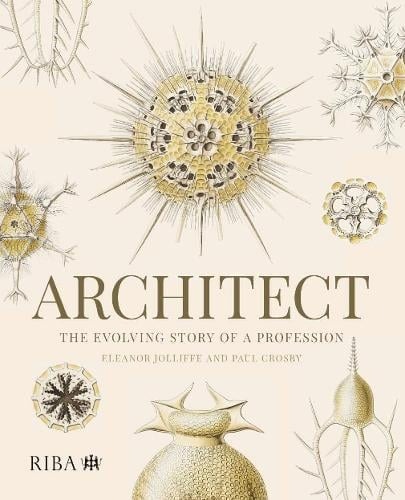
Architect : The evolving story of a profession
From Ancient Egypt, where architects were members of the ruling class, tied into the running of the empire, to the 21st century when questions are being raised about the future of the profession, this book, with its engaging narrative, explores the constant threads that remain as the profession adapts. While architects are no longer deified, their ability to imagine a new impending reality in built form implies a visionary dimension to their work. By focusing on both the practicalities of the profession and the more intangible motivations behind design – humans’ need to make a mark upon their surroundings – this volume provides a critical overview of over 3000 years of practice and education.

Arakelov Geometry and Diophantine Applications
Bridging the gap between novice and expert, the aim of this book is to present in a self-contained way a number of striking examples of current diophantine problems to which Arakelov geometry has been or may be applied. Arakelov geometry can be seen as a link between algebraic geometry and diophantine geometry.The first chapters provide some background and introduction to the subject. These are followed by a presentation of different applications to arithmetic geometry. The final part describes the recent application of Arakelov geometry to Shimura varieties and the proof of an averaged version of Colmez's conjecture. This book thus blends initiation to fundamental tools of Arakelov geometry with original material corresponding to current research.

Arabic talking heads
The need for someone to talk to about what is going on inside us while ensuring privacy has become a necessary requirement, especially since some people in our Arab societies judge people who visit a psychiatrist as mentally ill. Therefore, in this project, we propose a solution to the previous problem, where an Arabic-speaking robot, through an interactive chat application can mitigate the psychological and negative effects that humans are exposed to in various cases.

Arabian Deserts : Nature, origin and evolution
This is the first comprehensive survey of all the deserts of Arabia, based largely on the author's 50 years of experience there. The text deals with every kind of desert in the region, from vast sand seas to clay pans and stony plains to volcanic flows.

Aquatic medicinal plants
The use of medicinal plants in herbal and modern medicine has gained popularity over the last few decades due to consumers taking more natural approaches to medicine. Aquatic medicinal plants are rich in bioactive compounds and demonstrate various commercial, nutraceutical, and biological applications. Aquatic Medicinal Plants offers the reader a wealth of information on uses of bioactive components of these plants, along with crucial references, and explains their traditional uses, phytochemistry, and pharmacological properties.

Aquaponics Food Production Systems : Combined Aquaculture and Hydroponic Production Technologies for the Future
This book, written by world experts in aquaponics and related technologies, provides the authoritative and comprehensive overview of the key aquaculture and hydroponic and other integrated systems, socio-economic and environmental aspects. Aquaponic systems, which combine aquaculture and vegetable food production offer alternative technology solutions for a world that is increasingly under stress through population growth, urbanisation, water shortages, land and soil degradation, environmental pollution, world hunger and climate change.
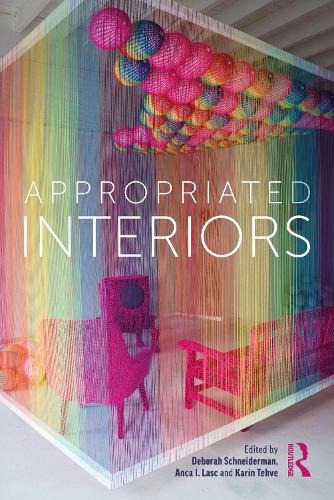
Appropriated Interiors
Uncoversthe ways interiors participate explicitly and implicitly in embedded cultural and societal values and explores timely emergent scholarship in the fields of interior design history, theory, and practice. An informative read for students and scholars of design history and theory, this collection considers the standards, assumptions, codes, and/or conventions that need to be dismantled and how we can expand our understanding of the history, theory, and practice of interior design to challenge the status quo.
Appropriate Dose Selection - How to Optimize Clinical Drug Development
Optimal dose individualization has become more important in improving clinical efficacy and safety, given the variability in drug response, e.g., due to concurrent illnesses or co-medications. Therefore, the role of optimal dose finding in early clinical drug development so as to maximize successful clinical use is emphasized. The continued use of biomarkers – based on the (known) pharmacology of the drug and/or biology of the underlying disease – along with exposure–response evaluation throughout all phases of drug development can quantitatively integrate clinical pharmacology knowledge, provide early proof of concept, and help in rational dose selection and rational drug product labeling for clinical use.
Applying reflective equilibrium : Towards the justification of a precautionary principle
This book provides the first explicit case study for an application of the method of reflective equilibrium (RE), using it to develop and defend a precautionary principle. It thereby makes an important and original contribution to questions of philosophical method and methodology. The book shows step-by-step how RE is applied, and develops a methodological framework which will be useful for everyone who wishes to use reflective equilibrium. With respect to precautionary principles, the book demonstrates how a rights-based precautionary principle can be constructed and defended.

Applying fuzzy mathematics to formal models in comparative politics
This book explores the intersection of fuzzy mathematics and the spatial modeling of preferences in political science. This book develops single- and multidimensional models of fuzzy preference landscapes and characterizes the surprisingly high levels of stability that emerge from interactions between players operating.

Applied therapeutics : The clinical use of drugs
"Continually revised and updated for 50 years, Applied Therapeutics: The Clinical Use of Drugs is the gold standard for patient centered drug therapeutics. With its acclaimed case-based approach, it promotes mastery and application of the fundamentals of drug therapeutics. Featuring contributions from more than 200 experienced clinicians, every chapter reflects our ever-changing knowledge of drugs and the application of this knowledge to the individualized therapy of patients. As students progress from the General Principles section to chapters on specific diseases, they will benefit from practical problem-solving techniques that help devise effective evidence-based drug treatment plans"

Applied scanning probe methods X : Biomimetics and industrial applications
The success of the Springer Series Applied Scanning Probe Methods I–VII and the rapidly expanding activities in scanning probe development and applications worldwide made it a natural step to collect further speci c results in the elds of development of scanning probe microscopy techniques (Vol. VIII), characterization (Vol. IX), and biomimetics and industrial applications (Vol. X). These three volumes complement the previous set of volumes under the subject topics and give insight into the recent work of leading specialists in their respective elds. Following the tradition of the series, the chapters are arranged around techniques, characterization and biomimetics and industrial applications. Volume VIII focuses on novel scanning probe techniques and the understanding of tip/sample interactions. Topics include near eld imaging, advanced AFM, specialized scanning probe methods in life sciences including new self sensing cantilever systems, combinations of AFM sensors and scanning electron and ion microscopes, calibration methods, frequency modulation AFM for application in liquids, Kelvin probe force microscopy, scanning capacitance microscopy, and the measurement of electrical transport properties at the nanometer scale.

Applied scanning probe methods VIII : Scanning probe microscopy techniques
The success of the Springer Series Applied Scanning Probe Methods I–VII and the rapidly expanding activities in scanning probe development and applications worldwide made it a natural step to collect further speci c results in the elds of development of scanning probe microscopy techniques (Vol. VIII), characterization (Vol. IX), and biomimetics and industrial applications (Vol. X). These three volumes complement the previous set of volumes under the subject topics and give insight into the recent work of leading specialists in their respective elds. Following the tradition of the series, the chapters are arranged around techniques, characterization and biomimetics and industrial applications. Volume VIII focuses on novel scanning probe techniques and the understanding of tip/sample interactions. Topics include near eld imaging, advanced AFM, s- cializedscanningprobemethodsinlifesciencesincludingnewselfsensingcantilever systems, combinations of AFM sensors and scanning electron and ion microscopes, calibration methods, frequency modulation AFM for application in liquids, Kelvin probe force microscopy, scanning capacitance microscopy, and the measurement of electrical transport properties at the nanometer scale.

Applied scanning probe methods VI : Characterization
The scanning probe microscopy feld has been rapidly expanding. It is a demanding task to collect a timely overview of this feld with an emphasis on technical dev- opments and industrial applications. It became evident while editing Vols. I–IV that a large number of technical and applicational aspects are present and rapidly - veloping worldwide. Considering the success of Vols. I–IV and the fact that further colleagues from leading laboratories were ready to contribute their latest achie- ments, we decided to expand the series with articles touching felds not covered in the previous volumes. The response and support of our colleagues were excellent, making it possible to edit another three volumes of the series
