



Page 184
Page 184

Artificial general intelligence
This book focused on engineering general intelligence – autonomous, self-reflective, self-improving, commonsensical intelligence.Each author explains a specific aspect of AGI in detail in each chapter, while also investigating the common themes in the work of diverse groups, and posing the big, open questions in this vital area.

Artifical intelligence for human computing ; ICMI 2006 and IJCAI 2007 International Workshops, Banff, Canada, November 3, 2006 Hyderabad, India, January 6, 2007 Revised Selceted Papers
This book contains the thoroughly refereed post-proceedings of two events discussing AI for Human Computing.It presented a vision of the future of computing technology in which AI, in particular machine learning and agent technology, plays an essential role.

Artery guidebook : Artery - transforming riversides for the future
"Artery" is an initiative on a European scale, funded by the INTERREG IIIB NWE programme, which puts riverside restoration and regeneration at the heart of regional strategies, helping communities across Europe ‘turn back to face the water’. In this book the implemented strategies will be discussed, including public-private-partnership, public participation, awareness programs and regional development strategies. The book functions as a guide to facilitate similar future projects in other regions. The valuable experience and methods of trans-national cooperation should be made available to other developers, regional planners, project managers and politicians.
Art Intervention in the City
This book focuses on the phenomenon of art intervention—an expression of local initiatives by artists, collectives, and art centers wishing to influence the design of the space or make a change in its lifestyle.
Arnolds Problems
Arnold's Problems contains mathematical problems.The invariable peculiarity of these problems was that Arnold did not consider mathematics a game with deductive reasoning and symbols, but a part of natural science (especially of physics), i.e. an experimental science. Many of these problems are still at the frontier of research today and are still open, and even those that are mainly solved keep stimulating new research, appearing every year in journals all over the world.The second part of the book is a collection of commentaries, mostly by Arnold's former students, on the current progress in the problems' solutions (featuring a bibliography inspired by them).
Arithmetical investigations : Representation theory, orthogonal polynomials, and quantum interpolations
In this volume the author further develops his philosophy of quantum interpolation between the real numbers and the p-adic numbers. The p-adic numbers contain the p-adic integers Zp which are the inverse limit of the finite rings Z/pn. This gives rise to a tree, and probability measures w on Zp correspond to Markov chains on this tree. From the tree structure one obtains special basis for the Hilbert space L2(Zp,w). The real analogue of the p-adic integers is the interval [-1,1], and a probability measure w on it gives rise to a special basis for L2([-1,1],w) - the orthogonal polynomials, and to a Markov chain on "finite approximations" of [-1,1]. For special (gamma and beta) measures there is a "quantum" or "q-analogue" Markov chain, and a special basis, that within certain limits yield the real and the p-adic theories. This idea can be generalized variously. In representation theory, it is the quantum general linear group GLn(q)that interpolates between the p-adic group GLn(Zp), and between its real (and complex) analogue -the orthogonal On (and unitary Un )groups. There is a similar quantum interpolation between the real and p-adic Fourier transform and between the real and p-adic (local unramified part of) Tate thesis, and Weil explicit sums.
ARIS design platform : Getting started with BPM
Containing tips, techniques and short cuts gained from practical experience, this book show how to use ARIS in an easy way, supporting smart methods and smart models, and displays how ARIS can be used as a powerful tool for BPM.
ARIS design platform : Advanced process modelling and administration
ARIS is ranked as the leading Business Process Modelling tool in the Gartner Quadrant for Business Process Analysis and Optimization. The ARIS Design Platform is being used as a business process management (BPM) tool for projects in BPM, quality management, business analysis and design, software development, implementation of service-oriented architectures and so forth. Following on from Rob Davis’ successful introductory text, ARIS Design Platform: Getting Started with BPM, this new book covers in detail some of the more advanced concepts of using ARIS Business Architect in the new ARIS 7 Design Platform. Written in a reader-friendly style, it contains detailed explanations of key concepts combined with numerous examples, hints and tips gained from many years of practical experience of using ARIS.

Arid Dune Ecosystems: The Nizzana Sands in the Negev Desert
Sand dune dynamics plays a key role in many arid deserts. This volume provides a synthesis of a specific sand dune ecosystem, the Nizzana site in the Negev Desert. Describing its climate and geophysical/geochemical properties of soils, geological history, flora and fauna, and past/present land-use patterns, it elucidates ecological and geomorphological processes and their interrelations, based on long-term monitoring, in situ experiments and satellite imagery. Particular attention is drawn to the impact of the topsoil biological crust in controlling water availability at local/regional scales. The interdisciplinary approach adopted in this case study offers a good example of a highly complex and dynamic system, which could easily be applied to other sandy ecosystems.

Argumentative Indicators in Discourse : A Pragma-Dialectical Study
Argumentative Indicators: A Pragma-Dialectical Study identifies and analyses English words and expressions that are crucial for an adequate reconstruction of argumentative discourse. It provides the analyst of argumentative discussions and texts with a systematic set of instruments for giving a well-founded analysis which results in an analytic overview of the elements that are relevant for the evaluation of the argumentation. In the book a systematic connection is made between linguistic insights into the characteristics of argumentative discourse and insights from argumentation theory into the resolution of differences of opinion by means of argumentation.

Argumentation in Science Education : Perspectives from Classroom-Based Research
This book brings together the work of leading experts in argumentation in science education. It presents research combining theoretical and empirical perspectives relevant for secondary science classrooms. Since the 1990s, argumentation studies have increased at a rapid pace, from stray papers to a wealth of research exploring ever more sophisticated issues. This volume constitutes a unique collection and covers fundamental issues in argumentation such as cognitive, methodological and epistemological aspects; classroom-based research in teaching and learning of argumentation in science classrooms; and argumentation in context such as in socio-scientific and moral contexts. The book’s underlying premise is that argumentation is a significant aspect of scientific inquiry and plays an important role in teaching and learning of science.

Arctic-Subarctic Ocean Fluxes : Defining the Role of the Northern Seas in Climate
The two-way oceanic exchanges that connect the Arctic and Atlantic oceans through subarctic seas are of fundamental importance to climate. Change may certainly be imposed on the Arctic Ocean from subarctic seas, including a changing poleward ocean heat flux that is central to determining the present state and future fate of the perennial sea-ice. And the signal of Arctic change is expected to have its major climatic impact by reaching south through subarctic seas, either side of Greenland, to modulate the Atlantic thermohaline ‘conveyor’. Developing the predictive skills of climate models is seen to be the most direct way of extending the ability of society to mitigate for or adapt to 'global change' and is the main justification for continuing an intense observational effort in these waters. As records have lengthened, they have shown that important aspects of oceanic exchange through subarctic seas are currently at a long-term extreme state, providing further motivation for their study.
Arctic Alpine ecosystems and people in a changing environment
This book addresses the significant environmental changes experienced by high latitude and high altitude ecosystems at the beginning of the 21st c- tury. Increased temperatures and precipitation, reduction in sea ice and glacier ice, the increased levels of UV-radiation and the long-range tra- ported contaminants in arctic and alpine regions are stress factors that challenge terrestrial and aquatic ecosystems. The large natural variation in the physical parameters of these extreme environments is a key factor in structuring the biodiversity and biotic productivity, and the effect of the new stress factors can be critical for the population structures and the - teraction between species. These changes may also have socio-economic effects if the changes affect the bio-production, which form the basis for the marine and terrestrial food chains. The book is uniquely multidisciplinary and provides examples of va- ous aspects of contemporary environmental change in arctic and alpine - gions. The 21 chapters of the book are organised under the fields of •Climate change and ecosystem response, •Long range transport of poll- ants and ecological impacts, and •UV radiation and biological effects, each also including aspects of the •Socio-economic effects of environmental change. The introductory chapter presents and explains the internal c- nection and integration of all chapters.
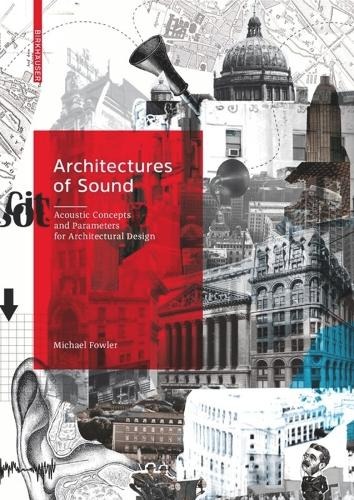
Architectures of sound
Architects are used to designing visually. In order to expand their basic design tools, this book explores the interactions between sound, space, hearing, and architecture. To this end, the author uses contemporary and historic buildings and projects, but also fictional, philosophical, and theoretical approaches – the idea is not only to define sound as a source, but also as an instrument of architectural space.
Architecture of advanced numerical analysis systems: designing a scientific computing system using ocaml
Applies the functional OCaml programming language to numerical or computational weighted data science, engineering, and scientific applications. This book is based on the authors' first-hand experience building and maintaining Owl, an OCaml-based numerical computing library. You'll first learn the various components in a modern numerical computation library. Then, you will learn how these components are designed and built up and how to optimize their performance. After reading and using this book, you'll have the knowledge required to design and build real-world complex systems that effectively leverage the advantages of the OCaml functional programming language.
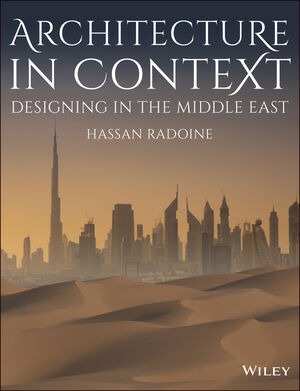
Architecture in context : Designing in the Middle East
Provides a foundation for understanding the critical context of architecture and design in this region. It does this by: presenting a practical overview of architectural know-how in the Middle East, and its potential for cultivating a sense of place introducing local architectural vocabularies and styles, and how they can still be reactivated in contemporary design exploring the cultural and contextual meaning of forms as references that may influence contemporary architecture discussing important discourses and trends in architecture that allow a rethinking of the current global/local dichotomy.
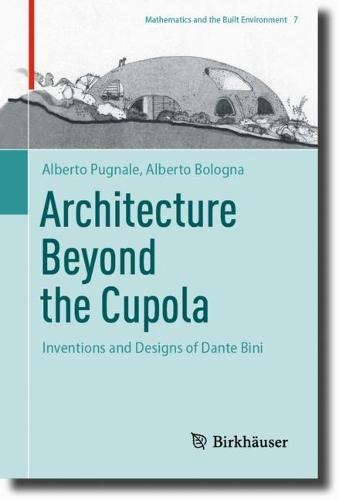
Architecture beyond the cupola : Inventions and designs of Dante Bini
This book reviews Dante Bini’s inventions and designs, focusing on his form-resistant Binishell and other pneumatic construction systems. Dante Bini’s double profile of architect and builder underpins the narrative of the entire book. It is used to analyse the evolution of the early reinforced-concrete Binishell patent into a variety of automated construction systems based on the use of air. Dante Bini has always been quite proactive in promoting his work and disseminating the results of his experimentations and achievements via journal articles, conference presentations and public talks.
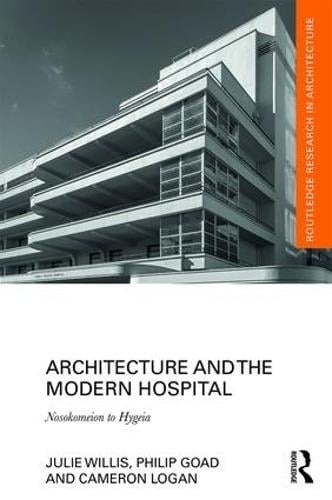
Architecture and the modern hospital : Nosokomeion to Hygeia
Explores the rapid evolution of hospital design in the twentieth century, analysing the ways in which architects and other specialists reimagined the modern hospital. It examines how the vast expansion of medical institutions over the course of the century was enabled by new approaches to architectural design and it highlights the emerging political conviction that physical health would become the cornerstone of human welfare.
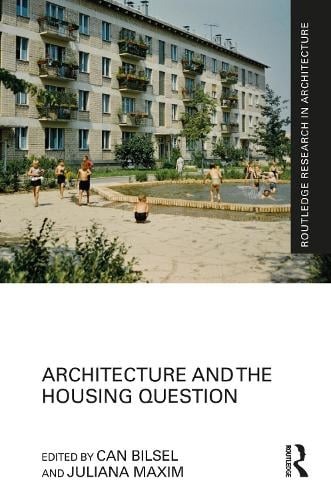
Architecture and the housing question
Examines how the design and provision of housing around the world have become central both to competing political projects and to the architecture profession. How have architects acting as housing experts helped alleviate or enforce class, race, and gender inequality? What are the disciplinary implications of taking on shelter for the multitude as an architectural assignment and responsibility? The book features essays in the historiography of architecture and the housing question, and a collection of historical case studies from Belgium, China, France, Ghana, the Netherlands, Kenya, the Soviet Union, Turkey, and the United States.
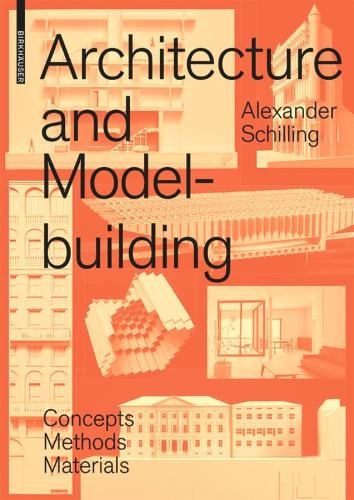
Architecture and modelbuilding : Concepts, methods, materials
Provides in-depth information Numerous practical tips, clear explanations, concrete examples Aims and Scope Architectural models are used at various stages of a project. As working models they support the design process: they are made up from time to time using simple materials, such as cardboard, without any attempt at accuracy, and continue to be adjusted and added to as the ideas and the design progress. The point here is to swiftly check a design idea, to allow it to be continued or dismissed. Presentational models are more involved; at this stage the design has been completed and the purpose of the model is to convey the ideas to the potential user in a clear and easy-to-understand way.
