



Page 184
Page 184

Constraint solving and language processing
Contains selected and thoroughly revised papers plus contributions from invited speakers presented at the First International Workshop on C- straint Solving and Language Processing, held in Roskilde, Denmark, September 1–3, 2004. Constraint Programming and Constraint Solving, in particular Constraint Logic Programming, appear to be a very promising platform, perhaps the most promising present platform, for bringing forward the state of the art in natural language processing, this due to the naturalness in speci?cation and the direct relation to e?cient implementation. Language, in the present context, may - fer to written and spoken language, formal and semiformal language, and even general input data to multimodal and pervasive systems, which can be handled in very much the same ways using constraint programming. The notion of constraints, with slightly differing meanings, apply in the characterization of linguistic and cognitive phenomena, in formalized linguistic m- els as well as in implementation-oriented frameworks. Programming techniques for constraint solving have been, and still are, in a period with rapid devel- ment of new eficient methods and paradigms from which language processing can prompt. A common metaphor for human language processing is one big c- straint solving process in which the differently specified linguistic and cognitive phases take place in parallel and with mutual cooperation, which ?ts quite well with current constraint programming paradigms.

Constraint satisfaction techniques for agent-based reasoning
Constraint satisfaction problems are significant in the domain of automated reasoning for artificial intelligence. They can be applied to the modeling and solving of a wide range of combinatorial applications such as planning, scheduling and resource sharing in a variety of practical domains such as transportation, production, supply-chains, network management and human resource management. In this book we study new techniques for solving constraint satisfaction problems, with a special focus on solution adaptation applied to agent reasoning.

Constraint handling rules : Current research topics
The Constraint Handling Rules (CHR) language is a declarative concurrent committed-choice constraint logic programming language consisting of guarded rules that transform multisets of relations called constraints until no more change occurs. The aim of this volume was to attract high-quality research papers on these recent advances in Constraint Handling Rules.

Constitutionalism and Legal Reasoning
This book of legal philosophy contends that positive law is better understood if it is not too easily equated with power, force, or command.
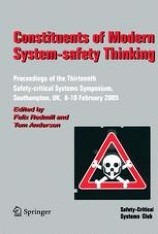
Constituents of Modern System-safety Thinking
Constituents of Modern System-safety Thinking contains the invited papers presented at the Thirteenth annual Safety-critical Systems Symposium, held at Southampton, UK in February 2005. The papers included in this volume bring together topics that are of the utmost importance in current safety thinking. The core of modern safety thinking and practice is a risk-based approach, and, this is not only a common thread running throughout the papers, but is also explored in two of them. Other themes considered include the safety case, safety assessment, accident investigation, and the commonality between the processes and techniques employed in safety and security engineering. Papers contain extensive industrial experience as well as recent academic research and are presented under the headings: Independent Safety Assessment, Safety and Security, Accident Investigation, Risk and its Tolerability, Achieving and Arguing the Safety of Modular Systems, and Technologies for Dependability.

Conservative Treatment of Pulp Tissue : Indications, Materials and Techniques
Addresses the physiology and pathology of pulp tissue in order to communicate the importance, indications, and techniques of conservative treatments to be performed, especially in young patients, as well as the most suitable biomaterials
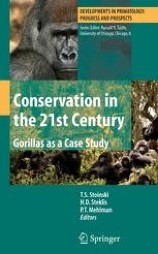
Conservation in the 21st century : Gorillas as a case study
this book is essential reading for primatologists, biologists, and conservationists searching for both a current assessment of the gorilla’s conservation status and, importantly, for ideas and tools that show promise of halting or reversing population declines and putting us on a path to achieving a stable, long-term co-existence of human and wildlife populations.

Conservation Biology : Foundations, Concepts, Applications
Fred Van Dyke’s new textbook, Conservation Biology: Foundations, Concepts, Applications, 2nd Edition represents a major new text for anyone interested in conservation. Drawing on his experience as a conservation biologist, college teacher, and successful textbook author, Van Dyke’s organizational clarity and readable style make this book an invaluable resource for students in conservation around the globe.Presenting key information and well-selected examples, this student-friendly volume carefully integrates the science of conservation biology with its implications for ethics, law, policy and economics. In addition to rigorous examination of the scientific theory supporting conservation biology and its applications, this unique book includes a number of features which set it apart from others. These include its chapters on aquatic conservation, landscape ecology, and ecosystem management, and its direct explanation and invitation to students on how to enter the work of conservation as a professional and personal vocation.

Consciousness : From Perception to Reflection in the History of Philosophy
Consciousness: From Perception to Reflection in the History of Philosophy shows that the concept of consciousness was explicated relatively late in the tradition, but that its central features, such as reflexivity, subjectivity and aboutness, attained avid interest very early in philosophical debates. This book reveals how these features have been related to other central topics, such as selfhood, perception, attention and embodiment. At the same time, the articles display that consciousness is not just an isolated issue of philosophy of mind, but is bound to ontological, epistemological and moral discussions. Integrating historical inquiries into the systematic ones enables understanding the complexity and richness of conscious phenomena.

Consciousness : A Mathematical Treatment of the Global Neuronal Workspace Model
This book brings together the fundamental ideas of information theory and the statistical mechanics of phase transitions within the context of the neurosciences, culture, immunology and socio-psychological studies. Outlined is a program pertaining to a dynamic and semantic extension of current models for the global neuronal workspace as were previously introduced by Baars, Dretske and others.

Conscious in a Vegetative State? A Critique of the PVS Concept
This book traces the origins of prevailing perceptions about PVS and submits these to critical examination. In doing this it comes to the conclusion that inadequate attention has been paid to acknowledging what is not known about affected individuals and that assumptions have consistently come to be traded as facts. Re-examination of the basis of the PVS and the adoption of a more scientific approach is long overdue and is owed to the community at large which has generally been provided by many medical practitioners with a 'dumbed-down' account of the condition.

Connecting Mathematics and Mathematics Education : Collected Papers on Mathematics Education as a Design Science
This book features a selection of articles written by Erich Ch. Wittmann between 1984 to 2019, which shows how the “design science conception” has been continuously developed over a number of decades.

Conjoint Behavioral Consultation : Promoting Family-School Connections and Interventions
Conjoint behavioral consultation (CBC) strengthens collaboration between children’s most critical learning environments – school and home – for improved academic, behavioral, and social-emotional skills. The reader-friendly, 2nd edition of Conjoint Behavioral Consultation: Promoting Family-School Connections and Interventions offers innovative applications of CBC as an ecological, evidence-based approach. In this new edition, the authors combine best practices in consultation and problem-solving for interventions that promote and support children’s potential, teachers’ educational mission, and family members’ unique strengths.

Congenital Diseases and the Environment
"In recent years, increasing attention and resources have been brought to bear on the relationship between the environment and congenital diseases. These diseases were previously thought to be mostly due to genetic causes. Even though the importance of genes as factors in causation is accepted, environmental factors seem to be implicated just as strongly. This book explores some further concepts that have arisen from more recent perceptions of environmental effects and their possible interactions with living systems. Discussion and presentation of old and novel ideas is targeted at developing a more holistic and united perception of the interaction between congenital diseases and the environment. Amongst the topics discussed are: -effects of prenatal exposure to toxic chemicals -intra-uterine exposure to drugs -effects of endocrine disrupters -environmental risk and sex ratio in newborns -surveillance of environmental impact-research and policy."

Confronting Scale in Archaeology : Issues of Theory and Practice
This book discusses the cultural, social and spatial aspects of scale and its impact on archaeology in practical and applicable cases. Each author takes one of the fundamental elements of archaeology - from the experience of time and space to the visualization of individuals, sites and landscapes to the intricacies of archaeological discourse - and shows how an awareness of scale can create new and exciting interpretations.

Conformation-Dependent Design of Sequences in Copolymers II
The book include : 1 V.O. Aseyev, H. Tenhu, F. Winnik: Temperature Dependence of the Colloidal Stability of Neutral Amphiphilic Polymers in Water.- 2 V.I. Lozinsky: Approaches to Chemical Synthesis of Protein-Like Copolymers.- 3 S.I. Kuchanov, A.R. Khokhlov: Role of Physical Factors in the Processes of Obtaining of Copolymers.- 4 A.Y. Grosberg, A.R. Khokhlov: After-Action of the Ideas of I.M. Lifshitz in Polymer and Biopolymer Physics.-

Conformation-Dependent Design of Sequences in Copolymers I
The book include : *Computer-aided conformation-dependent design of copolymer sequences *Folding and Formation of Mesoglobules in Dilute Copolymer Solutions *Water solutions of amphiphilic polymers : nanostructure formation and possibilities for catalysis Temperature Dependence of the Colloidal Stability of neutral amphiphilic polymers in water *Approaches to chemical synthesis of protein like copolymers *Role of physical factors in the process of obtaining copolymers *After-action of the ideas of I.M. Lifshitz in polymer and biopolymer physics

Cone beam computed tomography : Oral and maxillofacial diagnosis and applications
Cone Beam Computed Tomography helps the reader understand how CBCT machines operate, perform advanced diagnosis using CT data, have a working knowledge of CBCT-related treatment planning for specific clinical tasks, and integrate these new technologies in daily practice.

Conducting Quantitative Research In Education
provides a clear and straightforward guide for all those seeking to conduct quantitative research in the field of education, using primary research data samples. While positioned as less powerful and somehow inferior, non-parametric tests can be very useful where the research can only be designed to accommodate data structure which is ordinal, or scale but violates a normality assumption, which is required for parametric tests. Non-parametric data are a staple of educational research, and as such, it is essential that educational researchers learn how to work with these data with confidence and rigour.

Conducting Polymers with Micro or Nanometer Structure
Conducting Polymers with Micro or Nanometer Structure describes a topic discovered by three winners of the Nobel Prize in Chemistry in 2000: Alan J. Heeger, University of California at Santa Barbara, Alan G. MacDiarmid at the University of Pennsylvania, and Hideki Shirakawa at the University of Tsukuba. Since then, the unique properties of conducting polymers have led to promising applications in functional materials and technologies. The book first briefly summarizes the main concepts of conducting polymers before introducing micro/nanostructured conducting polymers dealing with their synthesis, structural characterizations, formation mechanisms, physical and chemical properties, and potential applications in nanomaterials and nanotechnology. The book is intended for researchers in the related fields of chemistry, physics, materials, nanomaterials and nanodevices.
