



Page 18
Page 18

Impact of Pollution on Animal Products
The present workshop contributed highly to the exchange between scientists giving the opportunity for researchers from Central Asia to access to new scientific approaches and methodologies, and for European scientists to assess the extent of the environmental problems in this part of the world. No doubt that these exchanges were the main success of the workshop marked by very stimulating discussions. Such meeting was also the opportunity to put on the first stone of a scientific network focused on the subject of the workshop. The importance of pollution in Central Asia in general and in Kazakhstan in p- ticular is a well-known feature and several references are available on the source and localization of pollution problems in those countries. The references are also abundant on the impact of the environmental failures on human health.

Immunoinformatics
Immunoinformatics is an emerging subdiscipline of bioinformatics. It utilizes mathematics, information science, computer engineering, genomics, proteomics and immunological methods to bridge immunology and informatics. Similar to bioionformatics which became a driving force in genome research, immunoinformatics enables data-driven research strategies and systems approaches that aim at understanding the networks regulating the immune system. Considering the breath of topic, Immunoinformatics was composed to provide a cross-section of research ranging from data integration, epitope predictions to systems level applications. In ten chapters experts in the field introduce and discuss research strategies for immunologists and bioinformaticians who wish to endeavour existing and new approaches to gain insight into the workings of the immune system.

Immediate Early Genes in Sensory Processing, Cognitive Performance and Neurological Disorders
This book reviews and details experiments and theories that challenge the reader to expand their view on how IEG research is currently being used to advance our understanding of static and active brain circuits, enabling the processing, acquisition and storage of new information in healthy systems. In addition, we explore roles of IEGs in clinical neuropathology, with potential utility in molecular modeling, to highlight, on a go-forward basis, candidate mechanisms for novel targets in clinical intervention.

Image Processing Using Pulse-Coupled Neural Networks
This is the first book to explain and demonstrate the tremendous ability of Pulse-Coupled Neural Networks (PCNNs) when applied to the field of image processing. PCNNs and their derivatives are biologically inspired models that are powerful tools for extracting texture, segments, and edges from images.

Image and video processing and recognition based on artificial intelligence (Vol. II)
Focuses on challenging issues in the field of AI-based image and video processing and recognition, including the topics of AI-based image processing, understanding, recognition, compression, and reconstruction; AI-based video processing, understanding, recognition, compression, and reconstruction; computer vision based on AI; AI-based biometrics; AI-based object detection and tracking; approaches that combine AI techniques and conventional methods for image and video processing and recognition; explainable AI (XAI) for image and video processing and recognition; generative adversarial network (GAN)-based image and video processing and recognition; and approaches that combine AI techniques and blockchain methods for image and video processing and recognition.

Image Analysis and Recognition ; 17th International Conference, ICIAR 2020, Póvoa de Varzim, Portugal, June 24–26, 2020, Proceedings, Part II
This two-volume set LNCS 12131 and LNCS 12132 constitutes the refereed proceedings of the 17th International Conference on Image Analysis and Recognition, ICIAR 2020, held in Póvoa de Varzim, Portugal, in June 2020. The 54 full papers presented together with 15 short papers were carefully reviewed and selected from 123 submissions. The papers are organized in the following topical sections: image processing and analysis; video analysis; computer vision; 3D computer vision; machine learning; medical image and analysis; analysis of histopathology images; diagnosis and screening of ophthalmic diseases; and grand challenge on automatic lung cancer patient management.

Image Analysis and Recognition ; 17th International Conference, ICIAR 2020, Póvoa de Varzim, Portugal, June 24–26, 2020, Proceedings, Part I
This two-volume set LNCS 12131 and LNCS 12132 constitutes the refereed proceedings of the 17th International Conference on Image Analysis and Recognition, ICIAR 2020, held in Póvoa de Varzim, Portugal, in June 2020. The 54 full papers presented together with 15 short papers were carefully reviewed and selected from 123 submissions. The papers are organized in the following topical sections: image processing and analysis; video analysis; computer vision; 3D computer vision; machine learning; medical image and analysis; analysis of histopathology images; diagnosis and screening of ophthalmic diseases; and grand challenge on automatic lung cancer patient management.

Image Analysis and Processing – ICIAP 2005 ; 13th International Conference, Cagliari, Italy, September 6-8, 2005, Proceedings
This volume contains the Proceedings of the 13th International Conference on Image Analysis and Processing (ICIAP 2005), held in Cagliari, Italy, at the conference centre “Centro della Cultura e dei Congressi”, on September 6–8, 2005. ICIAP 2005 was the thirteenth edition of a series of conferences organized every two years by the Italian group of researchersa?liated to the International Association for Pattern Recognition (GIRPR) with the aim to bring together researchers in image processing and pattern recognition from around the world. As for the previous editions, conference topics concerned the theory of image analysis and processing and its classical and Internet-driven applications. The central theme of ICIAP 2005 was “Pattern Recognition in the Internet and Mobile Communications Era”. The interest for such a theme was con?rmed by the large number of papers dealing with it, the special session devoted to pattern recognition for computer network security, and the emphasis of two invited talks on Internet and mobile communication issues. ICIAP 2005 received 217 paper submissions. Fifteen papers were collected into the two special sessions dealing with Pattern Recognition for Computer Network Security and Computer Vision for Augmented Reality and Augmented Environments.

Identification of nonlinear systems using neural networks and polynomial models : A block-oriented approach
The book gives a comparative study of their gradient approximation accuracy, computational complexity, and convergence rates and furthermore presents some new and original methods concerning the model parameter adjusting with gradient-based techniques. "Identification of Nonlinear Systems Using Neural Networks and Polynomal Models".

Hyperparameter tuning for machine and deep learning with R : A practical guide
Equips readers with the ability to achieve better results with significantly less time, costs, effort and resources using the methods described here. The case studies presented in this book can be run on a regular desktop or notebook computer. The content focuses on the hyperparameter tuning of ML and DL algorithms, and is divided into two main parts: theory (Part I) and application (Part II). Essential topics covered include: a survey of important model parameters; four parameter tuning studies and one extensive global parameter tuning study; statistical analysis of the performance of ML and DL methods based on severity; and a new, consensus-ranking-based way to aggregate and analyze results from multiple algorithms.

Hyperbolic Problems : Theory, Numerics, Applications ; Proceedings of the Eleventh International Conference on Hyperbolic Problems held in Ecole Normale Supérieure, Lyon, July 17-21, 2006
This volume contains papers that were presented at HYP2006, the eleventh international Conference on Hyperbolic Problems: Theory, Numerics and Applications held at the Ecole Normale Supérieure de Lyon, France, July 17-21, 2006. This biennial series of conferences has become one of the most important international events in Applied Mathematics. As computers became more and more powerful, the interplay between theory, modelling, and numerical algorithms gained considerable impact, and the scope of HYP conferences expanded accordingly. The field is currently in interaction with a variety of scientific domains, including fluid dynamics, physics, electromagnetism, chemistry, biology, road and network traffic, and engineering. Many of these papers present new effective numerical methods and their application in various contexts.

Hydrological modelling and the water cycle : Coupling the atmospheric and hydrological models
This collected work reports on the state of the art of hydrological model simulation, as well as the methods for satellite-based rainfall estimation. Mainly addressed to scientists and researchers, the contributions have the structure of a standard paper appearing in most cited hydrological, atmospheric and climate journals. Several already-known hydrological models and a few novel ones are presented, as well as the satellite-based precipitation techniques. As the field of hydrologic modeling is experiencing rapid development and transition to application of distributed models, many challenges including overcoming the requirements of compatible observations of inputs and outputs are addressed.

Hydrogen-based Autonomous Power Systems : Techno-economic Analysis of the Integration of Hydrogen in Autonomous Power Systems
Hydrogen-based Autonomous Power Systems contains a review of hydrogen technologies suitable for RES-based autonomous power systems, presents already-existing demonstration hydrogen-based power systems, and provides concrete examples for the integration of hydrogen technologies into existing autonomous power systems.

Hydrogels : Design, Synthesis and Application in Drug Delivery and Regenerative Medicine
Hydrogels are crosslinked, macromolecular polymeric materials arranged in a three-dimensional network, which can absorb and retain large amounts of water. Hydrogels are commonly used in clinical practice and experimental medicine for a wide range of applications, including drug delivery, tissue engineering and regenerative medicine, diagnostics, cellular immobilization, separation of biomolecules or cells, and barrier materials to regulate biological adhesions.

Hybrid Systems : Computation and Control ; 11th International Workshop, HSCC 2008, St. Louis, MO, USA, April 22-24, 2008. Proceedings
Contains the proceedings ofthe 11th Workshop on Hybrid Systems: Computation and Control (HSCC 2008) held in St. Louis, Missouriduring April 22–24,2008.The annual workshop on hybrid systems focuses on research inbedded ,reactive systems in volving theinterplay between symbolic/switchingand continuous dynamical behaviors. HSCC attracts academic as well as industrial researchers to exchange information on the latest developments of applications and theoretical advancements in the design, analysis, control, optimization, and implementation of hybrid systems, with particular attention to embedded and networked control systems. We would like to thank the Program Committee members and the reviewers for an excellent job of evaluating the submissions and participating in the online Program Committee discussions.

Hybrid metaheuristics ; 5th International Workshop, HM 2008, Málaga, Spain, October 8-9, 2008. Proceedings
This book constitutes the refereed proceedings of the 5th International Workshop on Hybrid Metaheuristics, HM 2008, held in Malaga, Spain, in October 2008.The 14 revised full papers presented were carefully reviewed and selected from 33 submissions. The papers discuss specific aspects of combinations of metaheuristics and other solving techniques for tackling particular relevant constrained optimization problems, such as fiber optic networks, time tabling and freight train scheduling problems.

Hybrid Intelligent Systems for Pattern Recognition Using Soft Computing : An Evolutionary Approach for Neural Networks and Fuzzy Systems
This monograph describes new methods for intelligent pattern recognition using soft computing techniques including neural networks, fuzzy logic, and genetic algorithms. Hybrid intelligent systems that combine several soft computing techniques are needed due to the complexity of pattern recognition problems.

Hybrid Intelligent Systems : Analysis and Design
The objective of this edited volume is to offer a general view at the recent conceptual developments of Soft Computing (SC) regarded as a general methodology supporting the design of hybrid systems along with their diversified applications to modeling, simulation and control of non-linear dynamical systems. As of now, SC methodologies embrace neural networks, fuzzy logic, genetic algorithms and chaos theory. Each of these methodologies exhibits well delineated advantages and disadvantages. Interestingly, they have been found useful in solving a broad range of problems. However, many real-world complex problems require a prudent, carefully orchestrated integration of several of these methodologies to fully achieve the required efficiency, accuracy, and interpretability of the solutions. In this edited volume, an overview of SC methodologies, and their applications to modeling, simulation and control, will be given in an introductory paper by the Editors. Then, detailed methods for integrating the different SC methodologies in solving real-world problems will be given in the papers by the other authors in the book. The edited volume will cover a wide spectrum of applications including areas such as: robotic dynamic systems, non-linear plants, manufacturing systems, and time series prediction.
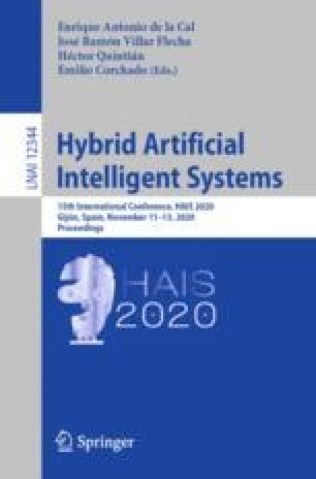
Hybrid Artificial Intelligent Systems ; 15th International Conference, HAIS 2020, Gijón, Spain, November 11-13, 2020, Proceedings
This book constitutes the refereed proceedings of the 15th International Conference on Hybrid Artificial Intelligent Systems, HAIS 2020, held in Gijón, Spain, in November 2020. The 65 regular papers presented in this book were carefully reviewed and selected from 106 submissions. The papers are grouped into these topics: advanced data processing and visualization techniques; bio-inspired models and optimization; learning algorithms; data mining, knowledge discovery and big data; and hybrid artificial intelligence applications.

Human-Computer Interaction and Cybersecurity Handbook - Human Factors and Ergonomics
Covers all areas of human–computer interaction and human factors in cybersecurity Includes information for IT specialists, who often desire more knowledge about the human side of cybersecurity Provides a reference for other disciplines such as psychology, behavioral science, software engineering, and security management Offers a source of information for cybersecurity practitioners in government agencies and private enterprises Presents new areas such as smart networking and devices
