



Page 18
Page 18

Interactive drink machine company - (IDM company)
This project is a continuation of our previous project for a hot drink machine by adding the capability for electronic payment and developing the company's management system and making the hot drink machine linkable with the company's server via the Internet and more interactive with the customer through the development of this project according to several aspects. On the software level: An integrated system that allows recording customer requests and executed operations, in addition to information about users, including their personal information, current balance, and executed requests. On the level of employees, their personal information, their work tasks and the operations carried out by them (Receipt and delivery of materials and servicing of machines).

Interactions Between Neurons and Glia in Aging and Disease
The subject material covered by the book is a crucial competitive area with critical implications for human health and will be of key interest to the scientific community. This unique volume will be invaluable not only to those interested in neuroscience, but also cell biology, molecular biology, biochemistry, and pharmaceutical sciences.
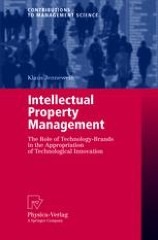
Intellectual Property Management : The Role of Technology-Brands in the Appropriation of Technological Innovation
The book investigates the interplay of brand equity and technological assets at the corporate level. In a grounded theory approach it develops a model of how companies in technology intensive industries can improve the appropriation of the returns of their intangible technological assets with the help of brand equity and thus improve their competitiveness. The theoretical discussions are supported by two extensive case studies on Bayer Aspirin and Cisco Systems as well as an extensive econometric analysis. The developed model points out how the strategic relevance of immaterial technological assets and brand equity develop along the technology-life-cycle and indicates how companies can, by an integrated technology and brand equity management, appropriate the returns of their initial technological advantage in the long-run. The implications of the findings for business companies as well as researchers are clearly revealed.

Intellectual Property in the Food Technology Industry : Protecting Your Innovation
Considering the effort and funding devoted to a company's success, understanding Intellectual Property rights patents, trade secrets, trademarks, and licensing is essential. Establishing appropriate internal policies from the outset can prevent companies from learning a costly and painful lesson in the courtroom. With Intellectual Property in the Food Technology Industry, currently the only book of its kind focusing specifically on the food industry, one will learn what to consider throughout the various creative phases of a product's lifespan from initial research and development initiatives through post-production.

Integrating Innovation in Architecture : Design, Methods and Technology for Progressive Practice and Research
Covers new materials and design methods, advances in computational design practices, innovations in building technologies and construction techniques, and the integration of research with design. Moreover, it discusses strategies for integrating innovation into design practices, risks and economic impacts. Through numerous case studies, it illustrates how innovations have been implemented on actual architectural projects, and how design and technical innovations are used to improve building performance, as well as design practices in cutting-edge architectural and engineering firms.

Integrated Reaction and Separation Operations : Modelling and experimental validation
The book presents the latest developments in simulation of integrated processes as well as new methods of process synthesis and process control. It shows details of experimental approaches for model validation, determining of model parameters and measurement techniques. The combination of sophisticated modelling, optimisation methods and experimental results has not ben published up to now. The book gives deep insights into the overall evaluation of integrated processes as well as development of methods for a systematic design and optimisation of integrated reaction and separation processes. Potentials for process integration and the technical as well as economic limitations have been identified. The book covers several case studies of reactive distillation, reactive extraction, reactive gas-adsorption and chromatographic reactors which have been investigated from the modelling and experimental point of view. Based on validated models process simulation was used to optimize these processes. Following the concept of integrated process design approaches have been developed for model predictive control and process optimisation during production. Another new and very important focus of the book is systematic synthesis of integrated processes.

Integrated Circuit Packaging, Assembly and Interconnections
Integrated Circuit Packaging, Assembly and Interconnections is intended as a multi-purpose text, serving individuals looking for an introduction, or a review, or an update of the various IC packaging, assembly, and interconnection technologies. To this end, it provides an overview of the materials and the processes, as well as the trends and available options that encompass electronic manufacturing. It covers both the technical issues and touches on some of the reliability concerns with the various technologies applicable to packaging and assembly of the IC. The focus is on the electronic manufacturing process which, in its simplest form, involves assembly of the IC into a package or interconnect substrate or board. The book discusses the various packaging approaches available, namely, single chip, multichip, and Chip On Board; the assembly options, chip & wire, tape automated bonding, and flip chip; and the essential high density package/substrate manufacturing technologies, thin film, thick film, cofired ceramic, and laminate printed wiring board (PWB) processes. Included also is a discussion of high density PWBs using build up/sequential processes.

Integrated Chemical Microsensor Systems in CMOS Technology
This book, "Integrated Chemical Microsensor Systems in CMOS Technology", provides a comprehensive treatment of the highly interdisciplinary field of CMOS chemical microsensor systems. It is targeted at students, scientists and engineers who are interested in gaining an introduction to the field of chemical sensing since all the necessary fundamental knowledge is included. However, as it provides detailed information on all important issues related to the realization of chemical microsensors in CMOS technology, it also addresses experts well familiar with the field.

Integral waterproofing of concrete structures : Advanced protection technologies of concrete by pore blocking and lining
This book first establishes a background about concrete structures and porosity linked with concrete hydration, then goes on to consider concrete durability problems from the perspective of water penetration including damages from freeze-thaw cycles, alkali silica reactions, and chloride ion penetration. The mechanisms, applications, performances, and limitations of waterproofing technologies including coatings and integral systems are compared. The book also showcases all application methods of crystallization waterproofing materials, including material spray on cured concrete and on fresh concrete, and their addition to concrete mix designs as enhancers or admixtures.

Integral Foam Molding of Light Metals : Technology, Foam Physics and Foam Simulation
This book shows in three parts the technology, the fundamentals and the simulation models for the Integral Foam Molding of Light Metals Part I: “Technology” shows for the first time that foaming of metals is possible by applying molding techniques very similar to polymer integral foam molding. Part II: “Physics” is devoted to the physics of foaming with special emphasis on the very short time scale which is characteristic for integral foam molding. Part III: “Numerical Simulation” presents a new lattice Boltzmann approach for the treatment of free surfaces is developed and applied on foam evolution problems. For the first time, the numerical simulation of foam evolution starting from nucleation until decay is accessible.

Inorganic Scintillators for Detector Systems : Physical Principles and Crystal Engineering
The development of new scintillators as components of modern detector systems is increasingly defined by the end user's needs. This book provides an introduction to this emerging topic at the interface of physics and materials sciences, with emphasis on bulk inorganic scintillators. After surveying the end user's needs in a vast range of applications, ranging from astrophysics to industrial R & D, the authors move on to review scintillating mechanisms and the properties of the most important materials used. A chapter on crystal engineering and examples of recent developments in the field of high-energy physics and medical imaging introduce the reader to the practical aspects. This book will benefit researchers and scientists working in academic and industrial R & D related to the development of scintillators.

Inorganic Reactions in Water
Organized to facilitate reference to the reagents involved, this book describes the reactions of the elements and their mostly simpler compounds, primarily inorganic ones and primarily in water. It emphasizes the similarities and differences in actual chemical behavior, as opposed to electronic structures and theories, although not exclusively.Inorganic Reactions in Water again makes available some of the more comprehensive coverage of descriptive aqueous chemistry found in older sources, but now corrected and interpreted with the added insights of the last seven decades. It also provides new information, including reactions of the recently discovered elements.

Inorganic Polymeric Nanocomposites and Membranes
This series presents critical reviews of the present and future trends in polymer and biopolymer science including chemistry, physical chemistry, physics and materials science. It is addressed to all scientists at universities and in industry who wish to keep abreast of advances in the topics covered.This Book reviews different methods of synthesis of polysilalkylene or silarylene siloxanes that are sometimes called "hybrid" silicones. This special type of silicone has been developed to avoid the drawback of the depolymerization of classical polysiloxanes in certain conditions and to obtain elastomers with enhanced thermal and fuel resistance properties.

Inorganic and Organometallic Polymers
This book has its origins in courses taught by the author to various und- graduate and graduate students at the Indian Institute of Technology, K- pur, India. The diversity of inorganic chemistry and its impact on polymer chemistry has been profound. This subject matter has grown considerably in the last decade and the need to present it in a coherent manner to young minds is a pedagogic challenge. The aim of this book is to present to the students an introduction to the developments in Inorganic and - ganometallic polymers. This book is divided into eight chapters. Chapter 1 provides a general overview on the challenges of Inorganic polymer synthesis. This is f- lowed by a survey of organic polymers and also includes some basic f- tures of polymers. Chapters 3-8 deal with prominent families of inorganic and organometallic polymers. Although the target group of this book is the undergraduate and graduate students of chemistry, chemical engineering and materials science it is also hoped that chemists and related scientists in industry would find this book useful.

Inorganic and Organometallic Macromolecules : Design and Applications
Polymers containing metals and metal-like atoms are essential materials for the extended opportunities and demands of the 21st century. This book describes the synthesis of some of these polymers and their potential application in many fields such as materials, biomedicine, engineering, communications, and ceramics.

Innovative Superhard Materials and Sustainable Coatings for Advanced Manufacturing ; Proceedings of the NATO Advanced Research Workshop on Innovative Superhard Materials and Sustainable Coating, Kiev, Ukraine,12 - 15 May 2004.
Modern industry imposes ever increasing requirements upon tools and tool materials as to the provision for performance under the conditions of high cutting speeds and dynamic loads as well as under intensive thermal and chemical interactions with workpiece materials. The industry demands a higher productivity in combination with the accuracy of geometry and dimensions of workpieces and quality of working surfaces of the machined pieces. These requirements are best met by the tool superhard materials (diamond and diamond-like cubic boron nitride). Ceramics based on silicon carbide, aluminum and boron oxides as well as on titanium, silicon and aluminum nitrides offer promise as tool materials. Tungsten-containing cemented carbides are still considered as suitable tool materials. Hi- hardness and high strength composites based on the above materials fit all the requirements imposed by machining jobs when manufacturing elements of machinery, in particular those operating under the extreme conditions of high temperatures and loads.

Innovative bioceramics in translational medicine II : Surgical applications
Highlights the latest advances in innovative bioceramics applied in the highly interdisciplinary area referred to as “translational medicine”. This volume predominantly written by surgeons in the fields of craniomaxillofacial, orthopedics, and spinal surgery, examines the translation of innovative bioceramics and bioceramics-based composite from the laboratory to a personalized surgical environment for the repair of damaged and diseased bone tissues.

Innovations in landscape architecture
The chapters explore digital technology, design processes and theoretical queries that shape the contemporary practice of landscape architecture. Topics covered include: Digital design Fabrication and prototyping Emerging technology Visualization of data System theory

Innovations in E-learning, Instruction Technology, Assessment and Engineering Education
Innovations in E-learning, Instruction Technology, Assessment and Engineering Education is a collection of world class paper articles addressing the following topics: E-Learning including development of courses and systems for technical and liberal studies programs; online laboratories; intelligent testing using fuzzy logic; evaluation of on line courses in comparison to traditional courses; mediation in virtual environments; and methods for speaker verification. Instruction Technology including internet textbooks; pedagogy-oriented markup languages; graphic design possibilities; open source classroom management software; automatic email response systems; tablet-pcs; personalization using web mining technology; intelligent digital chalkboards; virtual room concepts for cooperative scientific work; and network technologies, management, and architecture.
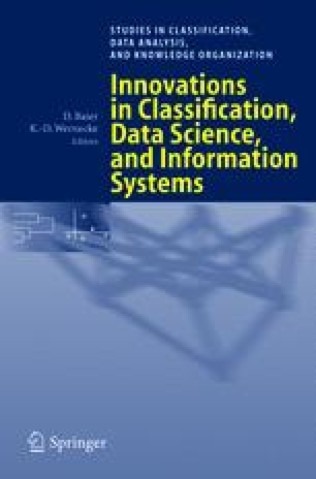
Innovations in classification, data science, and information systems ; Proceedings of the 27th Annual Conference of the Gesellschaft für Klassifikation e.V., Brandenburg University of Technology, Cottbus, March 12-14, 2003
The volume presents innovations in data analysis and classification and gives an overview of the state of the art in these scientific fields and applications. Areas that receive considerable attention in the book are discrimination and clustering, data analysis and statistics, as well as applications in marketing, finance, and medicine. The reader will find material on recent technical and methodological developments and a large number of applications demonstrating the usefulness of the newly developed techniques.
