



Page 18
Page 18

Methods of Celestial Mechanics: Vol. I: Physical, Mathematical, and Numerical Principles
G. Beutler's Methods of Celestial Mechanics is a coherent textbook for students in physics, mathematics and engineering as well as an excellent reference for practitioners. This Volume I gives a thorough treatment of celestial mechanics and presents all the necessary mathematical details that a professional would need. After a brief review of the history of celestial mechanics, the equations of motion (Newtonian and relativistic versions) are developed for planetary systems (N-body-problem), for artificial Earth satellites, and for extended bodies (which includes the problem of Earth and lunar rotation). Perturbation theory is outlined in an elementary way from generally known mathematical principles without making use of the advanced tools of analytical mechanics. The variational equations associated with orbital motion - of fundamental importance for parameter estimation (e.g., orbit determination), numerical error propagation, and stability considerations - are introduced and their properties discussed in considerable detail. Numerical methods, especially for orbit determination and orbit improvement, are discussed in considerable depth. The algorithms may be easily applied to objects of the planetary system and to Earth satellites and space debris.
Methods in Nonlinear Analysis
Nonlinear analysis has developed rapidly in the last three decades. Theories, techniques and results in many different branches of mathematics have been combined in solving nonlinear problems. This book collects and reorganizes up-to-date materials scattered throughout the literature from the methodology point of view, and presents them in a systematic way. It contains the basic theories and methods with many interesting problems in partial and ordinary differential equations, differential geometry and mathematical physics as applications.There are five chapters that cover linearization, fixed-point theorems based on compactness and convexity, topological degree theory, minimization and topological variational methods. Each chapter combines abstract, classical and applied analysis. Particular topics included are bifurcation, perturbation, gluing technique, transversality, Nash–Moser technique, Ky Fan's inequality and Nash equilibrium in game theory, setvalued mappings and differential equations with discontinuous nonlinear terms, multiple solutions in partial differential equations, direct method, quasiconvexity and relaxation, Young measure, compensation compactness method and Hardy space, concentration compactness and best constants, Ekeland variational principle, infinite-dimensional Morse theory, minimax method, index theory with group action, and Conley index theory.

Methods and Tools for Drought Analysis and Management
Implementation of effective drought management policies requires both advanced technologies and appropriate methods. Monitoring and forecasting systems, practical tools for risk assessment, as well as simple and objective criteria to select and implement appropriate drought mitigation measures are key elements for a successful drought management strategy.These key issues have been tackled by universities and public agencies involved in the EU projects Sedemed and Sedemed II (Programme Interreg IIIB MEDOCC), aimed at the definition of an integrated network for real time monitoring of drought, the development of common methodologies for drought analysis and forecasting, as well as the definition of proper mitigation strategies for the Mediterranean countries.The book presents the main outcomes of such projects with a special focus on: drought monitoring and forecasting echniques at different spatial scales; new or modified agrometeorological indices and remote sensing technique for drought identification and characterization; tools to improve surface water resources management under drought conditions; methods and tools for groundwater resources monitoring and management, based on hydrogeological and hydrodynamics characteristics of aquifers; general criteria to select and implement mitigation strategies to prevent or minimize drought impacts.

Methods and Models in Transport and Telecommunications : Cross Atlantic Perspectives
One aspect of the new economy is a transition to a networked society, and the emergence of a highly interconnected, interdependent and complex system of networks to move people, goods and information. An example of this is the in creasing reliance of networked systems (e. g. , air transportation networks, electric power grid, maritime transport, etc. ) on telecommunications and information in frastructure. Many of the networks that evolved today have an added complexity in that they have both a spatial structure , they are located in physical space but also an a spatial dimension brought on largely by their dependence on infor mation technology. They are also often just one component of a larger system of geographically integrated and overlapping networks operating at different spatial levels. An understanding of these complexities is imperative for the design of plans and policies that can be used to optimize the efficiency, performance and safety of transportation, telecommunications and other networked systems. In one sense, technological advances along with economic forces that encourage the clustering of activities in space to reduce transaction costs have led to more efficient network structures.

Methodological approaches to societies in transformation : How to make sense of change
This book provides methodological devices and analytical frameworks for the study of societies in transformation. It explores a central paradox in the study of change: making sense of change requires long-term perspectives on societal transformations and on the different ways people experience social change, whereas the research carried out to study change is necessarily limited to a relatively short space of time. This volume offers a range of methodological responses to this challenge by paying attention to the complex entanglement of qualitative research and the metanarratives generally used to account for change.

Method validation in pharmaceutical analysis
Provides hands-on information for readers involved in development, validation, and continued maintenance and evaluation of analytical procedures in pharmaceutical analysis. This newly revised and updated Third Edition includes much-needed interpretation of the most recent ICH guidelines for validation and method development, as well as recent publications of the USP on Analytical Procedure Lifecycle Management and the activities of the British Pharmacopeia AQbD Working Party. It also addresses hot topics in the field such as data integrity and continuous monitoring of analytical performance.

Metalliferous Sediments of the World Ocean : Fundamental Theory of Deep-Sea Hydrothermal Sedimentation
Dramatic advances in understanding global tectonics have been made in the last half century and the information and specific data acquired on the floor of the World Ocean by the scientific community probably has exc- ded that available in all previous time. With the benefit of new technology and advanced concepts in the earth sciences extensive exploration of the deep seabed became possible, and has been carried out in many parts of the world. Many features have been recognized and data recorded that are vital for understanding the fundamental processes that shape the earth=s surface and control the habitable environment. The data collected to date on the o- an floor and its physical environment greatly exceeds our understanding and appreciation of their fundamental importance in the earth sciences, and our ability to apply this knowledge effectively in improving our way of life.

Metal-containing molecules and nanomaterials : from diagnosis to therapy
Since the discovery and successful deployment of salvarsan to treat syphilis, as well as cisplatin as a cancer drug, the field of metallodrugs has been flourishing. In addition to therapeutic applications, metals and metal-containing molecules have properties, such as an electrochemical or an optical signal, used to diagnose biologically relevant molecules or unravel cellular metabolism. Metals are part of the essential elements for life, and of increased attention in nutraceuticals. Most of the current diagnosis processes, therapeutics and nutraceuticals are based on organic molecules. MILS-26 reviews the most recent metal-containing molecules and nanomaterials for diagnosis and therapy

Metal-Catalysed Reactions of Hydrocarbons
This unique book, drawing on the author’s lifetime experience, critically evaluates the extensive literature on the field of Metal-Catalysed Reactions of Hydrocarbons. Emphasis is placed on reaction mechanisms involving hydrogenation, hydrogenolysis, skeletal and positional isomerisation, and exchange reactions. The motivation for fundamental research in heterogeneous catalysis is to identify the physicochemical characteristics of active centres for the reaction being studied, to learn how these may be modified or manipulated to improve the desired behavior of the catalyst, and to recognize and control those aspects of the catalyst's structure that limit its overall performance. By restricting the subject of the book to hydrocarbons, Bond has progressively developed the subject matter to include areas of importance both to researchers and to those working in the industry.

Metal Oxide Nanoparticles : Formation, Functional Properties, and Interfaces ; 2 Volume Set
Metal oxide nanoparticles are integral to a wide range of natural and technological processes—from mineral transformation to electronics. Additionally, the fields of engineering, electronics, energy technology, and electronics all utilize metal oxide nanoparticle powders. Metal Oxide Nanoparticles: Formation, Functional Properties, and Interfaces presents readers with the most relevant synthesis and formulation approaches for using metal oxide nanoparticles as functional materials. It covers common processing routes and the assessment of physical and chemical particle properties through comprehensive and complementary characterization methods.
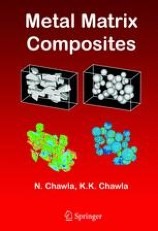
Metal Matrix Composites
Metal matrix composites (MMCs) have become real engineering materials. MMCs have gone from "niche" materials to several high performance applications in aerospace, electronic packaging, automotive, and recreational products. This text focuses on the synergistic relationships among processing, microstructure, and properties of metal matrix composites. An introductory chapter is followed by a chapter each on reinforcements and common matrix materials. A chapter on the very important topic of processing of MMC is then presented. This is followed by a chapter on interfaces in MMCs, their characterization and techniques to obtain interfacial properties. Next there are chapters on monotonic mechanical and physical properties; followed by cyclic fatigue, creep, and wear resistance. We conclude with a chapter on applications of MMCs. The book is well-suited for upper level undergraduate students, graduate students, and as general source of reference on the subject for the professionals in the field.

Metaheuristics : Progress as Real Problem Solvers
Metaheuristics: Progress as Real Problem Solvers is a peer-reviewed volume of eighteen current, cutting-edge papers by leading researchers in the field. Included are an invited paper by F. Glover and G. Kochenberger, which discusses the concept of Metaheuristic agent processes, and a tutorial paper by M.G.C. Resende and C.C. Ribeiro discussing GRASP with path-relinking. Other papers discuss problem-solving approaches to timetabling, automated planograms, elevators, space allocation, shift design, cutting stock, flexible shop scheduling, colorectal cancer and cartography. A final group of methodology papers clarify various aspects of Metaheuristics from the computational view point

Metabolomics : The frontier of systems biology
Metabolism is the sum of the chemical reactions in cells that produce life-sustaining chemical energy and metabolites. In the post-genome era, metabolism has taken on new significance for biological scientists: metabolites are the chemical basis of phenotypes that are final expressions of genomic information. This book covers research on metabolomics, ranging from the development of specialized chemical analytical techniques to the construction of databases and methods for metabolic simulation. The authors have been directly involved in the development of all the subject areas, including capillary electrophoresis, liquid chromatography, mass spectrometry, metabolic databases, and metabolic simulation. Breakthrough achievements and the future of metabolome studies are described, making this book a valuable source for researchers in metabolomics in diverse fields, such as plant, animal, cellular, microbial, pharmaceutical, medical, and genetic sciences.

Metabolome Analyses : Strategies for Systems Biology
Metabolome Analyses is intended as a follow-up to Metabolic Profiling: Its Role in Biomarker Discovery and Gene Function Analysis (Kluwer, 2003). That text offered guidelines to currently available technology, bioinformatics and databases. Evidence was presented showing metabolic profiling as a valuable addition to genomics and proteomics strategies devoted to drug discovery and development. This book focuses on how metabolic profiling is being more comprehensively integrated with the other "omics" technologies. It provides more practical applications of such "panomics" or "Systems Biology" approaches. The expanding use of mass spectrometry as a measurement technology in metabolic profiling is addressed through demonstrated applications. The integration of metabolic profiling and proteomics is probably most developed for plant-based studies, which was not addressed in Volume 1. Other areas related to metabolic profiling continue to show significant development. These include database strategies and an increased acceptance by the pharmaceutical industry of metabolic profiling. Also covered is the use of in silico metabolic networks. Again the focus is primarily on the pharmaceutical industry but the importance of metabolic profiling to studies on human nutrition (a burgeoning area) is discussed.

Metabolism and Functions of Bioactive Ether Lipids in the Brain
This book will be particularly useful to neuroscience graduate students, academics, and researchers. Clinicians will find this book useful for understanding molecular aspects of neurodegeneration in acute neural trauma and neurodegenerative diseases that are mediated by plamalogen-selective phospholipases A2 and PAF acetyl hydrolases. This monograph is the first to provide a comprehensive description of not only metabolism and role of plasmalogen and platelet activating factor in brain tissue but also the involvement of these lipids with abnormal signal transduction processes in neurological disorders.

Messenger RNA therapeutics
Focuses on the fundamentals and applications of messenger RNA (mRNA)-based therapeutics and discusses the strengths and key challenges of this emerging class of drugs. In the past 30 years, extensive research and technological development in many areas have contributed to the emergence of in vitro transcribed mRNA as a therapeutic that has now reached clinical testing. Formulations that protect the mRNA from nucleases and accelerate its cellular uptake, combined with improvements to the mRNA molecules themselves, have been critical advancements for mRNAs to become viable therapeutics. Though once regarded as a serious impediment, the transient nature of mRNA technology is now considered a major advantage in making mRNA therapies safe and, ultimately, a potential game changer in the field of medicine. This new book in the RNA Technologies series provides a state-of-the-art overview on the emerging field of mRNA therapeutics covering essential strategies for formulation, delivery, and application. It also reviews the promising role in cancer immunotherapy, respiratory diseases, and chronic HBV infection and discusses RNA vaccines in light of the current COVID-19 pandemic. mRNA-based approaches have great potential to revolutionize molecular biology, cell biology, biomedical research, and medicine.

Meshfree Methods for Partial Differential Equations II
A Particle Strategy for Solving the Fokker-Planck Equation Modelling the Fiber Orientation Distribution in Steady Recirculating Flows Involving Short Fiber Suspensions.- Extended Meshfree Method for Elastic and Inelastic Media.- Meshfree Petrov-Galerkin Methods for the Incompressible Navier-Stokes Equations.- The ?-shape Based Natural Element Method in Solid and Fluid Mechanics.- A Particle-Partition of Unity Method Part VI: A p-robust Multilevel Solver.- Enriched Reproducing Kernel Approximation: Reproducing Functions with Discontinuous Derivatives.- Reproducing Kernel Element Interpolation: Globally Conforming I m/C n/P k Hierarchies.- Multi-scale Analysis Using Two Influence Radii in EFGM.- Solution of a Dynamic Main Crack Interaction with a System of Micro-Cracks by the Element Free Galerkin Method.- Finite Cover Method for Physically and Geometrically Nonlinear Problems.- A Numerical Scheme for Solving Incompressible and Low Mach Number Flows by the Finite Pointset Method.- SPH Renormalized Hybrid Methods for Conservation Laws: Applications to Free Surface Flows.- Discontinuous Radial Basis Function Approximations for Meshfree Methods.- Treating Moving Interfaces in Thermal Models with the C-NEM.- Bridging Scale Particle and Finite Element Methods.

Mercury
Mercury, the planet closest to the Sun, is different in several respects from the other three terrestrial planets. In appearance, it resembles the heavily cratered surface of the Moon, but its density is high, it has a magnetic field and magnetosphere, but no atmosphere or ionosphere. This book reviews the progress made in Mercury studies since the flybys by Mariner 10 in 1974-75, based on the continued research using the Mariner 10 archive, on observations from Earth, and on increasingly realistic models of its interior evolution.

Men’s care center
"سين" مركزٌ للعافية والاسترخاء، مصمم بمزيج فريد من العناصر الطبيعية والهندسة المعمارية الحديثة ليمنح الزوار تجربة حسية متكاملة. يدمج المشروع المساحات الخضراء الداخلية والإضاءة الهادئة وخطوط التصميم المعاصرة لخلق بيئة فاخرة وهادئة. تشمل المساحات الرئيسية الحديقة الداخلية، والحمام التركي التقليدي، وغرف كبار الشخصيات، ومنطقة الاستقبال - جميعها مُرتبة بعناية لتعزيز الهدوء والتوازن. يركز التصميم على التفاصيل المعمارية والوظيفية، موفرًا للضيوف ملاذًا من ضغوط الحياة اليومية. خضعت التصاميم الداخلية والخارجية لدراسة دقيقة لضمان تجربة راقية وشاملة. “Sén” is a wellness and re laxation center designed with a unique blend of natural elements and modern architecture to provide visitors with a complete sensor experience. The project integrates indoor greenery, calming lighting, and con temporary design lines to create a luxurious and peaceful environment. Key spaces include the indoor garden, traditional hammam, VI P rooms, and reception area — all carefully arranged to promote tranquility and balance. The design focuses on architectural and functional details, offering guests a retreat from the stresses of everyday life. Both interior and exterior designs were carefully studied to ensure a refined and holistic experience.

Membrane Computing; 8th International Workshop, WMC 2007 Thessaloniki, Greece, June 25-28, 2007 Revised Selected and Invited Papers
This volume contains a selection of papers presented at the Eighth Workshop on Membrane Computing, WMC8, which took place in Thessaloniki, Greece, during June 25–28, 2008. Special attention was paid to the interaction of membrane computing with biology and computer science, focusing on the - ological roots of membrane computing, on applications of membrane computing in biology and medicine, and on possible electronically based implementations.
