



Page 17
Page 17

Gradients in a Tropical Mountain Ecosystem of Ecuador
This volume addresses a multitude of ecologically relevant aspects: macro- and microclimate; physics, chemistry and biology of soils; water relations, matter turnover and nutrient availability; plant growth and biomass partitioning; floral composition and plant life forms; vegetation structure and dynamics; organismic interactions, diversity and population biology of birds, moths and microarthropods; forest management, and reforestation with indigenous species; ethnobotanical and social aspects. New hypotheses are presented with regard to biodiversity and ecosystem functioning, as well as sustainable management of an ecosystem in a biodiversity hotspot.

GPCRs : From Deorphanization to Lead Structure Identification
The book highlights the following topics: Structure of GPCRs, Design of GPCR Ligands, GPCR Signalling, Deorphanization and Assay Development. All chapters are written by leading experts in the field, discussing the most recent state of the art. They give insight into the approaches taken by industry and academia to address GPCRs and depict how mature this target class-oriented research has become in the last decade. The book reflects the actual trends in the fast-emerging field of GPCR research in academia and industry.

Good Research Practice in Non-Clinical Pharmacology and Biomedicine
This book, published under a CC BY 4.0 license in the Pubmed indexed book series Handbook of Experimental Pharmacology, provides up-to-date information on best practice to improve experimental design and quality of research in non-clinical pharmacology and biomedicine.

Good laboratory practice : The why and the how
The GLP regulations have developed from rules on how to exactly document the planning, conduct and reporting of toxicity studies to a quality system for the management of a multitude of study types, from the simple determination of a physical/chemical parameter to the most complex field studies or ecotoxicology studies. At the same time the term “Good Laboratory Practice” has become somewhat of a slogan with the aim to characterise any reliably conducted laboratory work.

Glycerophospholipids in brain : Phospholipases A2 in Neurological Disorders
This unique volume will be invaluable not only to those interested in biochemical properties of phospholipases A2, but also their involvement in neurological disorders. Students will benefit from it as a supplement for a range of neuroscience courses. Clinicians will find it invaluable as well for understanding molecular aspects of neurodegeneration in acute neural trauma (stroke) and neurodegenerative diseases (Alzheimer disease) that are mediated by phospholipases A2.

Glutamate Receptors in Peripheral Tissue : Excitatory Transmission Outside the CNS
The book is divided into three sections— Part I is on general concepts and concentrates on the distribution and cell-specific localiza tion of glutamate receptors, their transporters, and the pharmacology in peripheral tissues and organs. Part II emphasizes the presence and implications of these receptors in specific target tissues, organs, and systems, including liver, lungs, endocrine tissues, bone, immune system, etc. Part III focuses on glutamate receptors in plants to illustrate their presence beyond the animal kingdom.

GI Microbiota and Regulation of the Immune System
This book opens with two general reference chapters, which provide an over-view of current knowledge of gastrointestinal immunology and the commensal microbiology of the gut. Next are two chapters dedicated to current methodologies used to investigate the icrobiota and host: molecular analysis of microbial diver-sity and gnotobiotic research. Both positive and negative interactions between the microbiota and the immune system can take place in the gut, with chapters dedicated to probiotics and intestinal diseases associated with unhealthy rnicrobiota.

Geological Approaches to Coral Reef Ecology
By reconstructing the ecological history of coral reefs, the authors are able to evaluate whether or not recent, dramatic changes to reef ecosystems are novel events or part of a long-term trend or cycle. The contributions examine the interacting causes of change, which include hurricane damage, regional outbreaks of coral-consuming predators, disease epidemics, sea-level rise, nutrient loading, global warming and acidification of the oceans. Crucial predictions about the future of coral reefs lead to practical strategies for the successful restoration and management of reef ecosystems.
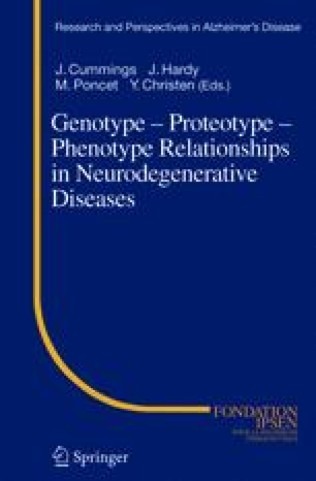
Genotype - Proteotype - Phenotype Relationships in Neurodegenerative Diseases
Improved understanding of role of protein dysmetabolism in neurodegeneration promises to improve diagnoses, facilitate the development of biological markers relevant to disease pathophysiology, and provide tractable therapeutic targets. This Fondation IPSEN conference summary provides an update on the latest advances of the role of protein misfolding in the pathophysiology of neurodegenerative diseases.

Genomics-assisted crop improvement ; Vol.2 : Genomics applications in crops
Genomics research has great potential to revolutionize the discipline of plant breeding. This two-volume set provides a critical assessment of genomics tools and approaches for crop breeding. Volume 2, entitled "Genomics Applications in Crops", compiles crop-specific studies that summarize both the achievements and limitations of genomics research for crop improvement.

Genomics-assisted crop improvement ; Vol.1 : Genomics approaches and platforms
Genomics research has great potential to revolutionize the discipline of plant breeding. This two-volume set provides a critical assessment of genomics tools and approaches for crop breeding. Volume 1, entitled "Genomics Approaches and Platforms", illustrates state-of-the-art genomics approaches and platforms presently available for crop improvement.

Genomics of Tropical Crop Plants
Genomics of Tropical Crop Plants summarizes recent progress on genomic research, including the development of molecular markers, genomic and cDNA libraries, expressed sequence tags (ESTs), genetic and physical maps, gene expression profiles, and whole genome sequences for 20 tropical crop plants. It offers background information about the evolutionary origin and environments of tropical crop species, international programs that are addressing the needs of tropical agriculture, and the potential for new technologies to increase the productivity and value of tropical crops. This book provides new dimensions to growing information concerning temperate crops and their morphology, physiology, and parallel evolution in diverse plant lineages.

Genomics of Disease
Genomics of Disease is the 24th volume in the Stadler Genetics Symposium series published by Springer, which has, over many years, served as a comprehensive collection of current trends and hot topics in the field of genetics. The current volume summarizes recent progress in our attempts to characterize the genomics of plant and animal diseases. Authoritative analytical reviews are specialized to be attractive to professional researchers, teachers, and students, while also being appealing to a wider audience of scientists in related disciplines. Genomics of Disease offers essential reference material for any scientist or teacher working in the fields of plant and animal diseases. Coverage of key areas of both animal and plant disease is a unique feature of this volume and one that allows direct comparisons between the systems. All academics, scientists, and industry professionals that desire to take advantage of the most up-to-date information on the continuously emerging and expanding field of the genomics of plant and animal diseases will find it an invaluable resource.

Genomic intelligence : Metagenomics and artificial intelligence
The field of metagenomics has revolutionized our comprehension of microbial diversity and function across various habitats, from the human body to terrestrial and aquatic environments. Simultaneously, advancements in AI have empowered researchers to analyze vast troves of genomic data with unprecedented speed and precision, facilitating new insights into the complex interplay between microorganisms and their surroundings. Provides an overview of metagenomics and discusses the combination of metagenomics and AI and its significant consequences for advancements in science. The chapters examine the approaches, difficulties, and revolutionary uses of AI in metagenomics and provide insight into the convergence of genomics, metagenomics, and AI’s potential to revolutionize diverse fields from healthcare to environmental.

Genomic Imprinting
Genomic imprinting refers to a recently discovered phenomenon in which the expression pattern of an allele depends on whether that allele was inherited from the mother or the father. This difference in expression strategy correlates with differences in the epigenetic state of the two alleles. The goal of this book is neither to provide a basic introduction to imprinting, nor to provide a comprehensive survey of the current state of the field (which would necessarily span multiple books). Rather, the book covers on some of the more recent advances, with the goal of drawing attention to some of the emerging subtleties and complexities associated with imprinted genes.

Genomes and Genomics of Nitrogen-fixing Organisms
Inthe book the first section organism based and should review our current knowledge of the genomes of nitrogen-fixing organisms and what these nucleotide sequences tell us. The second section should then be technology based. It should review what technologies are available to mine the data inherent in the nucleotide sequences and how they are now being used to produce gene-function data from differential gene expression.

Genome Mapping and Genomics in Fishes and Aquatic Animals
The series Genome Mapping and Genomics in Animals provides comprehensive and up-to-date reviews on genomic research on a large variety of selected animal systems, contributed by leading scientists from around the world.This volume summarizes the first era of genomic studies of aquaculture species, in which the tools and resources necessary to support whole-genome sequencing were developed. These tools will enhance efforts toward selective breeding of aquaculture species. Included in this volume are summaries of work on salmonids, cyprinids, catfish, tilapias, European sea bass, Japanese flounder, shrimps and oysters.

Genome Mapping and Genomics in Arthropods
Mapping of animal genomes has generated huge databases and several new concepts and strategies, which are useful to elucidate origin, evolution and phylogeny. Genetic and physical maps of genomes further provide precise details on chromosomal location, function, expression and regulation of academically and economically important genes. The series "Genome Mapping and Genomics in Animals" provides comprehensive and up-to-date reviews on genomic research on a large variety of selected animal systems, contributed by leading scientists from around the world.Insects and other arthropods, the largest group of animals in number of species, have global impact on agriculture, industry, human health and environment. They are of particular economic importance for food production as pollinators, for natural products like silk and also as pests and parasites. Arthropods covered in this volume include honeybee, bumblebee, the parasitic Jewel Wasp, silkworm, pea aphid, mosquito, Hessian fly and tick.

Genome integrity : Facets and perspectives
The volume begins with DNA replication and continues with replicative DNA repair and pleiotropic protein interactions. Examples of human diseases are included and the cellular responses to radiation and genotoxic stress affecting whole genomes are reviewed.

Genome instability in cancer development
Research over the past decades has firmly established the genetic basis of cancer. In particular, studies on animal tumour viruses and chromosome rearrangements in human tumours have concurred to identify so-called ‘proto-oncogenes’ and ‘tumour suppressor genes’, whose deregulation promotes carcinogenesis. These important findings not only explain the occurrence of certain hereditary tumours, but they also set the stage for the development of anti-cancer drugs that specifically target activated oncogenes.
