



Page 16
Page 16

Nanoscale Assembly : Chemical Techniques
Recent advances have pushed the limits of lithography firmly into the sub-100 nm domain, with smallest feature sizes around 10 nm. However, compared to living organisms, devices fabricated using nanolithography are not nearly as complex, as they are essentially 2D and contain only a limited number of chemical elements. For centuries, Nature has been a major inspiration for science. First of all to learn how Life functions at cellular level, but increasingly, as a blueprint for designing non-natural devices where the building blocks and their assembly are inspired by biological examples. The key tool in translating these examples into the domain of engineering, has been self-assembly or self-organization. This book gathers a spectrum researchers who have not only furthered our knowledge of self-assembly using small molecules, polymers and colloidal particles as building blocks, but who have also shown it to be a practical tool in the assembly of an astonishing variety of devices, ranging from molecular electronics to biosensors.

NanoBiotechnology : BioInspired Devices and Materials of the Future
NanoBioTechnology: BioInspired Devices and Materials of the Future is a groundbreaking text that will assist scientists and students in learning the fundamentals and cutting-edge nature of this new and emerging science. Focusing on materials and building blocks for nanotechnology, leading scientists from around the world share their knowledge and expertise in this authoritative volume. The volume is broken into five sections. The first section presents an overview of nanotechnology and describes the many aspects of the field. Section 2 details biological materials serving as nanotemplates for bottom-up fabrication. Section 3 covers the use of biological macromolecules for electron transfer and computation. Section 4 presents a brief overview of the extensive and rapidly growing field of nanomedicine. Finally, Section 5 details de-novo designed structures and the various approaches different scientific groups take with molecular level training and language
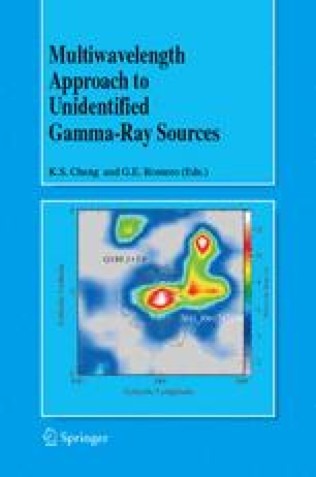
Multiwavelength Approach to Unidentified Gamma-Ray Sources : A 2nd Workshop on the Nature of the High-Energy Unidentified Sources
Nearly one half of the point-like gamma-ray sources detected by EGRET instrument of the late Compton satellite are still defeating our attempts at identifying them. To establish the origin and nature of these enigmatic sources has become a major problem of current high-energy astrophysics. The second workshop on Multiwavelength Approach to Unidentified Gamma-ray Sources intends to shed new and fresh light on the problem of the nature of these mysterious sources and the objects behind them. The proceedings contain 46 contributed papers in this subject, which cover theoretical models on gamma-ray sources as well as the best multiwavelength strategies for the identification of the promising candidates. The topics of this conference also include energetic phenomena ocurring both in galactic and extragalactic scenarios, phenomena that might lead to the appearance of what we have called high-energy unidentified sources. The book will be of interest for all active researchers in the high-energy astrophysics and related research areas as well as for scientists and graduate students interested in understanding the recent progress in this field.

Multiscale Problems in the Life Sciences : From Microscopic to Macroscopic
The aim of this volume that presents Lectures given at a joint CIME and Banach Center Summer School, is to offer a broad presentation of a class of updated methods providing a mathematical framework for the development of a hierarchy of models of complex systems in the natural sciences, with a special attention to Biology and Medicine. Mastering complexity implies sharing different tools requiring much higher level of communication between different mathematical and scientific schools, for solving classes of problems of the same nature. Today more than ever, one of the most important challenges derives from the need to bridge parts of a system evolving at different time and space scales, especially with respect to computational affordability. As a result the content has a rather general character; the main role is played by stochastic processes, positive semigroups, asymptotic analysis, kinetic theory, continuum theory and game theory.

Multiphase Reacting Flows : Modelling and Simulation
This book entitled ''Multiphase reacting flows: modelling and simulation'' contains the lecture notes of the CISM (International Centre for Mechanical Sciences) course held in Udine, Italy, on July 3-7, 2006, and it describes various modelling approaches for dealing with polydisperse multiphase reacting flows. A multiphase reacting system is characterized by the presence of multiple phases and in this book we focus on disperse multiphase systems, where one phase can be considered as a continuum, whereas the additional phases are dispersed in the continuous one. In other words, in this book we deal with multiphase systems constituted by particles, droplets or bubbles (i.e., solid particles suspended in a continuous liquid phase, liquid droplets in a gaseous phase, or gas bubbles in liquid.) The other important characteristic elements of the systems discussed in this book are the presence of one or more chemical reactions and the turbulent nature of the flow. The chemical reactions usually involve all the phases present in the system and might be responsible for the formation or disappearance of the disperse and/or continuous phases.

Multiobjective Problem Solving from Nature : From Concepts to Applications
he book focuses on how MOEAs and related techniques can be used to solve problems, particularly in the disciplines of science and engineering. Contributions by leading researchers show how the concepts of multiobjective optimization can be used to reformulate and resolve problems in broad areas such as constrained optimization, coevolution, classification, inverse modelling and design. The book is distinguished from other texts on MOEAs in that it is not primarily about the algorithms, nor specific applications, but about the concepts and processes involved in solving problems using a multiobjective approach. Each chapter contributes to the central, deep concepts and themes of the book: evaluating the utility of the multiobjective approach; discussing alternative problem formulations; showing how problem formulation affects the search process; and examining solution selection and decision making.

Multicriteria Optimization
Decision makers in many areas, from industry to engineering and the social sector, face an increasing need to consider multiple, conflicting objectives in their decision processes. In many cases these real world decision problems can be formulated as multicriteria mathematical optimization models. The solution of such models requires appropriate techniques to compute so called efficient, or Pareto optimal, or compromise solutions that - unlike traditional mathematical programming methods - take the contradictory nature of the criteria into account. This book provides the necessary mathematical foundation of multicriteria optimization to solve nonlinear, linear and combinatorial problems with multiple criteria. Motivational examples illustrate the use of multicriteria optimization in practice. Numerous illustrations and exercises as well as an extensive bibliography are provided.

MSC Maximal Stress Cooperation
In 1996 my book ‘The Nature of Cultures’ appeared in Vi- na and New York. It describes cultures as systems which are controlled by MSC and decorum. While MSC is a neologism meaning ‘maximal stress cooperation’ decorum is a very old term. It is as old as Western culture itself, and is furthermore, the translation of the even older Greek word ‘prepon’. Decorum and prepon mean ‘to be suitable, to be fitting’. It is all about the fitting of cultural medial contents to elementary cultural behavioural types and behavioural phases. These behavioural units are subject to a type of ranking system in which that which is essential is sorted from that which less essential. - corum then means – the representations of the media must ‘fit’ the ranking of the cultural behaviour. It is MSC which assumes the top position in this ranking. In 1996 and the two previous years when I was working on my book ‘The Nature of Cultures’ less than 5 years had passed since the Iron Curtain had been lifted. Many believed at that time that with ending of the Cold War, which was more or less de facto peace anyway, that a new and better age of peace was dawning.

Moral Philosophy on the Threshold of Modernity
This volume investigates the paradigm changes which occurred in ethics during the early modern era (1350-1600). While many general claims have been made regarding the nature of moral philosophy in the period of transition from medieval to modern thought, the rich variety of extant texts has seldom been studied and discussed in detail. The present collection attempts to do this. It provides new research on ethics in the context of Late Scholasticism, Neo-Scholasticism, Renaissance Humanism and the Reformation. It traces the fate of Aristotelianism and of Stoicism, explores specific topics such as probabilism and casuistry, and highlights the connections between Protestant theology and early modern ethics. The book also examines how the origins of human rights, as well as different views of moral agency, the will and the emotions, came into focus on the eve of modernity.

Monitoring State Compliance with the UN Convention on the Rights of the Child : An Analysis of Attributes
This book presents a discussion on human rights-based attributes for each article pertinent to the substantive rights of children, as defined in the United Nations Convention on the Rights of the Child (UNCRC). It provides the reader with a unique and clear overview of the scope and core content of the articles, together with an analysis of the latest jurisprudence of the UN Committee on the Rights of the Child. For each article of the UNCRC, the authors explore the nature and scope of corresponding State obligations, and identify the main features that need to be taken into consideration when assessing a State’s progressive implementation of the UNCRC. This analysis considers which aspects of a given right are most important to track, in order to monitor States' implementation of any given right, and whether there is any resultant change in the lives of children.

Monitoring Nature Conservation in Cultural Habitats : A Practical Guide and Case Studies
Monitoring Nature Conservation in Cultural Habitats presents monitoring as an integral component of responsible conservation management and as a catalyst for decision making. The early sections of the book cover key areas in the development of a monitoring project, including: - The roles of survey and surveillance - Incorporating knowledge from existing research - Identifying the conservation priority on sites - Minimising observer error - Identifying site-specific condition indicators for habitats - Collecting monitoring data The later sections of the book comprise a series of case studies covering a wide range of habitats and species. These case studies focus mostly, though not exclusively, on sites that form part of the Natura 2000 series in Europe.

Molecular Biology in Plant Pathogenesis and Disease Management : Microbial Plant Pathogens ; Vol.1
Studies on molecular biology of pathogens, infection process and disease resistance, have provided information essentially required to understand the vulnerable stages at which the pathogens can be tackled effectively and to adopt novel strategies to incorporate disease resistance genes from diverse sources and /or to induce resistance of cultivars with desirable agronomic attributes using biotic or abiotic agents. The nature of interaction between the gene products of the pathogen and plant appears to determine the outcome of the interaction resulting in either disease progression or suppression. Transgenic plants with engineered genes show promise for effective exploitation of this approach for practical application. Research efforts during the recent years to sequence the whole genomes of the pathogens and plants may lead to development of better ways of manipulating disease resistance mechanisms enabling the grower to achieve higher production levels and the consumer to enjoy safer food and agricultural products. Experimental protocols included in appropriate chapters will be useful for researchers and graduate students.

Modern natural product synthesis
Describes the details of the synthesis routes including unexpected reactions and syntheses. By presenting detailed stories behind the total synthesis developments, including those routes that were unsuccessful the book provides the reader with a better understanding of how other researchers devise their strategy and overcome difficulties in their studies. The contributions in the book have focused on highlighting the research from Japan however it is appealing to researchers and students worldwide. This compilation of cutting-edge natural product synthesis provides high-quality expertise, especially to graduate students and young researchers, regarding research on synthetic organic chemistry. It can be utilized as teaching material in university seminars as well as provide guidance to researchers in the area of total synthesis.

Modern Hematology : Biology and Clinical Management
The first chapters of this book contain a self-contained introduction to path integrals in Euclidean quantum mechanics and statistical mechanics. The resulting high-dimensional integrals can be estimated with the help of Monte Carlo simulations based on Markov processes. The most commonly used algorithms are presented in detail so as to prepare the reader for the use of high-performance computers as an “experimental” tool for this burgeoning field of theoretical physics. Several chapters are then devoted to an introduction to simple lattice field theories and a variety of spin systems with discrete and continuous spins, where the ubiquitous Ising model serves as an ideal guide for introducing the fascinating area of phase transitions. As an alternative to the lattice formulation of quantum field theories, variants of the flexible renormalization group methods are discussed in detail. Since, according to our present-day knowledge, all fundamental interactions in nature are described by gauge theories, the remaining chapters of the book deal with gauge theories without and with matter.

Model Reduction and Coarse-Graining Approaches for Multiscale Phenomena
Model reduction and coarse-graining are important in many areas of science and engineering. How does a system with many degrees of freedom become one with fewer? How can a reversible micro-description be adapted to the dissipative macroscopic model? These crucial questions, as well as many other related problems, are discussed in this book. Specific areas of study include dynamical systems, non-equilibrium statistical mechanics, kinetic theory, hydrodynamics and mechanics of continuous media, (bio)chemical kinetics, nonlinear dynamics, nonlinear control, nonlinear estimation, and particulate systems from various branches of engineering. The generic nature and the power of the pertinent conceptual, analytical and computational frameworks helps eliminate some of the traditional language barriers, which often unnecessarily impede scientific progress and the interaction of researchers between disciplines such as physics, chemistry, biology, applied mathematics and engineering. All contributions are authored by experts, whose specialities span a wide range of fields within science and engineering.

Model and Mathematics : From the 19th to the 21st Century
This book collects the historical and medial perspectives of a systematic and epistemological analysis of the complicated, multifaceted relationship between model and mathematics, ranging from, for example, the physical mathematical models of the 19th century to the simulation and digital modelling of the 21st century. The aim of this anthology is to showcase the status of the mathematical model between abstraction and realization, presentation and representation, what is modeled and what models.

Mining Sequential Patterns from Large Data Sets
To meet the different needs of various applications, several models of sequential patterns have been proposed. This volume not only studies the mathematical definitions and application domains of these models, but also the algorithms on how to effectively and efficiently find these patterns. Mining Sequential Patterns from Large Data Sets provides a set of tools for analyzing and understanding the nature of various sequences by identifying the specific model(s) of sequential patterns that are most suitable. This book provides an efficient algorithm for mining these patterns.

Microstructuring of Glasses
As microstructured glass becomes increasingly important for microsystems technology, the main application fields include micro-fluidic systems, micro-analysis systems, sensors, micro-actuators and implants. And, because glass has quite distinct properties from silicon, PMMA and metals, applications exist where only glass devices meet the requirements. The main advantages of glass derive from its amorphous nature, the precondition for its - theoretically - direction-independent geometric structurability. Microstructuring of Glasses deals with the amorphous state, various glass compositions and their properties, the interactions between glasses and the electromagnetic waves used to modify it.

Micromechanics of Heterogeneous Materials
The micromechanics of random structure heterogeneous materials is a burgeoning multidisciplinary research area which overlaps the scientific branches of materials science, mechanical engineering, applied mathematics, technical physics, geophysics, and biology. Micromechanics of Heterogeneous Materials features rigorous theoretical methods of applied mathematics and statistical physics in materials science of microheterogeneous media. The prediction of the behavior of heterogeneous materials by the use of properties of constituents and their microstructures is a central issue of micromechanics. This book is the first in micromechanics to provide a useful and effective demonstration of the systematic and fundamental research of the microstructure of the wide class of heterogeneous materials of natural and synthetic nature.

Microbial Sulfur Metabolism
In nature, sulfur occurs in many different oxidation states and is one of the most versatile elements in life. It is an integral part of many important cell constituents, such as the amino acids cysteine and methionine, and many sulfur compounds serve as the basis for energy-related processes in prokaryotes. In recent years, new methods have been applied to study the biochemistry and molecular biology of reactions of the global sulfur cycle, the microorganisms involved and their physiology, metabolism and ecology. These activities have uncovered fascinating new insights for the understanding of aerobic and anaerobic sulfur metabolism.
