



Page 16
Page 16
Iterative Learning Control : Robustness and Monotonic Convergence for Interval Systems
This monograph studies the design of robust, monotonically-convergent iterative learning controllers for discrete-time systems. Two key problems with the fundamentals of iterative learning control (ILC) design as treated by existing work are: first, many ILC design strategies assume nominal knowledge of the system to be controlled and; second, it is well-known that many ILC algorithms do not produce monotonic convergence, though in applications monotonic convergence is often essential. Iterative Learning Control takes account of the recently-developed comprehensive approach to robust ILC analysis and design established to handle the situation where the plant model is uncertain. Considering ILC in the iteration domain, it presents a unified analysis and design framework that enables designers to consider both robustness and monotonic convergence for typical uncertainty models, including parametric interval uncertainties, iteration-domain frequency uncertainty, and iteration-domain stochastic uncertainty.

Iterating Infusion : Clearer Views of Objects, Classes, and Systems
Iterating Infusion presents comprehensive tools for you to best manage and work with object orientation. These include simplified fundamental concepts, popular language comparisons, advanced designing strategies, a broad usage progression, thorough design notations (interaction algebra), and data-oriented (fundamentally-OO) languages. The title, Iterating Infusion, alludes to the fact that any system has multiple, coexisting functional levels and that new levels—both lower and higher—are continually added to the same functional area. The practical effect is to bring processes into focus, always clarifying the vague. The extreme form of this is when separate but compatible technologies are brought together to create advancements; these can be baby-steps or great leaps, with varying amounts of effort. In more general terms, the same thing in a different context can take on much more power. And actually, this phenomenon is at the heart of object-oriented software.

Computational Aspects of General Equilibrium Theory : Refutable Theories of Value
This monograph presents a general equilibrium methodology for microeconomic policy analysis. It is intended to serve as an alternative to the now classical, axiomatic general equilibrium theory as exposited in Debreu`s Theory of Value (1959) or Arrow and Hahn`s General Competitive Analysis (1971). The methodology proposed in this monograph does not presume the existence of market equilibrium, accepts the inherent indeterminancy of nonparametric general equlibrium models, and offers effective algorithms for computing counterfactual equilibria in these models. It consists of several essays written over the last decade, some with colleagues or former graduate students, and an appendix by Charles Steinhorn on the elements of O-minimal structures, the mathematical framework for our analysis.
Complexity Theory : Exploring the Limits of Efficient Algorithms
Complexity theory is the theory of determining the necessary resources for the solution of algorithmic problems and, therefore, the limits of what is possible with the available resources. An understanding of these limits prevents the search for non-existing efficient algorithms. This textbook considers randomization as a key concept and emphasizes the interplay between theory and practice: New branches of complexity theory continue to arise in response to new algorithmic concepts, and its results - such as the theory of NP-completeness - have influenced the development of all areas of computer science. The topics selected have implications for concrete applications, and the significance of complexity theory for today's computer science is stressed throughout.
Complexity hints for economic policy
This volume extends the complexity approach to economics. It provides some alternative pattern generators, which can supplement existing approaches by providing an alternative way of finding patterns than be obtained by the traditional scientific approach.

Compiler construction ; Vol. 3923 : 15th International Conference, CC 2006, Held as Part of the Joint European Conferences on Theory and Practice of Software, ETAPS 2006, Vienna, Austria, March 30-31, 2006, Proceedings
ETAPS 2006 was the ninth instance of the European Joint Conferences on Theory and Practice of Software. ETAPS is an annual federated conference that was established in 1998 by combining a number of existing and new conferences. The events that comprise ETAPS address various aspects of the system devel- ment process, including speci?cation, design, implementation, analysis and impro- ment. The languages, methodologies and tools which support these activities are all well within its scope. Di?erent blends of theory and practice are represented, with an inclination towards theory with a practical motivation on the one hand and soundly based practice on the other.

Comparative genomics ; Vol. 3388 : RECOMB 2004 International Workshop, RCG 2004, Bertinoro, Italy, October 16-19, 2004, Revised Selected Papers
This papers investigates the problem of conservation of combinatorial structures in genome rearrangement scenarios. We give a characterization of a class of scenarios that conserve all common intervals, called commuting scenarios, and a characterization of permutations for which commuting scenarios exist. We show that measuring conservation of common intervals can be useful tool in assessing the quality of rearrangement scenarios, by investigating in detail three specific scenarios involving the mouse, rat and human X chromosomes.

Clinical cases in pediatric dentistry ; 2nd ed.
Features comprehensive updates to all 66 cases to include the latest diagnostic and treatment techniques. Each chapter also includes brand-new cases, for a total of 13 entirely new cases. The most current references to the literature, best practices, and evidence based clinical guidelines, plus new and updated self‐assessment questions with detailed answers and explanations, have been added to all the cases. Presents updated content, clinical guidelines, and references in existing cases, with thirteen brand new case scenarios Takes an easy-to-follow format, with patient history and diagnostics, questions, and answers, and explanations for each case Part of the "Clinical Cases" series applying both theory and practice to actual clinical cases Includes access to a companion website featuring additional case studies, charts, tables, web links, and the figures from the book in PowerPoint

Climate change : Environment and history of the Near East
When the ?rst edition of this book was published in 2004, the following year 2005 has happened to have been the warmest year since 1880, when the ?rst reliable worldwide instrumental records came into existance. Claiming no li- age between the publication of our book and the temperature record, yet this record demonstrates the trend of increase in the global surface temperatures during thepast20years,reinforcedbyevidenceofriseofatmosphere’sand oceans’ temperatures, and increased melting of ice and snow in the arctic and antarctic regions as well as on mountain tops. All these observations are par- leled by the increase in the quantity of heat trapping gases in the atmosphere, causing most probably, the global greenhouse effect. In order to try and predict, what might be the impact of this effect on the on the natural and human environments of the Near East, (Figs. 1–1d) the authors adopted the saying that the past is the key for the future. The practical conclusion of this principle says that the acquiring knowledge of the impact of past climate changes on the nature and human societies, may allow conclusions with regard to future possible impact of climate changes. By correlating proxy data of all types, paleo-sea and lake levels, paleo-hydrology, pollen pro?les, environmental isotopes as well as archaeological and historical documents, the authors tried to collect as much as possible of this knowledge.
Climate Adaptation Modelling
This book focuses on an issue only marginally tackled by this literature: the still existing gap between adaptation science and modelling and the possibility to effectively access and exploit the information produced by policy making at different levels, international, national and local.
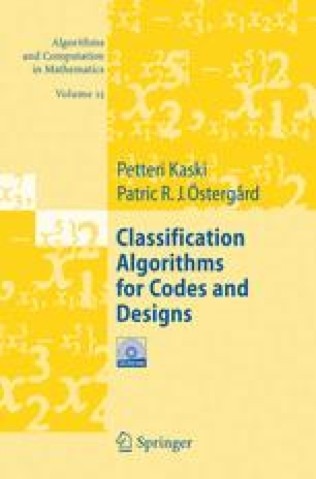
Classification Algorithms for Codes and Designs
Almost a century earlier, in 1782, Euler [180] published some results on classifying small Latin squares, but for the ?rst few steps in this direction one should actually go at least as far back as ancient Greece and the proof that there are exactly ?ve Platonic solids. One of the most remarkable achievements in the early, pre-computer era is the classi?cation of the Steiner triple systems of order 15, quoted above. An onerous task that, today, no sensible person would attempt by hand calcu- tion. Because, with the exception of occasional parameters for which com- natorial arguments are e?ective (often to prove nonexistence or uniqueness), classi?cation in general is about algorithms and computation.
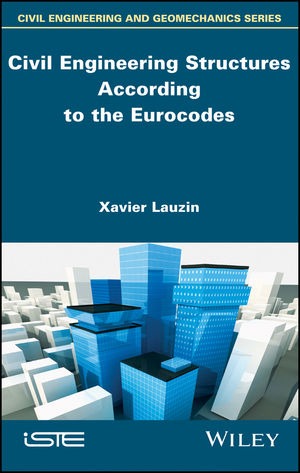
Civil engineering structures according to the Eurocodes : Inspection and maintenance
This standard assumes that the structure, after completion, is used as intended in the project and subject to planned inspection and maintenance to meet the expected project lifetime and to detect any unforeseen weakness or behavior" (EN 13670 4.1)An important decision factor in the design of new structures and repairs to existing structures is the lifetime or expected service life. This concept, which is common for civil engineering works, has been extended to all engineering and building works by applying the European Structural Design Codes.
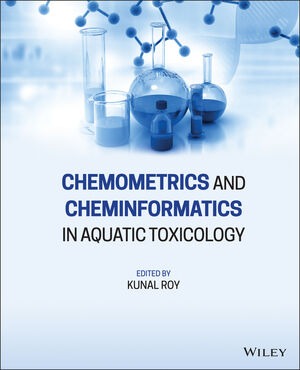
Chemometrics and Cheminformatics in Aquatic Toxicology
Chemometrics and Cheminformatics in Aquatic Toxicology delivers an exploration of the existing and emerging problems of contamination of the aquatic environment through various metal and organic pollutants, including industrial chemicals, pharmaceuticals, cosmetics, biocides, nanomaterials, pesticides, surfactants, dyes, and more. The book discusses different chemometric and cheminformatic tools for non-experts and their application to the analysis and modeling of toxicity data of chemicals to various aquatic organisms.

Chemical Leasing Goes Global : Selling Services Instead of Barrels : A Win-Win Business Model for Environment and Industry
Chemical Leasing is an innovative business model within the sustainable management of chemicals. The economic benefit is achieved by selling chemicals services instead of increasing the sales volume. This book contains detailed descriptions and evaluations based on existing projects in Austria, Egypt, Russia and Mexico where in a broard range of sectors and companies the application of Chemical leasing was assisted. The book also contains political and scientific interpretations and analyses.

Chance Rules : An informal guide to probability, risk and statistics
This second edition of Chance Rules again recounts the story of chance through history and the various ways it impacts on our lives. Here you can read about the earliest gamblers who thought that the fall of the dice was controlled by the gods, as well as the modern geneticist and quantum theory researcher trying to integrate aspects of probability into their chosen speciality. Example included in the first addition such as the infamous Monty Hall problem, tossing coins, coincidences, horse racing, birthdays and babies remain, often with an expanded discussion, in this edition. Additional material in the second edition includes, a probabilistic explanation of why things were better when you were younger, consideration of whether you can use probability to prove the existence of God, how long you may have to wait to win the lottery, some court room dramas, predicting the future, and how evolution scores over creationism. Chance Rules lets you learn about probability without complex mathematics.

Challenges for Computational Intelligence
Computational Intelligence (CI) is used as a name to cover many existing branches of science, with artificial neural networks, fuzzy systems and evolutionary computation forming its core. In recent years CI has been extended by adding many other subdisciplines and it became quite obvious that this new field also requires a series of challenging problems that will give it a sense of direction. Without setting up clear goals and yardsticks to measure progress on the way many research efforts are wasted.The book written by top experts in CI provides such clear directions and the much-needed focus on the most important and challenging research issues, showing a roadmap how to achieve ambitious goals.

Cell Separation : Fundamentals, Analytical and Preparative Methods
This special volume on cell separations discusses fundamental and applied aspects of the analytical and preparative cell-separation technologies. The aim is to enlighten the reader with the new developments in cell-separation technologies and at the same time provide sufficient knowledge with other existing and more commonly used techniques. The volume is comprised of contributions from subject experts from both academia and industry, focuses on the research and commercial aspects of cell-separation technology, and provides readers with broader choice. Unlike protein separation, the major challenge in cell separation has been the recovery of the cells in viable form after they are bound to the separation matrix, as cells bind more strongly through multipoint attachment. This is an important focus of the present work and one we believe will provide new insight to researchers in this field

Case-Based Approximate Reasoning
Case-based reasoning (CBR) has received a great deal of attention in recent years and has established itself as a core methodology in the field of artificial intelligence. The key idea of CBR is to tackle new problems by referring to similar problems that have already been solved in the past. More precisely, CBR proceeds from individual experiences in the form of cases. The generalization beyond these experiences typically relies on a kind of regularity assumption demanding that 'similar problems have similar solutions'. Making use of different frameworks of approximate reasoning and reasoning under uncertainty, notably probabilistic and fuzzy set-based techniques, this book develops formal models of the above inference principle, which is fundamental to CBR. The case-based approximate reasoning methods thus obtained especially emphasize the heuristic nature of case-based inference and aspects of uncertainty in CBR. This way, the book contributes to a solid foundation of CBR which is grounded on formal concepts and techniques from the aforementioned fields. Besides, it establishes interesting relationships between CBR and approximate reasoning, which not only cast new light on existing methods but also enhance the development of novel approaches and hybrid systems.

Capillary Forces in Microassembly : Modeling, Simulation, Experiments, and Case Study
Capillary Forces in Microassembly discusses the use of capillary forces as a gripping principle in microscale assembly. Clearly written and well-organized, this text brings together physical concepts at the microscale with practical applications in micromanipulation. Throughout this work, the reader will find a review of the existing gripping principles, elements to model capillary forces as well as descriptions of the simulation and experimental test bench developed to study the design parameters. Using well-known concepts from surface science (such as surface tension, capillary effects, wettability, and contact angles) as inputs to mechanical models, the amount of effort required to handle micro-components is predicted. These developments are then applied in a case study concerning the pick and place of balls in a watch ball bearing.
Cancer Proteomics : From Bench to Bedside
the authors collectively provide the current status of proteomics in cancer therapy and offers the existing technologies used in proteomics that allow for protein profiling and for the identification of druggable targets in human samples. Mass spectrometry based protein characterization and protein microarrays hold great promise of predicting response to specific drugs in cancer therapy. Insightful to the reader with broad perspectives on topics related to the use of proteomic strategies in cancer therapy, Cancer Proteomics offers anticipated challenges that may arise from its application in daily practice.
