



Page 145
Page 145
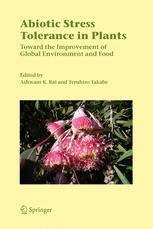
Abiotic Stress Tolerance in Plants : Toward the Improvement of Global Environment and Food
Stresses in plants caused by salt, drought, temperature, oxygen, and toxic compounds are the principal reason for reduction in crop yield. For example, high salinity in soils accounts for large decline in the yield of a wide variety of crops world over; ~1000 million ha of land is affected by soil salinity. Increased sunlight leads to the generation of reactive oxygen species, which damage the plant cells. The threat of global environment change makes it increasingly demanding to generate crop plants that could withstand such harsh conditions. Much progress has been made in the identification and characterization of the mechanisms that allow plants to tolerate abiotic stresses.
A Theory of Shape Identification
Recent years have seen dramatic progress in shape recognition algorithms applied to ever-growing image databases. They have been applied to image stitching, stereo vision, image mosaics, solid object recognition and video or web image retrieval. More fundamentally, the ability of humans and animals to detect and recognize shapes is one of the enigmas of perception. The book describes a complete method that starts from a query image and an image database and yields a list of the images in the database containing shapes present in the query image. A false alarm number is associated to each detection. Many experiments will show that familiar simple shapes or images can reliably be identified with false alarm numbers ranging from 10-5 to less than 10-300.
A Testers Guide to .NET Programming
A Tester's Guide to .NET Programming focuses solely on applied programming techniques for testers. You will learn how to write simple automated tests, enabling you to test tools and utilities. You will also learn about the important concepts driving modern programming today, like multitier applications and object-oriented programming. More businesses are adopting .NET technologies, and this book will equip you to assess software robustness and performance. Whether you're an experienced programmer who's unfamiliar with testing concepts, or you're an experienced tester versed in VB .NET and C#, the included real-world tips and example code will help you start your projects.
A Space of Their Own : The Archaeology of Nineteenth Century Lunatic Asylums in Britain, South Australia and Tasmania
The history of lunatic asylums – what do we really know about them? Films and television programs have portrayed them as places of horror where the patients are restrained and left to listen to the cries of their fellow inmates in despair. But what was the world of nineteenth century lunatic asylums really like? Are these images true? This book will explore this world using the techniques of historical archaeology and history.
A software process model handbook for incorporating peoples capabilities
Offers the most advanced approach to date, empirically validated at software development organizations. This handbook adds a valuable contribution to the much-needed literature on people-related aspects in software engineering. The primary focus is on the particular challenge of extending software process definitions to more explicitly address people-related considerations. The capability concept is not present nor has it been considered in most software process models. The authors have developed a capabilities-oriented software process model, which has been formalized in UML and implemented as a tool. A Software Process Model Handbook for Incorporating People's Capabilities guides readers through the incorporation of the individual’s capabilities into the software process. Structured to meet the needs of research scientists and graduate-level students in computer science and engineering, A Software Process Model Handbook for Incorporating People's Capabilities is also suitable for practitioners in industry.
A Short Course in Foundation Engineering
Although there are now a large number of computer programmes for solving all sorts of foundation design problems, the need to check these outputs by 'hand-calculation' has become vitally important. This book concentrates on getting the fundamentals right and then using them in practical applications. The book is illustrated with numerous worked examples and with quick-reference tables and charts.
A Rosicrucian Utopia in Eighteenth-Century Russia : The Masonic Circle of N.I. Novikov
The author undertakes an investigation into the history of Russian Freemasonry that has not been attempted previously. Her premise is that the Russian Enlightenment shows peculiar features, which prevent the application of the interpretative framework commonly used for the history of western thought. The author deals with the development of early Russian masonry, the formation of the Novikov circle in Moscow, the ‘programme’ of Rosicrucianism and the character of its Russian variant and, finally, the clash between the Rosicrucians and the State. The author concludes that the defenders of the Ancien Régime were not wrong. In fact the democratic behaviour, the critical attitude, the practice of participation, the freedom of thought, the tolerance for the diversity, the search for a direct communication with the divinity.
A Programmers Introduction to C#2.0
A Programmer's Introduction to C# 2.0, Third Edition is a critical update to the highly successful second edition. It is written by a member of the original C# language-design team and a C# program manager, so you can be certain this book contains the expertise you're looking for.
A Practical Theory of Reactive Systems : Incremental Modeling of Dynamic Behaviors
Presents a ""practical theory"" of reactive systems, with formal foundations in Temporal Logic of Actions. This book emphasises theoretical understanding of reactive behaviors and using ""horizontal"" modularity to manage their complexity. It illustrates the incremental specification by a number of examples of varying size and complexity
A Practical Programming Model for the Multi-Core Era ; 3rd International Workshop on OpenMP, IWOMP 2007, Beijing, China, June 3-7, 2007 Proceedings
This book constitutes the thoroughly refereed post-workshop proceedings of the Third International Workshop on OpenMP, IWOMP 2007, held in Beijing, China, in June 2007.The 14 revised full papers and 8 revised short papers presented were carefully reviewed and selected from 28 submissions. The papers address all topics related to OpenMP, such as OpenMP performance analysis and modeling, OpenMP performance and correctness tools and proposed OpenMP extensions, as well as applications in various domains, e.g., scientific computation, video games, computer graphics, multimedia, information retrieval, optimization, text processing, data mining, finance, signal and image processing, and numerical solvers.
A Practical Guide to TPM 2.0 : Using the New Trusted Platform Module in the New Age of Security
A Practical Guide to TPM 2.0: Using the Trusted Platform Module in the New Age of Security is a straight-forward primer for developers. It shows security and TPM concepts, demonstrating their use in real applications that the reader can try out. Simply put, this book is designed to empower and excite the programming community to go out and do cool things with the TPM. The approach is to ramp the reader up quickly and keep their interest.A Practical Guide to TPM 2.0: Using the Trusted Platform Module in the New Age of Security explains security concepts, describes the TPM 2.0 architecture, and provides code and pseudo-code examples in parallel, from very simple concepts and code to highly complex concepts and pseudo-code.

A practical guide on behaviour change support for self-managing chronic disease
Developed under the auspices of the Train4Health project, funded by the Erasmus+ program of the European Union, the book contains six chapters written by international contributors from different disciplines. Chapter one introduces the competencies necessary for delivering effective behavior change support, based on an established program of work, and related learning outcomes. The four following chapters describe how these competencies can be acquired, focusing on concepts and theories, assessing self-management behaviors, implementing change strategies and person-centered communication, using a practical approach.

A new deal for an effective European research policy : The design and impacts of the 7th Framework programme
It underlines an important truth: that science has always advanced most rapidly when it is a collective endeavour, with a strong circulation of knowledge.This book will show how the new Framework Programme was put together and explain why it took the shape it did. It will also set out its potential impacts and the conditions necessary for it to be a success.
A Modular Calculus for the Average Cost of Data Structuring
This volume, with forewords by Greg Bollella and Dana Scott, presents novel programs based on the new advances in this area, including the first randomness-preserving version of Heapsort. Programs are provided, along with derivations of their average-case time, to illustrate the radically different approach to average-case timing. The automated static timing tool applies the Modular Calculus to extract the average-case running time of programs directly from their MOQA code.
A Modern Perspective on Type Theory : From its Origins until Today
The first part of the book is historical, yet at the same time, places historical systems (like Russell's RTT) in the modern setting. The second part deals with modern type theory as it developed since the 1940s, and with the role of propositions as types (or proofs as terms), but at the same time, places another historical system (the proof checker Automath) in the modern setting. The third part uses this bridging in the first two parts between historical and modern systems to propose new systems that bring more advantages together. This book has much to offer to mathematicians, logicians and to computer scientists in general. It will have considerable influence for many years to come.' - Henk Barendregt
A Logical Approach to Philosophy : Essays in Honour of Graham Solomon
The papers in this collection are united by an approach to philosophy. They illustrate the manifold contributions that logic makes to philosophical progress, both by the application of formal methods to traditional philosophical problems and by opening up new avenues of inquiry as philosophers sort out the implications of new and often surprising technical results. Contributions include new technical results rich with philosophical significance for contemporary metaphysics, attempts to diagnose the philosophical significance of some recent technical results, philosophically motivated proposals for new approaches to negation, investigations in the history and philosophy of logic, and contributions to epistemology and philosophy of science that make essential use of logical techniques and results.
A High-Performance Logical Framework -- All About Maude : How to Specify, Program, and Verify Systems in Rewriting Logic
This book gives a comprehensive account of Maude, a language and system based on rewriting logic. Many examples are used throughout the book to illustrate the main ideas and features of Maude, and its many possible uses. Maude modules are rewrite theories. Computation with such modules is - cient deduction by rewriting. Because of its logical basis and its initial model semantics,aMaude module defines a precise mathematical model.This means that Maude and its formal tool environment can be used in three, mutually reinforcing ways: • as a declarative programming language; • as an executable formal specification language; and • as a formal verification system. Maude’s rewriting logic is simple, yet very expressive. This gives Maude good representational capabilities as a semantic framework to formally represent a wide range of systems, including models of concurrency, distributed al- rithms, network protocols, semantics of programming languages, and models of cell biology. Rewriting logic is also an expressive universal logic,making Maude a fiexible logical framework in which many difierent logics and - ference systems can be represented and mechanized. This makes Maude a useful metatool to build many other tools, including those in its own formal tool environment. Thanks to the logic’s simplicity and the use of advanced semi-compilation techniques, Maude has a high-performance implementation, making it competitive with other declarative programming languages.
A General introduction to data analytics
A guide to the principles and methods of data analysis that does not require knowledge of statistics or programming. A guide to the reasoning behind data mining techniques. A unique illustrative example that extends throughout all the chapters. Exercises at the end of each chapter and larger projects at the end of each of the text’s two main parts
A First Course in Statistical Inference
Offers a modern and accessible introduction to Statistical Inference, the science of inferring key information from data. Aimed at beginning undergraduate students in mathematics, it presents the concepts underpinning frequentist statistical theory. Written in a conversational and informal style, this concise text concentrates on ideas and concepts, with key theorems stated and proved. Detailed worked examples are included and each chapter ends with a set of exercises, with full solutions given at the back of the book. Examples using R are provided throughout the book, with a brief guide to the software included. Topics covered in the book include: sampling distributions, properties of estimators, confidence intervals, hypothesis testing, ANOVA, and fitting a straight line to paired data.

A Fair Share of Tax : A Fiscal Anthropology of Contemporary Sweden
Takes a taxpayer's perspective to the relations taxation creates between people and their state. Larsen proposes that in order to understand tax compliance and cheating, we have to look beyond law, psychological experiments and surveys to include tax collectors and taxpayers' practices. The text explores the view of taxes seen as citizen’s explicit economic relation to the state and implicit economic relation to all other compatriots. Larsen suggests how to build and increase tax compliance if we take the idea of taxation creating reciprocal relations seriously.
