



Page 144
Page 144

Deliberative public engagement with science : An empirical investigation
This compact open access reference delves beyond popular concepts of educated consumers and an informed public by examining the science behind deliberative engagement. Using data from four longitudinal studies, the authors assess public engagement methods in deliberative discussions of ethical, legal, and social issues concerning innovations in nanotechnology. Coverage includes the theoretical origins of the studies, forms of engagement and variations used, and in-depth details on cognitive, affective, and social components that go into the critical thinking process and forming of opinions. Not only are the findings intriguing in and of themselves, but researchers from varied fields will also find them useful in pursuing their own projects.

Delay Differential Equations and Applications ; Proceedings of the NATO Advanced Study Institute held in Marrakech, Morocco, 9-21 September 2002
This Edition includes detailed discussion and analysis on: General Results and Linear Theory of Delay Equations in Finite Dimensional Spaces; Hopf Bifurcation, Centre Manifolds and Normal Forms for Delay Differential Equations; Functional Differential Equations in Infinite Dimensional Spaces; and Delay Differential Equations and Applications.

Deformed Spacetime : Geometrizing Interactions in Four and Five Dimensions
This volume provides a detailed discussion of the mathematical aspects and the physical applications of a new geometrical structure of space-time, based on a generalization ("deformation") of the usual Minkowski space, as supposed to be endowed with a metric whose coefficients depend on the energy.

Deformations of Algebraic Schemes
This study has become increasingly important in algebraic geometry in every context where variational phenomena come into play, and in classification theory, e.g. the study of the local properties of moduli spaces.Today deformation theory is highly formalized and has ramified widely within mathematics. This self-contained account of deformation theory in classical algebraic geometry (over an algebraically closed field) brings together for the first time some results previously scattered in the literature, with proofs that are relatively little known, yet of everyday relevance to algebraic geometers. Based on Grothendieck's functorial approach it covers formal deformation theory, algebraization, isotriviality, Hilbert schemes, Quot schemes and flag Hilbert schemes. It includes applications to the construction and properties of Severi varieties of families of plane nodal curves, space curves, deformations of quotient singularities, Hilbert schemes of points, local Picard functors, etc. Many examples are provided. Most of the algebraic results needed are proved.

Deformation and Gravity Change : Indicators of Isostasy, Tectonics, Volcanism, and Climate Change
During the last decades, measurements of various geodynamic processes have gained ever increasing importance. Temporal variations of the deformation and gravity fields monitored by geodetic measuring techniques reflect isostatic, tectonic or volcanic processes in the earth’s interior.Recordings of hydrologic or oceanographic phenomena allow conclusions on surface processes. This volume reflects the major developments during recent years in these areas of research.Most of the papers in this book were presented at the workshop on"Deformation and Gravity Change: Indicators of Isostasy, Tectonics, Volcanism and Climate Change", which took place at the Casa de los Volcanes on Lanzarote,Spain, 2005.

Deformable Models : Theory and Biomaterial Applications
Deformable Models: Theory and Biomaterial Applications is the second installation in the two-volume set Deformable Models which provides a wide cross-section of the methods and algorithms of variational and PDE methods in biomedical image analysis. The chapters are written by well-known researchers in this field, and the presentation style goes beyond an intricate abstraction of the theory into real application of the methods and description of the algorithms that were implemented. As such these chapters will serve the main goal of the editors of the volumes in bringing down to earth the latest in variational and PDE methods in modeling of soft tissues, covering the theory, algorithms, and applications of level sets and deformable models in medical image analysis.

Deformable Models : Biomedical and Clinical Applications
Deformable Models: Biomedical and Clinical Applications is the first entry in the two-volume set which provides a wide cross-section of the methods and algorithms of variational and Partial-Differential Equations (PDE) methods in biomedical image analysis. The chapters of Deformable Models: Biomedical and Clinical Applications are written by the well-known researchers in this field, and the presentation style goes beyond an intricate abstraction of the theory into real application of the methods and description of the algorithms that were implemented. As such these chapters will serve the main goal of the editors of these two volumes in bringing down to earth the latest in variational and PDE methods in modeling of soft tissues.

DeFi For Dummies
Learn how the DeFi revolution started and where it’s going Get insight into opportunities for getting started and building value with DeFi Discover the leading assets, exchanges, and marketplaces built on DeFi principles Create secure DeFi applications on established platforms This book is great for current pros or active investors in the world of finance who need to get up to speed on the world of DeFi as quickly and clearly as possible.

Defense against Bioterror : Detection Technologies, Implementation Strategies and Commercial Opportunities ; Proceedings of the NATO Advanced Research Workshop on Defense against Bioterror: Detection Technologies, Implementation Strategies and Commercial Opportunities, held in Madrid, Spain from 8 to 11 April 2004
A critical assessment of state-of-the-art of emerging ("breakthrough") biosensor technologies that will allow for the rapid identification of biological threat agents in the environment and human population, Identification of directions for future research, and to promote close working relationships between scientists from different countries and with different professional experience. The volume is devoted to a comprehensive overview of the current state of biological weapons threat; challenges confronting biodetection technologies and systems; ongoing research and development; and, future requirements. Biosensor technologies including detection platforms, networked alarm-type biodetector systems, implementation strategies, electro-optical and electrochemical biosensors.

Defence Industry Applications of Autonomous Agents and Multi-Agent Systems
In this book defense and security related applications are increasingly being tackled by researchers and practioners using technologies developed in the field of Intelligent Agent research.

Deepfake detection = اكتشاف التزييف العميق
In the rapidly evolving era of artificial intelligence, addressing the escalating threats of deepfake technology becomes a necessity because of the increasing sophistication of AI algorithms in generating deceptive content, and since it threatens the integrity of information across diverse data. The main objective is to build a sophisticated AI-driven system to detect different types of deepfake in text, audio, and images. In English text deepfake detection, multiple pre-trained tokenizers have been used, but XLNET and BERT stand out with identifying objects outside the dataset with an accuracy of 0.9809 and both have been generalized & trained using LSTM. In Arabic text deepfake detection, Arabert has been trained using LSTM which led with an accuracy of 99.53% by generalizing the model. Both English and Arabic datasets have been generated to enhance the accuracy and effectiveness of the models. Audio deepfake detection has been generalized too, using Random Forest with an accuracy of 98.259%.

Deepfake detection
Recently, various techniques of manipulating the video content have become available to everyone – online, one can find free applications e.g., for face swapping in videos. Such universal accessibility carries a notable risk of flooding online content with false information, affecting not only the greats of this world, but also the whole societies, also the rapid progress in synthetic image generation and manipulation has now come to a point where it raises significant concerns for the implications towards society. It is therefore necessary to develop a verification tool that will help assess the authenticity of the videos posted on the internet. This project describes the approach of using artificial intelligence solutions to detect doctored videos.

Deep structure, singularities, and computer vision ; 1st international workshop, DSSCV 2005, Maastricht, The Netherlands, June 9-10, 2005, revised selected papers
Constitutes the refereed post-proceedings of the First International Workshop on Deep Structure, Singularities, and Computer Vision, DSSCV 2005, held in Maastricht. This book represents in understanding the relation between structural, topological information represented by singularities and metric information of signals, shapes, and colors.

Deep Statistical Comparison for Meta-heuristic Stochastic Optimization Algorithms
Presents a comprehensive comparison of the performance of stochastic optimization algorithms / Includes an introduction to benchmarking and statistical analysis / Provides a web-based tool for making statistical comparisons of optimization algorithms / Overviews of the current approaches used to analyze algorithm performance in a range of common scenarios, while also addressing issues that are often overlooked. In turn, it shows how these issues can be easily avoided by applying the principles that have produced Deep Statistical Comparison and its variants. The focus is on statistical analyses performed using single-objective and multi-objective optimization data. At the end of the book, examples from a recently developed web-service-based e-learning tool (DSCTool) are presented. The tool provides users with all the functionalities needed to make robust statistical comparison analyses in various statistical scenarios. The book is intended for newcomers to the field and experienced researchers alike. For newcomers, it covers the basics of optimization and statistical analysis, familiarizing them with the subject matter before introducing the Deep Statistical Comparison approach. Experienced researchers can quickly move on to the content on new statistical approaches.

Deep Learning, Machine Learning and IoT in Biomedical and Health Informatics : Techniques and Applications
Examines and demonstrates state-of-the-art approaches for IoT and Machine Learning based biomedical and health related applications. This book aims to provide computational methods for accumulating, updating and changing knowledge in intelligent systems and particularly learning mechanisms that help us to induce knowledge from the data. It is helpful in cases where direct algorithmic solutions are unavailable, there is lack of formal models, or the knowledge about the application domain is inadequately defined. In the future IoT has the impending capability to change the way we work and live. These computing methods also play a significant role in design and optimization in diverse engineering disciplines. With the influence and the development of the IoT concept, the need for AI (artificial intelligence) techniques has become more significant than ever.
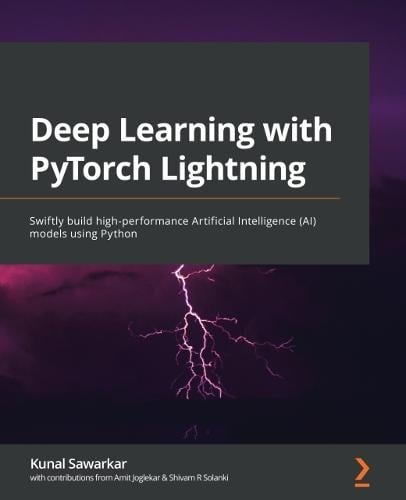
Deep Learning with PyTorch Lightning : Build and train high-performance artificial intelligence and self-supervised models using Python
You’ll learn how to configure PyTorch Lightning on a cloud platform, understand the architectural components, and explore how they are configured to build various industry solutions. You’ll build a neural network architecture, deploy an application from scratch, and see how you can expand it based on your specific needs, beyond what the framework can provide. In the later chapters, you’ll also learn how to implement capabilities to build and train various models like Convolutional Neural Nets (CNN), Natural Language Processing (NLP), Time Series, Self-Supervised Learning, Semi-Supervised Learning, Generative Adversarial Network (GAN) using PyTorch Lightning.
Deep Learning to See : Towards New Foundations of Computer Vision
Topics and features: Presents a curiosity-driven approach, posing questions to stimulate readers to design novel computational models of vision Offers a rethinking of computer vision, arguing for an approach based on vision in nature, versus regarding visual signals as collections of images Provides an interdisciplinary commentary, aiming to unify computer vision, machine learning, human vision, and computational neuroscience Serving to inspire and stimulate critical reflection and discussion, yet requiring no prior advanced technical knowledge, the text can naturally be paired with classic textbooks on computer vision to better frame the current state of the art, open problems, and novel potential solutions.

Deep learning architecture and application
As one of the fastest-growing topics in machine learning, deep learning algorithms have achieved unprecedented success in recent years. Novel paradigms (such as contrastive learning and few-shot learning) in deep learning and rising neural network architectures (e.g., transformer and masked autoencoder) are dramatically changing the field of data-driven algorithms. More importantly, deep learning models are redefining the next generation of industrial applications spanning image recognition, speech processing, language translation, healthcare, and other sciences. For example, recent advances in deep representation learning are allowing us to learn about protein 3D structures, which sheds new light on fundamental medicine and biology along with potentially bringing in billions of dollars (e.g., in the pharmaceutical market).

Deep learning and computer vision in remote sensing-II
Computer vision (CV) have seen a massive rise in popularity in the remote sensing field over the last few years. This success is mostly due to the effectiveness of deep learning (DL) algorithms. However, remote sensing data acquisition and annotation, as well as information extraction from massive remote sensing data, are still challenging. This reprint collected novel developments in the field of deep learning and computer vision methods for remote sensing. Papers dealing with fundamental theoretical analyses, as well as those demonstrating their application to real-world problems, have been published. With practical examples and real-world case studies, this reprint provides a valuable resource for researchers, professionals, and students seeking to harness the power of deep learning in the field of remote sensing.

Deep eutectic polvents : Synthesis, properties, and applications
Deep Eutectic Solvents contains a comprehensive review of the use of deep eutectic solvents (DESs) as an environmentally benign alternative reaction media for chemical transformations and processes. The contributors cover a range of topics including synthesis, structure, properties, toxicity and biodegradability of DESs. The book also explores myriad applications in various disciplines, such as organic synthesis and (bio)catalysis, electrochemistry, extraction, analytical chemistry, polymerizations, (nano)materials preparation, biomass processing, and gas adsorption.
