



Page 141
Page 141

Fuzzy Information and Engineering ; Proceedings of the Second International Conference of Fuzzy Information and Engineering (ICFIE)
The Second International Conference on Fuzzy Information and Engineering (ICFIE2007), built on the success of previous conferences, the ICIKE2002 (Dalian China), is a major symposium for scientists, engineers and practitioners in China as well as the world to present their latest results, ideas, developments and applications in all areas of fuzzy information and knowledge engineering. It aims to strengthen relations between industry research laboratories and universities, and to create a primary symposium for world scientists in fuzzy fields such as Fuzzy Information, Fuzzy Sets and Systems, Soft Computing, Fuzzy Engineering, Fuzzy Operation Research and Management, Artificial Intelligence, Rough Sets and Its Application, Application in Fuzzy Mathematics and Systems, etc.

Fuzzy Implications
Fuzzy Implications (FIs) generalize the classical implication and play a similar important role in Fuzzy Logic (FL), both in FL_n and FL_w in the sense of Zadeh. Their importance in applications of FL, viz., Approximate Reasoning (AR), Decision Support Systems, Fuzzy Control (FC), etc., is hard to exaggerate. This treatise is perhaps the first attempt at dealing exclusively with this class of operations.

Fuzzy Group Theory
This book presents an up-to-date account of research in important topics of fuzzy group theory. The book concentrates on the theoretical aspects of fuzzy subgroups of a group. It also includes applications to some abstract recognition problems and to coding theory. The book begins with basic properties of fuzzy subgroups. The notions of ascending series and descending series of fuzzy subgroups are used to define nilpotency of a fuzzy subgroup. The material presented in this book makes it a good reference for graduate students and researchers working in fuzzy group theory.

Fuzzy Engineering Economics with Applications
This book handles the fuzzy cases of classical engineering economics topics. It contains 15 original research and application chapters including different topics of fuzzy engineering economics. This book will provide a useful resource of ideas, techniques, and methods for present and further research in the applications of fuzzy sets in engineering economics.

Fuzzy Database Modeling of Imprecise and Uncertain Engineering Information
This book presents recent advances for imprecise and uncertain engineering information from the point of view of fuzzy database modeling. The topics include fuzzy conceptual data modeling of engineering information, conversion of the fuzzy conceptual models, and database implementation of the fuzzy conceptual data models. Some major data and database models for engineering information modeling are investigated. The main novel aspect of this book is that the book focuses on imprecise and uncertain industrial information modeling viewed from databases and fuzzy database technologies viewed from industrial applications. This may be useful for people involved in theory research, design implementation, and application development of intelligent engineering databases.

Fuzzy Control : Fundamentals, Stability and Design of Fuzzy Controllers
The book provides a critical discussion of fuzzy controllers from the perspective of classical control theory. Special emphases are placed on topics that are of importance for industrial applications, like (self-) tuning of fuzzy controllers, optimisation and stability analysis. The book is written as a textbook for graduate students as well as a comprehensive reference book about fuzzy control for researchers and application engineers. Starting with a detailed introduction to fuzzy systems and control theory the reader is guided to up-to-date research results.

Fuzzy Chaotic Systems : Modeling, Control, and Applications
"Fuzzy Chaotic Systems" provides original heuristic research achievements and insightful ideas on the interactions or intrinsic relationships between fuzzy logic and chaos theory. It presents the fundamental concepts of fuzzy logic and fuzzy control, chaos theory and chaos control, as well as thedefinition of chaos on the metric space of fuzzy sets. This monograph discusses and illustrates fuzzy modeling and fuzzy control of chaotic systems, synchronization, anti-control of chaos, intelligent digital redesign, spatiotemporal chaos and synchronization in complex fuzzy systems; as well as a practical application example of fuzzy-chaos-based cryptography. Like other very good books, this book may raise more questions than it can provide answers. It therefore generates a great potential to attract more attention to combine fuzzy systems with chaos theory and contains important seeds for future scientific research and engineering applications.

Fuzzy and Rough Techniques in Medical Diagnosis and Medication
This volume provides readers with selected fuzzy and rough tools used to medical tasks, especially diagnosing and medication. To build a link between theoretical, mathematical excerpts and practical medical applications, the contents is formed as a sequence of occurrences in which a patient appears to be diagnosed and cured. The fuzzy and rough elements are inserted in the book in the order required by the presentation of medical substance to maintain the logical unity of the book’s essence. In conformity with this pattern the essay presents in turn some necessary elements of fuzzy set theory, the classical fuzzy diagnostic model with extensions, the fuzzy diagnostic model with clinical examinations extended throughout time based on distance theory, methods of drug effectiveness measurements and algorithms selecting the optimal medicine. As the complement, the solution of an approximation problem is suggested to find a curve that surrounds two-dimensional clock-like point sets with the little approximation error.

Future-Oriented Technology Analysis : Strategic Intelligence for an Innovative Economy
The application of foresight to address the challenges of uncertainty and rapid change has grown dramatically in the past decade. In that period, the techniques have been greatly refined and the scope has been broadened to encompass future-oriented technology analysis (FTA) and more recently, the concept and practice of strategic intelligence. FTA addresses directly the longer-term future through the active and continuous development of visions, and pathways to realise these visions. It is increasingly seen as a valuable management and policy tool complementing, and extending further into the future, classical strategy, planning, and decision-making approaches.
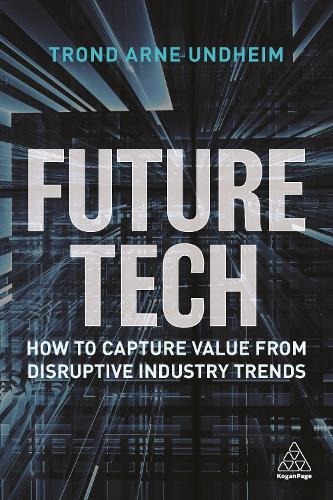
Future tech : How to capture value from disruptive industry trends
In Future Tech, the author reveals that true change only results from combining the forces of science and technology, policy and regulation, new business models (i.e. sharing economy) and social dynamics (whether or not people adopt it). Whether these four forces align explains why some technologies, such as AI, blockchain, robotics, synthetic biology and 3D printing, stick and why others fail.

Future space-transport-system components under high thermal and mechanical loads : results from the DFG Collaborative Research Center TRR40
This book presents the findings of Collaborative Research Center Transregio 40 (TRR40), initiated in July 2008 and funded by the German Research Foundation (DFG). Gathering innovative design concepts for thrust chambers and nozzles, as well as cutting-edge methods of aft-body flow control and propulsion-component cooling, it brings together fundamental research undertaken at universities, testing carried out at the German Aerospace Center (DLR) and industrial developments from the ArianeGroup

Future Shaper : How Leaders Can Take Charge in an Uncertain World
What should leaders do? The answer is not to shy away from inevitable changes and more uncertainty, but to have the courage to face it. Leaders need to take charge by embracing new technologies, new ideas and converting these into opportunities for leadership innovation. The best ways for leaders to predict the future is to help create the future. Future Shaper is about giving back a sense of control. It's about empowering leaders to take charge and shape the future. Niamh O'Keeffe asks leaders to re-calibrate their leadership skills to include imagination and courage, to embrace innovation and drive growth and create a better future. Future Shaper helps readers to: · Embrace new digital technologies, understand AI and equip themselves for those not-yet-invented challenges ·

Future Satellite Gravimetry and Earth Dynamics
Currently, a first generation of dedicated satellite missions for the precise mapping of the Earth’s gravity field is in orbit (CHAMP, GRACE, and soon GOCE). The gravity data from these satellite missions provide us with very new information on the dynamics of planet Earth. In particular, on the mass distribution in the Earth’s interior, the entire water cycle (ocean circulation, ice mass balance, continental water masses, and atmosphere), and on changes in the mass distribution. The results are fascinating, but still rough with respect to spatial and temporal resolution. Technical progress in satellite-to-satellite tracking and in gravity gradiometry will allow more detailed results in the future. In this special issue, Earth scientists develop visions of future applications based on follow-on high-precision satellite gravimetry missions.

Future Interaction Design
In 1969 Herbert Simon wrote a book, The Science of the Artificial, in which he argued that cognitive science should have its area of application in the design of devices. He proposed the foundation of a science of the artificial related with cognitive science in the sense in which we have traditionally understood the relationship between the engineering disciplines and the basic sciences. Such a science has been called cognitive ergonomics or cognitive engineering (Norman 1986). Simon’s cognitive ergonomics (1969), would be independent of cognitive science, its basic science, although both would be closely related. Cognitive science would contribute knowledge on human cognitive processes, and cognitive ergonomics would contribute concrete problems of design that should be solved in the context of the creation of devices. Norman (1986), the author that coined the term cognitive engineering, conceived it as an applied cognitive science where the knowledge of cognitive science is combined with that of engineering to solve design problems. According to Norman, its objectives would be: (1) to understand the fundamental principles of human actions important for the development of the engineering of design principles, and (2) to build systems that are pleasant in their use.

Future data and security engineering ; 7th International conference, FDSE 2020, Quy Nhon, Vietnam, November 25–27, 2020, Proceedings
This book constitutes the proceedings of the 7th International Conference on Future Data and Security Engineering, FDSE 2020, which was supposed to be held in Quy Nhon, Vietnam, in November 2020, but the conference was held virtually due to the COVID-19 pandemic. The 24 full papers (of 53 accepted full papers) presented together with 2 invited keynotes were carefully reviewed and selected from 161 submissions. The other 29 accepted full and 8 short papers are included in CCIS 1306. The selected papers are organized into the following topical headings: security issues in big data; big data analytics and distributed systems; advances in big data query processing and optimization; blockchain and applications; industry 4.0 and smart city: data analytics and security; advanced studies in machine learning for security; and emerging data management systems and applications.

Future campus : Design quality in university buildings
Argues that investment in the higher education sector is a driver for intellectual, social and economic development, offering opportunities for positive impacts for the physical environment on the character and performance of higher education. The editor believes that good outcomes result from good design, which should address elements such as learning from best current practice, the importance of clear briefing, good environmental performance, the positive social impacts and, also, the importance of ensuring a beautiful outcome. It has chapters contributed from leading-edge practices, including case studies with highly illustrated project examples.

Future approaches for safe and effective pain management
Pain is defined as an unpleasant sensory and emotional experience that is associated with actual or potential tissue damage or described in terms of such damage. It is subjective and considered an important physiological mechanism by which humans prevent themselves from developing tissue injury. However, pain patients do not respond to treatment in the same way, which makes it challenging to issue a consistent treatment for all pain conditions. Excessive pain can markedly increase psychological health problems and decrease health‐related quality of life; therefore, pain should be managed appropriately by analgesics. Analgesics act in various ways on the peripheral and central pain pathways and are regarded as one of the most valuable but equally dangerous groups of medications. Individual variability in pain perception and differences in the efficacy of analgesic drugs are complex phenomena and are partly genetically predetermined. Pain severities as well as responses to analgesics, can also be very variable among sufferer.

Furnishing - Zoning
Deals with the relationships between building typology and building structure, and between spatial composition and interior design. The relationship between the briefing and the catalogue of requirements, and between shell construction and fit-out, is elucidated. Connections at walls, ceilings and floors are explained in detail and illustrated with case studies of selected projects. In addition, the authors demonstrate how a well-designed sequence of spaces can create added value by means, for example, of the choice of materials and the lighting scheme, or adaptability to accommodate new functions.

Funology : From usability to enjoyment
This book reflects the move in Human Computer Interaction studies from standard usability concerns towards a wider set of problems to do with fun, enjoyment, aesthetics and the experience of use. Traditionally HCI has been concerned with work and task based applications but as digital technologies proliferate in the home fun becomes an important issue. There is an established body of knowledge and a range of techniques and methods for making products and interfaces usable, but far less is known about how to make them enjoyable.

Fungi as an Alternative Source of Anticancer and Antioxidant
Fungi are an " excellent but underexplored source " for new therapeutic compounds. The limited availability of bioactive principles in plant sources could be surpassed by exploiting the chemical entities in the endophytes fungi . fungi represent a rich source of bioactive metabolite that can manipulated to produce desirable novel analogs. In addition to the active substances that can be extracted from the fungi, so that they are useful in several mechanisms. Exploring and exploiting of metabolites from endophytic in terrestrial, mangrove and marine habitats may provide an avenue for discovery of drug candidates against deadly human disease. This review focuses on the production of antioxidant and anticancer from severa fungi habitats.
