



Page 14
Page 14

Mechanics of Materials
Provides a precise presentation of subjects illustrated with numerous engineering examples that students both understand and relate to theory and application. The tried and true methodology for presenting material gives students the best opportunity to succeed in this course. From the detailed examples, to the homework problems, instructors and students can be confident the material is clearly explained and accurately represented.
Mechanics of Materials
Provides a review of statics, covering the topics needed to begin the study of mechanics of materials including free-body diagrams, equilibrium, trusses, frames, centroids, and distributed loads. It presents the foundations and applications of mechanics of materials with emphasis on visual analysis, using sequences of figures to explain concepts and giving detailed explanations of the proper use of free-body diagrams. The Cauchy tetrahedron argument is included, which allows determination of the normal and shear stresses on an arbitrary plane for a general state of stress. An optional chapter discusses failure and modern fracture theory, including stress intensity factors and crack growth.

Mechanics of Material Forces
The book covers both theoretical and numerical developments. Conceptually speaking, common continuum mechanics in the sense of Newton—which gives rise to the notion of spatial (mechanical) forces—considers the response to variations of spatial placements of "physical particles” with respect to the ambient space, whereas continuum mechanics in the sense of Eshelby—which gives rise to the notion of material (configurational) forces—is concerned with the response to variations of material placements of "physical particles” with respect to the ambient material. Well-known examples of material forces are driving forces on defects like the Peach-Koehler forece, the J-Integral in fracture mechanics, and energy release. The consideration of material forces goes back to the works of Eshelby, who investigated forces on defects; therefore this area of continuum mechanics is sometimes denoted Eshelbian mechanics.

Mechanics of Composite Materials with MATLAB
This textbook makes use of the popular computer program MATLAB as the major computer tool to study Mechanics of Composite Materials. It is written specifically for students in Engineering and Materials Science examining step-by-step solutions of composite material mechanics problems using MATLAB.

Mechanics of Civil Engineering Structures
Presents the material needed by practicing engineers engaged in the design of civil engineering structures, and students of civil engineering. The book covers the fundamental principles of mechanics needed to understand the responses of structures to different types of load and provides the analytical and empirical tools for design. The title presents the mechanics of relevant structural elements—including columns, beams, frames, plates and shells—and the use of mechanical models for assessing design code application. Eleven chapters cover topics including stresses and strains; elastic beams and columns; inelastic and composite beams and columns; temperature and other kinematic loads; energy principles; stability and second-order effects for beams and columns; basics of vibration; indeterminate elastic-plastic structures; plates and shells.

Mechanics of biomaterials : Fundamental principles for implant design
Teaching mechanical and structural biomaterials concepts for successful medical implant design, this self-contained text provides a complete grounding for students and newcomers to the field. Split into three sections: Materials, Mechanics and Case Studies, it begins with a review of sterilization, biocompatibility and foreign body response before presenting the fundamental structures of synthetic biomaterials and natural tissues. Mechanical behavior of materials is then discussed in depth, covering elastic deformation, viscoelasticity and time-dependent behavior, multiaxial loading and complex stress states, yielding and failure theories, and fracture mechanics. The final section on clinical aspects of medical devices provides crucial information on FDA regulatory issues.

Mechanics and Strength of Materials
This treatise contains topics on Solid Mechanics, the Theory of Slender Members and an Introduction to the Theory of Structures, usually taught in the disciplines of Strength of Materials of most Engineering courses, such as Civil, Mechanical and Aeronautical Engineering.
Mechanics and Physics of Fracture : Multiscale Modeling of the Failure Behavior of Solids
Provides a comprehensive understanding of the macroscopic failure behavior of solids from the description of the microscopic failure processes and their coupling with the microstructure. Several fundamental questions were addressed: the relation between the microstructural features of materials and their fracture properties and crack trajectories; the role of damage mechanisms and non-linear deformations near the crack tip on the failure behavior of solids; and finally the role of dynamic inertial effects during fast fracture was more briefly evoked.

Mechanical Response of Composites
This book contains twelve selected papers presented at the ECCOMAS Thematic Conference — Mechanical Response of Composites, and the papers presented by the three plenary speakers. It describes recent advances in the field of analysis models for the mechanical response of advanced composite materials, ranging from the simulation of the manufacturing process to the inelastic response and collapse of the material. The analysis models are based on recent advances in computational mechanics such as multi-scale modeling, cohesive and partition of unity models.
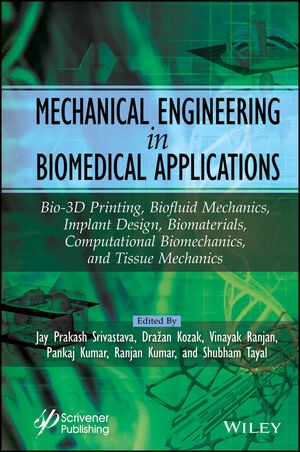
Mechanical engineering in biomedical application: bio-3D printing, biofluid mechanics, implant design, biomaterials, computational biomechanics, tissue mechanics
Explores the latest research and developments related to the interdisciplinary field of biomedical and mechanical engineering offering insights and perspectives on the research, key technologies, and mechanical engineering techniques used in biomedical applications.

Mechanical Behaviour of Engineering Materials : Metals, Ceramics, Polymers, and Composites
How do engineering materials deform when bearing mechanical loads? To answer this crucial question, the book bridges the gap between continuum mechanics and materials science. The different kinds of material deformation (elasticity, plasticity, fracture, creep, fatigue) are explained in detail. The book also discusses the physical processes occurring during the deformation of all classes of engineering materials (metals, ceramics, polymers, and composites) and shows how these materials can be strengthened to meet the design requirements. It provides the knowledge needed in selecting the appropriate engineering material for a certain design problem. The reader will thus learn how to critically employ design rules and thus to avoid failure of mechanical components.

Mechanical Behavior of Materials : Fundamentals, Analysis, and Calculations
Provides a holistic understanding of mechanical behavior of materials, and enables critical thinking through mathematical modeling and problem solving.Each of the 15 chapters first introduces readers to the technologic importance of the topic and provides basic concepts with diagrammatic illustrations; and then its engineering analysis/mathematical modelling along with calculations are presented.

Meat Biotechnology
The main goal of this book is to provide the reader with the recent developments in biotechnology and their applications in the meat processing chain. To achieve this goal, the book is divided into four parts. The first part deals with the use of modern biotechnology applied to farm animals. The second part focuses on the recent biotechnological developments in starter cultures for better meat fermentation. The third part discusses current approaches to improve the quality and nutritional properties of meats. The final part presents the latest advances in protection against foodborne pathogens, and other recent trends in the field. Written by distinguished international contributors, this book brings together the advances in such varied and different biotechnological topics

Measuring, Monitoring and Modeling Concrete Properties ; An International Symposium dedicated to Professor Surendra P. Shah, Northwestern University, USA
Of ECF16 Chairman Emmanuel E. Gdoutos The "16th European Conference of Fracture. The present volume is devoted to the symposium on "Measuring, Monitoring and Modeling Concrete Properties" (MMMCP). ECF16 focused in all aspects of structural integrity with the objective of improving the safety and performance of engineering str- tures, components, systems and their associated materials.

Measure Theory and Probability Theory
The book can be used as a text for a two semester sequence of courses in measure theory and probability theory, with an option to include supplemental material on stochastic processes and special topics.Prerequisites are kept to the minimal level of an understanding of basic real analysis concepts such as limits, continuity, differentiability, Riemann integration, and convergence of sequences and series. A review of this material is included in the appendix. The book starts with an informal introduction that provides some heuristics into the abstract concepts of measure and integration theory, which are then rigorously developed. The first part of the book can be used for a standard real analysis course for both mathematics and statistics Ph.D. students as it provides full coverage of topics such as the construction of Lebesgue-Stieltjes measures on real line and Euclidean spaces, the basic convergence theorems, L^p spaces, signed measures, Radon-Nikodym theorem, Lebesgue's decomposition theorem and the fundamental theorem of Lebesgue integration on R, product spaces and product measures, and Fubini-Tonelli theorems. It also provides an elementary introduction to Banach and Hilbert spaces, convolutions, Fourier series and Fourier and Plancherel transforms.

Measure Theory
This book gives a systematic presentation of modern measure theory as it has developed over the past century and offers three levels of presentation: a standard university graduate course, an advanced study containing some complements to the basic course (the material of this level corresponds to a variety of special courses), and, finally, more specialized topics partly covered by more than 850 exercises. Bibliographical and historical comments and an extensive bibliography with 2000 works covering more than a century are provided.

Matter and Methods at Low Temperatures
Matter and Methods at Low Temperatures contains a wealth of information essential for successful experiments at low temperatures, which makes it suitable as a reference and textbook. This third edition also describes newly developed low-temperature experimentation techniques and new materials properties; it also contains many additional references and a list of suppliers of cryogenic equipment.

Mathematics and Technology
Mathematics and Technology presents technological applications of mathematics making use of elegant mathematical concepts. The selected subjects consist of: public key cryptography, error correcting codes, the global positioning system (GPS) and cartography, image compression using fractals and the JPEG format, digital recording, robot movement, DNA computing, Google's PageRank algorithm, savings and loans, gamma ray surgery and random number generators. The authors highlight how mathematical modeling, together with the power of mathematical tools, have been crucial for innovation in technology. The exposition is clear, straightforward, motivated by excellent examples, and user-friendly. Numerous exercises at the end of every chapter reinforce the material. An engaging quality is the various historical notes accompanying the mathematical development.

Mathematics and Mechanics of Granular Materials
Granular or particulate materials arise in almost every aspect of our lives, including many familiar materials such as tea, coffee, sugar, sand, cement and powders. At some stage almost every industrial process involves a particulate material, and it is usually the cause of the disruption to the smooth running of the process. In the natural environment, understanding the behaviour of particulate materials is vital in many geophysical processes such as earthquakes, landslides and avalanches. This book is a collection of current research from some of the major contributors in the topic of modelling the behaviour of granular materials. Papers from every area of current activity are included, such as theoretical, numerical, engineering and computational approaches. This book illustrates the numerous diverse approaches to one of the outstanding problems of modern continuum mechanics.

Mathematical Tools for Data Mining : Set Theory, Partial Orders, Combinatorics
Mathematics is presented in a thorough and rigorous manner offering a detailed explanation of each topic, with applications to data mining such as frequent item sets, clustering, decision trees also being discussed. More than 400 exercises are included and they form an integral part of the material. Some of the exercises are in reality supplemental material and their solutions are included. The reader is assumed to have a knowledge of elementary analysis.
