



Page 14
Page 14

Molecular autoimmunity
The autoimmune disease paroxysmal cold hemoglobinuria, a rare hemolytic disorder. After a century of research, the list of autoimmune diseases has become impressive. With a prevalence of approximately 5% of the world-wide population, these chronic, debilitating conditions affect almost every major organ of the body and, for reasons that remain unclear, are much more prevalent in woman than in men. Despite our rapidly expanding knowledge of the cellular and molecular pathways that govern a normal immune response, deciphering the precise etiology of autoimmune diseases remains an important challenge. Over the last few years, our understanding of the pathogenesis of autoimmune diseases has improved rapidly, leading to the emergence of elegant immunointervention strategies. Molecular Autoimmunity illustrates how cutting-edge research is continuing to advance our understanding of autoimmune disease mechanisms and identifies novel therapeutic targets that provide a hope for effective future treatments. This volume contains a selected number of exciting advances in unraveling autoimmune reactions, and the resulting new armory of experimental immunotherapies that may lead to new ways of controlling autoimmune reactions.

Modified Fibers with Medical and Specialty Applications
This book will be an invaluable resource for researchers and others interested in future developments in fiber technology. Several innovative applications for natural and synthetic fibers are described in considerable detail with emphasis on the experimental data that supports these new applications. From bandages to magnetic materials and from antibacterial clothing to implants, creative modifications to fibers are described that could one day become commonplace. Never before has this much new information about fiber modification been packaged into one book volume. In this book the world’s leading experts describe their most recent research in their areas of expertise.

Modern trends in research on steel, aluminium and composite structures includes papers presented at the 14th International Conference on metal structures 2021 ; ICMS 2021, Poznań, Poland, 16-18 June 2021
Modern Trends in Research on Steel, Aluminium and Composite Structures includes papers presented at the 14th International Conference on Metal Structures 2021 (ICMS 2021, Pozna, Poland, 16-18 June 2021). The 14th ICMS summarised a few years' theoretical, numerical and experimental research on steel, aluminium and composite structures, and presented new concepts.

Modern Testing Techniques for Structural Systems : Dynamics and Control
The articles in this book describe new developments in the area of structural testing, particularly those based upon the principle of fusing numerical and experimental methods such as real-time dynamic substructuring and hardware-in-the loop testing. In addition to the hybrid methods, chapters on the latest develoments in more established techniques, such as shaking table testing, provide a completely up-to-date survey of structural testing methods.

Modern luminescence spectroscopy of minerals and materials
Luminescence Spectroscopy of Minerals and Materials presents an overview of the general concepts in luminescence spectroscopy as well as experimental methods and their interpretation. Special emphasis is laid on the fluorescence lifetime and the determination of time-resolved spectra. This method enables the exposure of new luminescence in minerals previously hidden by more intensive centers. Specialists in the fields of solid state physics, chemistry and spectroscopy will find a wealth of new information in this unique book.

Modern Hematology : Biology and Clinical Management
The first chapters of this book contain a self-contained introduction to path integrals in Euclidean quantum mechanics and statistical mechanics. The resulting high-dimensional integrals can be estimated with the help of Monte Carlo simulations based on Markov processes. The most commonly used algorithms are presented in detail so as to prepare the reader for the use of high-performance computers as an “experimental” tool for this burgeoning field of theoretical physics. Several chapters are then devoted to an introduction to simple lattice field theories and a variety of spin systems with discrete and continuous spins, where the ubiquitous Ising model serves as an ideal guide for introducing the fascinating area of phase transitions. As an alternative to the lattice formulation of quantum field theories, variants of the flexible renormalization group methods are discussed in detail. Since, according to our present-day knowledge, all fundamental interactions in nature are described by gauge theories, the remaining chapters of the book deal with gauge theories without and with matter.

Modelling water and nutrient dynamics in soil-crop systems : Applications of different models to common data sets - Proceedings of a workshop held 2004 in Müncheberg, Germany
This book contains articles from a workshop on "Modelling water and nutrient dynamics in crop-soil systems". Data sets from lysimeters and experimental fields of multiyear crop rotations were provided for modellers. A unique data set is provided of a 100 year long term field experiment regarding crop yield and organic carbon development under different management systems. The book includes a detailed description of data sets which can be used by modellers and the papers describe the applications of 18 different modelling approaches describing soil-crop-atmosphere interactions for water, nitrogen and carbon dynamics.

Modelling and Estimation Strategies for Fault Diagnosis of Non-Linear Systems : From Analytical to Soft Computing Approaches
This monograph presents a variety of techniques that can be used for designing robust fault diagnosis schemes for non-linear systems. The introductory part of the book is of a tutorial value and can be perceived as a good starting point for the new-comers to this field. Subsequently, advanced robust observer structures are presented. Parameter estimation based techniques are discussed as well. A particular attention is drawn to experimental design for fault diagnosis. The book also presents a number of robust soft computing approaches utilizing evolutionary algorithms and neural networks. All approaches described in this book are illustrated by practical applications.

Modeling of Soft Matter
Soft matter plays a role in a wide variety of important processes and application. For example, gel swelling and dynamics are an essential part of many biological and individual processes, such as motility mechanisms in bacteria and the transport and absorption of drugs. Ferroelectrics, liquid crystals, and elastomers are being used to design ever faster switching devices. Experimental studies, such as scattering, optical and electron microscopy, have provided a great deal of detailed information on structures. But the integration of mathematical modeling and analysis with experimental approaches promises to greatly increase our understanding of structure-property relationships and constitutive equations. The workshop on Modeling of Soft Matter has taken such an integrated approach.

Modeling Marvels : Computational Anticipation of Novel Molecules
The aim of this book is to survey a number of chemical compounds that chemists, both theoretical and experimental, find fascinating. Some of these compounds, like planar carbon species or oxirene, offer no obvious practical applications; nitrogen oligomers and polymers, in contrast, have been touted as possible high-energy-density materials. What unites this otherwise eclectic collection is that these substances are unknown and offer a challenge to theory and to synthesis.

Modeling Chemical Systems using Cellular Automata
The book will be of great value in undergraduate courses in chemistry, physics, biology, applied mathematics, and bioinformatics, and as a supplement for laboratory courses in introductory chemistry, organic chemistry, physical chemistry, medicinal chemistry, chemical engineering and other courses dealing with statistical and dynamic systems. It allows the exploration of a wide range of dynamic phenomena, many of which are not normally accessible within conventional laboratory settings due to limitations of time, cost, and experimental equipment. The book is both a textbook on applied Cellular Automata and a lab manual for chemistry (physics, engineering) courses with lab activity. It would supplement other lab work and be an additonal book the students would use in the course.

Model tests and numerical simulations of liquefaction and lateral spreading ; LEAP-UCD-2017
This book presents work collected through the Liquefaction Experiments and Analysis Projects (LEAP) in 2017. It addresses the repeatability, variability, and sensitivity of lateral spreading observed in twenty-four centrifuge model tests on mildly sloping liquefiable sand.
mODa 8 - Advances in Model-Oriented Design and Analysis ; Proceedings of the 8th International Workshop in Model-Oriented Design and Analysis held in Almagro, Spain, June 4–8, 2007
The volume contains the proceedings of the 8th Workshop on Model-Oriented Design and Analysis. This book offers leading and pioneering work on optimal experimental designs, both from a mathematical/statistical point of view and with regard to real applications. Scientists from all over the world, from Eastern and Western Europe, the USA, Latin-America, Asia and Africa, have contributed to this volume. Primary topics are designs for nonlinear models and applications to experimental medicine.

Mixture Formation in Internal Combustion Engines
This book covers the various approaches to modelling and optimising the spray and mixture formation processes in modern internal combustion engines. Due to their complexity and importance in predicting the temporal and spatial distribution of liquid and gaseous fuel inside the cylinder, special emphasis is put on the detailed description of multi-dimensional CFD-models. The book describes and discusses the most widely used mathematical models for in-cylinder spray and mixture formation processes.

Misleading marketing communication : Assessing the impact of potentially deceptive food labelling on consumer behaviour
Presenting four complementary experimental studies targeting recurrent grey-zone scenarios on the Danish food market, the book illustrates the potential of the so-called ShopTrip test paradigm which simulates and registers real-life e-shopping behaviour as it unfolds while yielding new types of data against which opposing assessments of potential misleadingness can be matched. The results are discussed in the light of possible paths of theoretical explanation and implications for future regulative practices, including companies’ self-regulation.
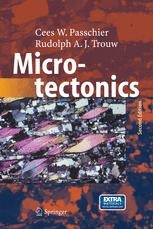
Microtectonics
The book mainly focusses on optical microscopy as a tool to study microstructures, but also describes other techniques such as EBSD and tomography. Many photographs and explanatory drawings clarify the text. Newest developments in microtectonics have been included in all chapters so that al chapters have been revised and updated, e.g. new information on brittle microstructures. Two new chapters have been added, on primary structures and experimental microstructures. Chapters on veins, shear zones, natural microgauges experimental modelling techniques and alternative techniques have been completely renewed

Microscale and Nanoscale Heat Transfer
Constitutes a particularly complete and original collection of ideas, models, numerical methods and experimental tools which will prove invaluable in the study of microscale and nanoscale heat transfer. It should be of interest to research scientists and thermal engineers who wish to carry out theoretical research or metrology in this field, but also to physicists concerned with the problems of heat transfer, or teachers requiring a solid foundation for an undergraduate university course in this area.

Micromechanics and Nanosimulation of Metals and Composites : Advanced Methods and Theoretical Concepts
This book provides insight into advanced numerical and experimental investigations of the microstructural aspects of strength and damage of metals and metal-based composites. In particular, atomistic and dislocation models, micromechanical simulations and homogenization techniques, as well as experimental observations in combination with computer simulations, are described. These methods are successfully applied to analyze the mechanical behavior of metals and metal-matrix composites.

Micromechanical Photonics
The purpose of this book is to give the engineering student and the practical engineer a systematic introduction to optical MEMS (Micro electro mechanical systems) and micromechanical photonics through not only theoretical and experimental results, but also by describing various products and their fields of application. After an overview on optical MEMS and micromechanical photonics, the book describes extremely-short-external-cavity laser diodes tunable laser diodes, a resonant sensor and an integrated optical head. It then addresses optical tweezers, the new technology employed to manipulate various types of objects in a variety of research and industrial fields. Coverage progresses through topics on the design and fabrication of an optical rotor and evaluation of mixing performances of micro-liquids for future fluidic applications. In the final chapter, the fundamentals and applications of the near field are described for the future development of micromechanical photonics, as well as near-field features, theoretical analyses, experimental analyses and applications mainly related to optical recording.

Microflows and Nanoflows : Fundamentals and Simulation
This book provides a comprehensive summary of these changes describing fluid flow in micro and nano configurations. Where as in their previous book entitled Microflows: Fundamentals and Simulation. In this new book they discuss length scales from angstroms to microns (and beyond). While still maintaining the emphasis on fundamental concepts with a mix of semianalytical, experimental, and numerical results, this book outlines their relevance to modeling and analyzing functional devices.
