


Refine Results
Sort By
From
To


This is an ultimate resource for creating the ideal remote retreat. Discover 150 cottages and cabins from around the world that feature the luxury of modern home construction while preserving the surrounding landscape and utilizing local natural resources. These enviable dwelling showcase inspirations for homeowners, designers, and architects - from exposed-beam ceilings and built-in furnishings to large open-floor plans and floor-to-ceiling windows that accentuate picturesque views of the great outdoors. This volume highlights hidden sanctuaries that offer spacious, comfortable, and, most important, more natural living environments with a range of stunning full-colour photographs and detailed design plans.

Bridges the gap between monograph and survey text by providing a new level of access and interpretation to Islamic art. The more than 50 newly commissioned essays revisit canonical topics, and include original approaches and scholarship on neglected aspects of the field. showcases more than 50 specially commissioned essays and an introduction that survey Islamic art and architecture in all its traditional grandeurEssays are organized according to a new chronological-geographical paradigm that remaps the unprecedented expansion of the field and reflects the nuances of major artistic and political developments during the 1400-year span. Represents recent developments in the field, and encourages future horizons by commissioning innovative essays that provide fresh perspectives on canonical subjects, such as early Islamic art, sacred spaces, palaces, urbanism, ornament, arts of the book, and the portable arts while introducing others that have been previously neglected, including unexplored geographies and periods, transregional connectivities, talismans and magic, consumption and networks of portability, museums and collecting,
The underlying theory on which much modern robust and nonlinear control is based can often be dif?cult for the student to grasp. In particular, the mathematical - pects can be problematic for students from a standard engineering background. The EPSRC sponsored Summer School which was held in Leicester in September 2006 attempted to “?ll the gap” in students’ appreciation the theory relevant to several important areas of control. This book is a collection of lecture notes which were p- sented at that workshop and consists of, broadly, two parts. The ?rst nine chapters are devoted to the theory behind several areas of robust and nonlinear control and are aimed at introducing fundamental concepts to the reader. The last six chapters contain detailed case studies which aim to demonstrate the use and effectiveness of these modern techniques in real engineering applications. It is hoped that this book will provide a useful introduction to many of the more common robust and nonlinear control techniques and serve as a valuable reference for the more adept practitioner.
Based on lecture notes of two summer schools with a mixed audience from mathematical sciences, epidemiology and public health, this volume offers a comprehensive introduction to basic ideas and techniques in modeling infectious diseases, for the comparison of strategies to plan for an anticipated epidemic or pandemic, and to deal with a disease outbreak in real time. It covers detailed case studies for diseases including pandemic influenza, West Nile virus, and childhood diseases. Models for other diseases including Severe Acute Respiratory Syndrome, fox rabies, and sexually transmitted infections are included as applications. Its chapters are coherent and complementary independent units. In order to accustom students to look at the current literature and to experience different perspectives, no attempt has been made to achieve united writing style or unified notation.
In this book we describe the basic principles, problems, and methods of clssical mechanics. Our main attention is devoted to the mathematical side of the subject. Although the physical background of the models considered here and the applied aspects of the phenomena studied in this book are explored to a considerably lesser extent, we have tried to set forth first and foremost the “working” apparatus of classical mechanics. This apparatus is contained mainly in Chapters 1, 3, 5, 6, and 8. Chapter 1 is devoted to the basic mathematical models of classical - chanics that are usually used for describing the motion of real mechanical systems. Special attention is given to the study of motion with constraints and to the problems of realization of constraints in dynamics. In Chapter 3 we discuss symmetry groups of mechanical systems and the corresponding conservation laws. We also expound various aspects of ord- reduction theory for systems with symmetries, which is often used in appli- tions. Chapter 4 is devoted to variational principles and methods of classical mechanics. They allow one, in particular, to obtain non-trivial results on the existence of periodic trajectories. Special attention is given to the case where the region of possible motion has a non-empty boundary. Applications of the variational methods to the theory of stability of motion are indicated.
Non è vero che la matematica susciti sempre poco interesse. Questa almeno è l'impressione che si ricava quando lo spunto per parlarne viene non solo dalla scienza e dalla tecnologia, ma anche dall'arte, dalla letteratura, dal cinema e dal teatro. Ce lo ha insegnato Michele Emmer con i suoi convegni Matematica e Cultura e lo abbiamo sperimentato a Bologna con le iniziative del 2000 per l'Anno Mondiale della Matematica e per Bologna Città Europea della Cultura. D’altra parte, negli ultimi anni abbiamo finalmente visto sullo schermo come protagonisti di film di successo dei matematici, non rappresentati come individui strani, ma come professionisti che svolgono il proprio lavoro, non necessariamente di insegnanti. Anche alcune opere teatrali di risonanza internazionale hanno parlato di matematici e questo ci ha spinto a organizzare per la prima volta in Italia, a Bologna, la rassegna Matematica e Teatro, che ha dato occasione non solo di assistere a spettacoli molto piacevoli, ma anche di parlare dei rapporti tra scienza, matematica e potere al tempo di Napoleone, di numeri primi, di teoria di Galois.

MARSWALK ONE: First Steps on a New Planet addresses the question of why we should embark on a journey to Mars, documenting what the first human crew will do when they place their feet in the red dust of the planet. The book also addresses why we need to carry out these tasks and, more importantly, what a human crew could achieve that an automated mission could not. Understanding the clear benefits of sending a human crew to the surface of Mars, and how these benefits can be seen back on Earth, is the key to sustained long-term public and political support for the programme in terms of cash and commitment. The book accepts that the journey will be made, but does not specify precisely when. Flight time, and how to get to and from the planet are discussed briefly, to understand why the suggested duration spent at Mars is reasonable. The main objective of the work is to look at what science will be done on the surface – supported by orbital operations – and what hardware and technology will be employed to achieve the mission objectives. This analysis is drawn from previous experiences in manned and unmanned space programmes, including Apollo, Skylab, Salyut/Mir, Shuttle and ISS, Viking, Luna/Lunokhod, and recent Mars missions such as Pathfinder and Global Surveyor.
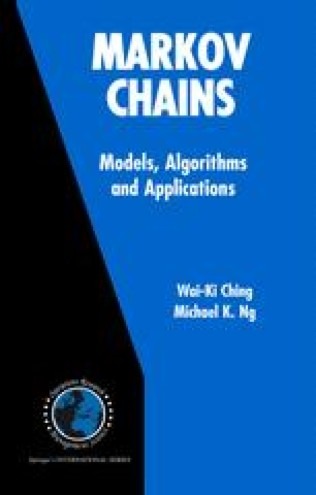
Markov chains are a particularly powerful and widely used tool for analyzing a variety of stochastic (probabilistic) systems over time. This monograph will present a series of Markov models, starting from the basic models and then building up to higher-order models. Included in the higher-order discussions are multivariate models, higher-order multivariate models, and higher-order hidden models. In each case, the focus is on the important kinds of applications that can be made with the class of models being considered in the current chapter. Special attention is given to numerical algorithms that can efficiently solve the models. Therefore, Markov Chains: Models, Algorithms and Applications outlines recent developments of Markov chain models for modeling queueing sequences, Internet, re-manufacturing systems, reverse logistics, inventory systems, bio-informatics, DNA sequences, genetic networks, data mining, and many other practical systems.
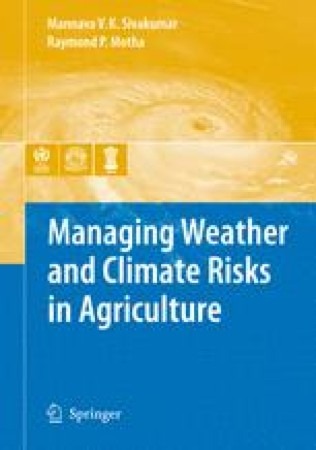
In many parts of the world, weather and climate are one of the biggest production risks and uncertainty factors impacting on agricultural systems performance and management. Both structural and non-structural measures can be used to reduce the impacts of the variability (including extremes) of climate resources on crop production. While the structural measures include strategies such as irrigation, water harvesting, windbreaks etc., the non-structural measures include use of seasonal to interannual climate forecasts, improved application of medium-range weather forecasts and crop insurance. This book based on an International Workshop held in New Delhi, India should be of interest to all organizations and agencies interested in improved risk management in agriculture.
Addresses the need for sharing knowledge and experience in the field of biodiversity conservation and climate change. There is an urgent need to build capacity in protected areas to monitor, assess, manage and report the effects of climate change and their interaction with other pressures. The contributors identify barriers to the adaptation of conservation management, such as the mismatch between planning reality and the decision context at site level. Short and vivid descriptions of case studies, drawn from investigation areas all over Central and Eastern Europe, illustrate both the local impacts of climate change and their consequences for future management.

This book provides an in-depth study of the management of standards and regulation in sustainable and radical innovation development. It considers the case of micro Combined Heat and Power (mCHP) technology. The developers of this radical innovation in the European heating sector encountered major conflicts when attempting to create or adapt standards when bringing the technology to market. Utilising rich research data and interviews with key actors, the author uses this case to derive a grounded theory on the management of standards and regulation during an innovation process. The results also have important implications for innovators, which are reflected in clear advice for practice.
With climate change now charging up the political agenda, there are three issues commonly making the headlines: carbon budgets, renewable energy, and the anticipated impacts of climate change. Equally important, though currently less well covered, is the issue how these effects might be mitigated. Given the significant role that forests play in the climate system – as sources, sinks, and through carbon trading – this book discusses the current scientific evidence on the relationships between climate, forest resources and forest management practices around the world. Drawing on expertise from forest scientists from several continents, the book presents both in depth analysis of the current knowledge, and a series of case studies which assess the biological and the economic impacts of climate change. It includes sections on forest responses to climate change, monitoring and modeling changes, economic and management implications, and carbon sequestration under specific management systems.
Intensifying worldwide environmental changes as well as political, cultural, religious, and economic crises have made intergovernmental organisations (IGOs) important instruments in international and global cooperation. In order to cope with their diverse stakeholders, it is more imperative than ever for intergovernmental organisations to engage in personnel policy on an international scale. Successful diversity management is an essential prerequisite for organisational performance, conflict management, and dynamics of IGOs. Björn A. Peters examines the challenges of diversity and managing diversity in IGOs on the basis of the Mekong River Commission case study.
As it circulates in the atmosphere, in the rivers, lakes, soil, rock, and in the oceans, it is the major conveyer of va- ous chemical substances and of energy, and it can also be called as the blood of the ecosystems of this planet. But at the same time water is interwoven in the va- ous functions of the nature and the human society in countless ways which makes water one of the most complicated challenges of the mankind today.Human beings are exploiting and enjoying, but at the same time polluting and deteriorating, the waters in various ways and water is equally important to the - man socio-economic system as it is to the nature. It may sound a bit anecdotal to say that water obeys no borders, but that is true; the hydrologic cycle with its r- ers, river basins, lakes, aquifers, rainfalls, oceans, etc., cross administrational b- ders without any passport control. River and lake basins are in most cases very different from the administrational borders that the human beings have set up.
This book seeks to widen the perspective taken on implementation in fisheries management. The cases presented in this volume addresses legal, administrative, and political challenges regarding implementation of resource conservation policies. The book addresses problems relating to goal achievement, but also causes of deliberate change of political goals during implementation. Fisheries management systems are embedded in inert social structures and natural conditions that vary among different states. Consequently, the book takes a historical and comparative approach, describing the historical developments of national implementation systems and the conditions that shaped their development. It thus seeks to explain why national fisheries management systems have evolved differently, focusing on Norwegian, Faeroese, and EU/Danish management systems. The descriptive and explanatory outlines are accompanied by qualitative assessments of the systems effectiveness as tools for collective action.
This book discusses the progress of science and the transfer of scientific knowledge to technological application. It also identifies the factors necessary to achieve this progress. Based on a case study of the physical chemist Fritz Haber's discovery of ammonia synthesis between 1903 and 1909, the book places Haber's work in historical and scientific (physicochemical) context. The scientific developments of the preceding century are framed in a way that emphasizes the confluence of knowledge needed for Haber's success. Against this background, Haber's work is presented in detail along with the indispensable contributions of his colleague, the physical chemist, Walter Nernst, and their assistants. The detailed accounts of scientific advancement remind us of the physical basis on which our scientific theories and ideas are built. Without this reminder we often forget how complex, and how beautiful achievements in science can be.
Magnesium, with a density of 1.74 g/cm², is the lightest structural metal and magnesium are increasingly chosen for weight-critical applications such as in land-based transport systems. "Magnesium Technology" substantially updates and complements existing reference sources on this key material. It assembles international contributions from seven countries covering a wide range of research programs into new alloys with the requisite property profiles, i.e., the current state of both research and technological applications of magnesium. In particular, the international team of authors covers key topics, such as: casting and wrought alloys; fabrication methods; corrosion and protection; engineering requirements and strategies, with examples from the automobile, aerospace, and consumer-goods industries, and recycling.

Injection molding of metallic alloys is a modern and environment-friendly technology with universal features, capable of implementing many conventional and novel processing methods based on semisolid and liquid routes. After its application to magnesium and recent commercialization, it is used to manufacture millions of light-weight, fully-recyclable components for various markets, including consumer electronics housings, automotive parts, sporting goods, household devices and office equipment.
Investigate the roots of Logical Empiricism in the context of the Life Reform and the German Youth Movements. Rudolf Carnap and Hans Reichenbach are the key protagonists; they both belonged to the German Youth Movement and developed their early philosophical views in this setting. By combining scholarly essays with unpublished and hard to access manuscripts, letters, and articles, this volume recasts our understanding of the early years of Logical Empiricism
Local Newforms for GSp(4) describes a theory of new- and oldforms for representations of GSp(4) over a non-archimedean local field. This theory considers vectors fixed by the paramodular groups, and singles out certain vectors that encode canonical information, such as L-factors and epsilon-factors, through their Hecke and Atkin-Lehner eigenvalues. While there are analogies to the GL(2) case, this theory is novel and unanticipated by the existing framework of conjectures. An appendix includes extensive tables about the results and the representation theory of GSp(4).

Daraa Highway - Ghabagheb - Syria
+963-15 2050 - 15 860 380 /1/2/3 - 11 662 3900