



Page 133
Page 133

A Personal History of Nuclear Medicine
In A Personal History of Nuclear Medicine, Dr. Henry N. Wagner, Jr. outlines his significant contribution to the field of nuclear medicine over the past half-century, while also discussing the hurdles that the field faced in becoming a major component of modern medical practice. Further, the author explores challenges within the academic and medical establishments, which have often been known for resisting change
A Pan-Chromatic View of Clusters of Galaxies and the Large-Scale Structure
The reviews presented in this volume cover a wide-range of cluster of galaxies topics like the physics of the ICM gas, the internal cluster dynamics, the detection of clusters using different observational techniques, the great advances in analytical or numerical modeling of clusters, weak and strong lensing effects, the large scale structure as traced by clusters, the cosmological significance of clusters as well as the formation and evolution of clusters within the new cosmological paradigm.

A Multidisciplinary Approach to Capability in Age and Ageing
This book provides insight on how to interpret capability in ageing – one’s individual ability to perform actions in order to reach goals one has reason to value – from a multidisciplinary approach. the book describes this demographic trends as well as the large global challenges and important societal implications this will have such as a worldwide increase in the number of persons affected with dementia, and in the ratio of retired persons to those still in the labor market. Through contributions from many different research areas, it discussed how capability depends on interactions between the individual (e.g. health, genetics, personality, intellectual capacity), environment (e.g. family, friends, home, work place), and society (e.g. political decisions, ageism, historical period).
A Modern Perspective on Type Theory : From its Origins until Today
The first part of the book is historical, yet at the same time, places historical systems (like Russell's RTT) in the modern setting. The second part deals with modern type theory as it developed since the 1940s, and with the role of propositions as types (or proofs as terms), but at the same time, places another historical system (the proof checker Automath) in the modern setting. The third part uses this bridging in the first two parts between historical and modern systems to propose new systems that bring more advantages together. This book has much to offer to mathematicians, logicians and to computer scientists in general. It will have considerable influence for many years to come.' - Henk Barendregt

A Mathematical Introduction to Conformal Field Theory
The first part of this book gives a detailed, self-contained and mathematically rigorous exposition of classical conformal symmetry in n dimensions and its quantization in two dimensions. In particular, the conformal groups are determined and the appearance of the Virasoro algebra in the context of the quantization of two-dimensional conformal symmetry is explained via the classification of central extensions of Lie algebras and groups. The second part surveys some more advanced topics of conformal field theory, such as the representation theory of the Virasoro algebra, conformal symmetry within string theory, an axiomatic approach to Euclidean conformally covariant quantum field theory and a mathematical interpretation of the Verlinde formula in the context of moduli spaces of holomorphic vector bundles on a Riemann surface.
A History of Plastic Surgery
Te frst section deals with anatomy and the healing of wounds, discusses You have in your hands a work that should become a old and new plastic surgical procedures, and outlines the milestone of our understanding of medical history. In it history of anaesthesia. Te second covers the methods Professor Paolo Santoni-Rugiu and Mr Philip Sykes trace used from ancient times to reconstruct various areas of the development of plastic surgery and much of medi- the body and is the most extensive. Te last section d- cine in general, over three millennia. With his extensive cusses the history of cosmetic surgery and the origin of knowledge of clinical plastic surgery, no one could be present day procedures. better placed than the senior author to gather this valu- Te pages ring with the names of giants of the medical able material from historical documents.
A History of Limb Amputation
This book traces humanity’s long experience of natural amputations due to congenital absence, disease, frostbite, toxins, domestic and wild animal trauma, and for non-medical reasons related to punitive, ritual, and legal actions, ultimately leading to the development of elective surgical amputation. While the evolution of surgical techniques forms a major chapter in the book, many ancillary problems are addressed including the control of hemorrhage and infection, the approach to pain relief, the development of suitable instruments and equipment, and the invention of prostheses, all suitably illuminated with case histories and relevant illustrations. In addition, alternative procedures designed to avoid amputation, increasingly important in the last two centuries, are debated, and factors associated with self-amputation in extremis, not rare according to press reports, are also examined. A separate chapter considers the philosophy and interpretations of society, patients, and surgeons faced with amputation, particularly before anesthesia.
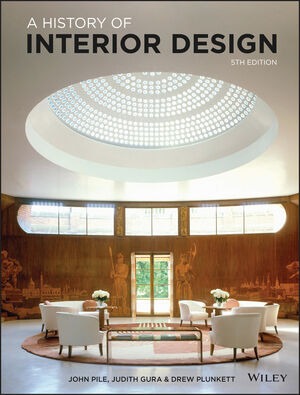
A History of Interior Design ; 5th Ed
Interior design describes the process by which an interior space is made into an effective setting for whatever range of human activities are to take place there. Much like the history of art, the history of interior design encompasses numerous styles, movements, and the influence of international, political, and social developments. A basic understanding of this history is important to students taking survey courses, professional designers looking to the past for inspiration, and for those interested in antiques, furniture design, and the general evolution of the spaces where we work and live

A History of Abstract Algebra
This presentation provides an account of the intellectual lineage behind many of the basic concepts, results, and theories of abstract algebra.The development of abstract algebra was propelled by the need for new tools to address certain classical problems that appeared unsolvable by classical means. A major theme of the approach in this book is to show how abstract algebra has arisen in attempts to solve some of these classical problems, providing context from which the reader may gain a deeper appreciation of the mathematics involved.

A Guide to Sustainable Corporate Responsibility : From Theory to Action
Discusses the challenges and opportunities faced by companies in an age that increasingly values sustainability and demands corporate responsibility. Beginning with the historical development of corporate responsibility, this book moves from academic theory to practical application. It points to ways in which companies can successfully manage their transition to a more responsible, sustainable way of doing business, common mistakes to avoid and how the UN Sustainable Development Goals are integral to any sustainability transformation.
A Guide to Good Occlusal Practice
Considers occlusion within the different disciplines of clinical dentistry, taking into account the challenges specific to each, in order to develop guidelines of good occlusal practice (GGOP). The GGOP for each discipline has benefited from an authoritative contribution of a recognised specialist in that field. Readers will find full description of what constitutes good occlusal practice in, for example, simple and advanced restorative dentistry, removable prosthodontics, the restoration of the worn dentition and implantology. It is clearly explained why and how the GGOP differ in the various branches of dentistry, the key point being that it is the support for the occlusal surfaces that determines GGOP.

A Geometric Approach to Differential Forms
The modern subject of differential forms subsumes classical vector calculus. This text presents differential forms from a geometric perspective accessible at the undergraduate level. The book begins with basic concepts such as partial differentiation and multiple integration and gently develops the entire machinery of differential forms. Each new concept is presented with a natural picture that students can easily grasp. Algebraic properties then follow. This facilitates the development of differential forms without assuming a background in linear algebra. Throughout the text, emphasis is placed on applications in 3 dimensions, but all definitions are given so as to be easily generalized to higher dimensions. A centerpiece of the text is the generalized Stokes' theorem. Although this theorem implies all of the classical integral theorems of vector calculus, it is far easier for students to both comprehend and remember.

A First Course in Modular Forms
This book introduces the theory of modular forms with an eye toward the Modularity Theorem: All rational elliptic curves arise from modular forms. The topics covered include: • elliptic curves as complex tori and as algebraic curves, • modular curves as Riemann surfaces and as algebraic curves, • Hecke operators and Atkin–Lehner theory, • Hecke eigenforms and their arithmetic properties, • the Jacobians of modular curves and the Abelian varieties associated to Hecke eigenforms, • elliptic and modular curves modulo p and the Eichler–Shimura Relation, • the Galois representations associated to elliptic curves and to Hecke eigenforms. As it presents these ideas, the book states the Modularity Theorem in various forms, relating them to each other and touching on their applications to number theory.

A First Course in Harmonic Analysis
This book is a primer in harmonic analysis using an elementary approach. Its first aim is to provide an introduction to Fourier analysis, leading up to the Poisson Summation Formula. Secondly, it makes the reader aware of the fact that both, the Fourier series and the Fourier transform, are special cases of a more general theory arising in the context of locally compact abelian groups. The third goal of this book is to introduce the reader to the techniques used in harmonic analysis of noncommutative groups. There are two new chapters in this new edition. One on distributions will complete the set of real variable methods introduced in the first part. The other on the Heisenberg Group provides an example of a group that is neither compact nor abelian, yet is simple enough to easily deduce the Plancherel Theorem.

A Course in Credibility Theory and its Applications
It covers the subject of Credibility Theory extensively and includes most aspects of this topic from the simplest case to the most general dynamic model. The first four chapters contain plenty of material The book therefore treats explicitly the tasks which the actuary encounters in his daily work such as estimation of loss ratios, claim frequencies and claim sizes. The models are worked out in detail (including the estimation of structural parameters) so that they can immediately be applied in practice. Most exercises are based on real insurance data and real situations from practice and many of them have the characteristics of a case study. The extension to practical problems arising from the general area of finance is often quite straightforward. This book deserves a place on the bookshelf of every actuary and mathematician who works, teaches or does research in the area of insurance and finance.for a first course on Credibility.
A Concise Introduction to Data Compression
Compressing data is an option naturally selected when faced with problems of high costs or restricted space. Written by a renowned expert in the field, this book offers readers a succinct, reader-friendly foundation to the chief approaches, methods and techniques currently employed in the field of data compression.

A Concise Course on Stochastic Partial Differential Equations
Concentrate on (nonlinear) stochastic partial differential equations (SPDE) of evolutionary type. All kinds of dynamics with stochastic influence in nature or man-made complex systems can be modelled by such equations.

A Computer Scientists Guide to Cell Biology
Provides a succinct treatment of the general concepts of cell biology, furnishing the computer scientist with the tools necessary to read and understand current literature in the field.After a brief introduction to cell biology, the text focuses on the principles behind the most-widely used experimental procedures and mechanisms, relating them to well-understood concepts in computer science. The presentation of the material has been prepared for the reader’s quick grasp of the topic: comments on nomenclature and background notes can be ascertained at a glance, and essential vocabulary is boldfaced throughout the text for easy identification.
A Computational Differential Geometry Approach to Grid Generation
This monograph gives a detailed treatment of applications of geometric methods to advanced grid technology. It focuses on and describes a comprehensive approach based on the numerical solution of inverted Beltramian and diffusion equations with respect to monitor metrics for generating both structured and unstructured grids in domains and on surfaces.

A comparison between ovate pontic and modified ridge-lap pontic
Aims to explore the differences in aesthetic, hygienic, and functional aspects of replacing missing anterior teeth using various pontic designs, with a particular focus on the ovate pontic design with a focus on the different stages needed for a pontic design placement on a ridge missing either a single or multiple teeth and the procedures needed to condition the soft tissues surrounding the prothesis.
